Turning a Neglected Room Into a Comfortable Personal Retreat
TL;DR
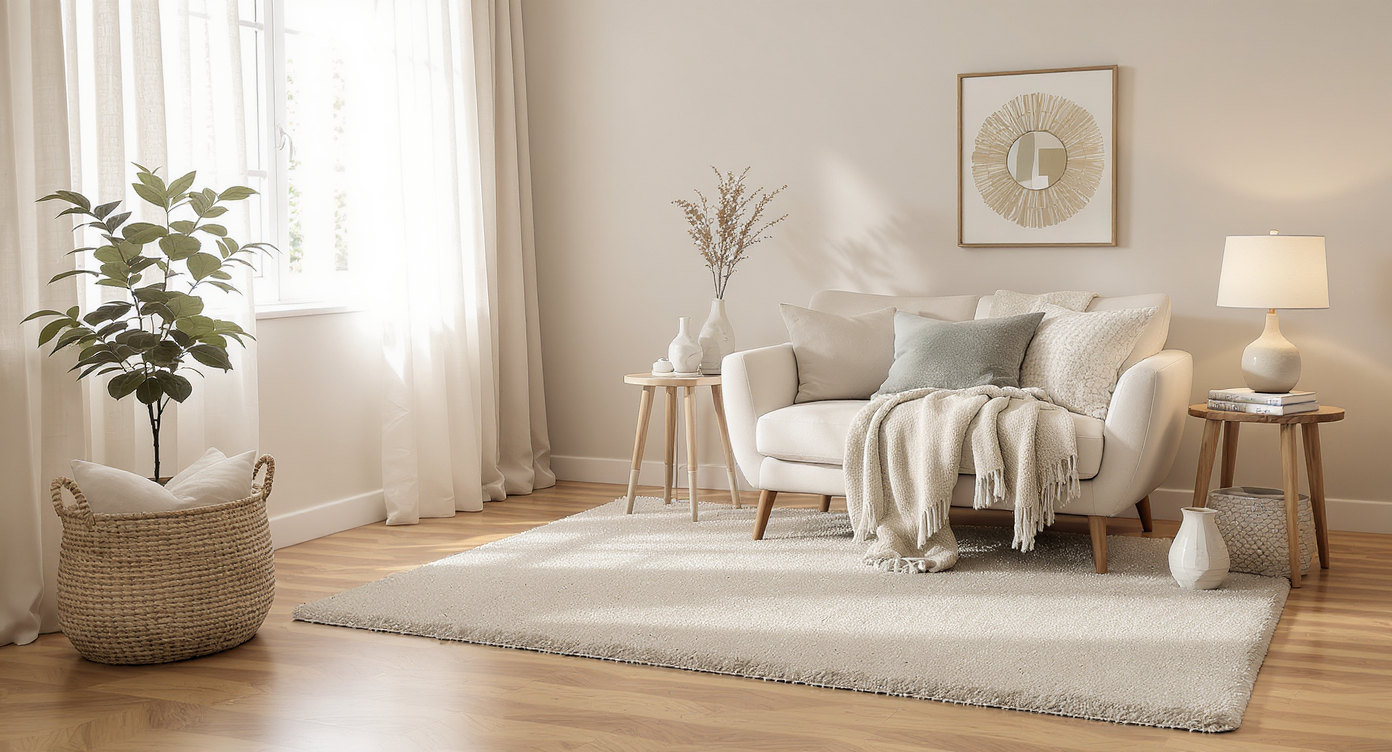
A room transformed from chaos and coldness to comfort begins by clearing clutter, brightening paint, layering warm lighting, and choosing furnishings with care. Practical changes like organizing, painting, adding soft textures, and flexible storage instantly uplift a neglected mood. Inexpensive shifts can help anyone craft a bedroom that feels welcoming and uniquely their own.
A Fresh Start for Tired Spaces
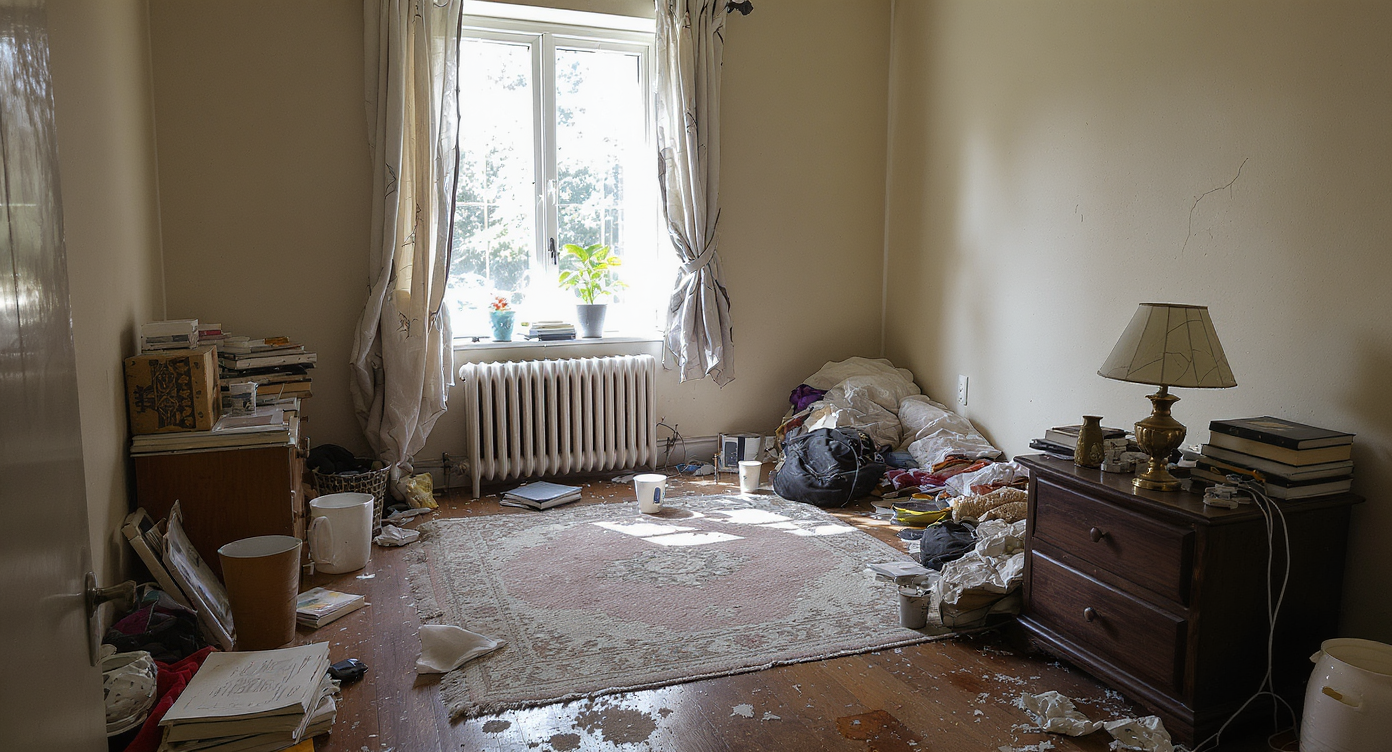
A real, overfilled room with mismatched textiles, cluttered surfaces, and undecorated walls—showing the starting point for a personal retreat.
When your room mirrors a sense of chaos and fatigue, reclaiming it might feel overwhelming. Yet, the journey to a more livable, welcoming space rarely begins with expensive new purchases or dramatic overhauls. It starts with a few simple, clearheaded steps. By evaluating what stays, what goes, and how small upgrades shape how a space looks and feels, anyone can create a calmer, more nurturing environment. Real-life rooms often accumulate more function and clutter than design intention. However, even in spaces that feel like a tapestry of mismatched items—old rugs with clashing curtain panels, overfilled tables, and bare, undecorated corners—a more inviting room is within reach. Finding personality, comfort, and order involves mindful edits and affordable moves that pay off immediately.
-
Declutter and Define What Matters
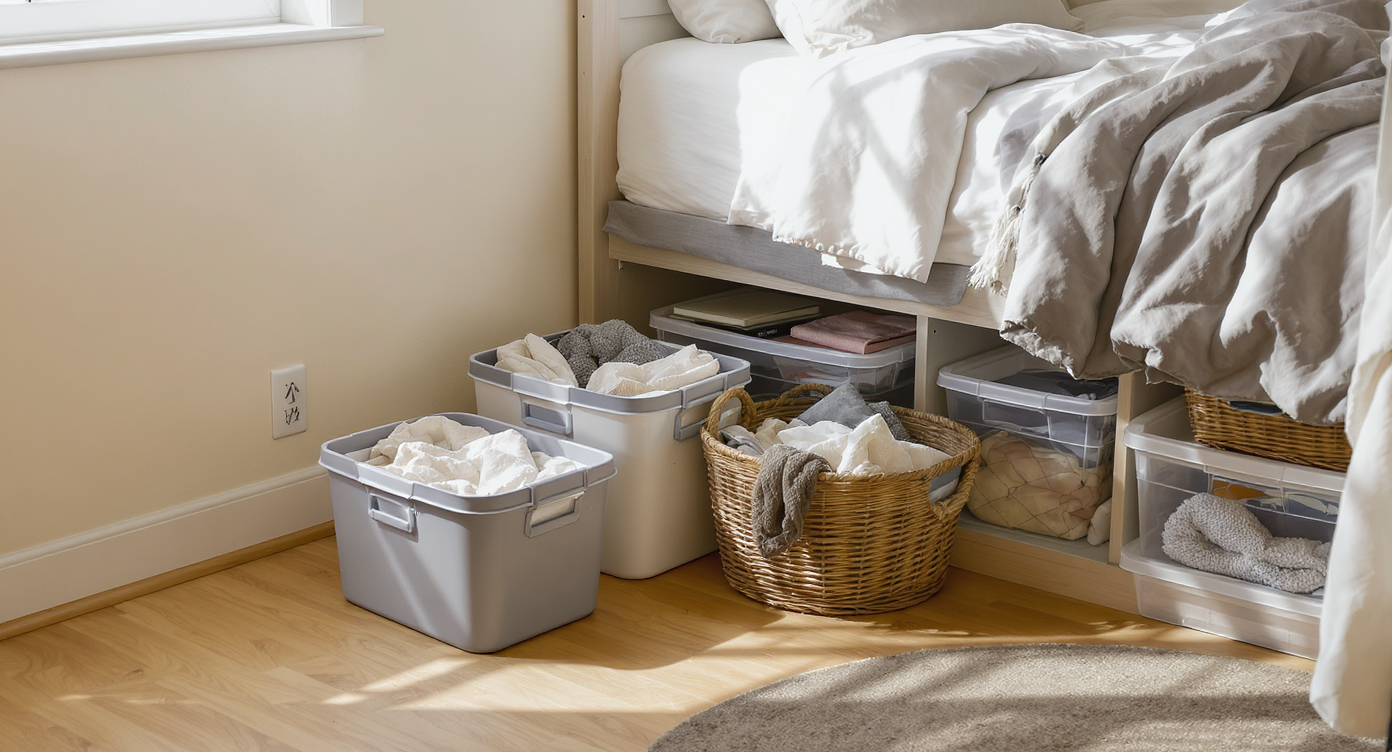
A bedroom in the midst of decluttering, showcasing labeled storage bins, baskets, and hidden under-bed containers for visual calm.
The most meaningful transformations begin by editing. Clutter saps comfort. Every designer and savvy renter agrees: before thinking about paint, art, or pillows, spend focused time sorting out what you actually use or love. Consider the simple keep/purge/decide-later method—handle items just once, categorizing what is essential or brings joy, what can be stored elsewhere, and what could be donated or discarded. This is more than an organizational step; it sets the emotional tone for the room. A decluttered room will immediately feel lighter and more accessible. Utilize under-bed storage bins or closed containers for everyday essentials—inexpensive options abound at local thrift stores or online community groups. For visual calm, group like items in labeled baskets or transparent bins tucked into wardrobes and under furniture. This hidden storage also makes it easier to take on larger projects, such as painting walls or rearranging furniture. See how thrifted, slow-collected pieces can enrich a bedroom without clutter in this look at eclectic thrifted bedrooms.
Expert Insight
Several years ago, a friend moved into a studio apartment that felt like an afterthought—floors covered in random rugs, a makeshift desk in the corner, and thick, borrowed curtains obscuring every sliver of sunlight. The initial mood was far from inviting. But by digging out forgotten bins for storage, painting the entire space a soft ivory, and swapping overhead bulbs for two thrifted lamps, that same space became a calming retreat within a month. With a few throw pillows in a favorite color and a pothos on a floating shelf, arriving home became something to look forward to. These quiet changes shaped everyday comfort far more than any big spend ever could.
-
Build a Calming Canvas: Paint, Light, and Textiles
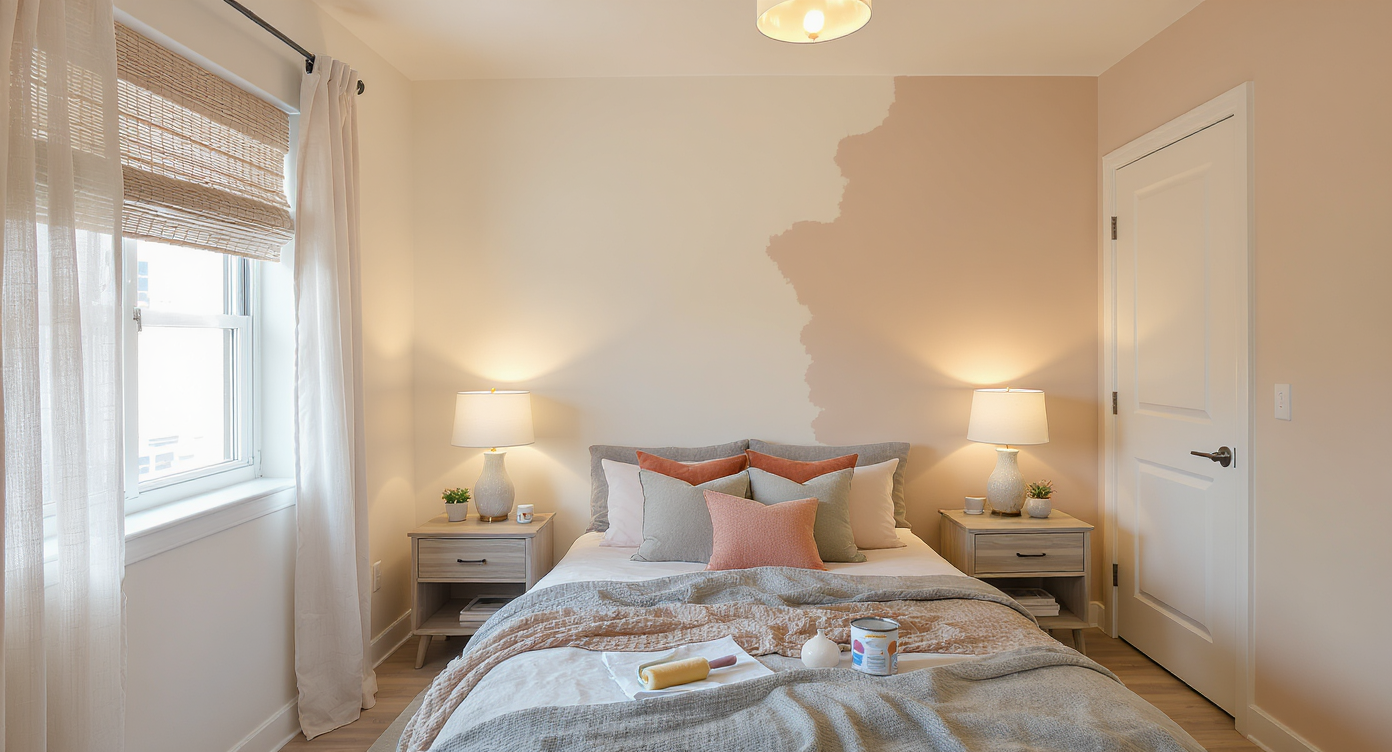
A small room transformed with soft neutral paint, layered lighting, airy window treatments, and cozy textiles in warm, repeated hues.
Fresh paint is a perennial favorite for a reason. A single weekend and a small investment can completely reset the energy of a room. Opt for inviting neutrals—off-whites with a hint of warmth, or gentle sand or blush tones. Avoid heavy greys and dark browns, as they can drain a small space. If painting every wall feels ambitious, even tackling one at a time creates a noticeable difference. Remember to paint furniture or doors if they clash or feel tired, using leftover or recycled paint when possible. Lighting often makes the biggest difference in comfort. Switch out a single overhead light for multiple lamps at varying heights with soft white bulbs (2700K is a sweet spot for coziness), and use shades or diffusers for pleasant, non-glaring ambience. String lights, LED strips, or small table lamps multiply the feeling of warmth. For window treatments, trade heavy curtains for lighter, textured panels or bamboo shades; maximizing natural light during the day always enhances mood. Layer in textiles for instant comfort. This might mean a plush neutral rug that calms busy flooring, linen covers in calming tones, or a few large pillows for the bed. Avoid high-contrast patterns and instead opt for repeated hues—a strategy backed by color flow principles often found in affordable decorator trick roundups. Frequent advice from designers is to repeat one or two accent shades (rust, navy, sage) in three to five places across the room. More about using color and light to finish a bedroom can be found in what’s missing from bedroom decor—and how to fix it.
-
Organize for Function, Comfort, and Style
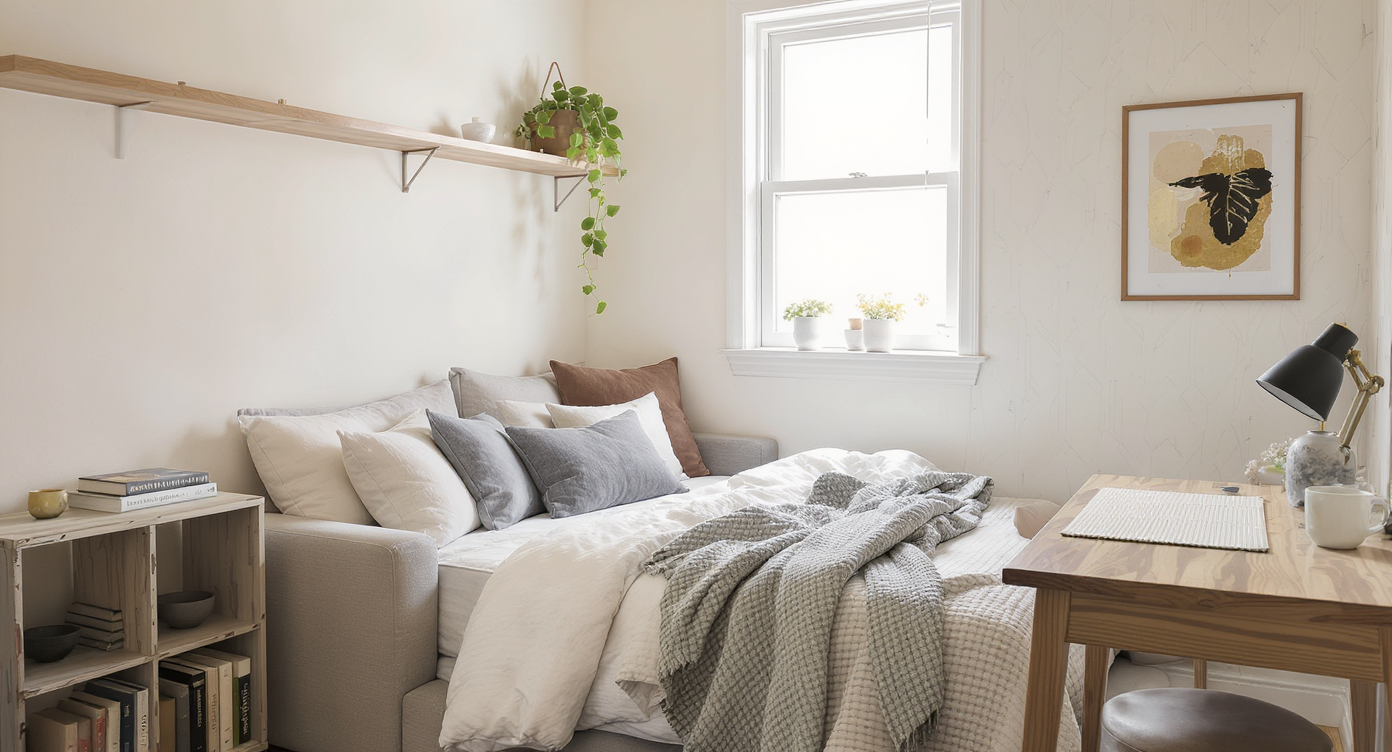
Organized, multi-use space: bed-as-sofa, modular storage, thrifted nightstand, floating shelf with pothos, and removable wallpaper accent.
With the surfaces clear and a softer, brighter base established, consider how the room works for everyday life. Zoning—creating distinct areas for sleeping, relaxing, and working—helps a space feel purposeful rather than scattered. Place beds against walls with pillows stacked to double as a daytime sofa. Use modular storage like cube bookcases or narrow shelves for books, media, or personal items. Replace busy, patterned table covers with a single, neutral runner or placemat to minimize visual “noise.” Renter-friendly projects such as peel-and-stick wallpaper on one wall or a thrifted nightstand makeover pack impact without commitment. Temporary solutions like removable hooks, thin floating shelves, and hanging planters add both storage and character, especially in tight quarters. For weekend projects with a quick boost, focus on upgrades under $200, prioritizing what can be finished with minimal tools and no paint fumes, as outlined in many renter-friendly DIY tips. Living plants, even just a hardy pothos on a shelf, bring overt freshness and nature into the mix. If live greenery feels intimidating, a small arrangement of dried stems or faux leaves softens the room with no maintenance. Flexibility is key—think of adding or removing items as your routine changes. When each element is thoughtfully chosen or placed, daily routines become easier and returning home feels grounding.
Visualization Scenario
Imagine entering your room at the end of a long day. The floor is open, thanks to hidden storage below the bed and clutter-free tabletops. Light from a fabric-shaded lamp and soft window sheers glows warmly off freshly painted walls. A textured rug underfoot invites you to kick off your shoes. A single pothos trails from a bookshelf, adding a touch of green. The bed, made up with oversized pillows and a linen throw in your chosen accent color, sits ready for an evening of relaxation or work. The result is simplicity with personality: a personal sanctuary carefully shaped through a handful of uplifting changes.
Frequently Asked Questions
- What are the cheapest ways to refresh a room on a tight budget?
- Start with decluttering, followed by rearranging furniture. Painting walls or even just trim in a warm white or soft neutral quickly lifts the mood. Shop secondhand for storage, and add one or two new lighting sources—lamp swaps provide instant coziness. Affordable decorator ideas from the Southern Living Idea House show how impactful color and DIY touches can be.
- How can I choose a color scheme that helps a small room feel bigger?
- Use light, warm neutrals for walls and most textiles. Repeat one or two bold accent colors in small doses for art, pillows, or planters. Maximize natural light, and keep window coverings simple and airy. See more on color flow and scale in our bedroom color guide.
- What practical storage solutions work best for multi-use bedrooms?
- Cube shelves, under-bed containers, floating narrow shelves, and labeled baskets all help minimize chaos. Thrifted cabinets or small bookcases blend function and style, as in these thrifted storage ideas. Flexible storage lets you adapt as life changes.
- Are there temporary or rental-friendly upgrades I can make?
- Yes. Peel-and-stick wallpaper, non-invasive hooks, and updated lighting are perfect for renters. Use removable tapes for light artwork, and choose textiles that travel with you. Detailed ideas for weekend-friendly projects are shared in this renter upgrade blog.
- Where can I get more design advice tailored to my personal needs?
- Try ReimagineHome.ai for custom design inspiration and support sourcing the right products for your unique space.
Making Comfort an Everyday Reality
Designing a room to feel uplifting and restorative never requires perfection or a hefty bank account. Instead, it is a matter of editing, lightening, layering, and building in small personal touches over time. Initial steps like decluttering and painting do the heaviest lifting. Over weeks or months, add comfort and character with carefully chosen lighting, textiles, and storage. Along the way, you may find unexpected joy in slow, affordable upgrades—each one a step closer to a completely your-own space. If you are searching for inspiration or personalized suggestions, ReimagineHome.ai can offer further guidance tailored to your style and needs.