
TL;DR
Go up a rug size (aim for 10×12 or 10×14) so all front legs of the sectional sit on it, choose a warm camel/brown leather accent chair with airy MCM lines, and swap to a lower, round coffee table with 14–18 inches of clearance. Layer lamps, tall plants, and full-length curtains for warmth. To avoid returns, preview everything with an AI tool to visualize furniture layout—upload your photo to ReimagineHome.ai and test options in minutes.
Why This Room Feels “Almost There” (and Why You’re Not Imagining It)
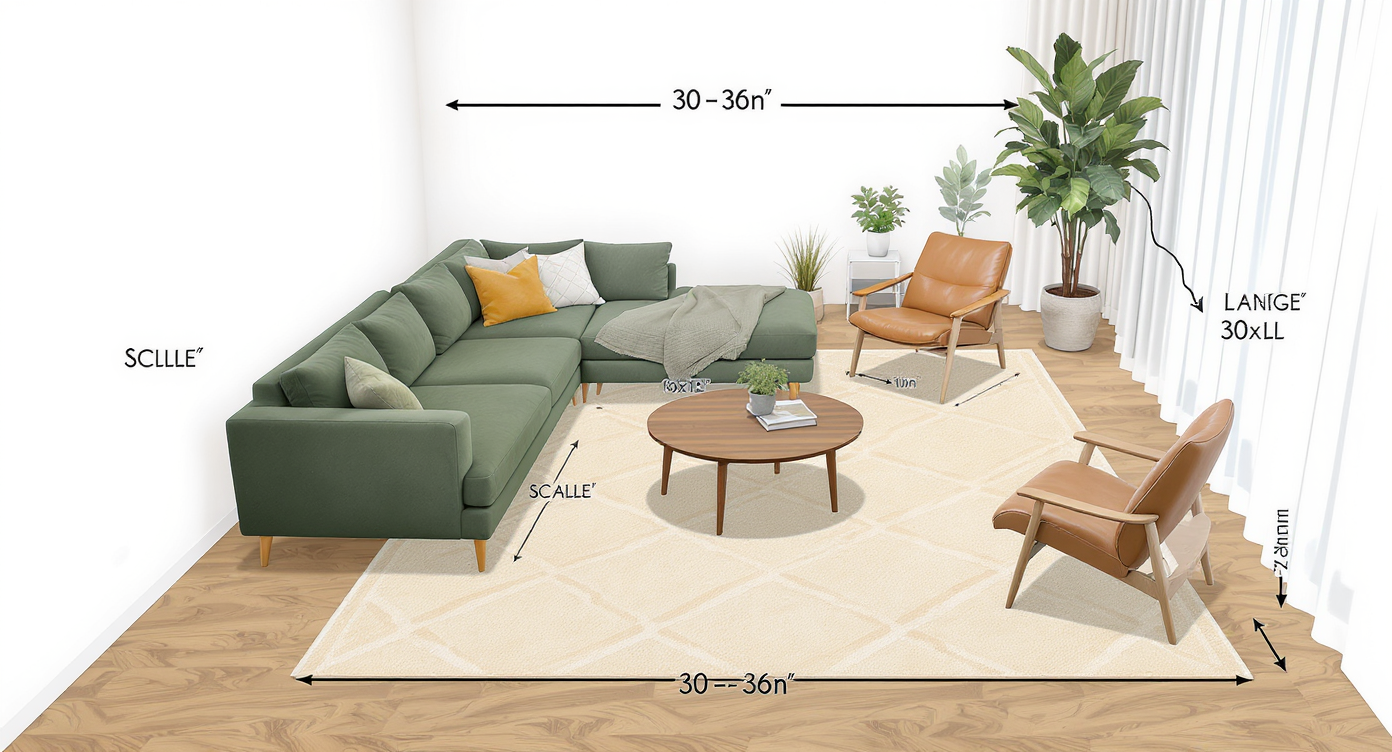
Proper rug size and furniture placement anchor a large sectional, ensuring balanced scale and flow.
Direct answer: the rug is undersized for the sectional; size up and add a camel leather accent chair with open legs, a round lower coffee table, tall plants, and full-height curtains. Use an AI room planner to preview these swaps on your actual photo before you buy.
- Rug sizing that anchors a large sectional (and why 10×12 or 10×14 works).
- Accent chair picks for industrial/MCM—leather tones, widths, and placement.
- Coffee table shape/height for better flow and conversation.
- Layered lamp lighting if you dislike overheads, plus cozy bulb temps.
- Curtains and vertical elements that balance all the white walls.
- Plants and styling: scale up, declutter, and add texture.
- How to preview everything with AI interior design from a single photo.
Before you move a single sofa or pick up a paint roller, upload a photo to ReimagineHome.ai and test a few ideas safely.
If you’re weighing tools, see this breakdown of AI interior design tools for how a photo-to-room workflow can help you visualize layouts, styles, and color tweaks without measurements.
Why Interior Design Dilemmas Are Usually About Layout, Scale, and One Wrong Piece

Layout and scale problems often stem from one inappropriate furniture piece disrupting flow and balance.
Most designers recommend keeping 30–36 inches of clear walking space along main paths, then anchoring seating on a rug large enough that at least the front legs sit on it. In many living rooms, “off” usually means one element is out of scale—often the rug or coffee table—and it throws circulation and balance.
Here, an 11×9.5 ft sectional needs a bigger rug to feel intentional. A 10×12 (or even 10×14 if the room allows) will let both sofa sides place their front legs on the rug, expanding the visual zone and making the coffee table feel proportionate. If you’re renting and budgeting, layer a large, neutral jute or sisal under your existing patterned rug; it’s a budget-friendly way to scale up and add texture.
Circulation matters, especially near a bedroom door: preserve that 30–36 inch walkway behind or around the sectional. Slide the seating zone just enough to center the coffee table under the pendant for visual calm, but not so far that you choke the path.
Light and verticals are the other culprits. With big windows and white walls, the room reads bottom-heavy (color/texture low, blank above). Tall plants, full-height curtains, and a few larger-scale art moments pull the eye up and create equilibrium. For layout nuances in tight zones, skim a detailed guide to small living room layouts; the sizing rules transfer to lofts and open plans, too.
Anecdote
That corner where the armchair never quite fits? Angle a compact leather lounge there, let just the front legs sit on the new rug, and suddenly guests stop hovering by the console and actually sit.
Furniture Rules That Quietly Solve Most Room Problems
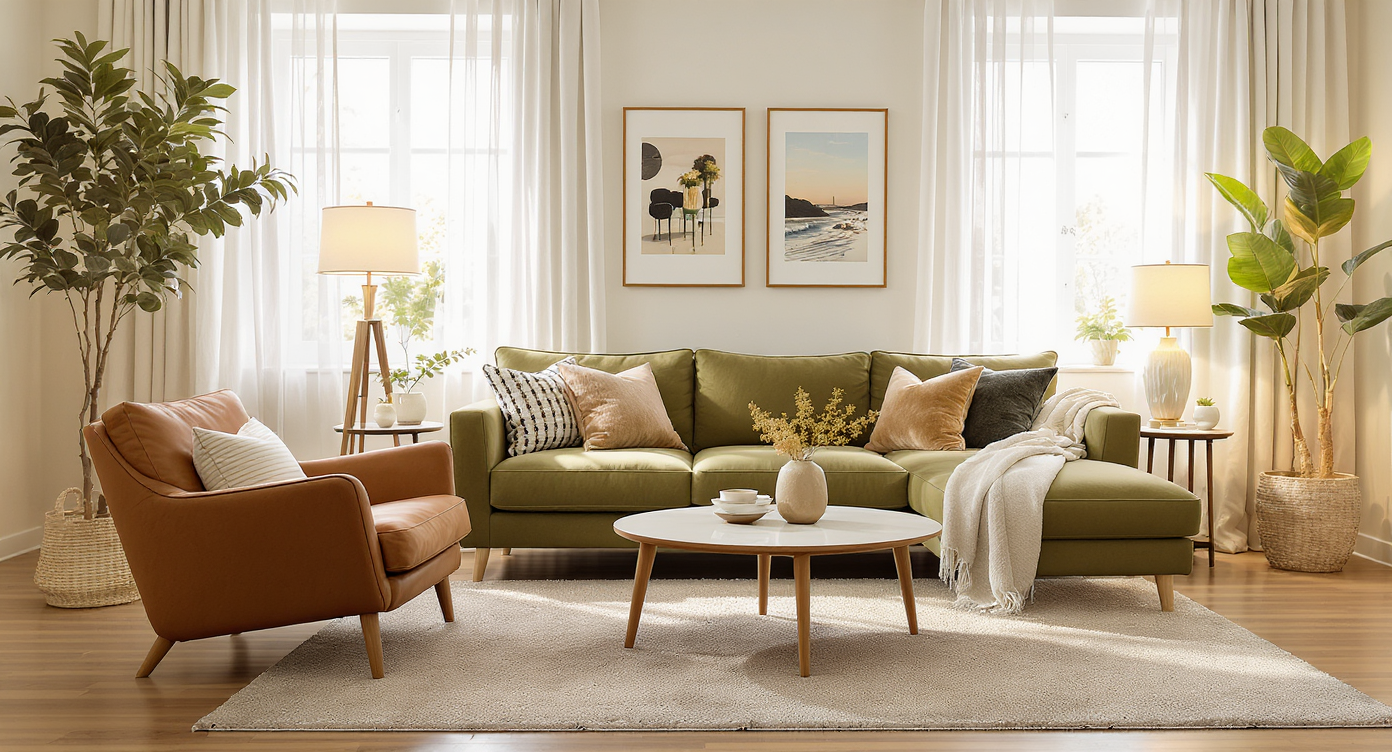
Proper furniture spacing and layered lighting quietly solve common room design challenges.
Coffee tables usually work best when they’re 14–18 inches from the sofa, about 1–2 inches lower than the sofa seat, and roughly 1/2–2/3 the sofa length. These simple ratios transform a room fast.
- Rug: For sectionals, 10×12 is a reliable starting point; 10×14 if you want more air around the conversation zone. Always get the front legs of all seating on the rug.
- Coffee table: Choose round or softly oval in a darker wood or matte stone to counter all the right angles. Target 36–42 inches diameter and keep 14–18 inches of reach space.
- Accent chair: Aim 28–32 inches wide with visible legs (walnut/black metal) for an industrial/MCM vibe. Camel or tobacco leather adds warmth and breaks up the greens/woods.
- Side and sofa tables: Top should sit within 2 inches of the sofa arm height for ergonomic reach.
- Lamps: Build 3–5 light sources at 2700–3000K for a cozy glow if you don’t like overheads. Floor lamp height typically lands around 58–64 inches at the shade.
- Curtains: Mount high—4–6 inches above the window or to the ceiling—and extend rods 8–12 inches past each side. Let panels kiss the floor for a tailored look.
- Plants: In a tall room, one 6–8 ft tree (bird of paradise, ficus, olive) plus a couple of medium-height companions feels proportionate.
Not sure which combination suits your space? Drop a photo into ReimagineHome.ai and iterate through table shapes, chair silhouettes, and rug sizes until the clearances and style click. For more sizing cheat codes, peek at this layout and furniture sizing guide.
How ReimagineHome.ai Helps You Test Layouts, Styles, and DIY Ideas

AI tools like ReimagineHome.ai simplify testing layouts and styles before any purchase or move.
AI tools can show multiple layout and style options in minutes, before you move a single piece. With ReimagineHome.ai, you can redesign your room from one photo—no measurements required.
- AI room restyle from a photo: Upload your living room image and ask for industrial/Mid-Century Modern variations. You’ll see different chair silhouettes, coffee table shapes, and rug scales applied to your exact space.
- AI to visualize furniture layout: Try a round coffee table vs. rectangular, test a swivel barrel chair vs. wood-frame lounge chair, and compare angles in the open corner—all within a virtual room design workflow.
- AI color and finishes: Preview camel leather next to your green sectional, a darker coffee table, or new paint colors and curtain tones without repainting or drilling.
- Inspiration without the doom-scroll: Generate Scandi, Japandi, or Boho takes if you’re curious, then dial back to your industrial/MCM core. It’s low-risk exploration with a high payoff.
New to this workflow? Start with this deep‑dive on AI room makeovers from a photo to see how to refine prompts and compare iterations side by side.
Step‑by‑Step: Fixing This Room Using AI and Simple DIY Changes
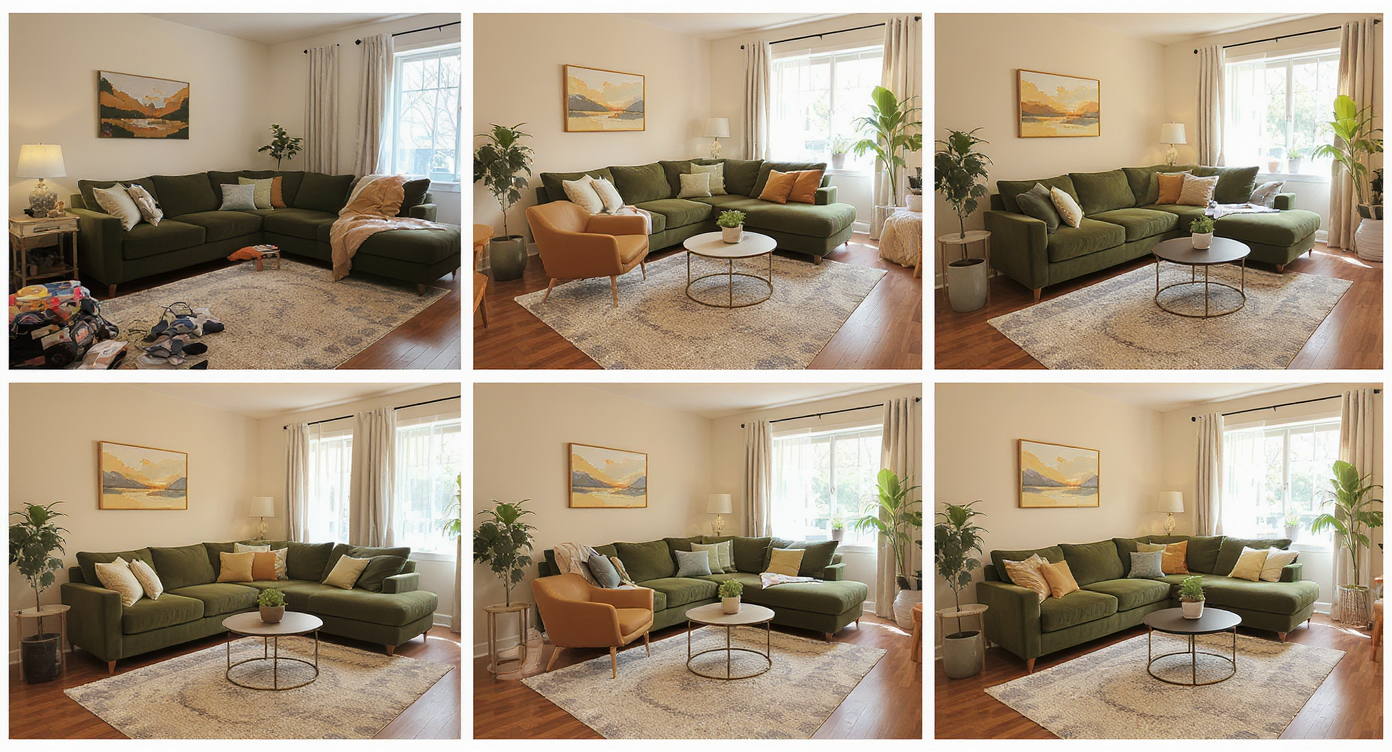
Simple AI-guided steps transform a living room with better scale, texture, and lighting for a finished look.
Most living rooms click into place with a few decisive moves. Here’s a focused sequence that honors rental constraints and keeps costs sane.
- 1) Measure for flow: Confirm 30–36 inches of walkway to the bedroom door. If you’re tight, consider a slimmer chair or angle it off the rug.
- 2) Scale the rug: Order a 10×12 or 10×14, or layer a large jute beneath your existing rug. Use a cushioned rug pad to eliminate ripples and add underfoot comfort.
- 3) Choose the accent chair: Pick camel/tobacco leather in a wood or black-metal frame, 28–32 inches wide. Place with front legs on the rug and a slight 10–15° angle toward the conversation area.
- 4) Coffee table swap: Go round/oval, 36–42 inches, 1–2 inches lower than sofa seat height. Maintain 14–18 inches to the sofa for easy reach.
- 5) Lamps over overheads: Add a tall arc or tripod floor lamp and a table lamp on the console. Use 2700–3000K bulbs and dimmers for layered warmth.
- 6) Curtains and verticals: Mount high, wide, and long. If drilling is off-limits, explore no-drill tension/track solutions. Linen, velvet, or twill in cream, flax, or rust will frame those windows beautifully.
- 7) Plants with presence: One tall tree plus two medium plants. A larger pot and riser for your fiddle leaf fig will help it read in scale with the room.
- 8) Edit and style: Declutter the console, vary heights, and add 2–3 neutral throw pillows with a kilim or stripe that echoes the rug’s tones. A tray, candle, and book stack on the coffee table finish the vignette.
- 9) Visualize first: Upload your photo to ReimagineHome.ai, generate two or three complete looks, and pick the one that preserves your clearances and feels most livable.
If you want a longer walkthrough on sequencing decisions, this living room redesign planner shows how to phase purchases without losing momentum.
Visualization Scenario
Upload your living room photo, choose “Industrial + Mid‑Century Modern,” then generate variants: 10×12 vs. 10×14 rug, round walnut coffee table vs. black metal/stone, and camel leather wood‑frame chair vs. swivel barrel. Compare side-by-side and pick the layout that preserves a 30–36 inch walkway to the bedroom door.
FAQ
How do I fix an awkward living room layout without buying all new furniture?
Re-space what you have using clearances: keep 30–36 inches for walkways, 14–18 inches between sofa and table, and get front legs of seating on the rug. Then test alternate arrangements on a photo with a room layout AI like ReimagineHome.ai.
Which AI interior design tool is best for small apartments and open-plan lofts?
Look for photo-to-room features and quick style iterations. ReimagineHome.ai excels at AI room design from a photo, so you can compare layouts, furniture styles, and colors before lifting a finger.
How can I see if a new rug or coffee table will fit before I buy it?
Measure first, then mock it up. Upload your room photo and try multiple sizes (e.g., 10×12 vs. 10×14 rugs, 36 vs. 42-inch round tables) to visualize proportion. This reduces returns and decision fatigue.
Can I use AI tools to plan DIY furniture or paint projects?
Yes—preview paint colors, curtain tones, and DIY finishes on your actual space. See step-by-step examples in this guide to AI room makeovers from a photo.
What’s the easiest way to mix industrial and mid-century modern furniture styles?
Use a 70/30 mix: let one style lead, repeat materials (walnut, black metal, leather), and keep a limited palette. Try mix-and-match looks in a virtual room design first to fine-tune balance.
Visualize Your Room’s Next Chapter
Great rooms don’t shout; they flow. When the rug anchors the sectional, the chair welcomes conversation, and the lighting feels soft and layered, that bold green sofa becomes the star—without overpowering the space.
When you can see the possibilities, it’s easier to move with confidence. Start by uploading one honest photo to ReimagineHome.ai and let your next version of the room come into focus.