
TL;DR
Quick fix: protect walking paths (aim for 24–30 inches around the bed), keep any fabric at least 18 inches from bulbs or heat sources, and corral collections on one strong focal wall. Then use an AI room designer to preview edits before lifting a finger. Upload a photo to ReimagineHome.ai to test layout, storage, and palette changes in minutes. This approach works for maximalist bedrooms, renters, and small spaces and is an easy way to try an AI room makeover from one photo.
Why Furniture & DIY Decisions Feel So High-Stakes
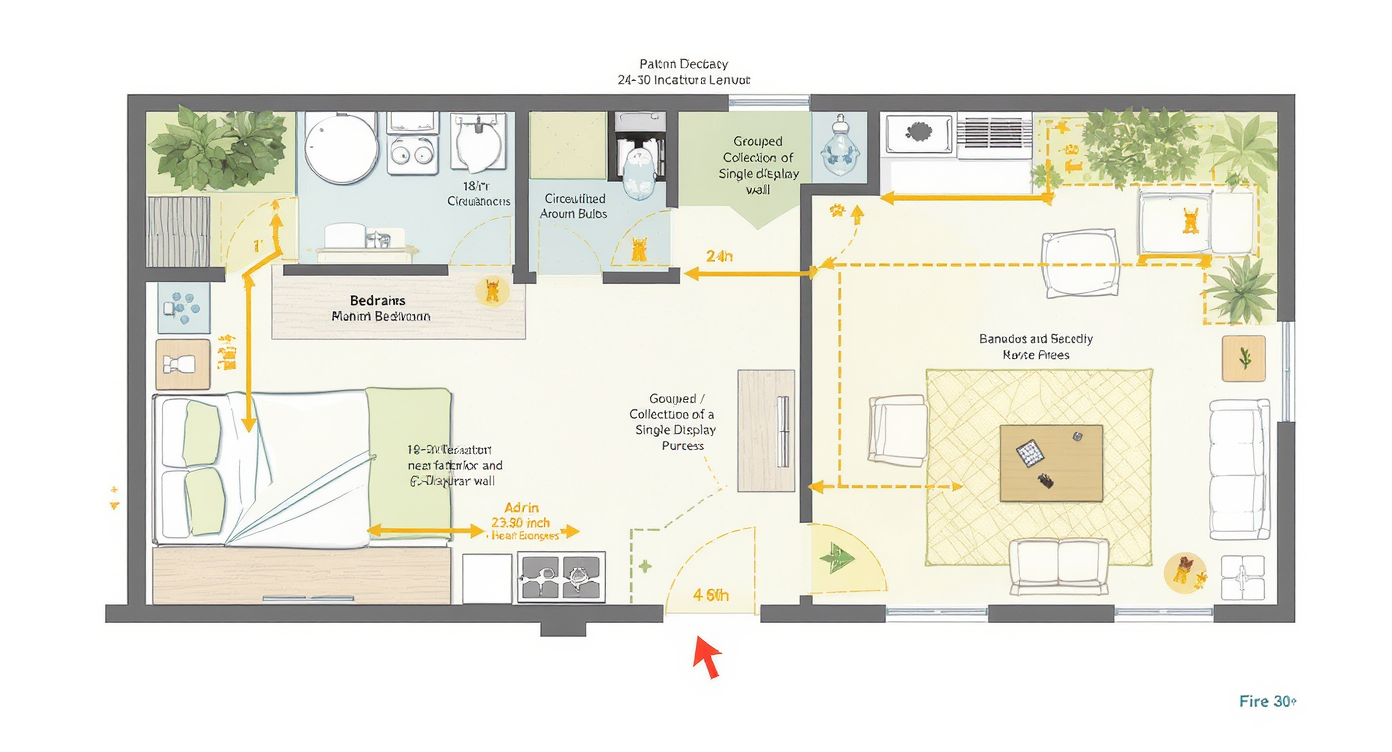
Key safety and design zones for maximalist bedrooms: circulation, fire-safety clearances, and curated collections.
To fix an overloaded maximalist bedroom fast, protect circulation (keep 24–30 inches clear along main paths), keep fabric at least 18 inches from any bulb or heat source, and group your collection into one intentional display. Then use a room design AI like ReimagineHome.ai to preview calmer layouts and color balance before you move anything.
- At a glance: safer tapestry and lighting clearances, dust-and-cleaning tactics that don’t kill the vibe, smarter collection displays, pet- and plant-friendly placements, and how an AI interior design tool visualizes options in minutes.
- Layout first: bed placement, walking space, window access, and where a desk or cage actually belongs.
- Scale and storage: right-sized rug, nightstands, and a focal shelf wall that tames visual noise.
- Textiles without stress: fire-safety basics, LED choices, and a washing routine that beats dust.
- Identity and style: balancing whimsical, boho, and retro cues so it feels you — not “too girly.”
Before you move a single sofa or pick up a paint roller, upload a photo to ReimagineHome.ai and test a few ideas safely.
If you’re new to AI interior tools, this platform overview — a straightforward breakdown of AI interior design tools and how they differ — explains where photo-to-room redesign shines for bedrooms and small spaces.
Why Interior Design Dilemmas Are Usually About Layout, Scale, and One Wrong Piece
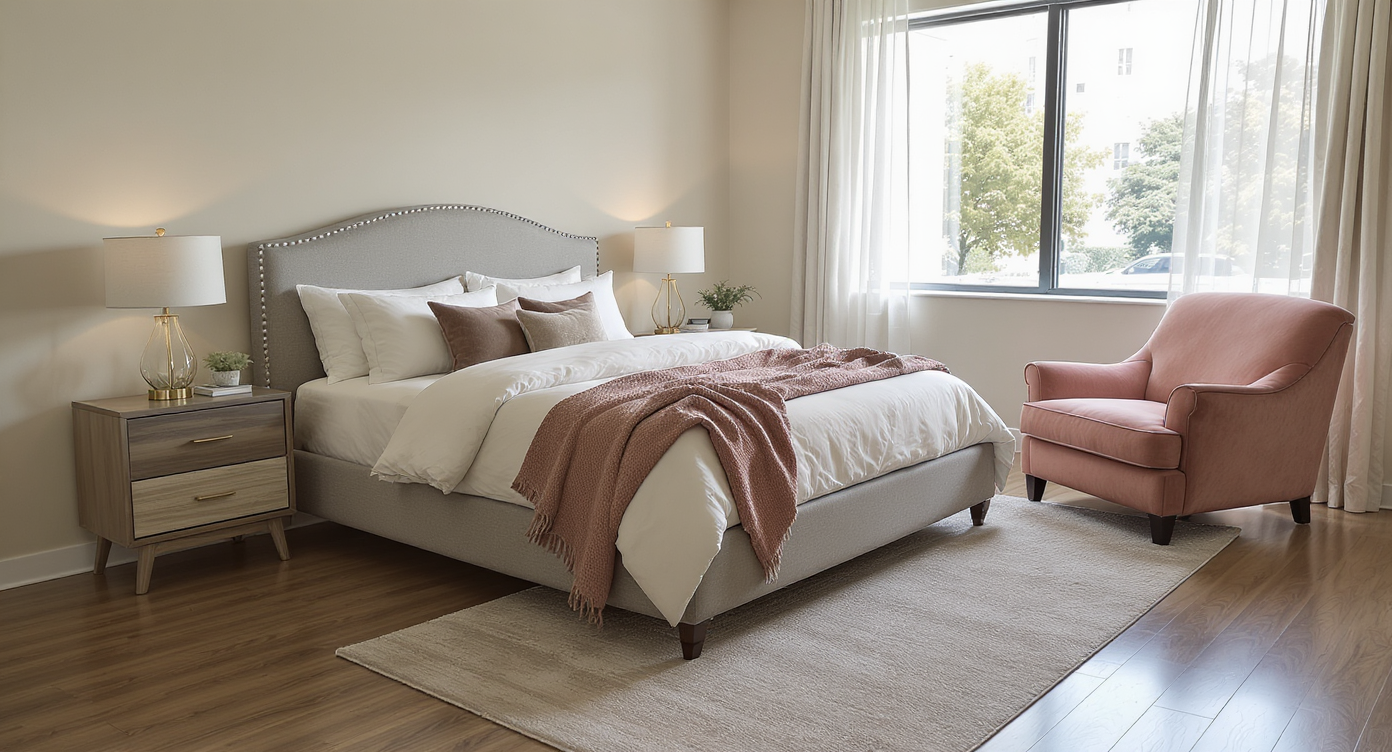
Why layout, scale, and a single wrong furniture piece often define interior design dilemmas.
Most designers recommend keeping at least 24 inches of clearance on bed sides and 30–36 inches along the primary path from door to window. When a room feels “off,” it’s usually because one oversized piece or a crowded path forces everything else to fight for attention. In maximalist bedrooms that means: fabric too close to lighting, rugs that are too small, or a collection spread so widely it becomes visual static.
Start with the bed. If you can’t maintain a 24–30-inch walkway, rotate the frame or swap a bulky headboard for a slimmer one. Next, look up. Ceiling textiles can be magical at night, but they should never drape over light fixtures or block smoke detectors. Keep fabric no closer than 18 inches to bulbs, use cool-running LED bulbs, and avoid trapping heat around fixtures. Finally, map a single, satisfying focal wall — for example, a tight grid of shelves for a beloved collection — so the eye can rest and the rest of the room can breathe.
Natural light is precious in cozy, layered spaces. Keep leafy plants just off the glass so you can still draw curtains, and make sure a desk or pet habitat doesn’t block the only clear path to daylight.
For more layout specifics sized to compact rooms, see this small-bedroom layout guide; it covers bed sizes, traffic lanes, and clever storage that preserve flow in tight footprints.
Anecdote
That corner where the desk “kind of fits” until you realize you’ve shaved the walkway down to 18 inches? That’s usually the moment a room starts feeling chaotic instead of cozy.
Furniture Rules That Quietly Solve Most Room Problems
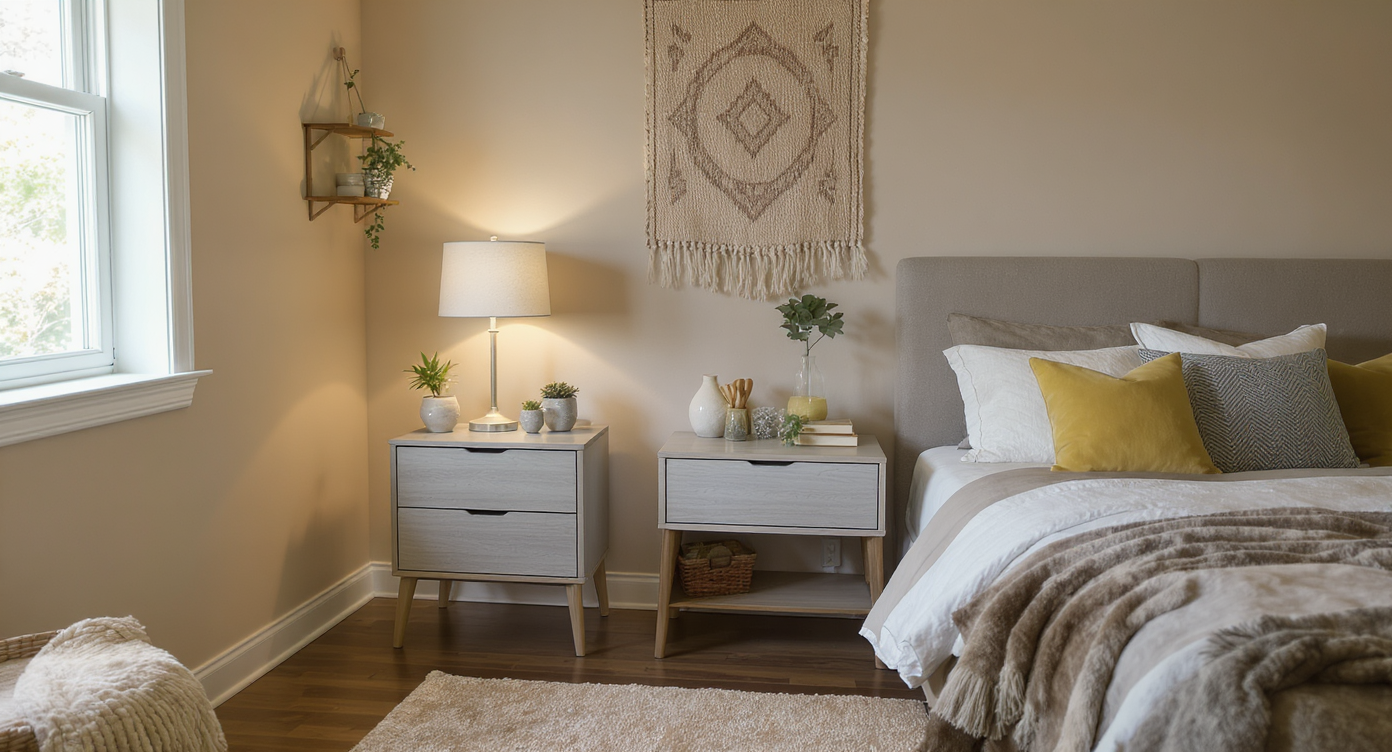
Furniture alignment and balance quietly solve common room design challenges for comfort and flow.
Nightstands work best when they’re within ±2 inches of your mattress height; that alignment keeps lamps usable and spills less likely.
- Walkways: 24–30 inches is the sweet spot around the bed; 30–36 inches if it’s the only route to a door or window.
- Rug sizing: Under a full/queen, an 8×10 often beats a 5×7; slide the rug 2/3 under the bed so your feet land on softness.
- Lamps and fabric: Maintain at least 18 inches between any textile and bulb; pick cool LED bulbs and avoid enclosed fabric canopies over heat sources.
- Surface heights: Desk chairs or stools should allow 10–12 inches from seat to underside of desktop for knees to clear comfortably.
- Storage depth: Wall shelves at 10–12 inches deep fit books and collectibles without overwhelming narrow rooms.
- Plants and vents: Give 6–12 inches clearance from radiators and supply vents so leaves don’t scorch and airflow stays healthy.
Input these dimensions into a visual test. With ReimagineHome.ai, you can upload one photo and ask the AI to try a safer ceiling treatment, resize the rug, or consolidate a collection onto a single shelf wall — then compare side by side. If you want more sizing rules and sample floor plans, skim this guide to virtual staging and layout planning before you commit.
How ReimagineHome.ai Helps You Test Layouts, Styles, and DIY Ideas

ReimagineHome.ai helps visualize and test bedroom layouts and styles before any physical changes.
AI tools can generate multiple layout and style variations from a single room photo in minutes, reducing risk before you drill, shop, or rearrange heavy furniture.
With ReimagineHome.ai you can:
- Run an AI interior design from photo: Upload your bedroom as-is and request “maximalist boho, keep plants, safer ceiling, one focal display.” You’ll get instant alternates.
- Visualize furniture layout: Ask for a bed rotation to restore 30–36-inch traffic, or swap to a slimmer desk and see the path reopen.
- Test paint and finishes: Try a deeper wall color behind your collection so lighter shelves pop, or preview a darker rug to ground bright textiles.
- Explore global styles: Iterate through 70s boho, Whimsygoth, Scandi-with-color, or Japandi-maximal to find your sweet spot.
- Stage storage: See a glass-front cabinet for collectibles (less dust) versus open shelving (more tactile), and pick what fits your habits.
If you’d like a walkthrough of photo-to-room workflows, this explainer — a deep-dive on AI room makeovers from one photo — shows prompts that work well for small spaces and renters.
Step-by-Step: Fixing This Room Using AI and Simple DIY Changes
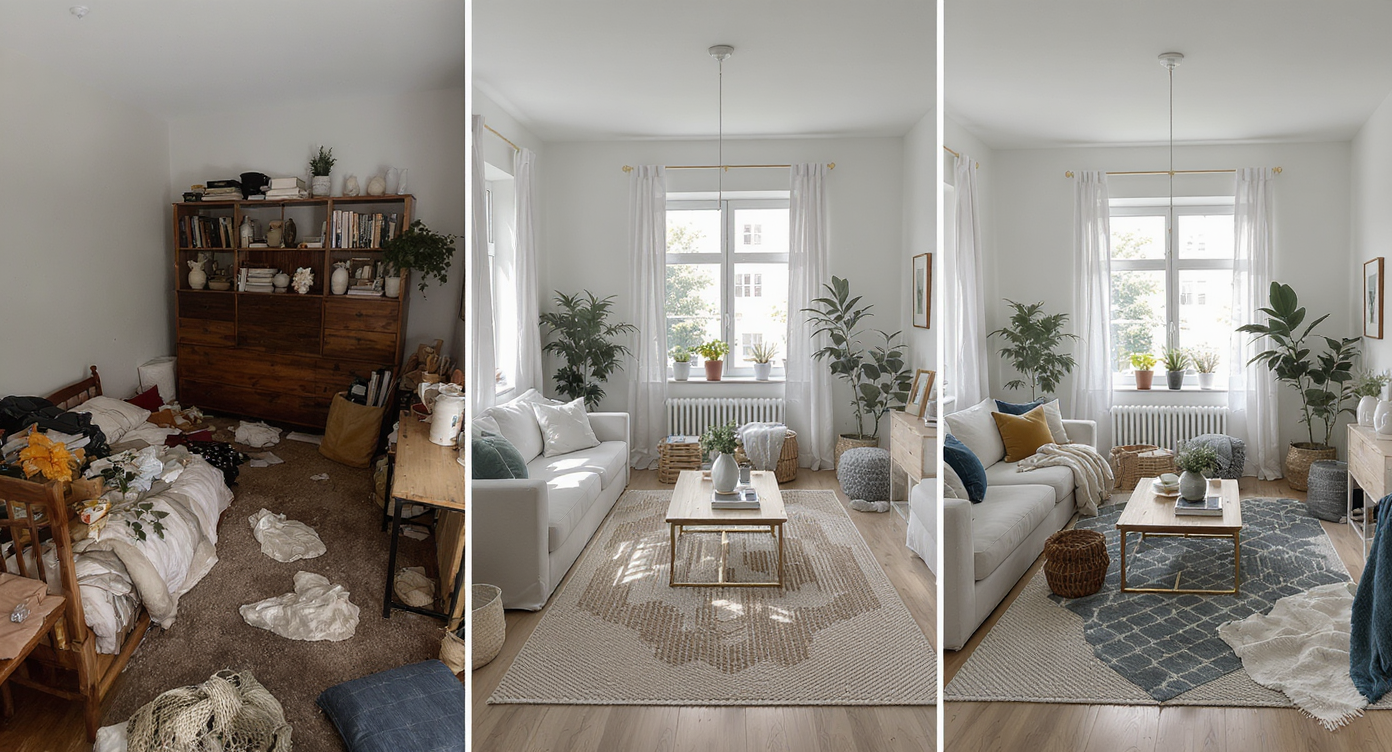
Transforming a maximalist bedroom with AI insight and simple DIY steps for safer, smarter design.
Most designers suggest establishing the main path first; if you can’t get 30 inches from door to bed, change placement before anything else.
- Measure and mark: Tape a 30-inch path from door to window and door to bed. If tape crosses furniture, that piece needs to move or slim down.
- Safety-first textiles: Swap any hot bulbs for cool LEDs and ensure at least 18 inches between fabric and light. If you love a canopy look, use a perimeter track that keeps fabric away from fixtures and detectors.
- Upload to AI: Take a straight-on photo and ask ReimagineHome.ai to: consolidate collection on a single wall, ground the palette with a darker rug, and reduce ceiling fabric density by 30%.
- Pick the best concept: Choose the render that preserves your personality but restores clearances. Save 2–3 favorites.
- DIY storage wall: Install a grid of 10–12 inch–deep shelves or a glass-front cabinet for smaller items. Leave 2–3 inches between groupings so it reads curated, not cluttered.
- Dust control: Put textiles on a two-month wash cycle; vacuum them weekly with a soft brush attachment. Consider a small air purifier sized to your room’s square footage.
- Lighting layer: Add a dimmable lamp at 26–30 inches high on the nightstand; aim for a warm 2700–3000K bulb for cozy color without heat.
- Rug reset: If your rug is undersized, try an 8×10 slid under the front 2/3 of the bed to visually anchor everything.
- Plant and pet zones: Cluster plants near light but off the main path; position pet habitats where noise and drafts are minimal and airflow is steady.
- Style balance: If you worry the room leans “too girly,” balance florals with wood, iron, denim, or solid dark textiles. Repeat each material at least twice for harmony.
Many of these moves align with the bedroom blueprints in our small-bedroom layout companion, useful if you’re optimizing a modest footprint.
Visualization Scenario
Upload a straight-on photo of your current bedroom to ReimagineHome.ai; ask for: “Maximalist boho, safer ceiling (no fabric near lights), consolidate collection on one wall, darker rug to ground color, keep plants, maintain 30-inch path.” Compare three variations and pick the one that restores flow without losing personality.
FAQ
How do I hang tapestries safely in a bedroom?
Keep fabric at least 18 inches from any bulb or heat source, use cool LED bulbs, and don’t cover smoke detectors or vents. A perimeter track or spaced ceiling hooks can create drape without trapping heat.
Which AI interior design tool is best for small, maximalist rooms?
For photo-to-room redesigns, ReimagineHome.ai is strong: it visualizes layout, paint, and storage changes from a single image and works well for renters and small spaces.
How can I see if a new rug or bed size will fit before I buy?
Measure for 24–30-inch walkways and test scale in a render. Upload your photo to ReimagineHome.ai and ask for a larger rug or different bed size; compare side-by-side to confirm fit.
Can I use AI to plan DIY storage or paint projects?
Yes. Generate options for shelf walls, glass-front cabinets, or accent colors, then follow the concept you like. For workflow ideas, see this AI room makeover walkthrough.
What’s the easiest way to display a big collection without clutter?
Centralize it on one focal wall using 10–12 inch–deep shelves or a cabinet, keep 2–3 inches between groupings, and repeat one grounding color behind it so the display reads intentional.
Visualize Your Room’s Next Chapter
Good maximalism tells a story. You can honor the joy of tapestries, plants, and a treasured collection — while giving yourself safe clearances, easier cleaning, and a layout that feels grown, not crowded. When you can see the options, it’s easier to choose with confidence.
Start by uploading one honest photo to ReimagineHome.ai and let the next version of your room come into focus.