12 Home Staging Strategies to Sell Faster in 2026: Practical Corrections for Every Room
TL;DR
Sell your home faster in 2026 by depersonalizing, assigning function to every space, using neutral warm colors, maximizing natural light, and previewing layouts with virtual staging. These 12 strategies combine proven real estate logic and the latest AI-powered tools.
Staging for Speed and Results in 2026
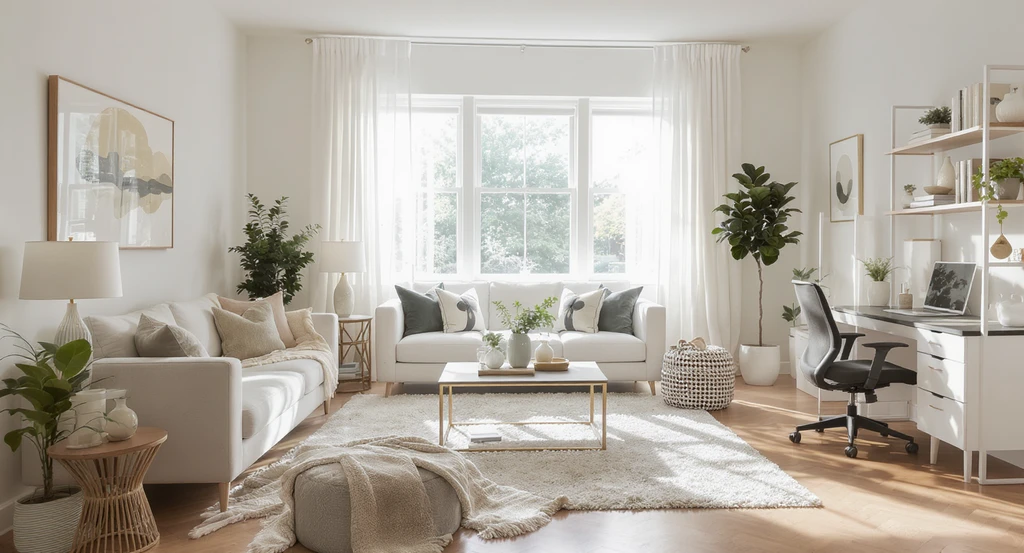
Modern home staged with proven strategies for faster sales in 2026, featuring a virtual staging vs physical staging comparison, best lighting for listing photos, and a home office setup.
If you’re preparing to sell your home this year, the simple answer is this: careful staging with clear, buyer-focused logic is now essential. The right layout, color, and staging style can shorten your time on market by weeks, and you don’t have to spend thousands to do it. In 2026, successful sellers combine classic staging principles with new AI-powered strategies to avoid expensive mistakes and improve buyer appeal before making any physical changes.
The 12 strategies below focus on what to check, what to fix, and practical steps you can preview virtually, helping you plan your staging for faster, more confident sales results.
-
01. Avoid Personalization: Make First Impressions Buyer-Focused
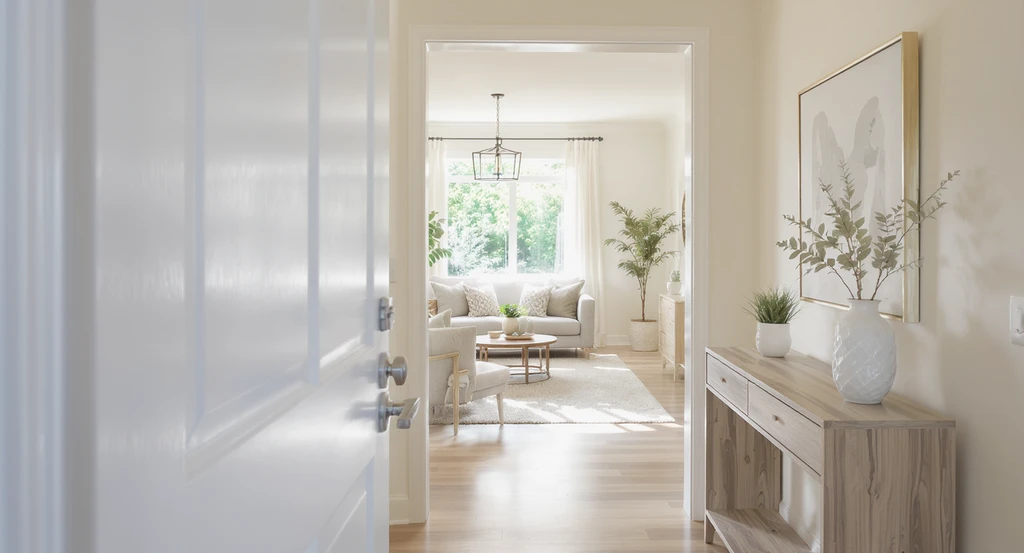
Depersonalized home entryway staging using neutral colors, minimal decor, and uncluttered sightlines—core strategies to sell faster with best lighting tips for real estate photos in 2026.
Staging for your own taste often leads to rooms filled with personal artifacts, bold statements, or hobby decor, these instantly limit buyer imagination and lower engagement. Over-personalization overwhelms visitors and distracts from the home’s true potential.
The fix is neutral depersonalization. Remove all family photos, certificates, and themed decor, then add a minimal layer of warmth, such as one plant or a neutral art print. The entryway must be clear of shoes and bags, with a welcoming but generic sightline into the living area. This approach lines up with data outlined in our guide on why neutral interiors help sell faster, confirming that a blank but inviting canvas is far more effective.
- Remove personal effects and niche decor from all visible areas.
- Use simple, soft textures and a restricted palette to suggest comfort, not ownership.
- Prioritize unobstructed entry and living space sightlines.
-
02. Select Camera-Ready Neutral Paint Colors
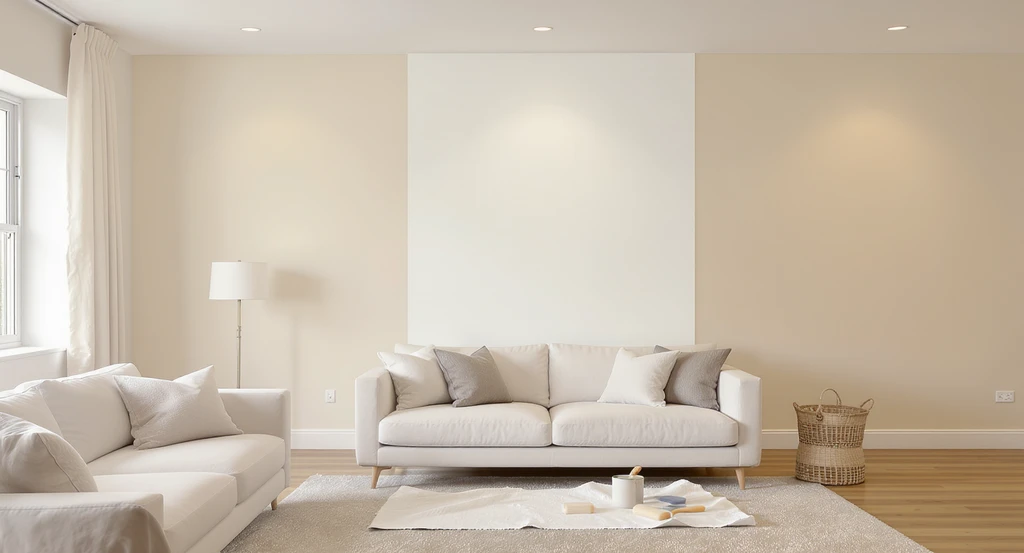
Previewing neutral paint color options under natural and artificial lighting is key for home staging strategies to sell faster. This side-by-side test shows how greige, warm white, and soft taupe shades create an inviting, photo-ready atmosphere.
Poor or polarizing color choices make rooms photograph smaller and less appealing, particularly under harsh listing photo lighting. Stark whites read cold, and saturated hues can make spaces look smaller or niche.
To correct this, use greige, warm white, or soft taupe on all main walls. These shades reflect natural and artificial light evenly, making rooms appear larger and more open in photos. As outlined in our warm neutrals guide, soft, inviting tones are proven to create emotional comfort and invite buyer connection. Always test candidate paints in daylight and your interior lighting before choosing. Previewing several color options virtually prevents costly mistakes and reveals which tones perform best under real-life photo conditions.
- Sample at least three shades in both lighting conditions.
- Use AI virtual staging to preview and compare before buying paint.
-
03. Define Every Room’s Purpose Visually
Leaving bonus rooms, lofts, or nooks empty, or full of storage, forces buyers to mentally subtract value or feel lost. Undefined rooms disrupt the home’s logical flow and reduce perceived overall function.
Assign each room a clear role. Spare rooms should visually read as a guest suite, office, or relaxation area, not ambiguous storage. For awkward spaces, arrange a simple reading nook, compact workspace, or workout zone. AI virtual staging is especially useful here, preview the addition of furniture, lighting, and decor to show buyers the full potential without a physical investment.
- Label every substantial floor area with an obvious function.
- Virtually stage vacant spaces to demonstrate flexibility and use.
-
04. Stage Home Office and Wellness Spaces, Even in Small Nooks
Buyers in 2026 actively search for remote work or wellness zones. Failing to stage these, even if only in a bedroom corner, means buyers miss one of the most valued functions for today’s lifestyle.
Dedicate any under-used area to a clear, minimal setup: desk, task lamp, ergonomic chair, and a plant for an office; yoga mat, shelf, and natural light for a wellness zone. According to our review of 2026's most requested staging preferences, adaptability and defined secondary spaces outscore traditional minimalism. Stage these visually for listing photos, regardless of how the space will be lived in day-to-day.
-
05. Maximize and Balance Natural Light Before Listing Photos
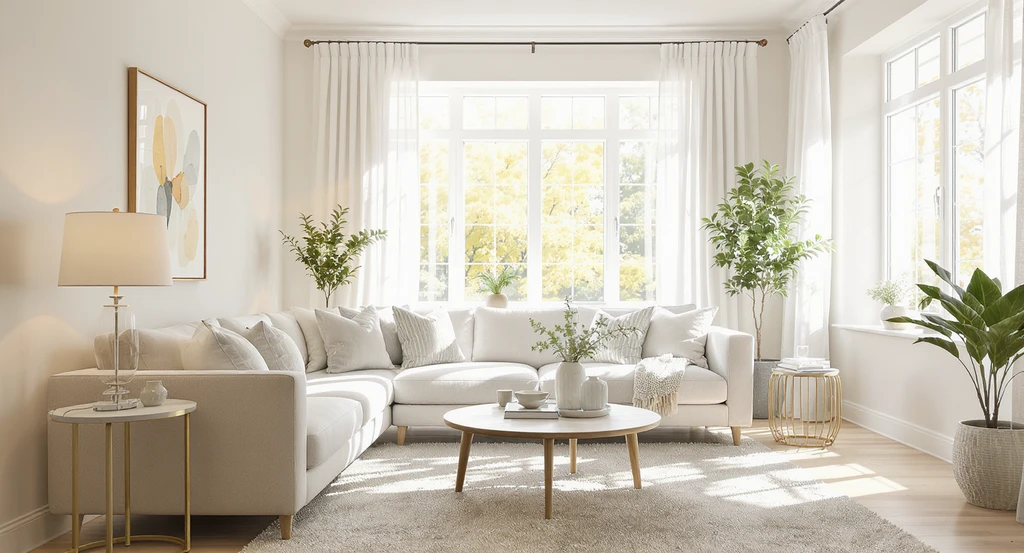
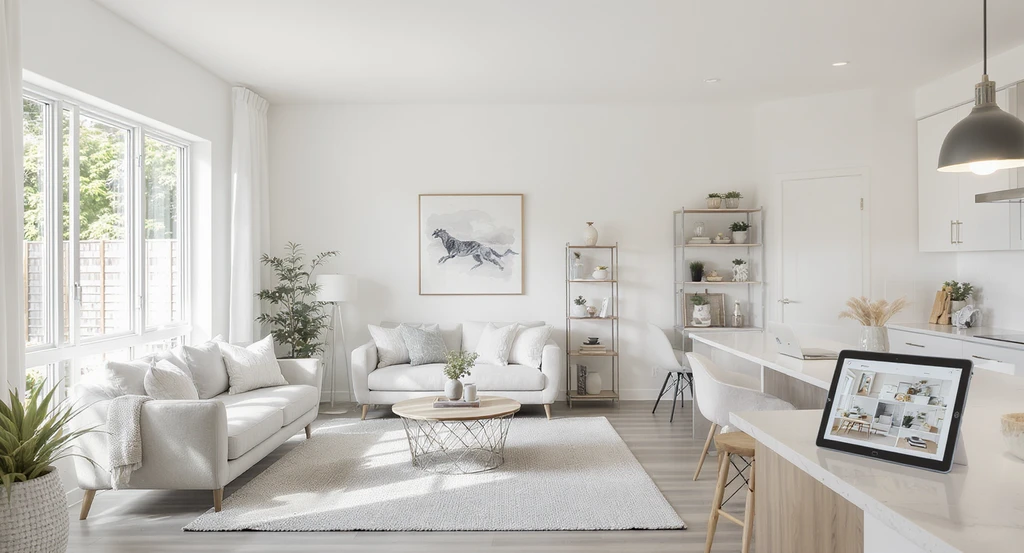
Balanced natural light, clean windows, and unified warm white bulbs are top home staging strategies to sell faster. Applying best lighting tips for real estate photos, shown here, helps create inviting spaces—critical for a faster sale in 2026.
Dark or unevenly lit rooms are the most common source of poor listing photos. Unmatched bulb temperatures, dirty windows, or blocked light sources make even well-staged rooms look uninviting.
Correct this by matching all bulbs to warm white (2700–3000K), removing heavy drapes, and thoroughly cleaning windows, both inside and out. Use lamps to fill deeper shadows in north-facing or window-limited areas. Schedule photography when sunlight is most balanced for your specific windows, typically late morning to early afternoon. Previewing your staged space at different times of day helps identify and correct shadow or glare issues before photos are taken.
- Match all lighting hardware to warm white (2700–3000K).
- Remove or replace heavy window treatments with light-filtering ones.
- Fill shadows using additional floor or table lamps as needed.
-
06. Plan Furniture Placement for Flow and Balance
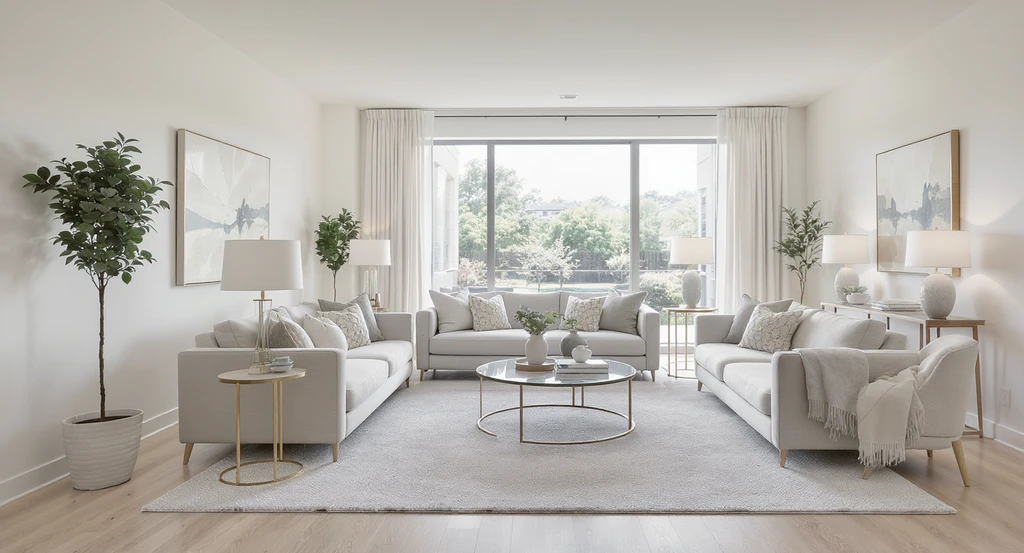
Floating furniture off walls with clear walkways and open sightlines is among the best home staging strategies to sell faster and maximize room appeal.
Oversized furniture and wall-to-wall placement constrict walking paths and block featured views. The result is a cramped, awkward flow that lowers both photogenic appeal and functional clarity.
Float furniture off the walls and maintain at least 30–36 inches of clear walking path through all rooms. Prioritize open sightlines toward windows or architectural features. Before moving or renting furniture, use AI staging to preview two or three layout options, what feels logical in person may look unbalanced or cramped from a camera's perspective, and previewing helps avoid unnecessary heavy lifting or costly moves.
- Float sofas, chairs, or tables with at least one walkway of 30–36 inches.
- Align layouts to highlight natural light and exterior views, not just wall space.
- Try AI staging layouts to solve flow issues visually before making changes.
-
07. Apply Minimal, Cohesive Kitchen Staging, Skip Costly Remodels
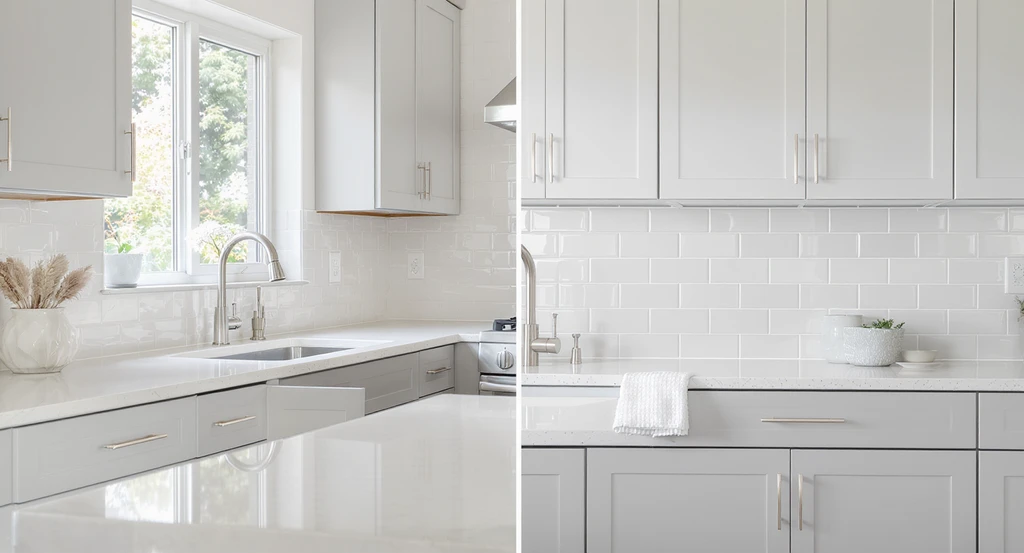
Minimal kitchen staging with AI virtual staging preview demonstrates high-ROI home staging strategies to sell faster. See a clear virtual staging vs physical staging comparison with cost-effective updates perfect for 2026 homes.
Excess countertop items and mixed accessory colors quickly make kitchens seem cluttered or dated. Major remodels rarely return maximal value, while focused visual updates and decluttering give high ROI.
Clear all countertops of small appliances and decor. Update dated hardware if older than 10 years and consider painting cabinets in a neutral color for a modern look. Use AI virtual staging to preview changes such as new backsplash, hardware, or countertop style before committing to physical updates. This ensures your investment aligns with what photographs best, and avoids over-improving for your target market.
-
08. Stage Bathrooms for a Hotel-Like Clean and Calm
Personal bath products or excessive accessories clutter photos and erode the fresh feel needed to secure offers. Buyers want a sense of newness and easy maintenance, not reminders of previous owners.
Clear every surface, hide all personal hygiene items, and use just two rolled white towels and a single simple accessory per bathroom. Replace worn mats or curtains with clean, neutral-colored alternatives. Previewing a new vanity, mirror, or tile in a virtual staging tool helps you decide which upgrades are worth doing in real life.
- Surfaces 100% clear except for minimal white towels and a plant or candle.
- Neutrals for all fabrics and finishes, no bold bathroom color schemes.
-
09. Use Layered Texture and Natural Décor, Minimal Accessories
Over-accessorizing after depersonalizing creates new visual clutter. Too many objects distract from layout and scale, especially on camera. The correct approach is layered texture, minimal objects.
Focus on a variety of materials (linen, wool, wood, woven baskets) while keeping 80% of all surfaces clear. Include one medium plant per room for biophilic appeal. This principle is more effective than filling shelves or tables with generic vases or statues, and aligns with the current buyer-sensitive biophilic preferences suggested in industry data.
-
10. Preview and Correct with Virtual Staging Tools
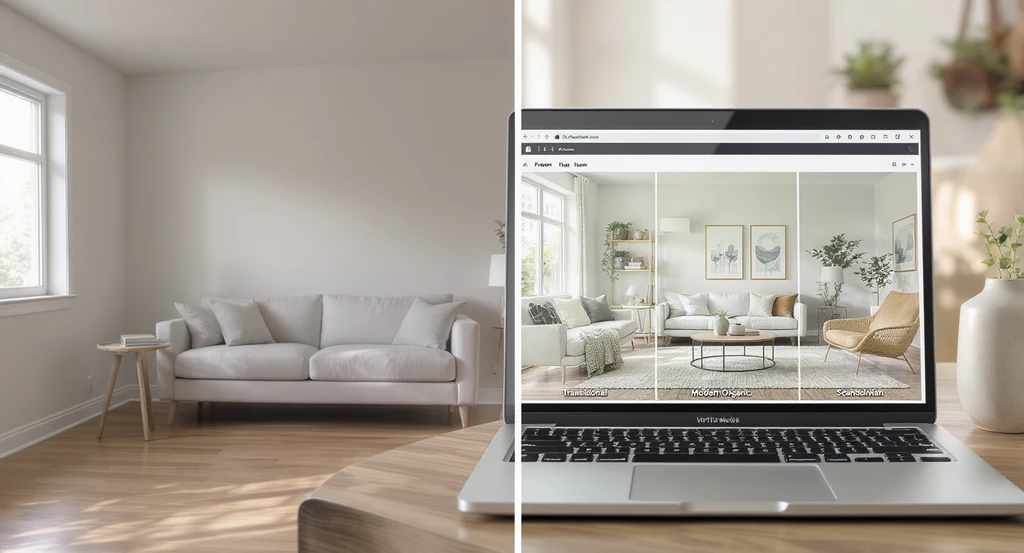
Compare home staging strategies to sell faster by previewing virtually staged rooms in multiple styles. See the practical benefits of virtual staging vs physical staging, best lighting tips for real estate photos, and cost breakdowns for 2026 listings.
Guessing how furniture scale, wall color, or layout changes will look in photos is one of the most expensive mistakes in home staging. In 2026, AI-powered virtual staging is no longer optional for sellers wanting the highest ROI, it provides quick, accurate previews, fixes clarity before physical changes, and corrects issues like empty rooms or furniture mismatch at minimal cost.
Upload images of empty or occupied rooms to generate photorealistic staged options that you and your agent can review. Compare multiple staging styles (Transitional, Modern Organic, Scandinavian) to see which looks best for your listing, a key advantage depicted in our resource on the practical benefits of virtual staging. Previewing options before committing to physical purchases prevents wasted budget and improves consistency and buyer fit across every room.
-
11. Stage for the Camera, Not Just for Showings
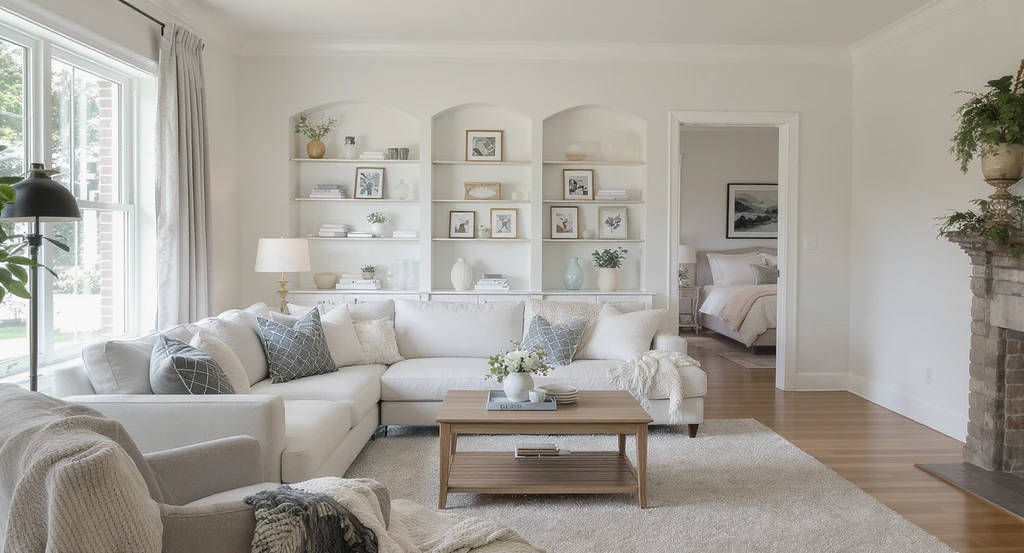
Camera-focused home staging strategies ensure rugs, pillows, and decor are precisely aligned for real estate photos, helping homes sell faster in 2026.
Subtle design issues invisible in person, off-center rugs, crooked pillows, mismatched accessories, are often glaring in listing photos. Many sellers stage for walkthrough appeal but neglect how rooms appear from the main listing photo angles, costing valuable buyer interest.
Execute a camera-focused staging checklist: center and straighten all rugs and artwork, remove visible cables or bins, open all interior doors, ensure beds look plush with extra pillows, and wipe reflective surfaces to prevent glare or photographing the photographer. Work room by room just before the listing photo shoot to catch alignment, lighting, and balance issues in the camera perspective.
-
12. Make a Staging Plan and Preview Full-Home Consistency
Buying decor or staging each room piecemeal, without previewing the collective effect, leads to visual inconsistency and a confusing listing. Connected sightlines, where adjacent rooms are visible, often highlight style or color mismatches even more than isolated rooms.
Photograph the entire property 'as is' and use virtual staging tools to apply a consistent style and palette across every room. Share these previews with your agent to align on the best approach before buying any new pieces. Cross-check every purchase against the approved staging plan to avoid budget waste and maintain continuity. These steps hold especially true for open floor plans and homes with multi-angle listing photos.
Frequently Asked Home Staging Questions (2026)
- Does virtual staging actually help sell homes faster?
- Yes. According to industry data, virtually staged homes sell significantly faster and receive more inquiries. Photorealistic, multi-view AI staging sessions—instead of just one or two static images—improve buyer confidence and can reduce time on market by up to 11 days, as shown in recent case studies. Learn more in our practical guide to virtual staging in real estate.
- How much does AI virtual staging cost compared to traditional staging?
- Traditional staging often costs $1,500–$5,000 for a full home, while AI virtual staging is $20–$150 per room, with no rental fees. For most sellers, the ROI strongly favors AI previews, especially for listing photos.
- Which rooms matter most for staging?
- Staging should focus first on the main living area, primary bedroom, kitchen, primary bathroom, and entry—these make the biggest first impression in online listings.
- What common mistakes delay home sales?
- Leaving rooms undefined, using polarizing or personal decor, and staging for showings but not the camera are frequent errors. Consistency and clarity throughout the home are key.
- Is virtual staging worth it for occupied homes?
- Yes. AI overlay can preview color, furniture, and style changes digitally, making it easy to test options before spending or moving anything physically. It's especially helpful for optimizing occupied homes for listing photos.
Key Takeaways for 2026 Home Staging Success
Modern home staging in 2026 demands planning, neutral-focused color choices, and the avoidance of both over-staging and under-defining spaces. Leverage AI-powered virtual previews to clarify layout, lighting, and color decisions before any money is spent. Focus on function, flow, and photo-readiness in every room, and above all, stage for buyers and the camera, not for personal taste. Consistency, clarity, and buyer-focused adaptations drive faster sales and better offers in every market.