9 Ways Virtual Staging Helps Your Home Sell Faster
TL;DR
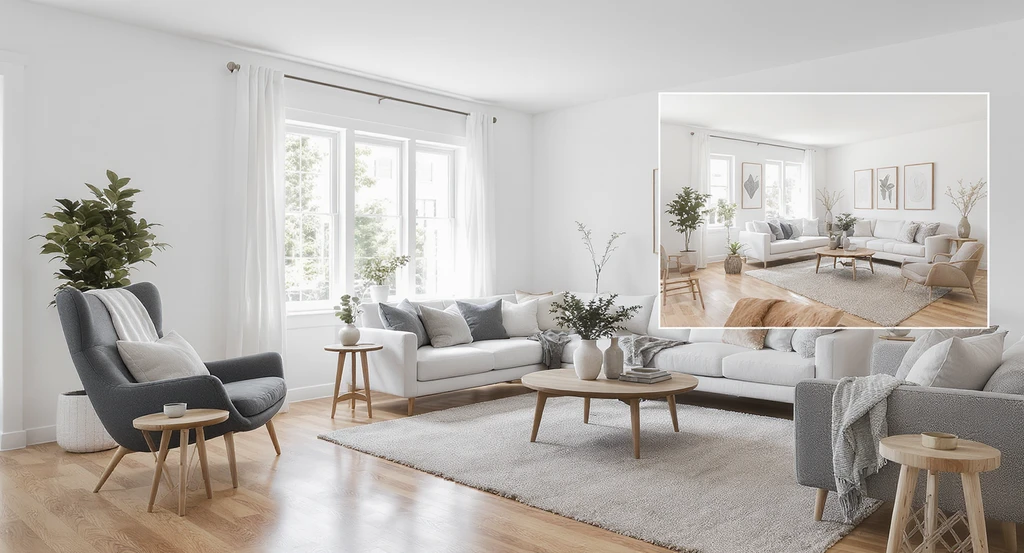
Virtual staging improves perceived value and online appeal, driving more buyer interest and potentially quicker sales, but only when done honestly and accurately. Avoiding misleading edits, labeling photos transparently, and using staging for clarity, rather than deception, makes all the difference.
If You’re Debating Staging vs Empty Room Photos, Here’s What Actually Works
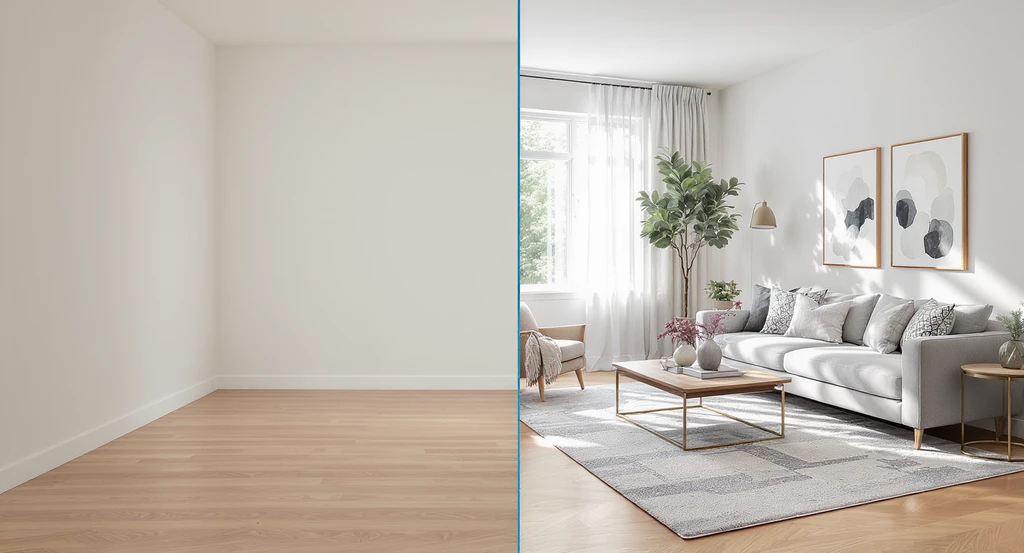
Does virtual staging sell homes faster? This side-by-side living room illustrates the benefits of AI virtual staging for realtors, shows the difference between virtual vs physical staging in real estate, and highlights the risks of misleading virtual home staging. See how AI visualization tools can enhance home sales while building buyer trust.
If you’re confused about whether real or virtually staged photos help homes sell faster, the answer is practical: virtual staging can increase interest, but only if it’s used correctly and transparently. Many buyers need visual context to understand room size and use, so showing both empty and staged photos is often best. However, avoid misleading edits and always label digitally modified images, today’s buyers are quick to spot artificial enhancements and may lose trust if they feel misled.
In this guide, I’ll address what works (and what doesn’t), why empty and staged photos serve different buyers, and the must-follow rules to make virtual staging a true asset instead of a risk. We’ll also cover key layout, scaling, and visual accuracy tips.-
01. Overestimating the Impact: Virtual Staging Doesn’t Change Appraisal Value
The main misconception is that virtual staging makes a home "worth more." In reality, it doesn’t affect the formal appraisal value, which depends on physical features, comps, and location. However, it does enhance a home's perceived value. Staging helps buyers see potential, leading to stronger interest and possibly faster offers. Use it to improve presentation, not disguise flaws. As highlighted in our explanation on what to consider before choosing virtual staging tools, clarity and honesty are critical to results.
-
02. Empty Rooms Are Harder for Buyers to Understand
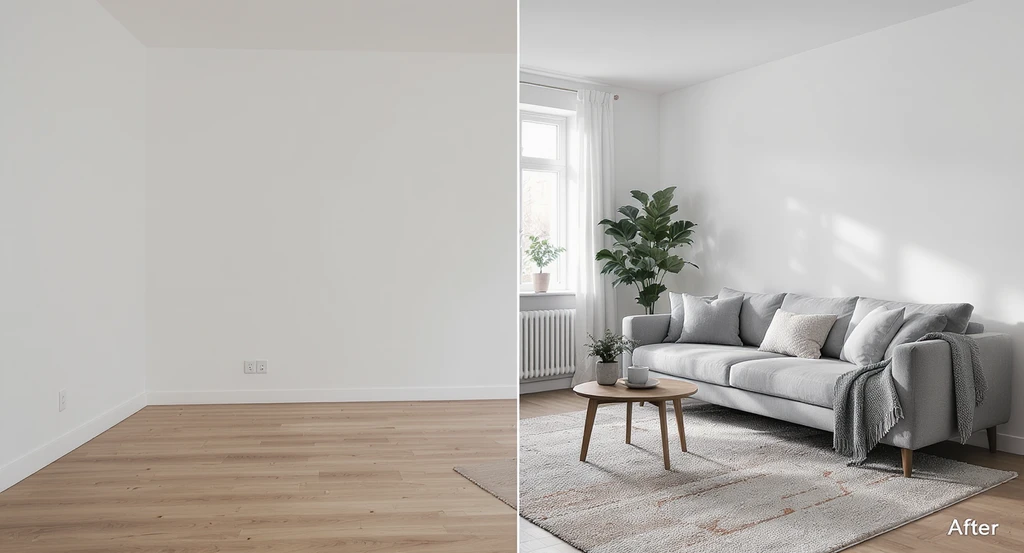
Does virtual staging sell homes faster? This split-room visual demonstrates how AI visualization tools and virtual vs physical staging in real estate help home buyers accurately judge size and the potential of empty rooms, enhancing home sales effectiveness.
Many buyers can’t accurately judge size or imagine how furniture will fit in bare spaces. This often results in rooms feeling smaller and less inviting. Virtual staging creates clear visual anchors, sofa sizes, bed placement, and table dimensions, that help buyers understand true scale and use. Without these reference points, buyers sometimes underestimate the property’s potential, skipping showings. Instead, strategically staged photos with known furniture sizes establish a clear sense of proportion, even in listings for small or awkwardly-shaped rooms.
-
03. Failing to Disclose: Why Transparency Always Wins
A common mistake is leaving buyers in the dark about which images are virtually staged. Lack of clear labeling causes mistrust, as buyers may expect the home to look like the staged photos in-person. When they visit and see empty rooms, disappointment can outweigh the online excitement that drew them in. Always disclose any virtual edits in listing captions or watermarks. This practice, as explored in our review of DIY virtual staging AI for listings, builds trust and maintains compliance with MLS regulations.
-
04. Skipping Empty Room Views: Why Both Photo Types Matter
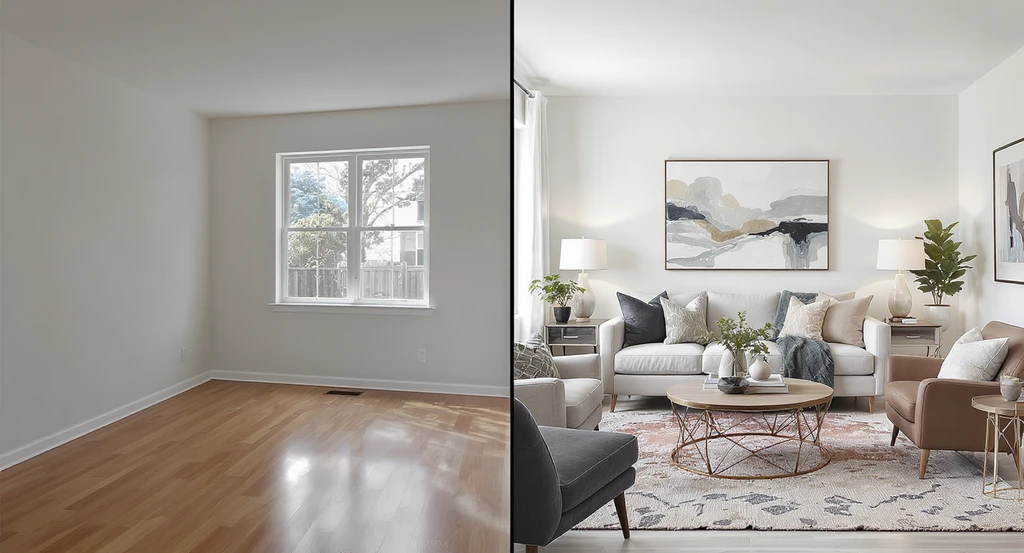
Comparing vacant and virtually staged rooms shows how ai visualization tools enhance home sales while helping buyers verify features and avoid misleading virtual home staging.
Only showing staged photos can exclude buyers who prefer to see the space as-is. Some want to plan their own layouts or verify room features without distractions. Including both vacant and staged images in your listing serves all buyer types, those who need visualization and those who value unaltered space. This dual approach avoids the frustration reported in community discussions, where buyers feel misled if reality doesn’t match the photos.
-
05. Using Unrealistic or Poorly Scaled Furnishings
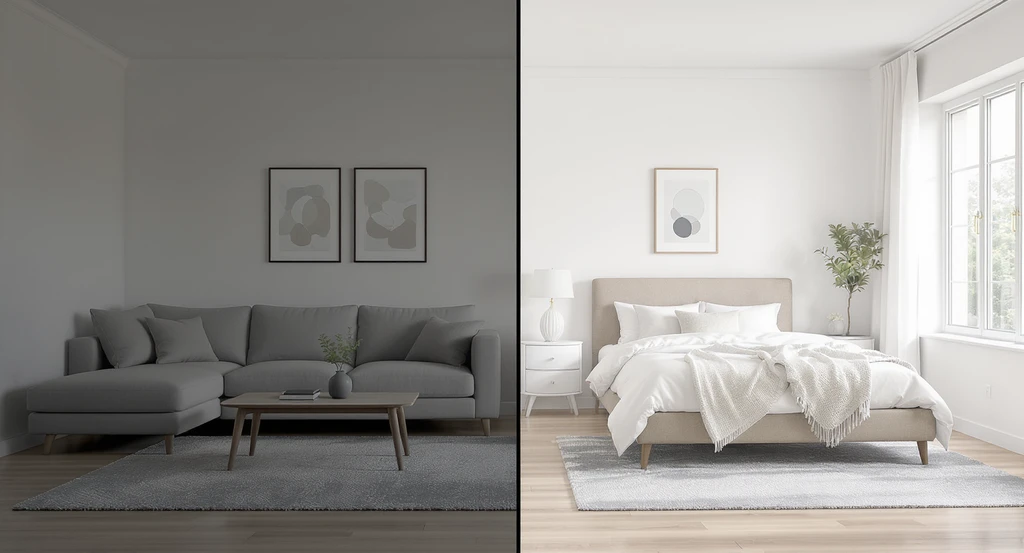
Accurate virtual staging with realistic furniture dimensions—such as an 84-inch sofa and properly placed queen bed—prevents buyer distrust. Showcasing the benefits of ai virtual staging for realtors, this comparison highlights how ai visualization tools enhance home sales while underlining the risks of misleading virtual home staging.
When virtual staging places furniture that is noticeably undersized (to make rooms seem bigger) or doesn’t follow realistic proportions, buyers quickly pick up on the inconsistency. This reflects badly on the listing and can create a sense of deception. Stick to furniture dimensions that would actually fit, such as an 84" sofa in a standard living room or a queen bed centered with walking clearance. Previewing layouts using accurate AI features can prevent scaling errors. REimagineHome AI allows you to visualize realistic furniture placement and check for proper alignment, so buyers trust the visuals presented.
-
06. Unrealistic Lighting Makes Staging Look Fake
If staged furniture appears with impossible lighting or shadows (e.g., a lamp with no reflection, or a sofa in direct sunlight but no shadow below), the result looks inauthentic. Poorly integrated lighting can make even professional furniture overlays stand out as fake. Always adjust virtual staging to match the room’s real light sources, ensuring brightness and shadow direction are consistent with the original photo. This extra step prevents visual discomfort and supports buyer trust.
-
07. Overusing Decor or Distracting Styles
Another frequent virtual staging mistake is filling the space with trendy, high-end decor that clashes with the property type or target buyer. Extravagant styles can feel out-of-place and distract buyers from the home itself. Opt for neutral, functional layouts and keep decor simple. The goal is to clarify room use, not to showcase unrealistic aspirations. As seen in many real estate photo critiques, including our breakdown on the hard truths of real estate photo editing and staging, subtlety yields better results.
-
08. Missing Key Rooms: Where Virtual Staging Has the Most Impact
Prioritize staging in rooms where buyers need the most help envisioning use. Living rooms, primary bedrooms, dining areas, and undefined bonus spaces benefit most from clear, accurate staging. Avoid wasting effort on secondary spaces unless they’re functionally ambiguous. This targeted approach maximizes return and keeps online listings streamlined.
-
09. Ignoring Ethical and Legal Risks
Misleading edits, such as changing finish materials, hiding flaws, or altering window views, run the risk of regulatory trouble and damaged buyer trust. Always stage only what could be achieved with real furnishings; avoid manipulating structure or condition. This principle is echoed in future-forward discussions on AI's role in real estate visualization, where transparency and buyer empowerment remain essential.
FAQ: Honest Answers About Virtual Staging for Home Sales
Does virtual staging always sell homes faster? Not always, but it often improves listing engagement by helping buyers visualize how a vacant space can be used. While virtual staging can contribute to a faster sale, results also depend on pricing, location, market conditions, and the overall quality of the listing.
Is it legal to use virtual staging on MLS listings? Yes. Most MLS platforms allow virtual staging, but they generally require sellers and agents to clearly disclose that images have been digitally modified. Proper disclosure helps maintain transparency and prevents buyer confusion.
Can virtual staging hurt your sale? Yes, if it is used improperly. Unrealistic furniture, misleading edits, or poor-quality staging can damage buyer trust. The best virtual staging is realistic, accurately scaled, and clearly identified as digitally enhanced.
What is the best way to present virtually staged images? A good approach is to include both empty and virtually staged versions of key rooms. This allows buyers to see the home's actual condition while also helping them understand how the space can be furnished and used.
Does virtual staging increase appraisal value? No. Virtual staging does not affect a home's appraised value because appraisals are based on physical characteristics, condition, location, and comparable sales. Its primary benefit is improving marketing appeal and perceived value among potential buyers.
Key Takeaways: Virtual Staging Works, If You Follow the Rules
Virtual staging helps homes sell faster by enhancing perceived value, clarifying space function, and improving online presentation. However, it only works when you respect spatial accuracy, disclose adjustments, and avoid creative overreach. Use staged images to help buyers understand the property, not to mislead them. Combine empty and virtually staged views for maximum appeal across audiences, and always keep trust and realism at the forefront of your marketing.