Why Neutral Interiors Sell Faster: Clear Design Logic for Quicker Results
TL;DR
Neutral interiors consistently sell faster because they reduce visual distractions, appeal to a wider buyer pool, and help buyers instantly imagine themselves in the space. In a digital-first market, clean, lightly styled homes outperform bold or heavily themed interiors by improving decision speed and online engagement. Across industry reports and agent insights, a clear pattern emerges: the easier a space is to visually process, the faster it converts into buyer interest and offers. Neutral interiors in real estate are spaces designed with non-polarizing colors, minimal styling, and clear layouts to reduce cognitive load and help buyers quickly understand and visualize the home.
Why Neutral Interiors Outperform in Real Estate Today
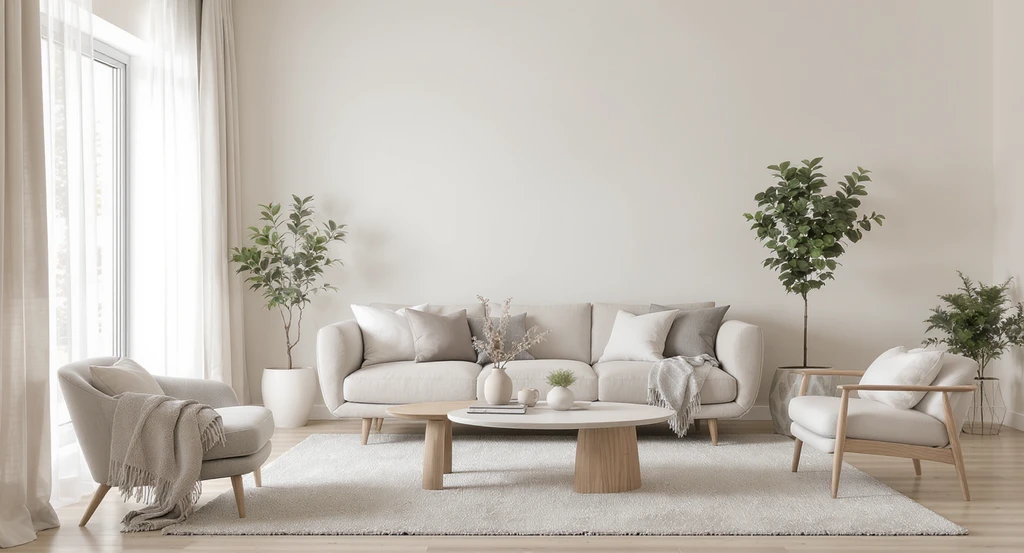
Neutral living rooms with warm whites, beiges, and greiges clearly highlight why neutral interiors sell faster and increase engagement in listing photos.
Neutral interiors outperform because they simplify visual processing, improve visual clarity, and help buyers quickly understand a space, leading to faster decisions and stronger engagement. They act as a blank canvas, allowing buyers to imagine their own lifestyle without distraction. By removing bold or highly personalized design elements, neutral palettes create brighter, more flexible spaces that appeal to a broader audience.
In today’s digital-first market, where buyers rely heavily on listing photos and virtual staging, clarity and simplicity are critical. Clean, neutral interiors consistently outperform decor-heavy spaces because they communicate layout, light, and usability instantly. Neutral interiors in real estate typically use soft, non-polarizing tones, such as warm whites, beiges, and greiges, paired with minimal, functional styling.
This combination maximizes perceived space, improves listing performance, and increases the speed at which buyers can visualize themselves living in the home. According to the National Association of Realtors (2023 Profile of Home Staging), 81% of buyers’ agents said staging makes it easier for buyers to visualize a property as their future home, while Zillow’s Consumer Housing Trends Report indicates that clean, decluttered listings receive higher engagement, including more saves and shares.
| Factor | Neutral Interiors | Bold Interiors |
|---|---|---|
| Buyer Understanding | Instant | Delayed |
| Visual Clarity | High | Low |
| Market Appeal | Broad | Limited |
| Listing Engagement | Higher | Lower |
| Decision Speed | Faster | Slower |
-
The Core Issue: The Imagination Gap and Buyer Hesitation
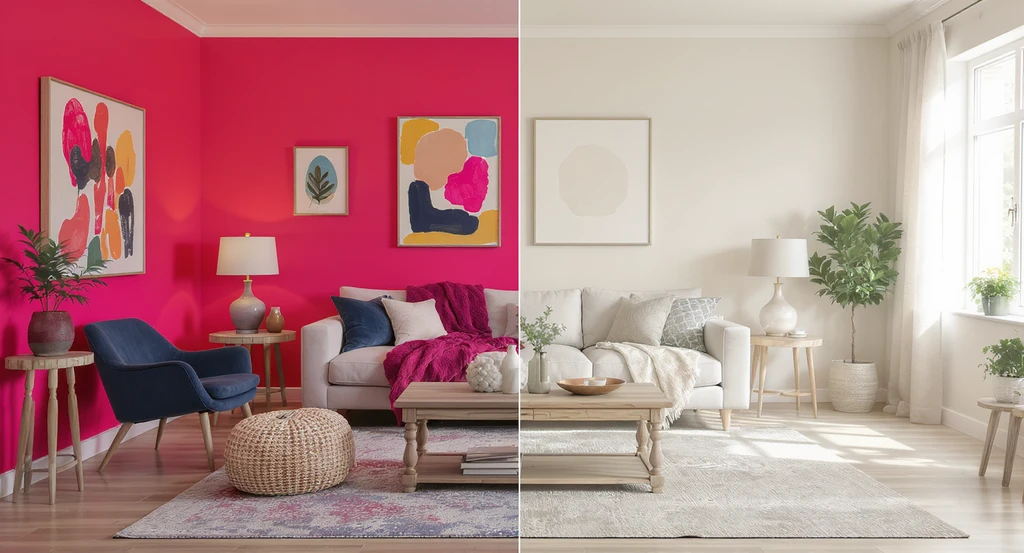
Comparing bold décor versus neutral interiors illustrates why neutral interiors sell faster and highlights the best neutral colors for home staging—showing how neutral decor impacts listing photos and reduces buyer hesitation.
The primary barrier in selling homes is the imagination gap, the difficulty buyers face in visualizing themselves in a space. This can be understood through Visual Decision Speed (VDS), defined as the time it takes for a buyer to process a space, understand its layout, and feel confident enough to move forward. The gap between what buyers see and what they can imagine is a key reason why highly personalized interiors slow down home sales.
Bold or highly personalized interiors force buyers to mentally “undo” the design before imagining their own lifestyle, which delays emotional connection and decision-making. This added layer of interpretation slows down engagement and increases hesitation during the evaluation process.
Neutral interiors eliminate this friction by simplifying visual processing and presenting a clear, readable environment. Buyers can immediately understand layout, light, and function without extra effort. This improves visual decision speed, leading to stronger emotional connection, faster comprehension, and quicker purchasing decisions.
Expert Insight
A seller recently repainted their previously bold living room a soft greige and removed heavy curtains. The listing generated 40% more online interest within a week, and they received multiple offers—demonstrating how a neutral overhaul can transform engagement.
-
Why It Happens: Digital-First Home Shopping and Listing Clarity
Most buyers form an opinion within 3–7 seconds of viewing a listing photo. In this environment, clarity becomes one of the most important performance drivers. Neutral interiors consistently photograph better because they present spaces in a way that is easy to process and immediately understandable.
- Reflect more light
- Reduce visual clutter
- Highlight layout instead of décor
These qualities make spaces easier to understand at a glance, increasing click-through rates, viewing time, and inquiry intent. In contrast, visually complex spaces delay comprehension and increase drop-off. In digital-first real estate, the speed at which a buyer understands a space directly impacts listing performance.
The faster a buyer understands a space, the more likely they are to engage with it. In practice, listings with visually simplified, neutral interiors often see higher click-through rates and faster showing requests compared to visually complex spaces, particularly in the first week of listing exposure.
-
Practical Correction: The Neutral Staging Formula
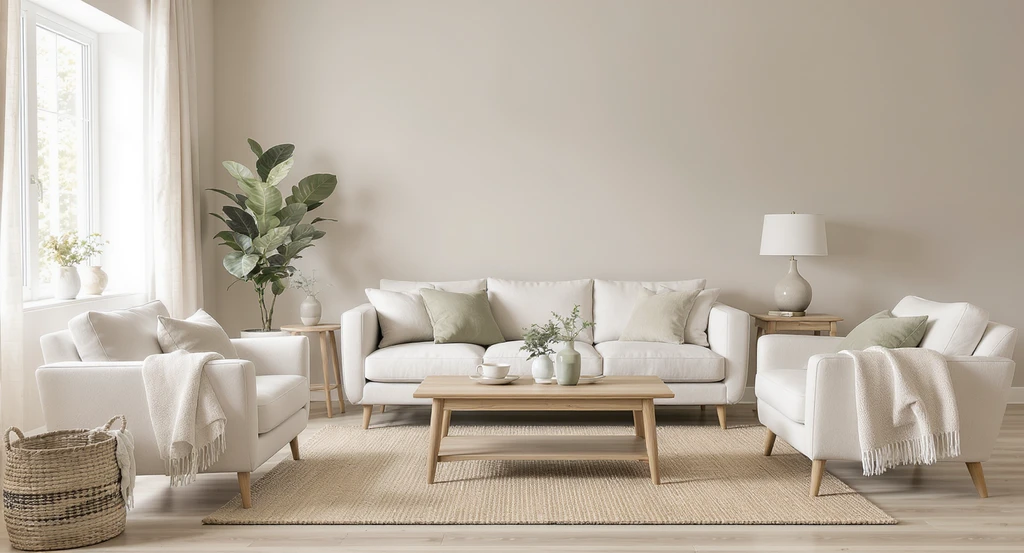
A living room staged with the best neutral colors for home staging illustrates why neutral interiors sell faster—showcasing virtual staging with neutral interiors, reduced buyer hesitation, and balanced accents for clear, appealing listing photos.
The Clarity-First Staging Model™ is based on a simple idea: buyers choose the home that is easiest to understand, not the most decorated. It prioritizes visual clarity, spatial readability, and imagination flexibility, ensuring that spaces are immediately comprehensible and emotionally accessible to a wide range of buyers.
- Visual clarity
- Spatial readability
- Imagination flexibility
A practical way to apply this model is through the 80/20 rule, where the majority of the space remains neutral while a small portion adds warmth and character. Use warm whites, beiges, or greiges for walls, pair them with light wood or soft flooring, and choose clean-lined, neutral furniture to maintain consistency and balance.
- 80% neutral base (walls, floors, large furniture)
- 20% subtle accents (plants, textiles, muted colors)
Add texture through natural materials like linen, wood, and rugs, while keeping accents minimal and non-distracting. Neutral staging does not mean empty, empty homes often feel smaller and harder to interpret. Instead, effective neutral staging adds context, helping buyers understand layout, scale, and function without overwhelming them. The goal is clarity, not emptiness. For a deeper breakdown of layout clarity and furniture placement, refer to our guide on space planning and staging optimization.
-
Visual Reasoning: How Neutrals Maximize Space and Light
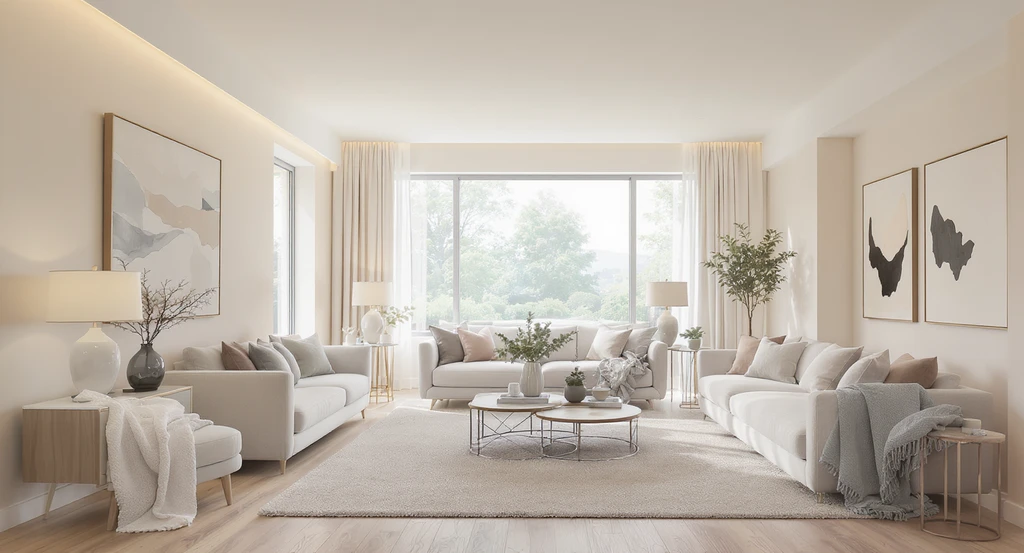
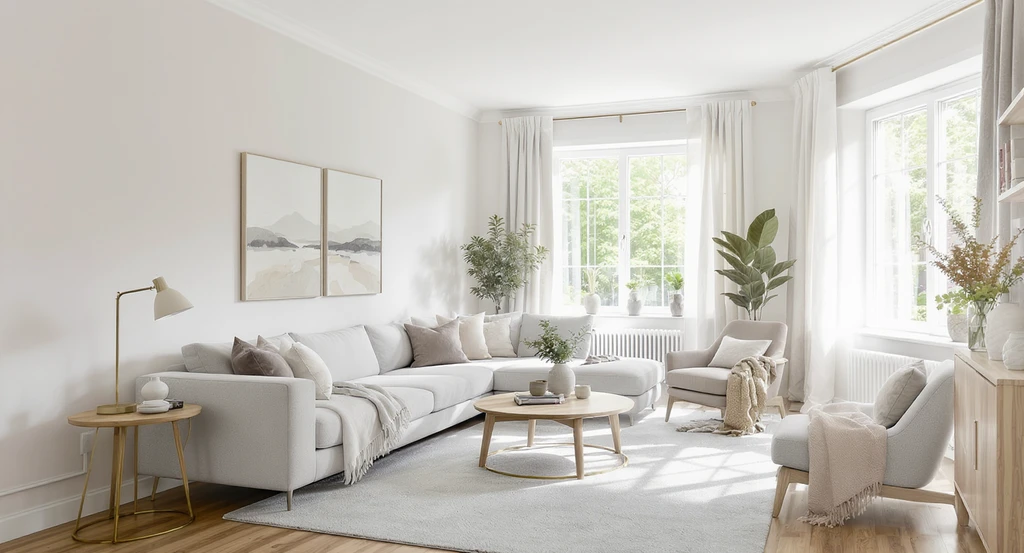
Warm, modern neutral interiors reflect light to make rooms look larger and brighter, illustrating why neutral interiors sell faster. The best neutral colors for home staging amplify space, ease virtual staging, and reduce buyer hesitation in listing photos.
Light-colored neutrals reflect both natural and artificial light, making rooms appear brighter and more spacious. This enhances perceived room size, ceiling height, and overall openness, creating a more inviting and expansive environment for buyers.
- Improves perceived room size
- Enhances ceiling height perception
- Increases overall sense of openness
Because visual boundaries are softer, buyers can more easily interpret scale and layout. Modern neutral palettes have also shifted toward warmer tones, favoring soft whites, greiges, and earth tones over cold greys, helping reduce visual friction and making spaces feel more natural, comfortable, and instantly understandable.
-
Neutral Design by Style: Not One-Size-Fits-All
Neutral interiors adapt across different design styles while maintaining clarity and broad appeal. By using a restrained palette and consistent visual language, they allow each style to feel distinct without overwhelming the space or reducing readability.
- Scandinavian: white and beige base, light wood, minimal décor
- Contemporary: greige and soft earth tones, clean lines
- Coastal: white, sand, and beige with subtle blue/green accents
The principle remains the same: avoid over-theming and keep the space visually readable. However, neutral design is not always the strongest strategy. In high-end or architecturally unique homes, overly neutral staging can reduce distinctiveness and memorability. In these cases, controlled contrast or subtle identity can improve differentiation while maintaining clarity.
-
Room-by-Room: Neutral Staging Guidelines
Neutral staging works best when each room is arranged for clarity, balance, and easy interpretation. A well-structured layout helps buyers instantly understand the purpose, scale, and usability of each space without distraction.
- Living Room: Sofa facing focal point, centered table, minimal décor
- Bedroom: Bed on main wall, neutral bedding, simple symmetry
- Dining: Clean table, 4–6 chairs, uncluttered surface
- Kitchen: Clear counters, minimal items, bright surfaces
By keeping layouts simple and consistent across rooms, the overall home feels more cohesive and easier to navigate. This improves spatial readability and allows buyers to quickly visualize how they would live in the space.
-
How Neutral Design Improves Listing Performance and Buyer Trust
Exterior and First Impression Impact
The principle of neutral design extends to exteriors, where simple color palettes, clean landscaping, and uncluttered entryways create immediate trust. Buyers often form their first impression before entering the home, and a neutral exterior signals maintenance, move-in readiness, and lower perceived risk. This consistency between exterior and interior clarity strengthens buyer confidence and improves conversion from online interest to in-person showings.
- Builds immediate trust through clean, simple visuals
- Signals maintenance and move-in readiness
- Improves conversion from online views to showings
Platforms like Zillow and Redfin show that visually clean, decluttered homes generate higher engagement, including more saves, shares, and showing requests, especially in digital-first markets. In many markets, agents report that neutral listings can generate 20–40% higher engagement in the first week compared to heavily personalized interiors.
Online, where buyers make split-second decisions, neutral design simplifies visual processing and reduces hesitation, leading to faster and more confident offers. The fastest-selling homes are not the most decorated, they are the easiest to understand.
-
The Role of AI and Virtual Staging: Neutral as the Digital Base
Neutral interiors are ideal for AI-powered staging because they provide a clean, adaptable base. Their simplicity allows AI tools to generate more accurate, visually consistent results without interference from complex or conflicting design elements.
- Reduce rendering conflicts
- Improve realism
- Allow multiple design variations
As AI-driven home search evolves, visually simple spaces are easier to interpret, categorize, and recommend. This gives neutral interiors a long-term digital advantage by improving both staging flexibility and algorithmic visibility across platforms.
Learn more about how AI transforms empty or cluttered spaces in our virtual staging guide. ReimagineHome
-
Common Mistakes That Increase Buyer Hesitation
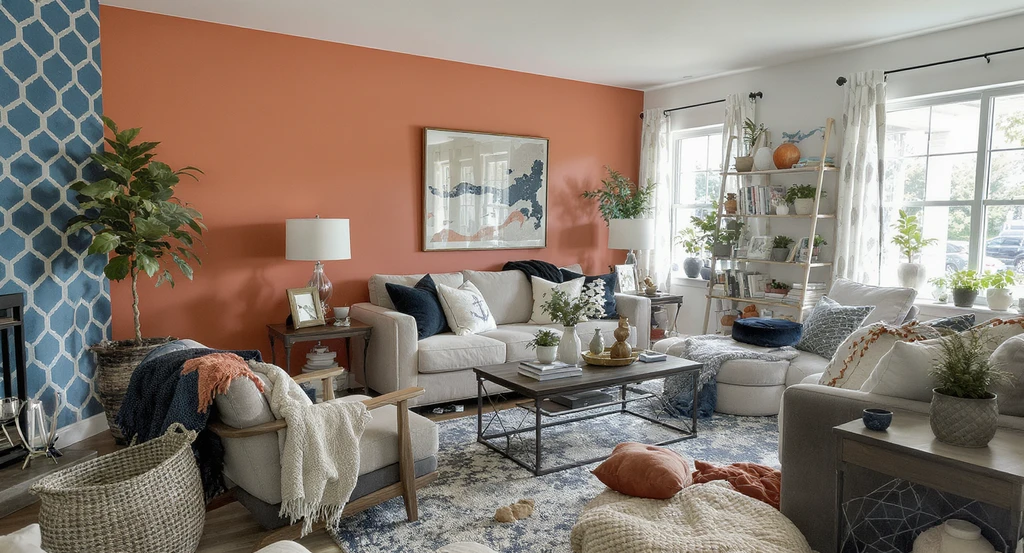
Overly themed interiors, bold accent walls, and clutter can confuse buyers. Neutral interiors sell faster by enhancing clarity and reducing buyer hesitation in listing photos.
Certain design choices can increase buyer hesitation by reducing clarity and distracting from the core layout of the space. These elements make it harder for buyers to quickly understand and connect with the home.
- Overly themed interiors
- Bold accent walls
- Excessive décor or clutter
- Oversized or mismatched furniture
These factors reduce visual clarity, shift focus away from spatial understanding, and slow down decision-making. However, neutral staging can also fail when it lacks contrast, warmth, or scale cues. Over-simplified spaces may feel flat or uninviting, reducing emotional engagement. The objective is not emptiness, but clarity with livability.
-
Emotional Journey: How Neutral Design Drives Buyer Decisions
Neutral interiors guide buyers from confusion to clarity, and from comfort to confidence. By simplifying visual input and improving spatial understanding, they create an environment that feels both approachable and easy to interpret.
This clarity shortens the decision cycle and increases the likelihood of offers. The fastest-selling homes are not the most decorated, they are the easiest to understand.
Visualization Scenario
Imagine uploading your home’s current photos into ReimagineHome and seeing an instant preview of each room with neutral walls, decluttered surfaces, and adjusted furniture layout. You immediately spot which spaces look larger and brighter, a clear advantage when marketing your property digitally.
FAQ: Neutral Interiors and Fast Home Sales
- Do statistics support neutral staging?
- Yes. Industry reports indicate that over 80% of buyers find it easier to visualize a property as their future home when it is staged, particularly when neutral design principles are used.
- What are the best neutral colors for home staging?
- The most effective neutral colors for staging are warm whites, soft beiges, greiges, and muted earth tones, as they maximize light and appeal to a wide range of buyers.
- Why do neutral interiors sell faster?
- Neutral interiors sell faster because they remove visual distractions, help buyers quickly imagine living in the space, and broaden market appeal, leading to higher engagement and shorter listing times.
- How does neutral staging improve listing photos?
- Neutral staging creates cleaner, brighter photos that accurately show room size and layout. This helps listings stand out online and improves click-through rates, as described in our listing photo strategy guide.
- Are neutral interiors better for AI and virtual staging?
- Yes. Neutral interiors provide a versatile, conflict-free base for AI-driven transformations and digital staging, allowing multiple design options and higher visual realism—see our insights on minimal AI staging..
- Do empty homes sell faster than staged homes?
- No. Empty homes often feel smaller and harder to interpret. Neutral staged homes provide visual context, helping buyers understand layout and functionality, which leads to faster decision-making.
Key Takeaways: Clarity Sells, Not Complexity
Homes don’t sell because they look impressive, they sell because they feel easy to understand. Neutral interiors sell faster because they align with how modern buyers search and make decisions. By reducing visual complexity, improving spatial clarity, and enabling immediate emotional connection, they remove friction from the buying process.
Buyers are not judging design complexity, they are responding to how quickly they can understand and trust a space. In a digital-first market, success comes from clarity, not decoration. The most effective homes are the ones buyers can instantly understand, imagine, and feel confident saying yes to.