Shopify Furniture Stores: Help Customers Buy With Confidence

TL;DR
Furniture shoppers hesitate when they cannot confidently answer three questions: Will this fit my space? Will it look right in my room? What happens if it doesn’t work out? Shopify furniture stores can reduce that uncertainty by providing accurate product specifications, clear dimensions, room visualization, transparent delivery information, straightforward returns, and accessible customer support. The goal is not simply to increase conversions, it is to help shoppers make more informed purchasing decisions.
Why Confidence Matters for Your Furniture Store
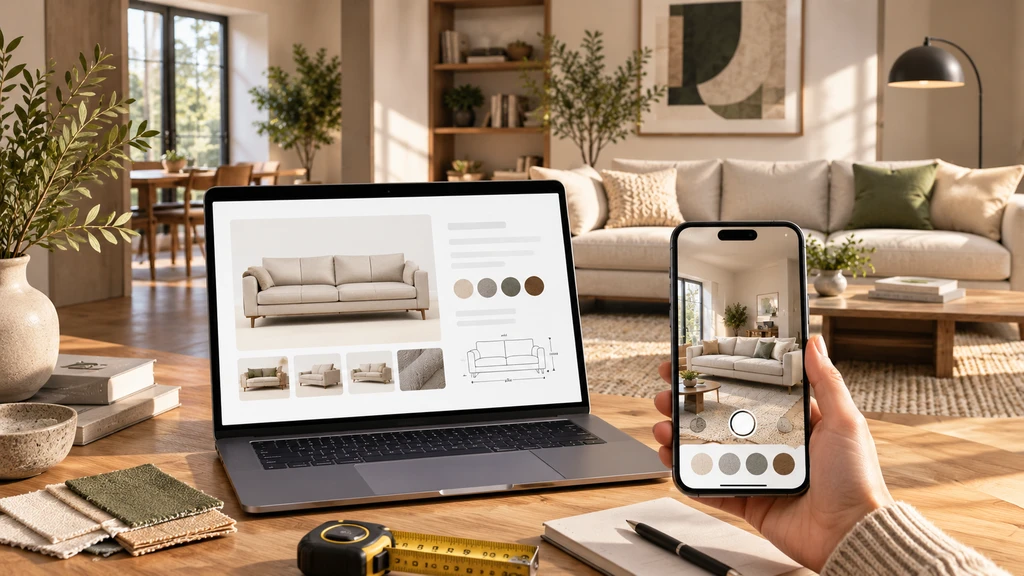
Furniture shoppers buy with more confidence when stores support their decisions with clear product information, room context, and practical buying cues.
Furniture is complex to sell online because it is expensive to ship, difficult to visualize, and costly to return. Product photos alone cannot answer key questions such as whether a sofa will work in the shopper’s space, fit through the doorway, or match existing furniture. For high-consideration products like sofas, dining tables, beds, rugs, and storage furniture, shoppers need more context before buying.
Shopify furniture merchants can build buyer confidence by combining accurate product details, in-room visualization, transparent delivery information, and clear return policies across the shopping journey.
-
1. Make Product Information Decision-Ready, Not Just Descriptive
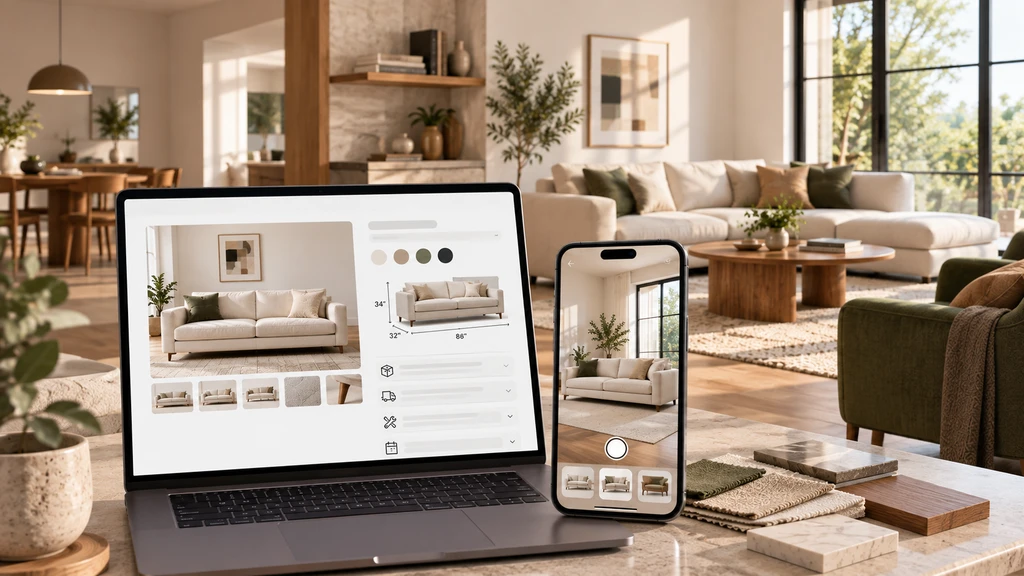
Decision-ready product information helps shoppers evaluate dimensions, finishes, and fit before committing to a furniture purchase.
Avoid vague claims like “premium quality” or “versatile piece.” Provide manufacturer-confirmed details that answer common pre-purchase questions.
Customer Question Information to Show Will it fit? Width, depth, height, and configuration dimensions Can it reach the room? Packaged dimensions, removable parts, and doorway guidance What is it made from? Frame, upholstery, finish, and filling What will I receive? Included pieces, selected variant, and assembly details How do I care for it? Cleaning and maintenance instructions -
2. Let Shoppers Preview Your Products in Their Rooms With Room Visualization
In-room visualization adds context that product photos cannot by letting shoppers preview furniture in their own space, compare products, and visualize combinations using existing product images without separate 3D models. Learn more about Shopify implementation.
For example, shoppers can upload a room photo and preview a sofa and rug against their existing space before comparing options. Visualization complements measurements, so customers should still confirm dimensions, clearances, and finish details before ordering. See our design visualization guide.
-
3. Make Delivery, Returns, and Costs Transparent Before Checkout
Furniture delivery involves more variables than standard parcel shipping. Clearly explain delivery estimates, curbside or room-of-choice service, assembly, package size, elevator requirements, and what happens if an item arrives damaged.
Keep return and support information near the purchase area. State the return window, condition requirements, return shipping costs, restocking fees, exclusions, and damage-claim process, and provide an easy way for shoppers to contact your team with pre-purchase questions.
-
4. Measure Whether Shoppers Are Making Better-Informed Decisions
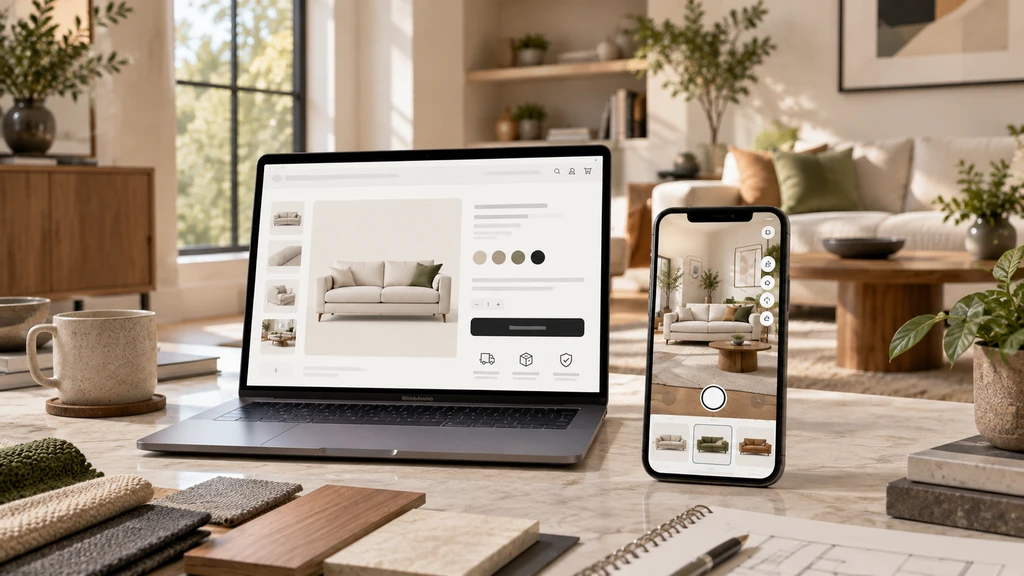
Merchants can evaluate buyer confidence by looking at how shoppers interact with product details, room previews, and the purchase journey.
Buyer confidence should be measured beyond conversions. Track whether product information, room visualization, and transparent policies help shoppers make informed decisions.
- Add-to-cart rate
- Checkout progression
- Completed purchases
- Pre-purchase support questions
- Return reasons
- Room visualizer engagement
Use recurring questions about sizing, delivery access, or materials to improve product pages. Compare visualizer engagement with purchases, support questions, and returns rather than attributing conversions to visualization alone.
The goal is to give shoppers enough information and context to decide whether a product is right for their home.
Frequently Asked Questions: Confidence for Shopify Furniture Stores
Can a room visualizer guarantee that furniture will fit?
No. Room visualization can help shoppers understand style and visual context, but customers should still confirm product dimensions, room measurements, doorways, staircases, elevators, and delivery access before ordering.
Does using a room visualizer require 3D models?
No. Room visualizers like ReimagineHome can work with existing product images, so merchants do not need to create separate 3D assets for every item.
Will these changes guarantee more sales or fewer returns?
No. Better product information, clearer policies, and room visualization can support more informed buying decisions, but results will vary by store, product category, traffic, and customer behavior. Merchants should measure their own data.
What information should a Shopify furniture product page include?
A strong furniture product page should include accurate dimensions, materials, configuration details, assembly requirements, care instructions, product images, delivery information, return conditions, and customer reviews where available.
How can Shopify furniture stores reduce uncertainty around sizing?
Provide overall dimensions, configuration-specific measurements, package dimensions, labeled diagrams, and practical measuring guidance. Customers should also be encouraged to check the intended placement area and the full delivery path before purchasing.
Help Customers Make a More Informed Furniture Purchase
By delivering decision-ready product facts, enabling room previews, and communicating delivery and returns upfront, your Shopify furniture store can remove uncertainty and empower customers to make informed purchases. Use these tactics to give shoppers the information and context they need to decide whether a product is right for their home, and keep improving the experience based on real customer questions and feedback.