Too Much Texture? How to Compare Wood, Stone, and Plaster Before Redecorating
TL;DR
Wood, stone, and plaster can make a room feel warm and layered, but too many strong surfaces can compete for attention. Choose one material to lead, keep the others quieter, compare complete combinations in 3D, and verify the final direction with real samples before redecorating.
Why Too Much Texture Can Overwhelm a Room
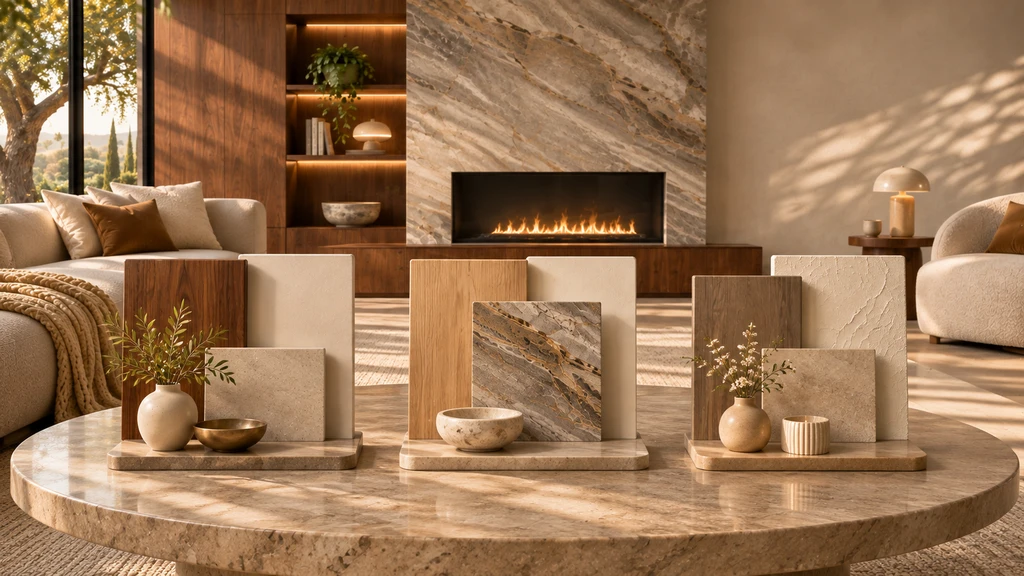
Compare complete wood, stone, and plaster combinations together to see which material should lead and which finishes should stay quieter.
Texture adds depth, but a room can feel busy when several large surfaces all have strong grain, veining, relief, or pattern.
- Which surface should attract attention first?
- Which materials already have strong movement?
- Are several textures competing at the same scale?
- Is there enough visual calm between them?
The goal is not less texture. It is a clearer visual hierarchy.
-
1. Give Wood, Stone, and Plaster Different Roles
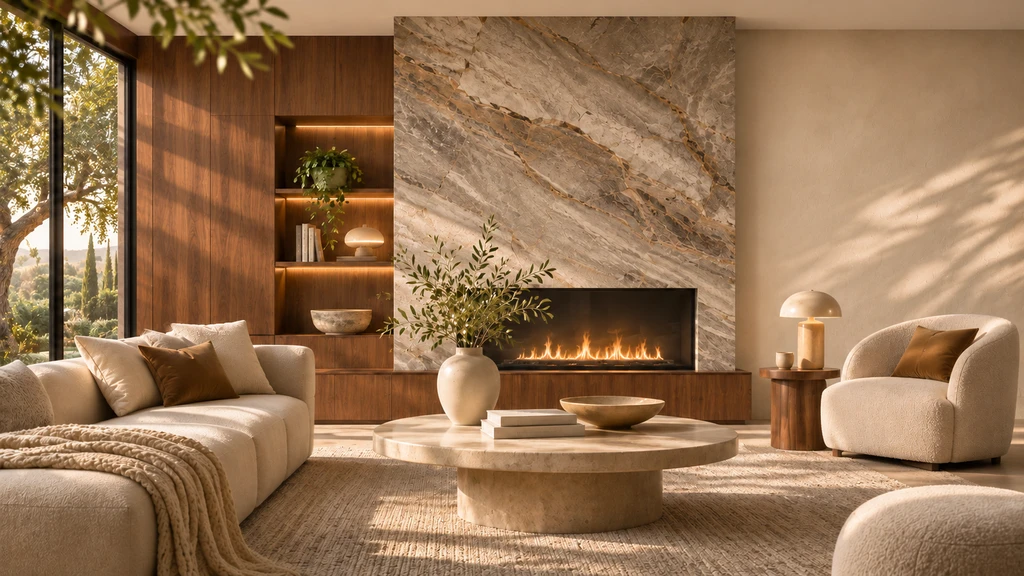
A balanced room lets wood, stone, and plaster work together without competing, using one dominant material and quieter supporting finishes.
Let one material lead and use the others as supporting finishes instead of giving every surface equal visual weight.
Material What it adds Watch for Wood Warmth, grain, and rhythm Too many competing wood tones Stone Weight, contrast, and natural movement Heavy veining beside other busy finishes Plaster Soft depth and wall texture Strong texture across too many surfaces For example, strong walnut cabinetry can pair with quieter stone and softly textured plaster instead of three equally expressive finishes.
-
2. Compare Complete Material Combinations
A swatch can look beautiful on its own and still compete with the rest of the room. Compare complete material combinations instead.
- Strong wood + quiet stone + soft plaster
- Light wood + expressive stone + smooth plaster
- Quiet wood + subtle stone + textured plaster
This makes it easier to identify the dominant material before adding more visual movement.
-
3. Check How Much Surface Area Each Material Covers
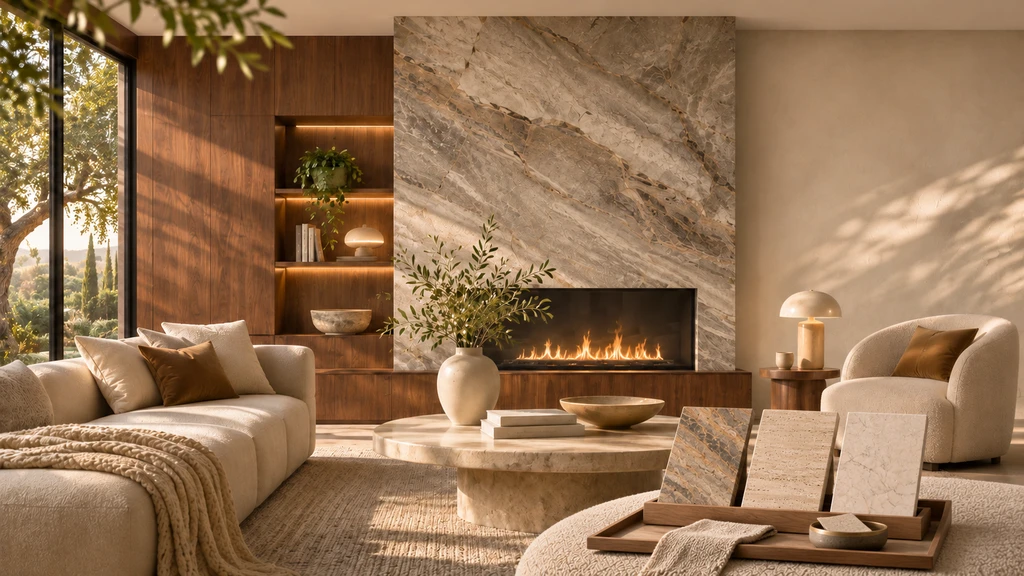
Compare real material samples beside the finished room to confirm how wood, stone, and plaster work together before making permanent design changes.
Texture intensity is only part of the decision. Coverage matters too. A bold material can feel subtle in a small area but overwhelming across a full wall or ceiling.
- Stone: Strong veining may dominate when used across a large fireplace wall.
- Plaster: A feature wall feels very different from covering every wall and ceiling.
- Wood: Large areas of strong grain can add more visual movement than expected.
Judge materials in larger room views, not only as small samples.
-
4. Compare Materials From Different Views in Chez
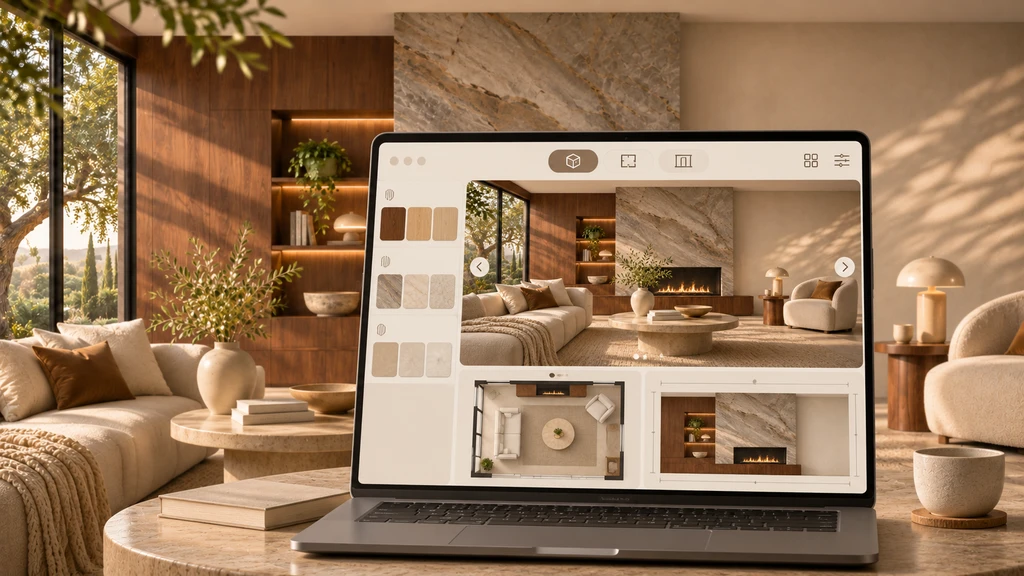
Use 3D, floor-plan, and elevation views to compare how wood, stone, and plaster interact across the whole room before choosing a final material direction.
Chez lets you explore a reconstructed room in 3D, floor-plan, and elevation views while testing colours, textures, materials, and finishes.
View What to inspect 3D View Overall material balance Floor Plan How much area each finish occupies Elevation Whether one wall has too many competing surfaces Wall elevations are especially useful when wood panelling, a stone fireplace, and plaster finishes appear on the same wall.
-
5. Change One Material at a Time
Keep the furniture and layout unchanged while testing finishes so you can judge the material change clearly.
- Keep the room structure and furniture fixed.
- Change only the main wall or floor material.
- Compare two or three versions.
- Review each from the same viewpoint.
- Choose the version with the clearest material hierarchy.
Changing one variable at a time makes it easier to see which finish improves the room and which one creates visual overload.
-
6. Check Texture Under Different Lighting
Materials can look very different as lighting changes, so compare the same finish in both daylight and warmer evening light.
- Stone: Veining may appear stronger in directional daylight.
- Plaster: Relief becomes more visible when shadows fall across it.
- Wood: Tones can appear warmer under evening lighting.
- Matte vs. reflective: Each creates a different level of visual contrast.
Review your preferred material combination under more than one lighting condition before deciding.
-
7. Verify Real Samples Before Committing
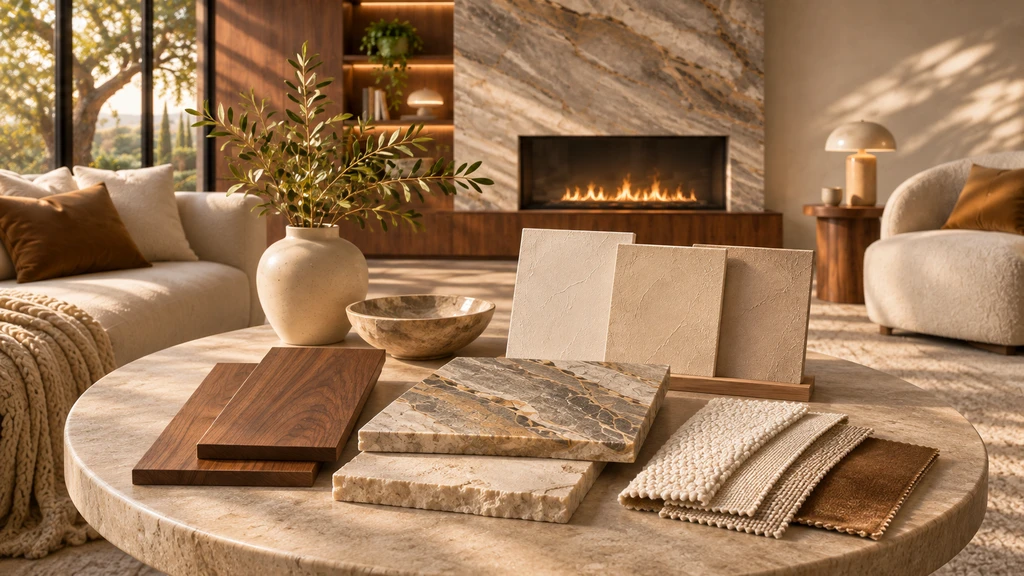
Review real wood, stone, plaster, and textile samples together in the room to confirm texture, colour, and material balance before making permanent changes.
Chez is useful for comparing design directions, but its materials, colours, lighting, furniture, and measurements are visual approximations rather than exact representations.
- Order physical samples where possible.
- Compare them beside existing finishes.
- View them at different times of day.
- Check maintenance requirements.
- Confirm installation details.
Use the 3D room to narrow the direction, then use real materials to make the final decision.
Frequently Asked Questions
Can wood, stone, and plaster work in the same room?
Yes. They work especially well when one material leads visually and the other two act as supporting finishes.
How do I know if a room has too much texture?
If several large surfaces have strong grain, veining, pattern, or relief and your eye has no clear place to rest, simplify one or two supporting finishes.
Can Chez show different materials and textures?
Yes. Chez supports changes to colours, textures, materials, and finishes within the reconstructed room.
Will the 3D material look exactly the same in real life?
No. Chez visualizations are approximations. Always check real samples before buying or installing finishes.
Build Texture With Hierarchy, Not Competition
A richly textured room does not need to feel busy. Choose one dominant material, reduce competition around it, compare complete combinations in Chez, and confirm the final direction with physical samples before making permanent changes.