How Photo-to-3D Could Make Seasonal Furniture More Shoppable

TL;DR
Seasonal furniture becomes truly shoppable when customers can visualize it in their own rooms—alongside what they already own and for the seasonal moment they’re preparing for. The upcoming Photos to 3D experience from ReimagineHome is designed to make that transition from inspiration to confident purchase far smoother and more personal by letting you explore, compare, and shop seasonal arrangements directly in a digital version of your real space.
Why Seasonal Furniture Needs a Smarter Shopping Experience

A seasonal room state can be created by keeping the major furniture in place and introducing selective fall updates through smaller pieces, warmer textures, and flexible seating for everyday use and entertaining.
Buying seasonal furniture is rarely just about choosing a summer lounge chair or holiday-ready dining table. The harder question is whether that new piece will work with the room, the furniture already there, and the way the space needs to function during that season.
The challenge is spatial translation: taking a product shown in one environment and predicting what it will do inside another. A holiday dining room may need extra seating, a spring living room may need less visual weight, and a summer setup may need more flexible circulation. Seasonal shopping becomes more useful when products are connected to those room-level needs rather than presented only as a “Spring Refresh” or “Holiday Collection.”
-
1. Seasonal Furniture Shopping Is Really a Room Problem, Not Just a Product Choice
Most people do not begin seasonal shopping by thinking, “I need a fall furniture collection.” They begin with a room problem: more seating for holiday guests, a lighter living room for spring, a warmer corner for fall, or a dining area that works better for entertaining.
A useful way to think about this is a seasonal room state: a temporary or semi-temporary version of an existing room created by changing selected furniture, layout, or supporting pieces for a seasonal need. The sofa or dining table may stay exactly where it is while a chair, bench, console, side table, rug, or lighting changes around it. The customer is often not shopping for a new room, they are shopping for a different version of the room they already have.
-
2. Why Traditional Ecommerce Misses the Room Context
Traditional product pages are good at providing product truth: dimensions, materials, colors, finishes, price, and availability. What they often cannot provide is room truth: what happens when that object enters a particular space.
A sideboard may fit technically but tighten circulation. An accent chair may look ideal on its own but feel visually heavy beside an existing sofa. For furniture, the missing information is often not about the product itself, it is about the relationship between the product and the room.
-
3. How Photo-to-3D Could Change the Seasonal Furniture Decision
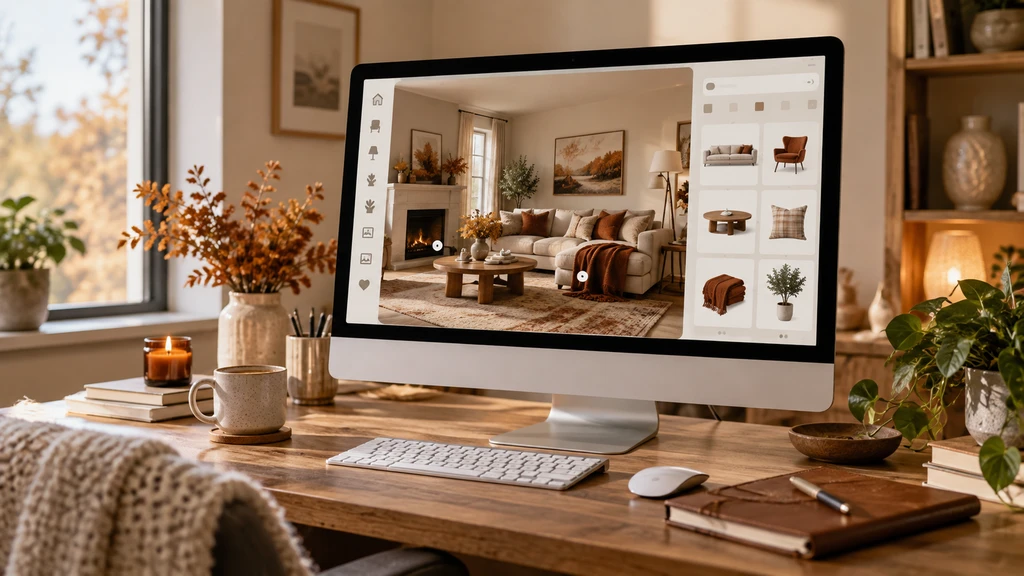
Photo-to-3D can help shoppers compare seasonal furniture and décor inside a digital version of their room, making it easier to build a relevant product shortlist before buying.
Photo-to-3D changes the shopping problem by moving the customer from evaluating a product outside the room to evaluating a proposed change inside a spatial version of the room. The important shift is not simply that the room is shown in 3D, it is that different furniture choices can be considered as changes to the room rather than as isolated products.
For a spring refresh, that might mean keeping the sofa while comparing a lighter coffee table or a different accent chair. For holiday dining, it might mean considering whether an extra chair, a bench, or additional serving furniture better solves the hosting need. ReimagineHome’s upcoming Photos to 3D experience is being developed around this broader move from static room imagery toward spatial exploration using room photos.
-
4. Seasonal Shopping Works Better With Selective Change
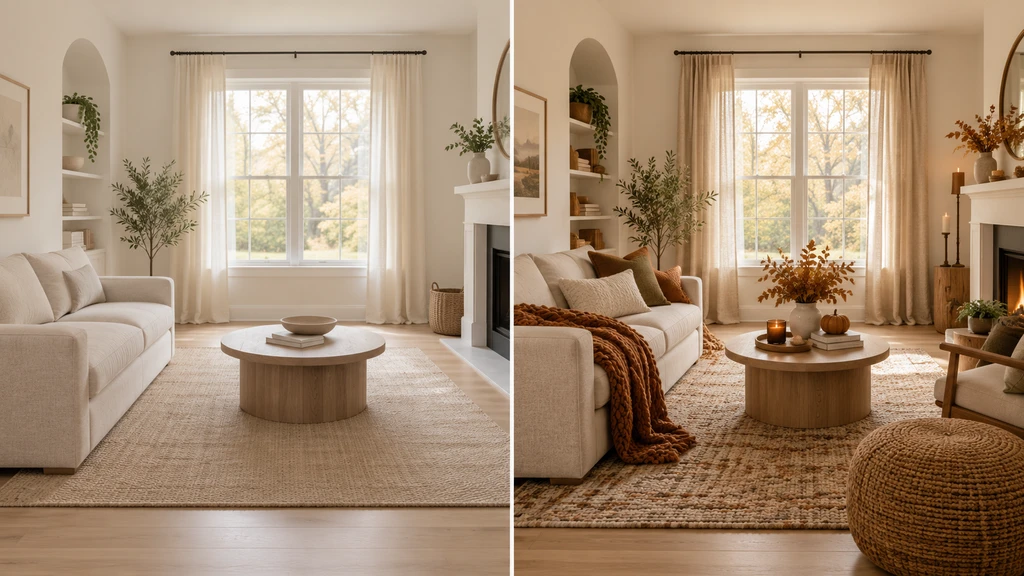
A seasonal room comparison shows how a few selective changes, such as textiles, accent seating, décor, and lighting, can shift the feel of a room for fall without replacing the main furniture.
Most seasonal updates do not require replacing the whole room. Major pieces can stay while smaller, flexible furniture changes around them. This makes selective change more practical than a complete seasonal makeover.
Instead of asking, “Which seasonal collection should I buy?”, a room-based approach asks, “What needs to change, and what can stay?”
Different seasons create different room needs:Seasonal need What usually stays What may change Decision to test Holiday hosting Dining table Chairs, bench, serving furniture Can more people use the room comfortably? Spring refresh Sofa, major storage Chair, coffee table, rug Can the room feel lighter without replacing anchor pieces? Fall reset Sofa, bed, dining table Side furniture, lighting, textiles Can the room feel warmer without becoming crowded? Summer entertaining Major seating Movable seating, tables, storage Can the room support more flexible use? -
5. From Room Problem to Product Shortlist
A more useful seasonal shopping journey begins before the product grid. It starts with the seasonal need, considers what already exists in the room, explores a proposed change, compares the options in context, and only then narrows the choice to products worth buying.
Seasonal need → existing room → proposed change → spatial comparison → product shortlist → purchase. Traditional ecommerce often begins at the product shortlist. Room-based shopping begins one step earlier, with the room problem.
-
6. What This Changes for Furniture Retailers
For merchants, the opportunity is to organize seasonal furniture around the problem being solved, not only around category or collection. A generic “Holiday Dining Collection,” for example, could become “Add Holiday Seating Without Replacing Your Dining Table.” A broad “Spring Refresh” could become “Make Your Living Room Feel Lighter Without Replacing the Sofa.”
The merchandising logic shifts from season → products to seasonal need → room problem → relevant products. That makes the collection easier to understand because every recommendation has a reason to be there.
-
7. What You Still Need to Check: Fit, Finish, and Real-World Details
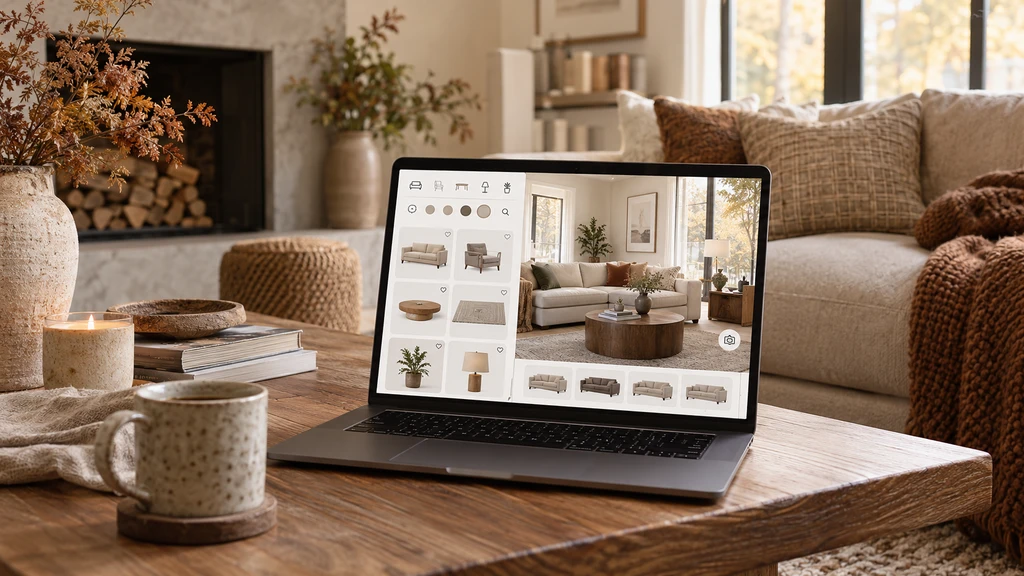
A room-based shopping experience can help shoppers explore seasonal furniture and décor inside a familiar space, compare alternatives, and narrow the catalog to pieces that fit the room’s fall setup.
Visualization can narrow the decision, but it should not replace practical verification. Before buying, shoppers should still confirm product dimensions, materials, finish, color under real lighting, delivery access, assembly requirements, availability, and return conditions.
A 3D scene can help answer, “Should this product be on my shortlist?” It should not be treated as the final authority on every physical purchasing detail.
Seasonal Furniture Shopping & Photo-to-3D: Frequently Asked Questions
What makes seasonal furniture more shoppable?
Seasonal furniture becomes easier to shop when customers can understand how a new piece works with their existing room, what it changes, and whether that change solves a specific seasonal need.
Does seasonal furniture mean replacing everything?
No. In many rooms, major anchor pieces such as the sofa, bed, or dining table stay while smaller and more flexible pieces change around them.
How can Photo-to-3D help with seasonal furniture shopping?
Photo-to-3D can help shoppers evaluate furniture choices in spatial context rather than relying only on isolated product images or a single styled room view.
What types of furniture are easiest to change seasonally?
Accent chairs, benches, stools, side tables, consoles, smaller storage pieces, serving furniture, rugs, and lighting are generally easier to change than major anchor furniture.
Can 3D visualization guarantee that furniture will fit?
No. Visualization can improve spatial understanding, but shoppers should still verify dimensions, delivery access, materials, and other physical details before purchasing.
Shop the Change, Not the Collection
Seasonal furniture shopping becomes more useful when the room, not the collection page, becomes the starting point. The shopper can keep what already works, identify what needs to change, and compare only the products that meaningfully improve the room for that season.
Photo-to-3D could make that process more practical by moving seasonal shopping from mental estimation toward spatial comparison. For shoppers and retailers alike, the opportunity is not simply to sell a seasonal collection, it is to help create the right seasonal room state.