How to Choose an Interior Design Style You’ll Actually Love (and Live With)
TL;DR
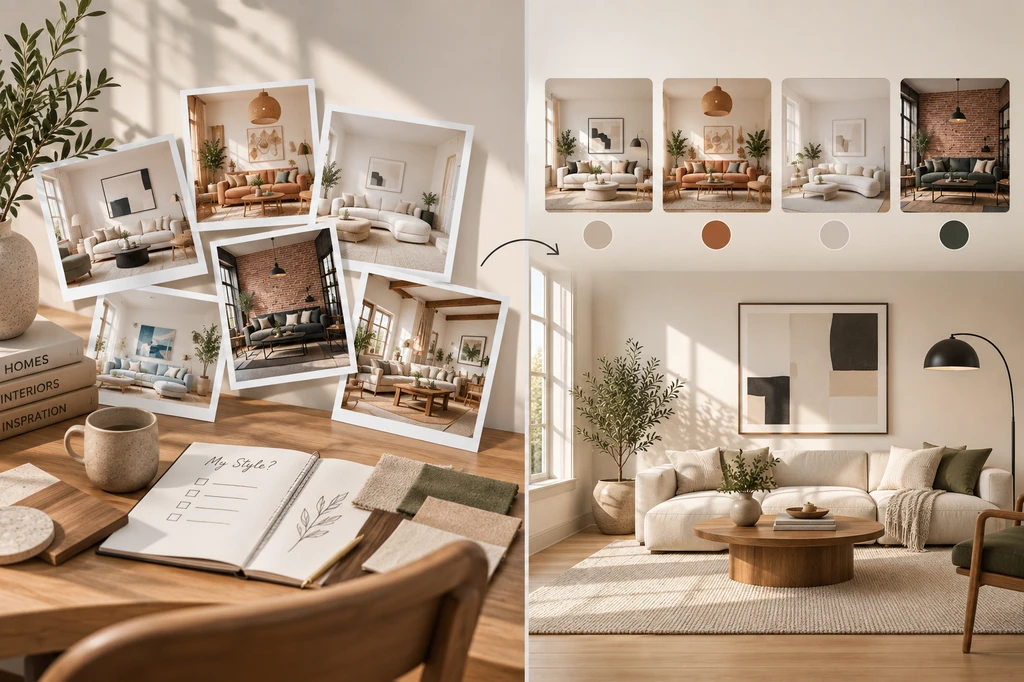
To choose an interior design style you'll actually live with, focus first on the mood you want, then identify clear patterns in rooms you love, pick one or two fitting styles, and—crucially—test how they look in your own room. Designing with your specific space in mind, before you spend, is the surest way to avoid regret.
Why Finding Your Style Is So Tricky—and So Important
Choosing an interior design style can feel overwhelming because online inspiration and real-life rooms rarely line up. Most people freeze up not due to lack of taste, but from having too many options and no way to preview them in their actual home. You might love a stunning industrial loft you spot online—but your own space, with its different dimensions, light, and features, won’t deliver the same result. The solution? Move from passive scrolling to active testing, taking your taste from uncertainty to clarity by anchoring choices in your true needs and real surroundings.
Here’s a streamlined path from “I like this” to “this style will actually work for me,” turning design guesswork into confident decision-making.
-
1. Start With a Feeling, Not a Label
Before chasing trend names like 'Scandinavian' or 'industrial,' ask how you want your room to feel when you walk in. Your focus could be calm and peaceful, vibrant and energetic, cozy and layered, or bright and airy. This emotional filter quietly narrows your style options: someone seeking calm will likely be unhappy in a maximalist or high-contrast room, no matter what’s trending. Write down two or three feeling words, and treat these as your north star while assessing every inspiration image or product. This approach is echoed in our guide to decoding your design style—personal vibes precede labels in unlocking clarity.
-
2. Collect Images and Identify the Patterns
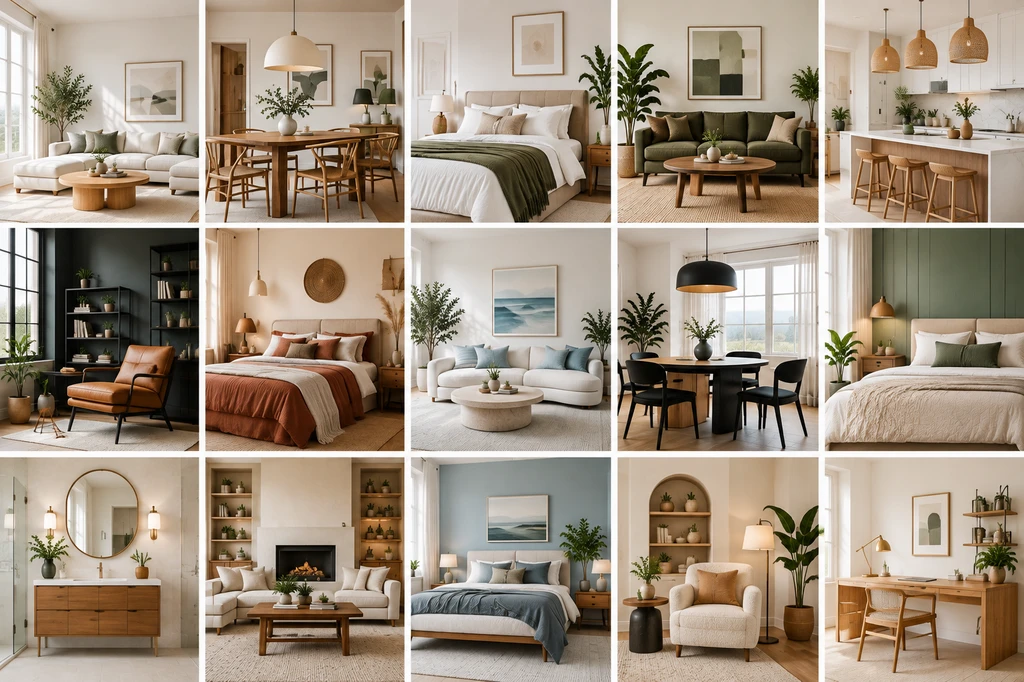
Explore different rooms, colors, materials, and styles to identify patterns in your design preferences.
Next, gather 15 to 20 images of rooms you're genuinely drawn to—think Pinterest, Instagram, magazines, or screenshots. Try not to overthink at this stage. Once you have your batch, view them side by side and look for patterns: Are most rooms airy and minimal, or layered and eclectic? Are there recurring colors, materials, or types of furniture? These repeated elements reveal your natural preferences whether or not you can name them yet. Recognizing your pattern is the clearest signpost for your true style, a method endorsed in our article on using AI to identify your design personality.
-
3. Explore Core Styles Without Pressure to Fit
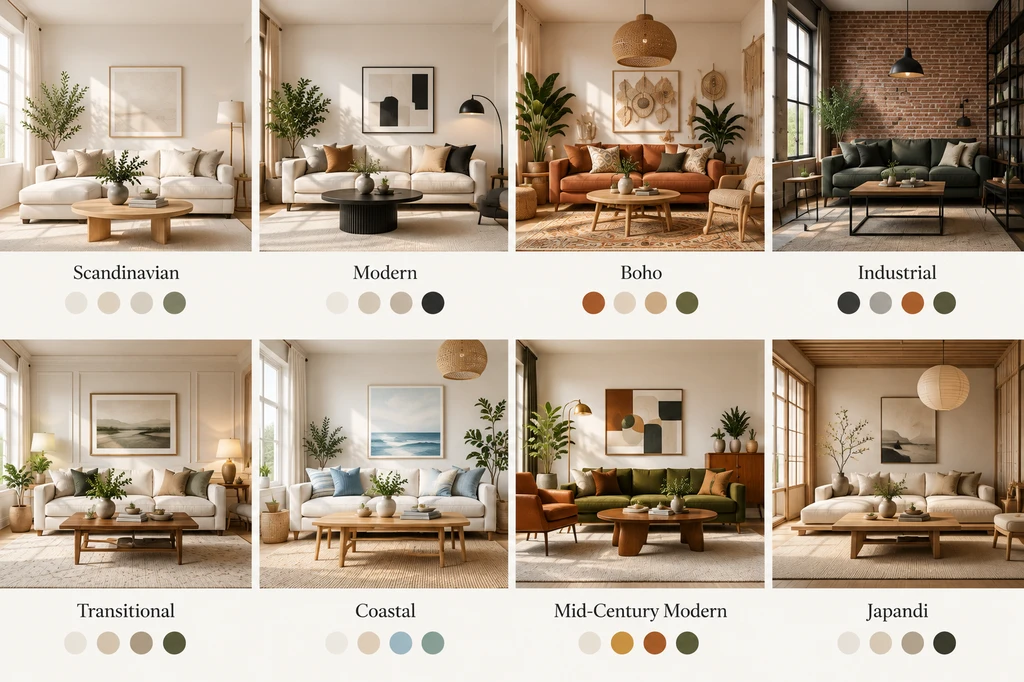
Explore different interior design styles to discover the look that fits your home.
Once you spot your preference pattern, match it up to a few core interior design styles for vocabulary—think modern, Scandinavian, Japandi, mid-century modern, farmhouse, industrial, boho, or coastal. It’s perfectly normal not to fit into just one box; real-life spaces almost always blend elements. Use this vocabulary to guide searches and streamline purchases, but let your own mix guide the results. Our advice from finding your signature aesthetic is that your style is less about rules and more about which frameworks make your choices easier.
- Modern / Contemporary: Clean lines, neutral palette, minimal clutter.
- Scandinavian: Light woods, white walls, cozy yet simple, natural light emphasized.
- Japandi: Japanese and Scandinavian blend, muted tones, calm and organic.
- Mid-Century Modern: Warm woods, statement shapes, retro details.
- Farmhouse: Rustic, soft textures, homey and lived-in.
- Industrial: Raw materials, exposed finishes, urban edge.
- Boho: Layers upon layers: books, textiles, plants, art.
- Coastal: Light, breezy, sandy and blue hues, relaxed energy.
-
4. Match Your Style to Your Actual Room and Budget
An inspiring style won’t succeed unless it respects your reality: room size, light, fixed finishes, layout, and budget. A dramatic industrial look might shrink a small, north-facing living room, while a pale, coastal scheme can help it feel brighter. Consider what you can change (paint, furniture) versus what’s fixed (flooring, built-ins). Budget also matters: some styles are easier to nail on a shoestring, others depend on investment pieces. As we set out in our smart steps for testing design choices, reality-checking upfront saves regret (and money) later.
-
5. Test Your Top Styles Directly on Your Own Room

Start your design journey with any room, exterior, or floor plan photo.
Seeing is believing. Instead of hoping a style ‘translates’ from a mood board to your unique space, test it with a tool like ReimagineHome. Upload a photo of your real room—with its fixed architectural lines—and apply different design styles. The platform’s structural lock ensures walls, windows, and proportions stay true, so you’re viewing realistic options rather than risky fantasy. Try several styles side-by-side, tweak details step-by-step ("swap the chair" or "keep this rug, add more plants") and preview what actual shoppable furniture would cost you before committing. This is the leap from wishful brainstorming to confident, informed choices—turning “I think I like this” into “I know this feels right in my home.” As highlighted in our full AI-powered style guide, test-driving styles on your actual room is the final, most reliable filter for decisions you’ll love for years.
Frequently Asked Questions
Gather 15–20 room images you genuinely love, then search for the common threads—wall colors, materials, room fullness, and color palette. Whether or not you can name it right away, your recurring pattern helps define your style.
Can I mix two interior design styles?
Absolutely. Most homes are hybrids. Let one style take the lead, and use the other as an accent—with a cohesive color palette tying them together.
What should I do if I like a style that doesn’t fit my room?
Adapt it: focus on the aspects that work for your space or light and set aside elements that clash with your room’s size or features. Testing the look on a photo of your room helps pinpoint what to keep and what to skip.
Do I have to pick just one style?
No! A single style is useful as shopping shorthand, but your goal is a room that feels right to you, not a textbook example of a label.
Choose Your Style—With Certainty, Not Guesswork
The process becomes straightforward: start with the feeling you want, gather images of what you love, identify the visual patterns, match to a named style or two, filter choices through your space and budget, and—above all—preview your picks in your real room before buying anything. Skip the expensive mistakes and uncertainty: when you test a style in your space with your light and layout, you know it will work for you, not just in theory, but in practice and daily life.