How to Make Grey Floors Look Warmer Without Replacing Them
TL;DR
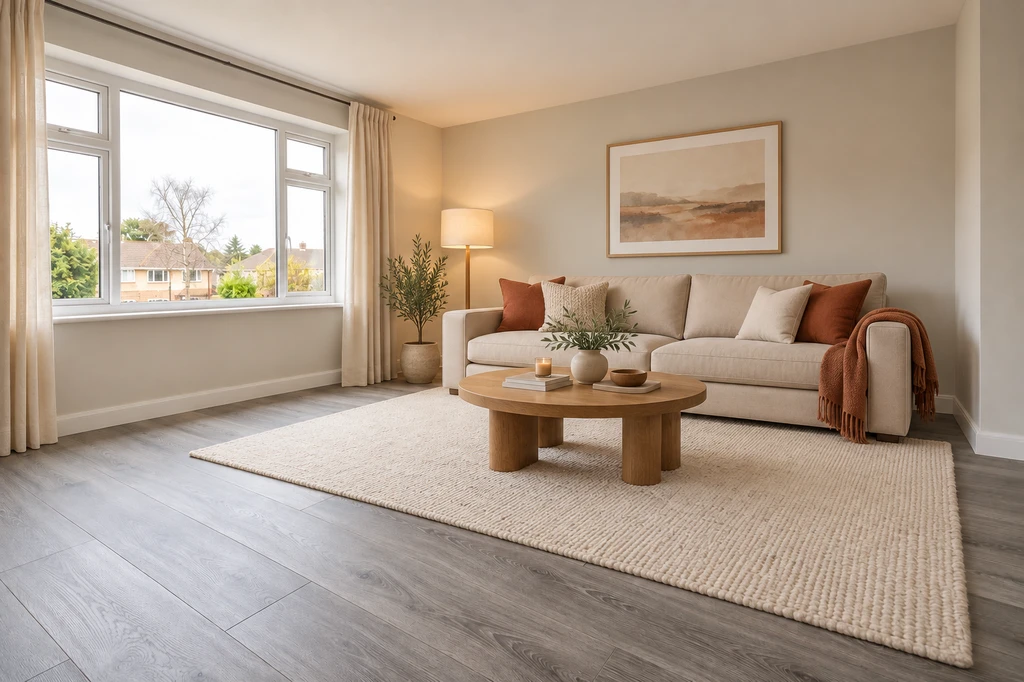
To make grey floors feel warmer without a full replacement, focus on adding rugs, wood tones, softer textiles, and warmer wall colors. Address the undertones of your existing grey, use larger surfaces for impactful changes, and compare several small updates to find the most effective plan.
Tired of Chilly, Uninviting Grey Floors? Here’s Your Answer
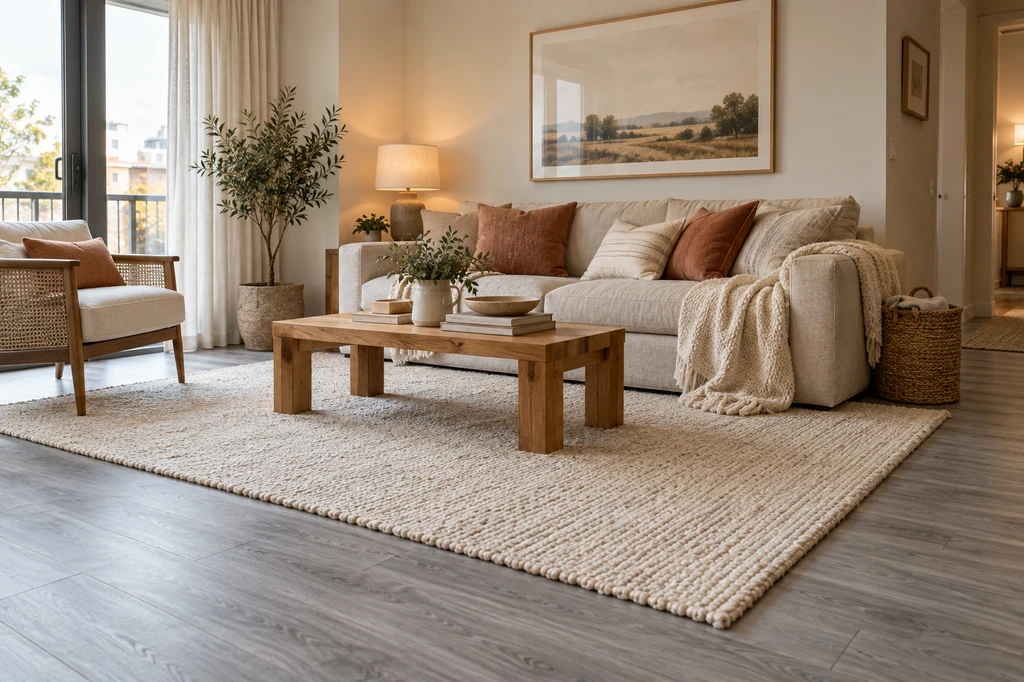
Warm textiles, natural wood and earthy accents make a room with grey flooring feel more inviting.
Grey floors come with a sleek, modern appeal, but they can unintentionally make a space feel cold or flat, especially when paired with similarly cool-toned furniture and lighting. If you’re looking for ways to warm up grey flooring without the mess and cost of replacement, you’re not alone. The solution is to rethink what surrounds your floor: update rugs, walls, curtains, and furniture to shift the overall feel while keeping what works. This article walks you through practical steps to make grey floors look and feel more inviting using changes you can actually implement and preview visually with your own room photo.
-
First, Identify Why the Room Feels Cold
Before bringing in new decor, try to understand what makes your space feel unwelcoming. Does the chill come from too much exposed grey, coordinating but overly similar furnishings, or perhaps lighting that casts a bluish tint at night?
- Too much visible floor: Try a larger or warmer rug to break up the grey sea.
- Matching greys everywhere: Add contrast with wood, vibrant textiles, or patterned accessories.
- Wall and floor clashes: Check the wall color’s undertone and test paint swatches near the floor.
- Room feels cold at night: Investigate your lighting before changing everything.
According to our discussion in 7 Factors to Consider Before Adding a Rug, thoughtfully chosen rugs and textiles can anchor a social area and instantly boost coziness.
-
Study the Undertone of Your Grey Flooring
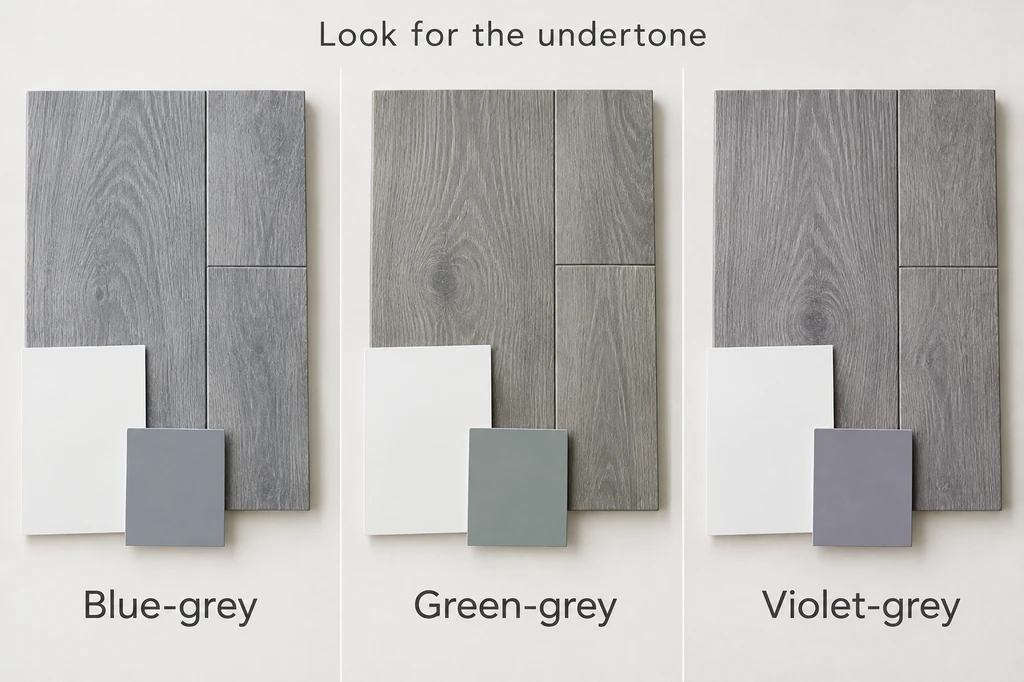
Compare your grey flooring with a white reference to help identify its underlying blue, green or violet tones.
Not all grey is created equal. Some greys lean blue or violet (cool), others brown or taupe (warm), and a few appear mostly neutral. This undertone guides what colors or materials make sense alongside them. For example, a creamy white wall can soften a taupe grey floor but might make a blueish-grey look more chilly.
Set swatches fabric, rug, paint, or trim directly alongside your flooring. Check both in natural daylight and under your evening lights, since perception of color often shifts between these conditions. Assess the mix for harmony, not just individual appeal.
-
Warm Up With a Rug—The Fastest Impact
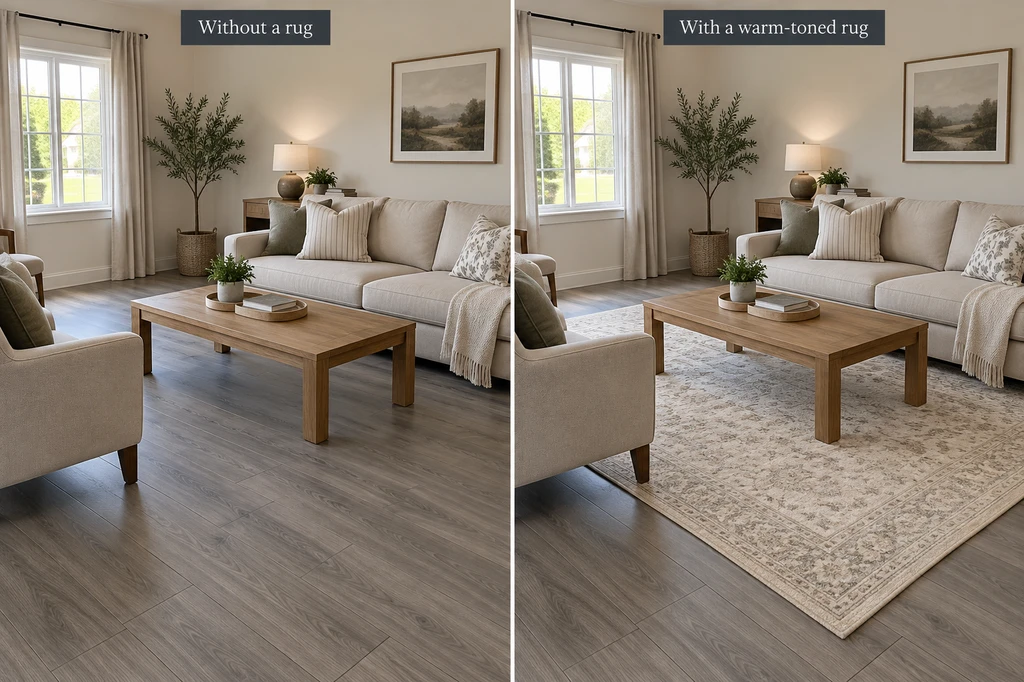
A warm-toned rug softens the look of grey flooring and brings the seating area together.
The easiest and often most effective way to add warmth is by choosing the right rug. Instead of defaulting to grey again, compare options in oatmeal, cream, muted rust, brown, or softly patterned styles that incorporate both grey and a warmer color. Look at placement, too: a rug that extends under the front legs of your sofa or chairs helps define the space and draws different parts of the room together.
Before you shop, measure your seating area to ensure the rug connects the main furniture and doesn’t interfere with doors or traffic patterns. To go deeper on pairing rugs with moody or cool spaces, explore tips for choosing a rug for a moody dining room.
-
Incorporate Wood for Natural Contrast
Nothing warms grey like the organic richness of wood—just be selective about your finish. Don’t try to match the flooring; instead, choose a wood tone that adds contrast and works with your existing mix of colors. Oak, walnut, or even a mid-tone stained wood can bridge cool flooring and soft accessories.
If you already own wood pieces, echo these tones in small accents like trays or frames to pull the room together. Avoid the brightest orange or yellow woods—they can emphasize the floor's coolness. The right wood, placed thoughtfully, will look intentional, not accidental.
-
Rethink Wall Colors—But Only If Needed
Changing wall color is a bigger commitment, but sometimes it’s the step that brings everything together. Stick to soft off-whites, delicate greiges, or muted taupes unless you’re ready for a bold statement. Always assess paint samples with your floor, trim, and core furniture in the same room lighting.
If your current walls work, keep them! You might find rugs and curtains are enough to shift the mood. For more, this guide on finishing a living space goes into how layers interact.
-
Review Lighting Before Buying More Decor
If your grey floor looks fine during the day but cold at night, swap in a lamp with a warm-white bulb. Side and floor lamps soften light compared to bright overheads. Test these lighting changes first, since warmer bulbs can enhance the feel of every finish in the room—especially against grey floors.
-
Three Palettes to Try—With No Replacement Needed
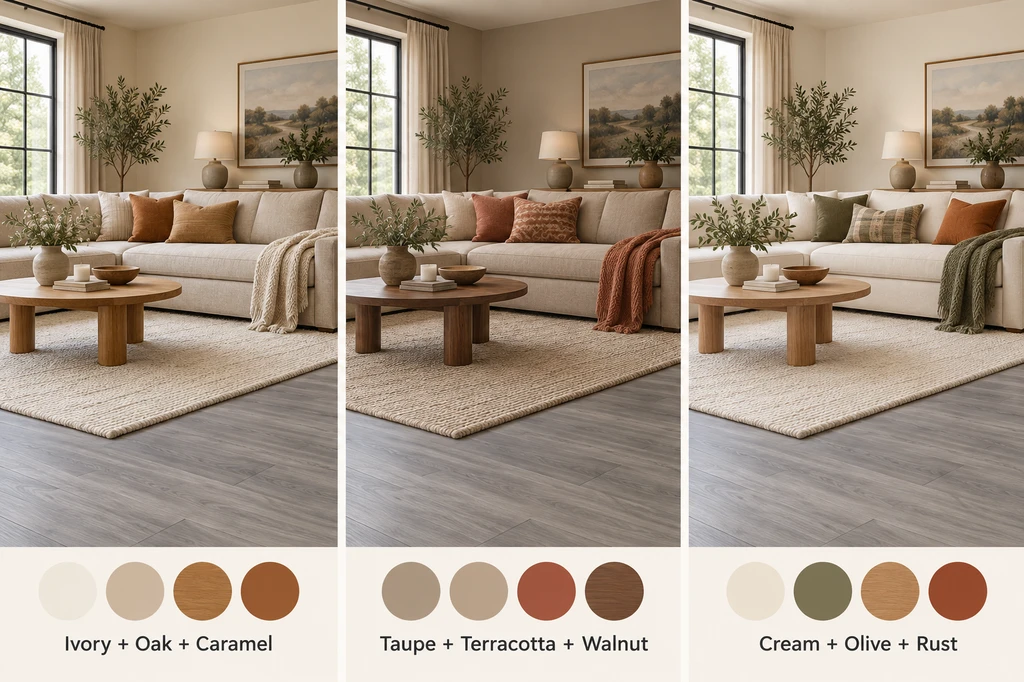
Try ivory, oak and caramel; taupe, terracotta and walnut; or cream, olive and rust alongside grey flooring.
- Soft and Neutral: Off-white walls, oatmeal rug, oak furniture, cream accents. Add one darker item for contrast.
- Earthy and Layered: Muted rust textiles, cream-and-brown patterned rug, walnut furniture, touches of olive or khaki.
- Warm With a Little Color: Warm ivory textiles, a statement art piece that bridges greys and warm tones, and a walnut or dark oak table.
-
Preview Changes Using ReimagineHome’s Workflow
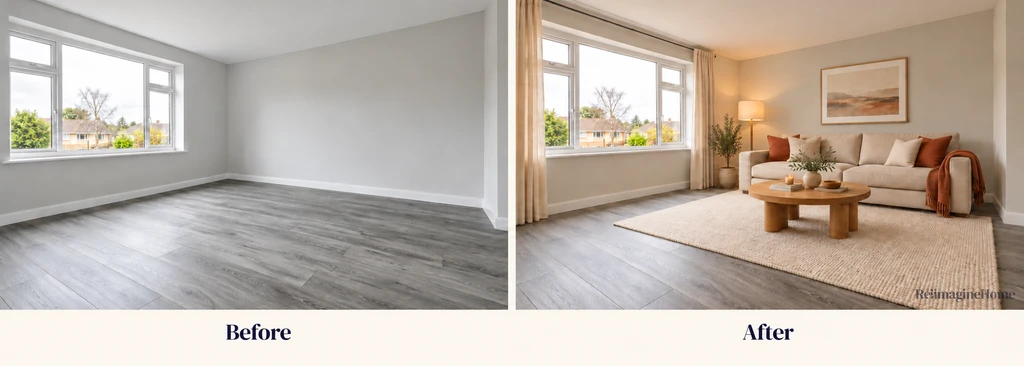
From an empty room to a cosy living space: a ReimagineHome visualisation showing how to warm up grey floors without replacing them.
If you want to see these changes in your actual room before purchasing, use a clear photograph that shows your floor, main furnishings, and wall color. On the ReimagineHome platform, you can set what must stay (the grey floor, perhaps the sofa or windows) and then try a few specific changes—like layering an oatmeal rug, swapping to a deeper wood table, or introducing muted accent colors in cushions and textiles.
Compare two or three directions, each building around your unique space. Focus on changing one layer at a time and check that each generated preview keeps your key surfaces intact. Visual previews make it easier to shortlist changes, especially when you aren’t ready for major purchases or painting projects. For a step-by-step example, see our guide on previewing changes with rugs and decor.
Use ReimagineHome to test how different rug and decor choices impact the warmth of your existing grey floor. -
Mistakes to Avoid When Warming Up Grey Flooring
- Piling on more grey—this reinforces the cold effect.
- Choosing beige finishes without checking for yellow or pink undertones, which can clash with your floor.
- Adding lots of small accessories instead of impactful changes like a rug, curtains, or new lamps.
- Swapping out large furniture too soon; try changing the surroundings first.
- Judging digital previews as final—always check real samples before buying.
Frequently Asked Questions
- Can grey floors work with beige furniture?
- Yes. Check undertones and connect pieces with a rug or accessories containing related colors for a harmonious look. Not all beige is equal—compare actual samples in your room.
- What color rug makes grey floors look warmer?
- Oatmeal, cream, muted rust, and warm neutral patterns are all effective. A rug including both grey and warmer hues can tie the room together.
- Can I mix wood furniture with grey flooring?
- Absolutely; an exact match isn’t needed. Identify a wood finish that complements your floor and existing pieces, then repeat it in a few accents for a deliberate feel.
- Do I have to repaint the walls to fix a cold-looking room?
- Not always. Rugs, curtains, and textured accessories can go a long way. Test other changes first, then reassess wall color if the room still feels off.
- Can I preview these changes digitally before buying?
- Yes, with ReimagineHome’s photo-based editing, you can keep your grey floor and virtually explore a range of rugs, furniture finishes, and accent colors in your space.
Build a Warmer Room Around the Grey Floors You Already Have
Grey floors don’t have to define your space as cold or uninviting. By focusing on large surfaces—rugs, wood furniture, textiles—and being mindful of undertones, you can create a much warmer, cohesive feel without replacing what’s already underfoot. Use digital previews and physical samples before you commit, and build confidence in your choices with small, targeted changes instead of costly overhauls.