The Most Requested Home Staging Styles in 2026: What Buyers and Homeowners Really Want

TL;DR
The most requested home staging styles in 2026 include Contemporary, Soft Modern, Modern Coastal, and Modern Organic because buyers increasingly prefer warm, realistic, and functional spaces over heavily decorated interiors.
What’s Behind 2026’s Home Staging Shift?
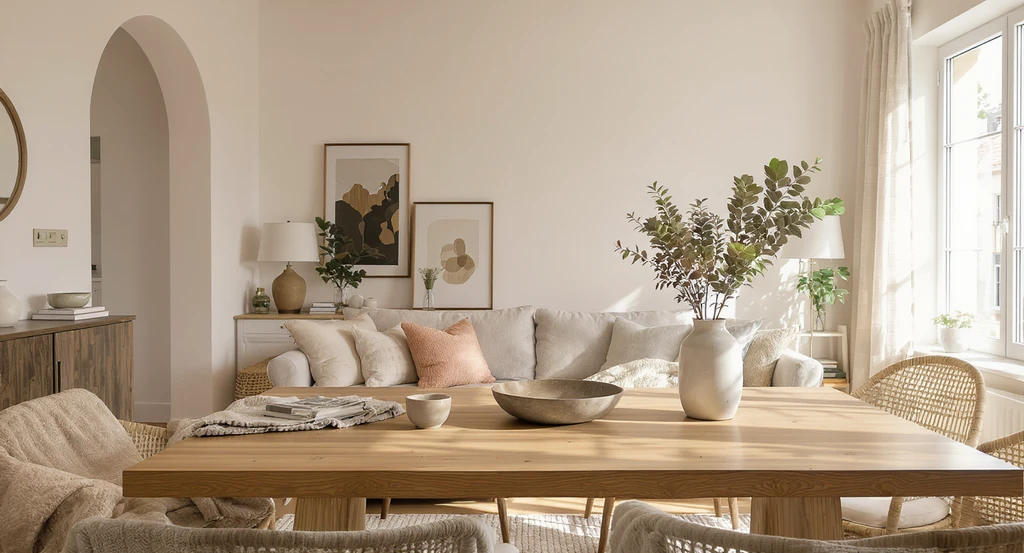
AI home staging style trends 2026 show how virtual staging with ai for real estate creates inviting, lived-in spaces using organic textures, warm colors, and realistic decor for contemporary and coastal style homes.
Home staging priorities continue shifting toward spaces that balance visual appeal with comfort, realism, and everyday livability. Previously, many listings emphasized highly styled, decorated rooms created for impressive photography rather than daily comfort. Many home staging professionals and designers report growing demand for spaces that feel emotionally comfortable, uncluttered, and easy to live in.
This new approach is less about strict style categories and more about achieving warmth, balance, and realism. According to our guide on 2026’s key interior design trends, lived-in comfort, tactile finishes, and organic materials now drive decision-making. Sellers and agents are adapting to these shifts, seeking staging solutions that feel inviting and believable.
-
Why Home Staging Requests Are Changing in 2026
A main driver of change is the growing importance of how homes feel for day-to-day living, not just how they photograph. As homeowners spend more time indoors, they increasingly seek spaces that provide practical comfort and emotional ease, reflected in the rise of soft textures, warm color palettes, and decluttered layouts.
Minimal staging is in demand because it improves layout clarity and demonstrates real-life flow. Buyers now expect livable, welcoming rooms rather than excessive decoration or styling for its own sake.
Industry observations increasingly suggest that spaces emphasizing warmth, functionality, and emotional comfort resonate strongly with today’s buyers. Buyers often make rapid emotional judgments while browsing listings online, making comfort and visual clarity increasingly important during first impressions.
Expert Insight
A recent client was hesitant about neutral palettes, believing they would look bland. However, after previewing a warm, minimalist design in the REimagineHome AI tool, the client was surprised to see how inviting and premium the space became, ultimately choosing the softer look for their listing.
-
Most Requested Home Staging Styles for 2026
Within today’s leading staging projects, several styles consistently top the request list:
- Contemporary: Clean, versatile spaces with neutral palettes, layered textures, curved forms, and understated luxury. Warmth and softness distinguish it from colder modern styles of the past.
- Modern: Still highly requested, but now updated with softer lighting, warmer materials, and greater comfort. Minimal spaces are evolving toward more lived-in and welcoming environments.
- Farmhouse: Popular in suburban and family-focused listings, now presented with lighter woods, less distressing, and brighter furnishings. The updated farmhouse look feels refined and avoids rustic overload.
- Coastal: The updated "Modern Coastal" style features airy layouts, beige and white palettes, glass accents, and light woods with minimal beach motifs, appealing to a broader audience than traditional nautical themes, as we detailed in our breakdown of modern vs traditional coastal preference.
- Glam: For luxury properties, quiet luxury remains popular, featuring cream palettes, subtle metallics, and elegant forms instead of flashy finishes or heavy ornamentation.
-
The Rise of Fusion and Soft Styles
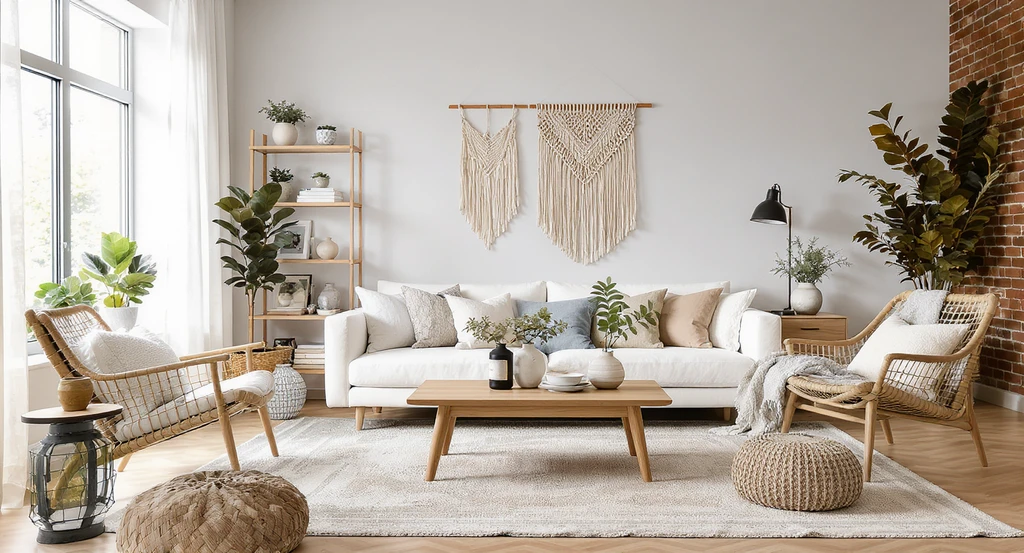
Editorial living space staged to show ai home staging style trends 2026—how ai tools visualize modern interiors through virtual staging, blending contemporary and coastal design ideas from the best ai tools for realistic home staging in real estate.
Many current staging projects increasingly blend multiple design influences rather than relying on rigid style categories. Buyers now seek fusion staging, combining elements that create warmth, balance, and personalization. Soft Modern, Modern Coastal, Modern Organic, and Scandi-Boho are common examples of this shift.
- Soft Modern: Combines the clarity of modern design with the comfort of contemporary interiors. Characterized by warm neutrals, soft textures, minimal clutter, and practical layouts—echoing trends found in the rise of soft modern interiors for 2026.
- Modern Coastal: Features airy spaces, restrained decor, and relaxed palettes. Works especially well in homes with strong natural light.
- Modern Organic: Blends sleek modern lines with wood, linen, woven materials, and earthy tones to create calming and upscale spaces.
- Scandi-Boho and Soft Industrial: Mix relaxed natural elements with subtle accent colors or industrial structure while maintaining comfort and livability.
-
Why Warm, Neutral Colors Dominate Staging Palettes
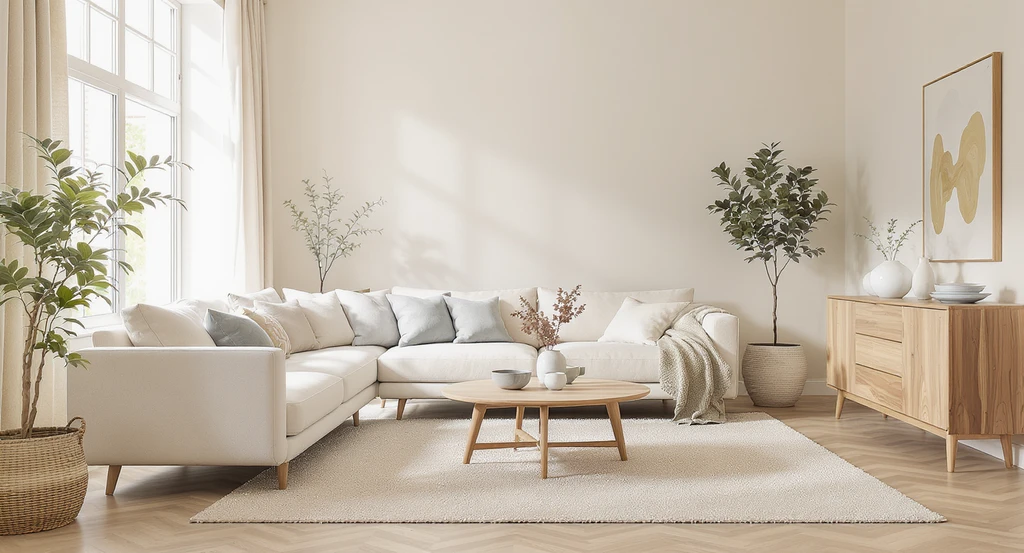
AI home staging style trends 2026 reveal how virtual staging with AI tools favors warm creams, beiges, greige, and muted blues for contemporary interiors. This photorealistic living room highlights the best AI tools for realistic home staging and how modern color palettes maximize both serenity and visual appeal in real estate marketing.
Color trends for staging now lean toward warm simplicity for both design and marketing reasons. Creams, beiges, oatmeal, greige, olive, and muted blues feature strongly. These colors complement natural light, create a calm atmosphere, and photograph exceptionally well, helping listings stand out.
Current staging trends increasingly favor warmer palettes and softer contrast over cooler grey-dominant interiors. The right palette signals modernity and comfort while maximizing visual appeal in both listing photos and live showings.
-
Lifestyle Staging: Function Over Decoration
2026’s top staging projects don’t just fill rooms, they highlight lifestyle potential and functional comfort. Home offices with proper acoustics, inviting reading corners, family-friendly zones, and welcoming outdoor spaces are increasingly prioritized over purely decorative accessories.
This approach helps buyers imagine real life in the home rather than simply admiring furnishings. Layouts are thoughtfully designed, with every piece scaled and placed to support everyday routines, not just photography.
Functional staging helps buyers visualize daily routines and understand how a space can support real-life living.
-
The New Measuring Stick: Realism and Proportion
Visual realism is now a staging must-have. Staged spaces require accurate furniture scale, natural lighting, and believable arrangements. Overly staged photos featuring floating, awkwardly placed, or out-of-scale pieces can reduce trust and create a disconnect for buyers.
Instead, modern staging emphasizes correct proportions, clear circulation, authentic materiality, and practical use of space. As more agents adopt AI visualization tools, layouts can be previewed in advance to ensure real-world viability and avoid costly mistakes, precisely what REimagineHome AI is designed to support.
Buyers often notice unrealistic furniture scale and awkward layouts quickly, especially during rapid online browsing.
-
Common Staging Mistakes Agents Avoid in 2026
- Overdecorating with excess accessories — Creates clutter and distracts buyers from the space itself.
- Relying on cold grey color schemes — Cooler grey-heavy interiors are increasingly being replaced by warmer and more approachable palettes.
- Neglecting functional layouts — Buyers expect to see practical, usable spaces that reflect real-life scenarios.
- Insisting on a single design style — Fusion approaches often perform well because they combine warmth, familiarity, and flexibility.
Understanding and correcting these common issues can improve both listing photos and in-person showings, making properties feel more memorable and appealing.
Visualization Scenario
Imagine uploading your listing photos to a platform like REimagineHome AI, instantly previewing multiple staging options—Soft Modern, Modern Coastal, or Modern Organic, each rendered at the right scale. This makes it easy to pick the style and furniture placement that look best, before moving a single item in real life.
Frequently Asked Questions: 2026 Home Staging Styles
- What are the biggest home staging mistakes to avoid in 2026?
- Common errors include overdecorating, relying on cold grey color schemes, ignoring function, and sticking to rigid design categories. Emphasize warmth, realistic layouts, and minimal clutter for better buyer response.
- Which color palettes work best for 2026 real estate staging?
- Warm neutrals—such as cream, beige, oatmeal, and muted blues—work well. These palettes photograph beautifully and create a calming, premium feel. Avoid dark browns and busy patterns to enhance universal appeal.
- How do fusion styles like Soft Modern improve staging appeal?
- Fusion styles combine the strengths of multiple design influences—for example, Soft Modern’s balance of clean lines and comfort. This approach makes spaces feel more natural, flexible, and widely appealing to today’s buyers.
- What home staging style appeals to the widest range of buyers in 2026?
- Soft Modern, Modern Coastal, and Modern Organic often appeal broadly because they combine warmth, simplicity, and realistic layouts that feel approachable and easy to personalize.
- How does AI visualization help prevent staging mistakes?
- AI home visualization lets agents and sellers preview spaces before changes are made, ensuring that scale, color, and layout choices work in real life. This avoids costly mistakes and maximizes property appeal right from the start.
The New Staging Standard: Warmth, Clarity, and Realism
The most requested home staging styles in 2026 share a focus on welcoming, visually calming, and functionally believable interiors. Buyers are increasingly drawn to balanced color palettes, fusion-driven design, and realistic layouts that help them imagine living comfortably within a space.
For both real estate professionals and homeowners, the shift away from dramatic or over-decorated interiors reflects broader preferences for clarity, practicality, and stronger emotional connection from the very first impression.