Modern Coastal vs Traditional Coastal: What Buyers Actually Prefer
TL;DR
Modern coastal design is outperforming traditional coastal in most markets. Buyers prefer clean lines, neutral palettes, and minimal styling over heavy nautical themes. Modern coastal photographs better, feels more flexible, and appeals to a wider audience. Traditional coastal still works in niche coastal or vacation properties but has limited resale flexibility.
Understanding Today’s Coastal Design Shift
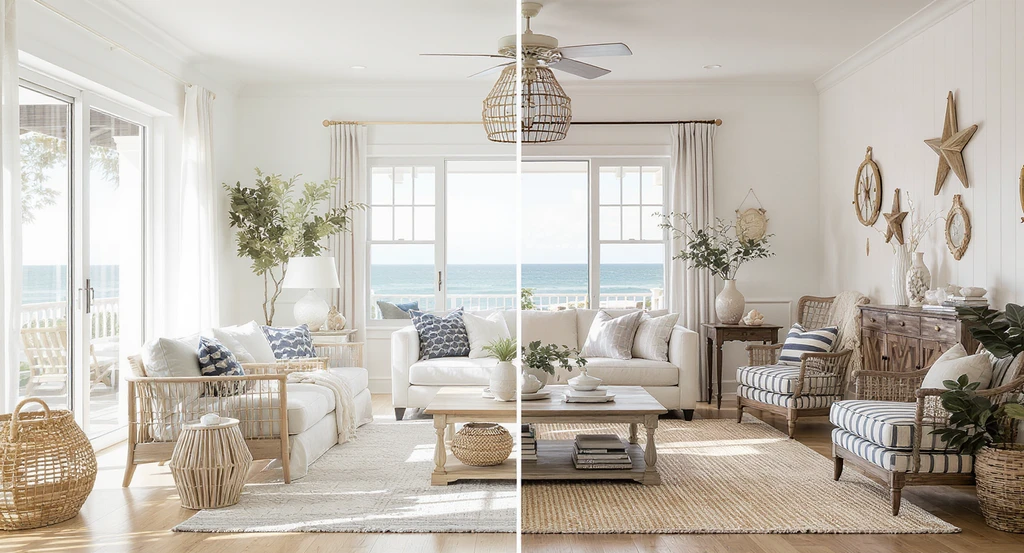
Modern coastal vs traditional coastal interiors visualized with ai for home staging: see how ai virtual staging tools transform neutral coastal spaces, highlight design trends, and help homebuyers choose the best coastal style for their luxury beach homes.
Modern coastal vs traditional coastal design reflects a major shift in buyer expectations in 2026. Buyers now prefer neutral, airy interiors over blue-heavy, nautical themes, as homes are increasingly judged through fast, digital-first browsing on listing platforms and virtual tours.
This shift is driven by how quickly first impressions are formed online. Visually simple, neutral interiors tend to perform better than highly themed spaces because they improve spatial readability and help buyers interpret layout, flow, and scale more efficiently. Modern staging prioritizes clarity, functional flow, and flexibility, making it easier for buyers to imagine their own furniture and lifestyle within the space.
-
Modern Coastal vs Traditional Coastal: The Core Difference
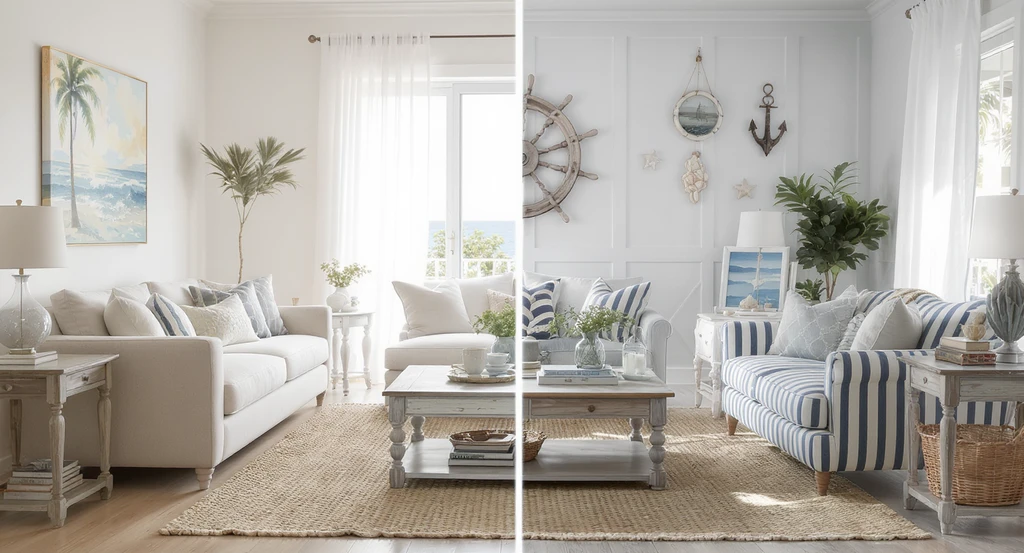
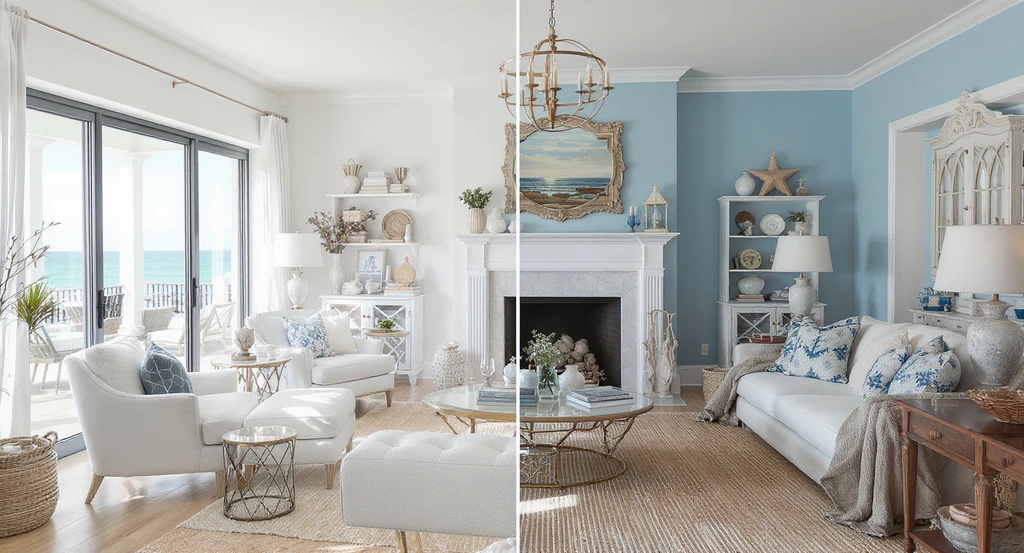
AI visualization contrasts modern coastal interiors—neutral, minimalist elements—with traditional coastal design—blue-and-white, nautical décor. See how AI tools for virtual staging transform home staging and help buyers choose their preferred coastal style.
Modern coastal uses neutral tones, natural textures, and minimal décor to create a calm, contemporary look. It suggests the coastal feel rather than showing it literally.
Traditional coastal relies on blue-and-white palettes, nautical objects, and decorative beach-themed elements, creating a more literal and themed aesthetic.
Both styles are rooted in coastal inspiration, but they differ in execution and market appeal.
Quick Comparison
Factor Modern Coastal Traditional Coastal Buyer appeal Broad Niche Styling Minimal, neutral Themed, decorative Flexibility High Limited Listing performance Stronger engagement Moderate Best use Resale homes Vacation homes
Expert Insight
A real estate client recently asked if she should update a family beach house in bold stripes and anchor motifs. After using REimagineHome AI to visualize both modern and traditional coastal looks, she chose neutral, airy modern coastal, leading to multiple offers at listing.
-
Why Buyers Are Shifting Toward Modern Coastal in 2026
Buyers today want homes that feel move-in ready and easy to personalize. Modern coastal reduces visual complexity, allowing buyers to interpret layout and functionality with greater clarity.
Overly themed interiors slow down decision-making because buyers must mentally “remove” décor before imagining their own style. Neutral spaces eliminate this friction and feel more universally appealing.
-
Buyer Psychology: Why Modern Coastal Feels ‘Easier to Buy’
Modern coastal interiors reduce visual complexity by limiting themed décor, helping buyers quickly understand layout, light, and spatial flow without distraction. This increases perceived value because the space feels intentionally designed yet flexible for different lifestyles. Instead of processing heavy visual themes, buyers experience improved spatial readability and lower interpretation effort, which helps them understand layout and scale more quickly.
A key factor is the “imagination gap,” where buyers struggle to mentally replace strong or themed décor with their own furniture and routines. The more specific the styling, the harder this mental conversion becomes, slowing decision-making.
Instead of processing heavy visual themes, buyers experience lower cognitive load and improved spatial readability, making layout and scale easier to interpret. Modern coastal reduces this gap with a neutral, sophisticated foundation that supports easy personalization.
As a result, it reduces emotional friction and speeds up confidence in decision-making. Clean, neutral interiors improve listing comprehension and help buyers understand space, flow, and usability at first glance. Real estate research and staging reports consistently show that low-themed interiors perform better in buyer engagement and comprehension than highly stylized spaces.
-
Modern Coastal Performance in Real Estate Listings
According to real estate listing behavior patterns observed across major property platforms, visually simplified and neutral interiors are consistently associated with stronger digital engagement and quicker buyer decision-making. While exact performance varies by market, neutral and minimally styled interiors are widely associated with improved listing visibility, higher click-through behavior, and stronger online engagement compared to heavily themed interiors.
Modern coastal interiors perform better in online listings because they:
- Photograph clearly
- Highlight space, light, and layout
- Reduce visual clutter
- Increase engagement and inquiry rates
Across major listing platforms, neutral interiors are commonly associated with higher engagement rates, improved click-through behavior, and faster listing comprehension in digital-first home searches. This performance advantage is largely driven by reduced visual complexity, which allows buyers to interpret space, scale, and layout more efficiently during initial viewing.
AI staging tools and virtual visualization further enhance this effect by enabling multiple neutral styling options without overwhelming or alienating potential buyers.
-
When to Choose Modern Coastal vs Traditional Coastal
- Choose Modern Coastal when: marketing to a broad buyer pool, listing for resale, seeking faster turnover, or needing a neutral, universally appealing look.
- Choose Traditional Coastal when: the property is a vacation or specialty beach house, the audience expects lifestyle storytelling, or the goal is to maintain a niche, resort-focused identity.
This framework aligns design intent with actual buyer profiles and market context, reducing the risk of over- or under-theming a home. This decision should always be guided by the type of buyer you are targeting rather than personal design preference.
Modern coastal is optimized for broad market appeal and faster resale, making it the default choice in most mainstream residential listings.
Traditional coastal is optimized for emotional storytelling in niche, location-specific markets where lifestyle-driven presentation is more important than broad flexibility.
Overall, modern coastal has become the dominant resale style in 2026, while traditional coastal remains limited to niche and vacation-focused properties.
-
Common Mistakes in Coastal Interior Design
Coastal interiors commonly lose impact when they are over-themed. Excessive decorative objects or overt nautical styling can make a space feel less flexible and reduce its appeal to a wider range of buyers. Modern buyers generally respond better to restraint, where design supports adaptability rather than a fixed visual narrative.
Another frequent issue is the overuse of strong coastal color cues. Heavy reliance on blue-dominant palettes can feel dated in many resale contexts, where warmer neutrals such as creams, beiges, and sand tones are increasingly preferred for their broader market appeal and visual neutrality.
Cluttered styling is also a common mistake. When every surface is decorated, the space can feel visually heavy and smaller than it actually is, reducing perceived openness and flow. In contrast, controlled styling improves spatial readability and helps highlight architecture and natural light.
Finally, ignoring layout principles undermines even well-designed coastal spaces. Every room should support clear circulation and functional zoning based on how the space is used, not just decorative placement. Proper layout clarity remains a key factor in creating balanced, market-ready interiors.
-
Modern Coastal: Design Elements Buyers Love
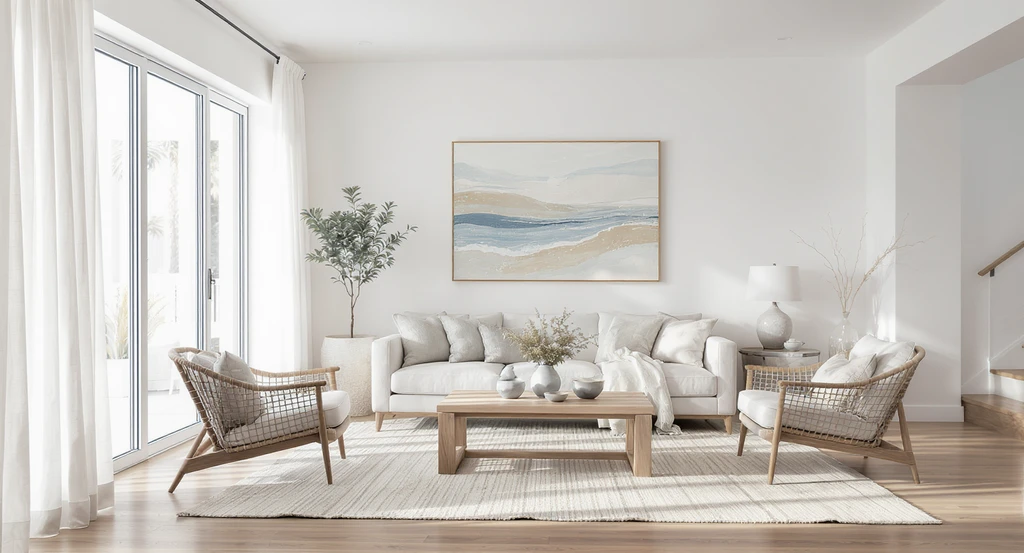
Using AI visualization for modern coastal interiors, this space demonstrates how AI tools for neutral home makeovers maximize light, organic materials, and subtle coastal elements, illustrating how AI transforms home staging and virtual staging for beach houses.
- Neutral Palettes: Soft whites, sand, and beige tones set a fresh, calming backdrop.
- Natural Light: Open layouts, large windows, and sheer curtains maximize daylight and ocean views.
- Organic Materials: Linen, light oak, rattan, and stone create a natural, tactile feel.
- Subtle Coastal References: Use textures and art inspired by the sea, not overt motifs or patterns.
These elements work together to create a modern coastal interior that feels flexible, refined, and adaptable across different property types. Instead of relying on literal coastal styling, the focus shifts toward atmosphere, material quality, and spatial openness.
The result is a luxury coastal aesthetic that remains visually timeless while still evoking a subtle sense of place, making it suitable for both resale and long-term living environments.
-
The Future of Coastal Interior Design
Coastal interiors are increasingly shifting away from literal, theme-heavy decoration toward neutral, adaptable luxury. The focus is now on minimal styling, softer palettes, and seamless indoor–outdoor transitions that work across both primary residences and vacation homes. Modern staging priorities emphasize restraint and clarity, where design supports usability and long-term flexibility rather than visual storytelling alone.
This evolution reflects a broader preference for homes that feel easy to interpret and adapt. Instead of emphasizing overt coastal identity, successful spaces now prioritize spatial clarity and future-proof design choices, making it easier for buyers to visualize themselves in the property.
As this trend extends into exterior design, modern coastal homes increasingly use simplified landscaping, muted material palettes, and clean architectural lines to maintain continuity between curb appeal and interior spaces. The result is a more cohesive and universally appealing property presentation.
Visualization Scenario
Imagine previewing new neutral furnishings and open layouts in your beach house before making a single purchase. With AI-powered visualization, you can see how modern coastal design transforms both light and layout, helping you commit to changes confidently before investing.
Frequently Asked Questions
- What is modern coastal interior design?
- Modern coastal design blends minimalist interiors with soft coastal influences like neutral colors, natural materials, and airy layouts. It creates a sense of relaxation without heavy themes, making spaces feel timeless and easy to personalize.
- Is traditional coastal design outdated?
- Traditional coastal design isn’t outdated—it works well for vacation homes and luxury beach properties, but can feel too specific in urban or suburban resale markets. As discussed in our guide on common beach house mistakes, it’s best to avoid over-theming.
- Which coastal style sells homes faster?
- Modern coastal typically leads to faster sales because it appeals to a broader range of buyers, feels contemporary, and works well with both in-person and virtual staging. Listing performance data backs up this shift.
- Why do buyers prefer modern coastal design?
- Buyers see modern coastal interiors as visually calm, easy to update, and emotionally neutral. This makes it easier for them to picture their own lifestyle in the space.
Final Thoughts
The debate between modern and traditional coastal ultimately comes down to one question: how easily can a buyer imagine living in the space? In most markets, modern coastal performs better because it offers clarity, flexibility, and broad visual appeal that aligns with how buyers evaluate homes today.
Traditional coastal still holds relevance in resort-driven and luxury vacation segments where lifestyle storytelling is expected, but in broader resale contexts, less theme-heavy and more neutral design approaches tend to be more effective.
For most sellers, this makes modern coastal the more practical default, as it communicates space, light, and usability more efficiently during both online browsing and in-person visits. Ultimately, it succeeds because it reduces interpretation effort and helps buyers reach comfort and confidence faster.