9 Reasons Functional Spaces Are Becoming the New Luxury in Homes
TL;DR
Modern luxury homes are defined by how well they adapt to daily life, not by size or ornate finishes. Functional layouts that support work, relaxation, wellness, and family routines are now valued over visual excess, as explored in our guide on why layout matters more than furniture. AI-powered design tools help buyers experience the true potential of these adaptable spaces before making decisions.
Modern Luxury Redefined: Experience Over Excess
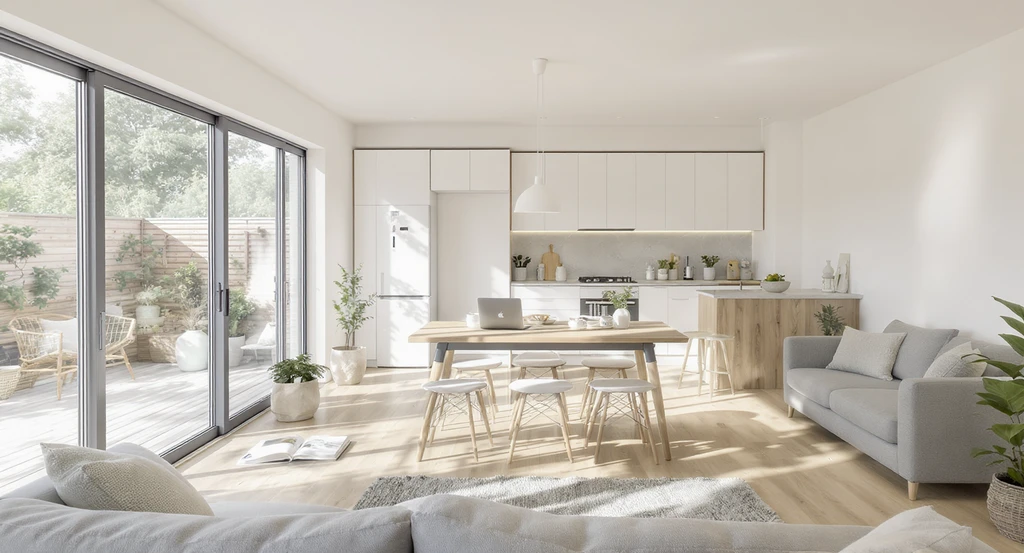
Functional luxury redefined: This flexible, smartly designed home illustrates how ai-powered home design visualization tools and ai interior design for flexible living spaces help prioritize lifestyle and convenience in modern luxury homes.
Recent housing preference studies suggest that over 70% of buyers now prioritize flexible, practical layouts and ease of daily living over sheer square footage. For decades, luxury meant bigger rooms, impressive foyers, and lavish materials. In 2026, this formula is being replaced. Today’s most desirable homes combine smart design, flexible layouts, and invisible convenience to support work, wellness, family, and comfort—all in one. According to our guide on interior design trends for 2026, the emphasis is now on lifestyle-oriented features and behavioral support. Modern luxury is less about status display and more about how environments simplify life.
-
01. Layout Over Lavishness: Why Big Spaces No Longer Impress
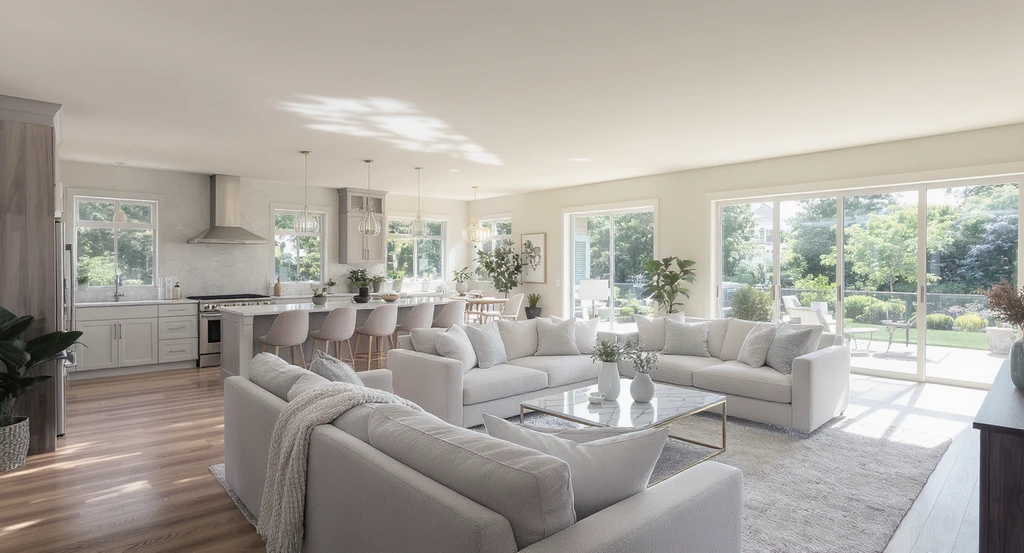
A modern living and dining area exemplifies how ai-powered home design visualization tools and ai interior design for flexible living spaces can create functional luxury by optimizing circulation and purposeful room relationships.
The traditional definition of luxury was rooted in expansive footprints and formal rooms. But large spaces often go unused or create inefficient circulation, leading to higher maintenance and less satisfaction. As we explored in our layout-first approach guide, today’s luxury comes from clear room relationships, logical movement flow, and purpose-driven zones, not size alone. Correcting this means focusing on core layout principles:
- Prioritize circulation paths to avoid wasted steps.
- Use clear sightlines to connect spaces visually.
- Scale furniture according to room use, not just available space.
-
02. Invisible Friction: Identifying Daily Design Obstacles
Invisible friction—such as awkward storage, poor flow, or cluttered entryways—undermines the sense of luxury. These issues arise when functional needs aren’t anticipated during the design process, leaving homeowners to work around poorly planned features. Friction accumulates as micro-stresses, like missing a drop zone at the entry, poor lighting by workspaces, or storage that’s hard to access. Correction logic:
- Position storage where routines happen (e.g., shoe storage by the door).
- Design entryways and kitchens to minimize cross-traffic.
- Use layered lighting to soften and support various activities.
-
03. The F.L.O.W. Framework: 4 Dimensions of True Functional Luxury
Modern buyers subconsciously assess luxury by how spaces support daily life. The F.L.O.W. model helps reveal this logic:
- F – Flexibility: Can the space adapt from work to relaxation to socializing during the day?
- L – Livability: Does the layout support intuitive, unobstructed movement?
- O – Organization: Are storage systems seamlessly integrated to reduce clutter?
- W – Wellbeing: Does the environment boost comfort and support routines?
-
04. Flex Rooms: The End of Single-Purpose Spaces
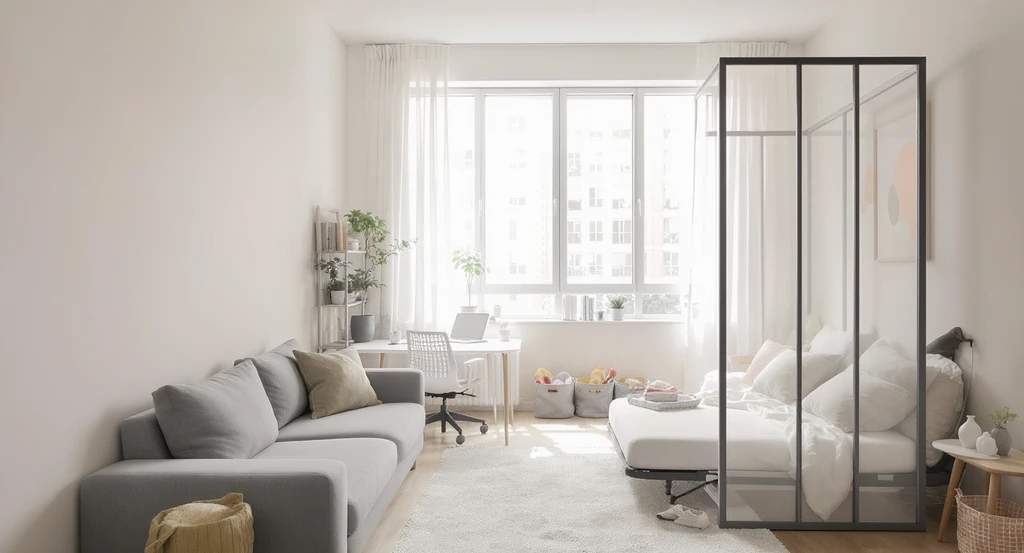
A flex room designed with modular furniture and movable dividers, demonstrating how ai interior design for flexible living spaces and home design visualization tools transform single-purpose homes.
Relying on rigid room categories, like a formal dining room with limited use, leads to underutilized space. Flexible rooms—like a guest space that doubles as a home office or play area—reduce future uncertainty and maximize long-term value. This shift is a response to how buyers now imagine their daily lives flowing across one adaptable space, not several fixed ones. Correction steps include:
- Choose modular furniture and movable dividers.
- Anticipate reconfiguration for evolving needs.
- Avoid built-ins that prevent future flexibility.
-
05. Right-Size Matters: Why Smaller Can Feel More Luxurious
Large homes often create visual emptiness, maintenance challenges, and underused spaces. Intentional layouts in smaller homes, however, support stronger room connections, more functional relationships, and efficient daily movement. As we covered in our piece on future homebuyer trends, smaller functional homes often provide greater emotional impact than less-used, larger homes. Correction logic:
- Focus on room purpose, not just dimensions.
- Use purposeful zoning rather than spreading furniture thinly.
- Eliminate circulation dead-ends and overlapping functions.
-
06. Behavioral Design: Spaces Built for Real Life, Not Photoshoots
Designing for social media or visual trends sometimes leads to impractical spaces. Behavioral design prioritizes user routines, such as dedicated coffee prep stations or self-care corners, over trendy but nonessential features. Functionality is embedded by analyzing and supporting occupant behavior, creating homes that intuitively serve real daily needs.
-
07. How AI Changes the Functional Design Equation
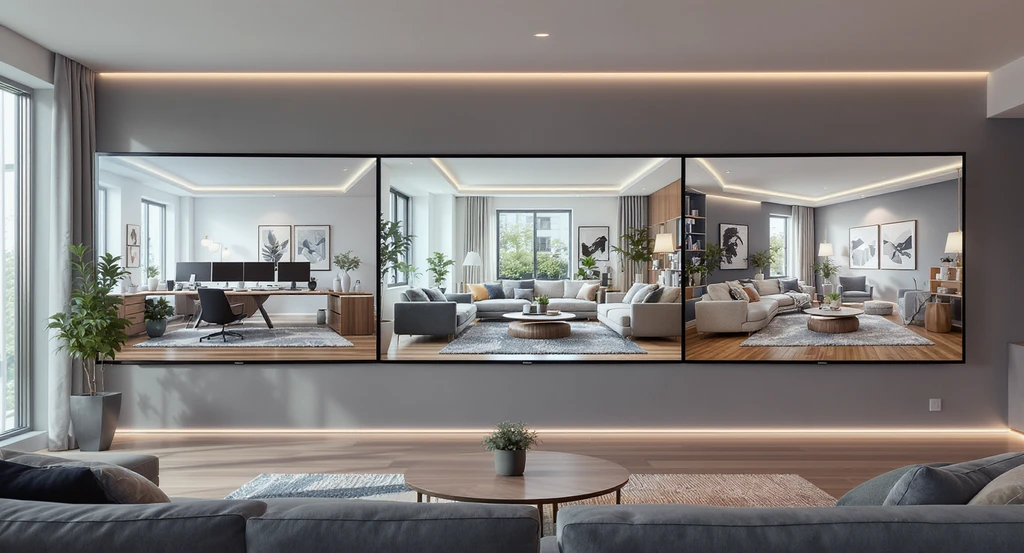
AI-powered home design visualization tools let users preview real-life layouts, demonstrating how AI transforms functional home layouts and supports flexible living spaces.
AI-powered home design visualization tools now let users preview how a room might function across different routines or times of day. This facilitates experimentation and reduces decision fatigue by making use-cases visible before any physical changes occur. According to our article on 2026 design trends, this trend is informing smarter, more adaptable homes. Practical correction:
- Use AI staging to preview work/social/relaxation setups.
- Evaluate which arrangement best supports actual routines before committing.
- AI tools lower the risk of inflexible design mistakes by simulating lived experience.
-
08. Red Flags: Common Mistakes to Avoid in Functional Spaces
Not every attempt at functional design succeeds. Frequent errors include:
- Adding storage quantity without accessibility.
- Designing for minimalism, not real use.
- Ignoring how furniture scale or lighting affects movement flow.
- Overlapping too many functions in one area.
-
09. What’s Next: Predictive, Personal, Effortless Luxury
Expect functional luxury to move beyond responsive design toward predictive personalization. In the future, homes may adapt automatically to occupant routines, optimizing lighting, comfort, wellness, and workspace flows. The most sought-after homes will be those that seem to "just work" for their owners, removing decision fatigue entirely. As environmental psychologist Dr. Maya Bernstein observes, “Spaces designed around behavior not only feel better to use—they also feel uniquely personal. The next wave of home design is about intelligence, not opulence.”
-
Comparison Table: Traditional vs. Functional Luxury
Traditional Luxury Functional Luxury Bigger rooms Smarter rooms Formal spaces Flexible spaces Visual impact Daily usability Status display Lifestyle support
Frequently Asked Questions
- Why are functional homes more popular now? Homes now serve multiple roles. Buyers want environments that make daily routines easier and more adaptable.
- Does functionality replace aesthetics? No. Well-designed functional homes combine usability with visual appeal, not one at the expense of the other.
- Why do buyers prefer flexible rooms? Flexible rooms adapt as needs change, reducing uncertainty and increasing a home’s usefulness over time.
- Can smaller homes feel luxurious? Yes. With intentional planning and strong layouts, smaller homes often feel more usable—and more desirable—than larger, inefficient spaces.
- How does AI improve functional home design? AI visualization helps preview multiple layout scenarios before making decisions, leading to better spatial use and reduced design mistakes.
Conclusion: Effortless Function Is the New Status Symbol
The most memorable homes are those that support real routines—not just those that look good. Luxury is shifting away from visual spectacle to practical design and invisible ease. As examined in our insight on lifestyle-oriented interiors, the next luxury upgrade isn't size—it's a home that feels naturally suited to its occupants.