Why Texture Matters More Than Color in Modern Home Staging
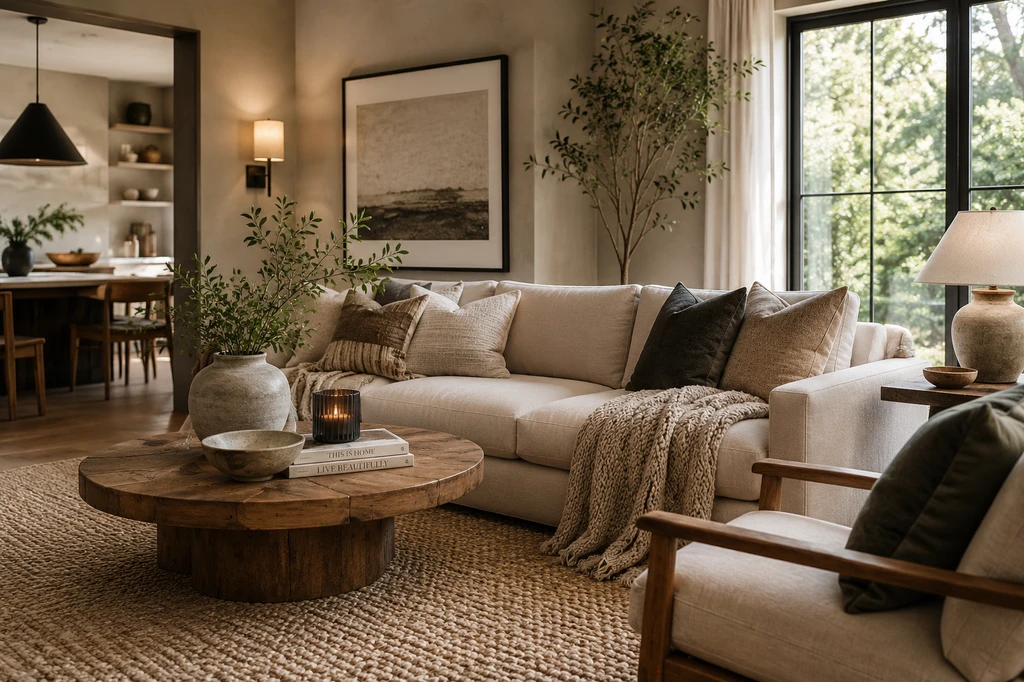
TL;DR
In the digital-first real estate market, texture restores emotional realism and tactile trust lost in listing images. While color gets attention, texture anchors buyer memory, creates spatial clarity, and drives better decisions, making it the true performance layer of modern staging.
The New Psychology of Home Staging: Beyond Color
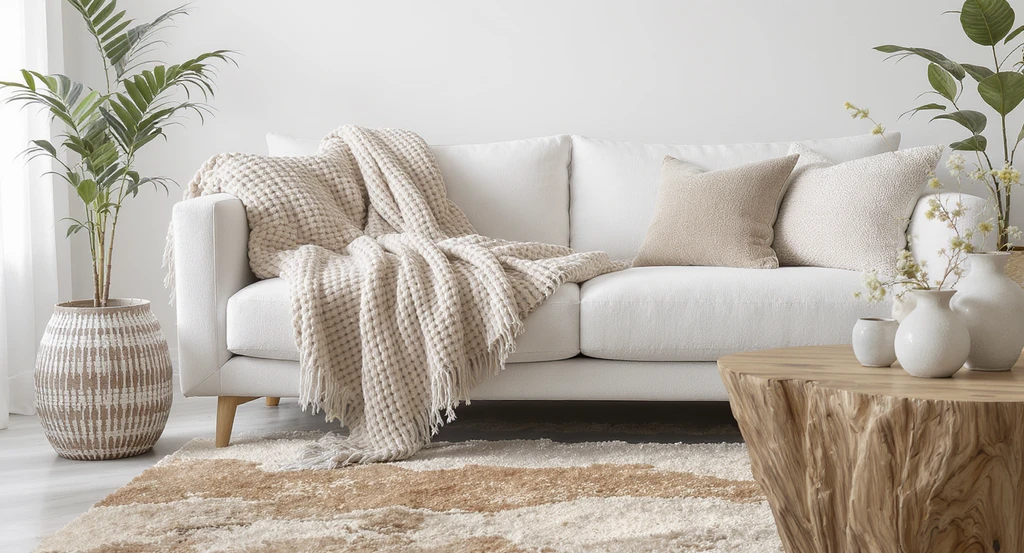
In modern home staging, layered textures—like linen upholstery, wool rugs, and natural wood—boost listing engagement and visual trust, showing why texture matters more than color in real estate listings and virtual staging photography.
Home staging once focused mainly on color, but today’s buyers experience homes through screens before visiting in person, changing how listing visuals influence decisions.
In digital real estate, textured and emotionally believable spaces hold attention longer, helping listings create stronger visual trust and buyer connection online.
-
Direct Answer: Why Texture Outperforms Color in Digital Staging
In modern home staging, texture often influences buyer decisions more than color because it restores emotional realism and tactile depth that digital images naturally lose.
While color attracts attention, texture creates spatial clarity, visual trust, and memorable listing experiences that help homes feel more believable across listing photos and virtual tours.
Expert Insight
One agent shared how a home in a new development sold faster and at a higher price than nearly identical listings nearby. The layout and colors were similar, but this staging used wool rugs, textured fabrics, and tactile decor throughout the space. The buyer later said the home simply “felt more real” in the photos. The difference was not color. It was texture and emotional realism.
-
Why This Matters: The Sensory Compression Problem
Today’s buyers often judge homes through small listing images and digital tours before ever visiting in person. As discussed in our guide to common listing photo mistakes, digital platforms naturally flatten depth, warmth, and spatial feeling.
• Many listings appear visually flat and emotionally forgettable online.
• Texture helps restore warmth, realism, and dimensional depth in digital spaces.
• Strategic texture layering makes listings easier for buyers to remember and emotionally connect with.What buyers see shapes what they feel, and those feelings strongly influence real estate decisions.
-
The Visualization Gap: Why Buyers Struggle to Connect
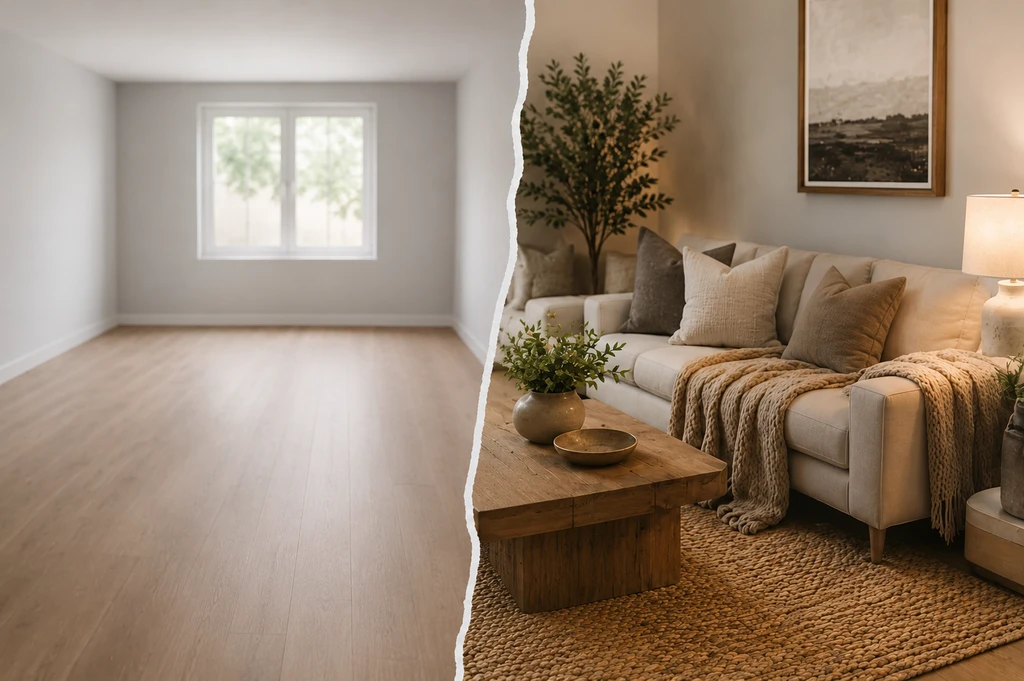
Texture helps digital listings feel warmer, more believable, and easier for buyers to connect with online
Many buyers hesitate because they cannot fully imagine how a home will feel emotionally through photos alone. Texture helps bridge that gap by making spaces feel warmer, softer, and more believable online.
• Buyers respond more strongly to tactile realism like wool rugs, matte walls, and layered fabrics than color alone.
• As explored in our analysis of homebuyer psychology for 2026, buyers increasingly value clarity, realism, and emotional trust over overly polished visuals.
• Spaces that feel too smooth or artificial can quickly reduce buyer confidence.Thoughtful texture layering helps transform digital inspiration into more confident real estate decisions.
-
How Texture Works: The Three Levels of Impact
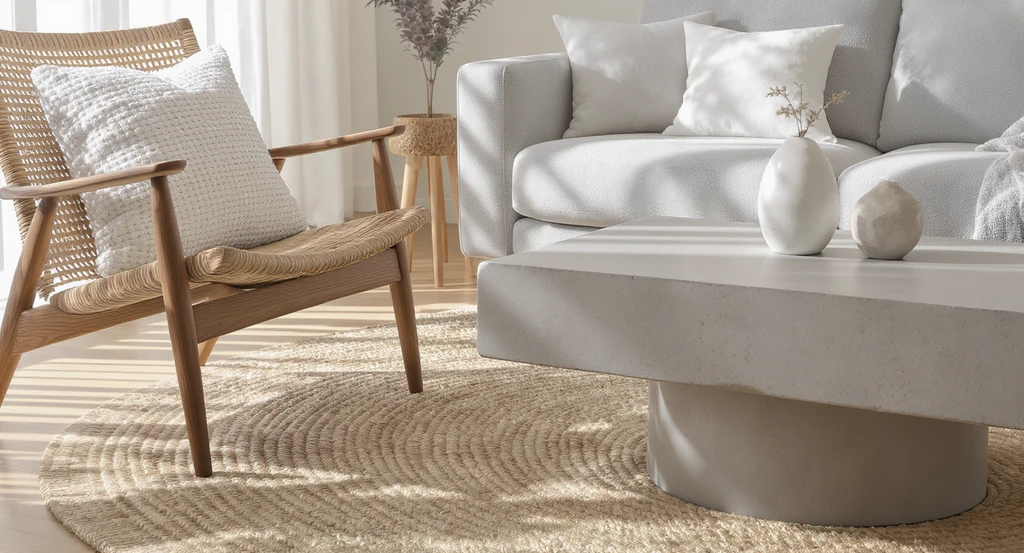
How texture influences real estate listings: A layered mix of a boucle pillow, walnut chair, jute rug, and concrete table demonstrates why texture matters in home staging, creating depth and credibility that boost listing engagement and visual trust in virtual staging.
Texture helps listing visuals feel more realistic, memorable, and emotionally engaging across digital platforms.
• Texture restores depth in listing photos through contrast, shadows, and dimensional detail that flat images often lose.
• Layered tactile materials help buyers slow down, process spaces emotionally, and remember listings more clearly after scrolling.
• Realistic textures build visual credibility by making homes feel warmer, authentic, and thoughtfully staged.The strongest staging uses controlled texture variation that creates visual interest without making spaces feel cluttered or overwhelming.
-
Visual Friction Theory: The Secret Behind Listing Engagement
Visual Friction Theory explains how texture shapes emotional engagement in listing photos and digital staging.
• Low friction spaces use overly smooth surfaces that feel clean but emotionally forgettable online.
• Balanced friction spaces combine layered textures like linen, wood, and matte stone to create warmth and stronger buyer connection, similar to the ideas explored in our spring 2026 staging trends overview.
• High friction spaces contain too many competing textures or trends, making rooms feel visually overwhelming instead of sophisticated.The strongest listings use controlled texture layering that feels visually interesting, emotionally believable, and easy for buyers to process across digital screens.
-
Texture Hierarchy Framework: A Practical Model for Stagers
The Texture Hierarchy Framework helps staged spaces feel balanced, believable, and visually readable in listing photos.
• Foundational texture creates structure through surfaces like wood flooring, rugs, or stone.
• Comfort texture adds warmth using linen, wool, cushions, and upholstered fabrics.
• Contrast texture introduces visual interest through ceramics, metal, glass, or textured decor.Balanced texture layering creates emotional calm and spatial clarity, while too much or too little texture can make spaces feel cold or visually overwhelming. Always check how textures appear on mobile screens where small details may disappear.
-
Business Impact: Texture as a Listing Performance Variable
Texture directly affects how buyers engage with listing visuals in digital real estate markets.
• Textured rooms encourage buyers to slow down and engage more deeply with listing photos.
• Layered and believable visuals improve gallery memorability after scrolling.
• Emotional realism often attracts more serious and confident buyer inquiries.
• Texture rich listings stand out more easily in crowded digital feeds.In modern staging, texture supports buyer trust, listing differentiation, and stronger conversion performance beyond aesthetics alone.
-
AI Staging & Texture: Avoiding the Trap of Synthetic Spaces
AI generated staging makes large scale listing visuals faster, but unrealistic textures or overly smooth materials can quickly reduce buyer trust. As buyers become better at spotting artificial visuals, tactile realism and accurate texture rendering are becoming essential in digital real estate.
Platforms like REimagineHome.ai help users test material combinations, layering, and lighting digitally before staging physically, reducing hesitation, costly mistakes, and visualization uncertainty.
-
Operational Reality: Constraints and Best Practices
Texture driven staging also comes with practical limitations. The best results balance visual impact with operational reality, buyer expectations, and listing performance needs.
• Natural materials like wood, stone, and layered textiles often cost more, so texture choices should align with real ROI.
• Some textures work better in certain climates and markets depending on comfort, maintenance, and local buyer preferences.
• Sourcing tactile materials may be easier in major cities than in smaller or rural markets.
• Larger texture upgrades like flooring or wall finishes usually require more time than smaller staging updates.
• Textures must still read clearly on mobile screens where subtle details can disappear in listing thumbnails.The strongest staging strategies combine emotional realism with practical execution while keeping spaces believable and easy for buyers to trust.
-
Compliance, Trust & Visual Integrity in Listing Media
As listing visuals become more advanced, buyers increasingly expect realism and transparency. Over edited photos or unrealistic AI staging can quickly reduce visual trust and long term credibility.
• Maintain realistic proportions and room scale
• Preserve believable lighting, textures, and material detail
• Clearly disclose digital enhancements when required for MLS complianceIn modern real estate marketing, visual integrity is becoming one of the biggest drivers of buyer confidence and platform trust.
-
Styldod Perspective: Texture as Visual Infrastructure
Texture is no longer just part of interior styling. It now influences how buyers interpret trust, realism, and listing quality in digital real estate.
Platforms like REimagineHome.ai and the Styldod Smart Media Module help teams manage scalable listing visuals where texture and material realism directly affect buyer perception.
In modern staging, texture supports more than aesthetics. It supports listing performance, visual trust, and portfolio level consistency across digital property marketing.
-
Common Texture Mistakes That Hurt Listings
• Overly polished spaces can feel emotionally flat and harder for buyers to connect with.
• Trend driven textures may reduce timeless buyer appeal over time.
• Very subtle textures often disappear in mobile thumbnails and listing feeds.
• Too many competing textures create visual noise instead of warmth and clarity.
• Rooms designed only for aesthetics often perform worse than spaces that feel realistic and livable.The strongest listings are not always the most dramatic. They are the ones that feel believable, emotionally clear, and easy to trust.
Visualization Scenario
Imagine scrolling through a mobile gallery. The fifth home looks nice, but every surface is flat and shiny. The next image? A soft woven rug, a matte stone table, linen sunlight, suddenly you can almost feel the room. You pause. You imagine walking barefoot. That’s the power of digital texture.
Frequently Asked Questions About Texture in Home Staging
- Why is texture important in modern home staging?
- Texture adds warmth, realism, and visual trust to listing photos and staged spaces.
- Does texture matter more than color in listing photography?
- Yes. Texture restores depth and tactile realism that flat digital images often lose.
- What is tactile credibility in real estate?
- Tactile credibility is how believable and realistic materials feel in listing visuals or virtual staging.
- Why do minimalist homes sometimes feel cold online?
- Many minimalist spaces lack enough texture, making rooms feel emotionally flat in digital views.
- How does texture improve listing performance?
- Texture improves buyer engagement, gallery memorability, perceived luxury, and visual trust.
- What is Visual Friction Theory?
- It explains how controlled texture variation slows visual scanning and improves emotional connection.
- Is texture important in AI generated staging?
- Yes. Realistic texture helps AI staged spaces feel authentic and trustworthy to buyers.
- How does texture affect buyer psychology?
- Texture helps buyers interpret comfort, warmth, livability, and emotional realism more naturally.
Conclusion
In digital first real estate, texture now influences listing performance more than color alone. While color attracts attention, texture creates emotional realism, spatial depth, and visual trust that help buyers connect with homes more naturally online.
Textured spaces feel more believable and memorable in listing photos, virtual staging, and AI visualization, helping buyers emotionally engage with a property and better understand the space through screens.