Lake House Interior Trends Buyers Love in 2026
TL;DR
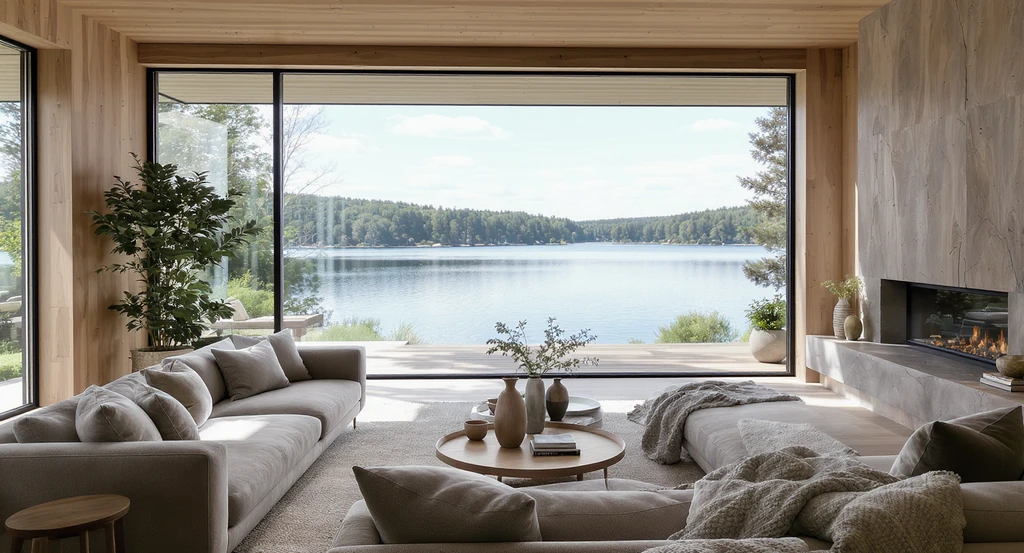
Lake house interiors in 2026 are defined by emotional clarity rather than decorative style. Buyers now prioritize warm minimalism, biophilic design, and layouts that reduce cognitive load while enhancing natural light and connection to nature. AI visualization is increasingly used to preview spatial comfort and emotional response before purchase.
Lake House Design in 2026: Why Experience Now Matters Most
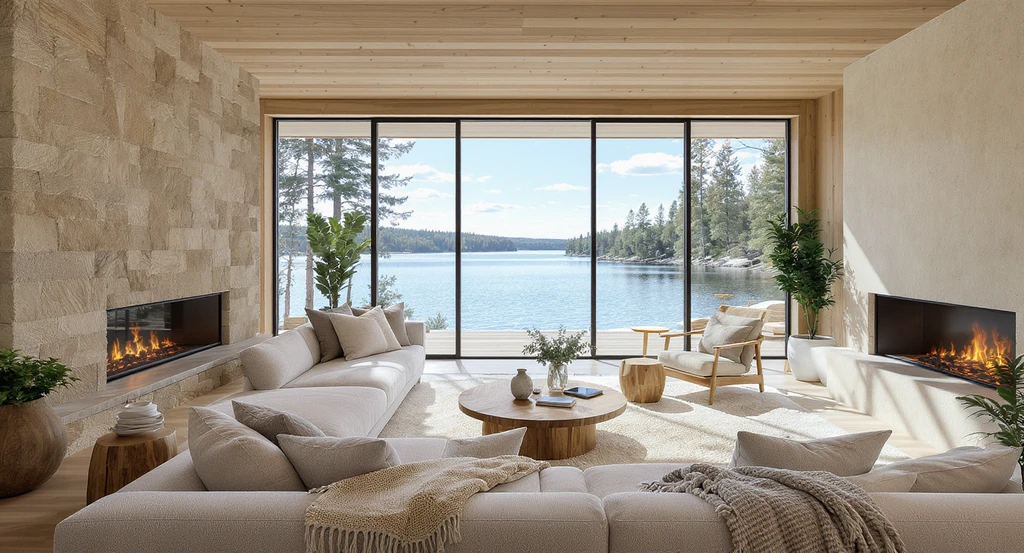
AI visualization for lake house interiors reveals how AI transforms waterfront home design, blending virtual staging with emotional comfort and nature-driven elements.
Lake houses are no longer just weekend escapes, they are increasingly primary homes and personal reset zones. In 2026, lake house interior design is defined by one clear shift: emotional experience now outweighs decorative display.
Buyers are prioritizing spaces that dissolve tension, enhance mental clarity, and maintain a strong connection to water, light, and surrounding landscape.
This shift is driven by lifestyle migration, wellness-focused living, and the growing use of AI visualization tools that allow buyers to preview the emotional feel of a home before purchase. As a result, clarity and emotional ease are replacing visual layering and heavy thematic design.
The most successful lake house interiors balance restraint, warmth, and seamless nature integration, establishing a new baseline for modern luxury and comfort. This aligns with broader real estate staging trends, where emotional usability is now valued more than decorative complexity, especially in high-value secondary homes.
-
The Shift: From Decorative Lake Cabin to Emotional Reset Zone
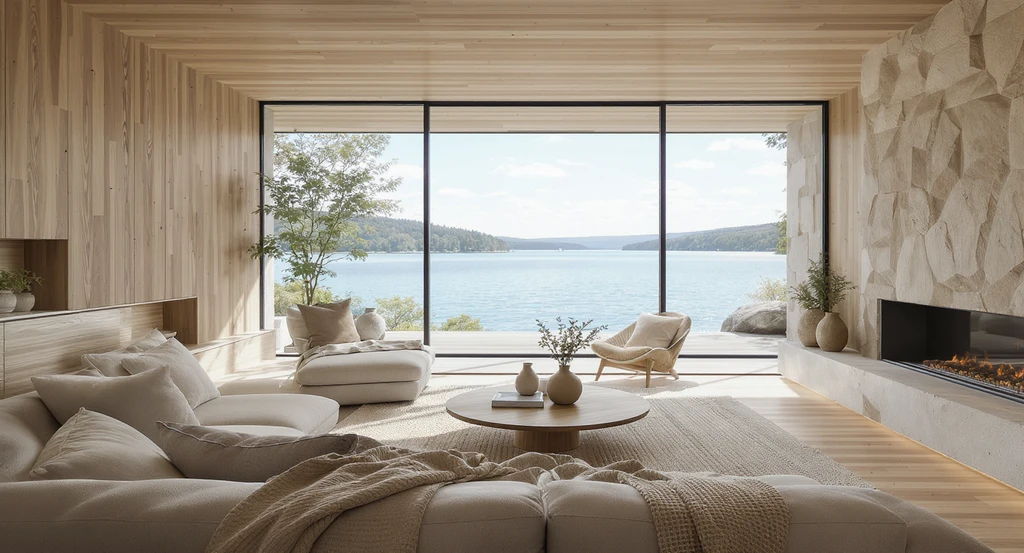
This ai visualization for lake house interiors shows how ai transforms waterfront home design, using best ai tools for vacation home interiors to create a calming, emotionally comforting living area that blends seamlessly with lakeside nature and prioritizes restorative comfort.
Modern lake houses are no longer marketed solely on their views. Today’s buyers expect interiors that actively support deep relaxation, mental clarity, and restorative daily routines.
As explored in our 2026 design trends guide, this reflects a broader shift toward interiors that reduce stress, enhance everyday wellness, and allow the natural setting to become the primary experience.
The most successful lake house designs no longer compete with the landscape, they dissolve into it, creating a seamless connection between interior space and nature.
Expert Insight
A client recently toured two similarly sized lake houses with identical price points. One used soft wood, gentle palettes, and clear sightlines; the other was more decorated, with patterned rugs and numerous art pieces. The client later explained, "I felt instantly relaxed in the first house, like my mind didn’t have to work." That, more than any feature, decided the sale.
-
Design Principle: Interiors Must Extend, Not Compete With, Nature
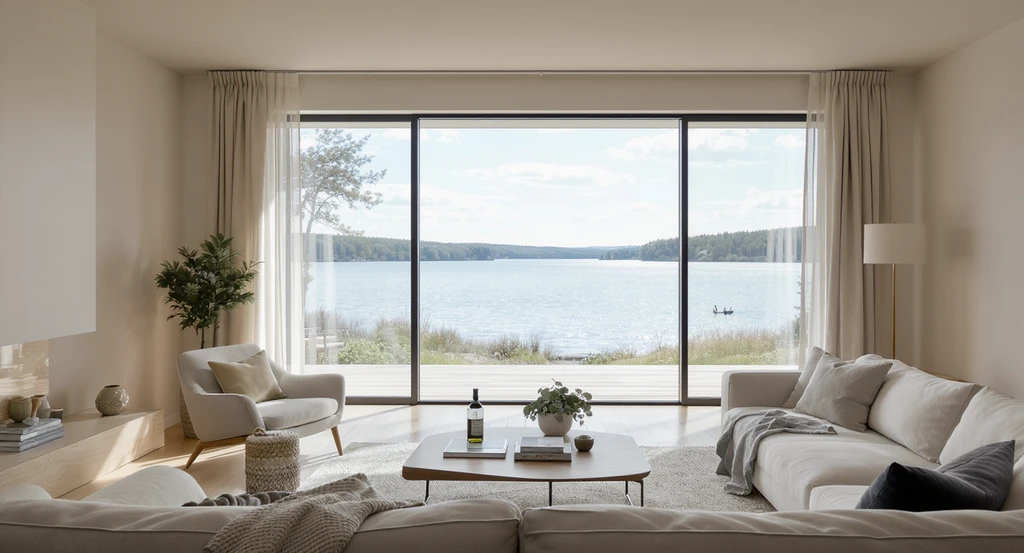
This ai visualization for lake house interiors illustrates how ai transforms waterfront home design—showcasing best ai tools for vacation home interiors that create emotional comfort in ai-designed spaces through visual silence and seamless indoor-outdoor harmony.
The dominant design principle in 2026 lake house interiors is visual subtraction for sensory clarity, where every material, object, and layout decision is evaluated based on whether it enhances or interrupts the experience of natural views.
Earlier design styles often relied on heavy rustic themes, nautical motifs, or layered décor. While visually expressive, these approaches frequently created competition with the lake itself, reducing the sense of calm and visual continuity.
Contemporary lake house design now prioritizes uninterrupted views, lighter material palettes, and low-decor density, transforming interiors into “visual silence” zones where nature remains the primary focus.
-
Trend 1: Warm Minimalism, Calm, Textural, and Lived-In
Warm minimalism in lake house interiors is a design system that combines low visual density with high tactile warmth. It uses muted earth palettes, natural textures, and soft material contrast to create emotional comfort without visual emptiness.
The palette typically includes beige, clay, muted greens, and soft earth tones, layered with tactile materials such as linen, natural oak, and lightly textured stone.
In line with the rise of soft modern interiors in 2026, the goal is not uniform emptiness but perceptual quietness, achieved through texture rather than objects. Walls and floors remain visually continuous, with gentle contrast that allows the outdoors to become the primary visual focus.
-
Trend 2: Biophilic and Nature-Integrated Living
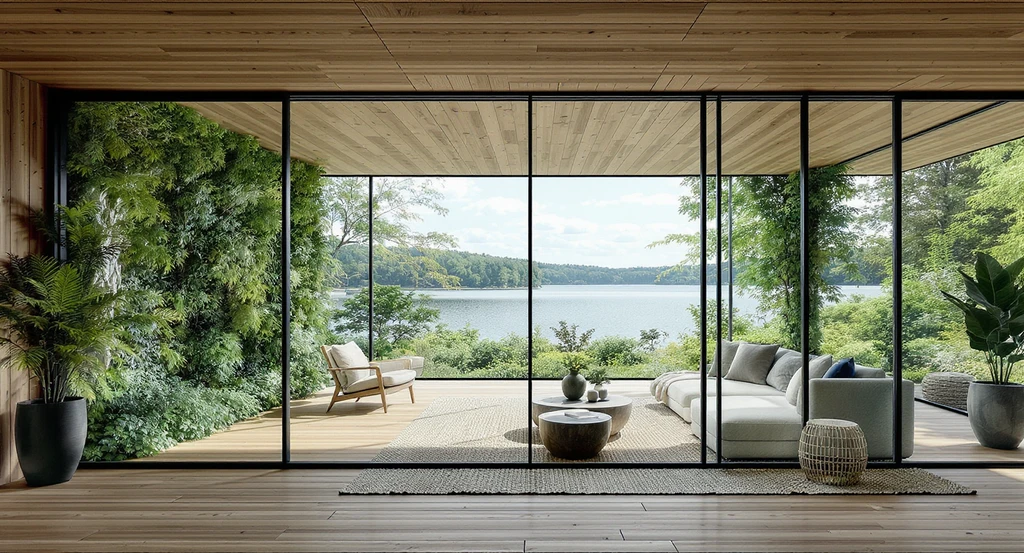
Explore how AI visualization for lake house interiors captures biophilic and nature-integrated design trends, blending natural materials, plant life, and waterfront views to elevate emotional comfort and well-being in vacation home spaces.
Lake house buyers now expect homes to feel like a natural extension of their environment, going far beyond simply having a view.
Effective biophilic design relies on uninterrupted glass, seamless floor plans, continuous natural materials flowing from exterior to interior, and thoughtfully integrated plant life.
In this approach, vegetation becomes functional, framing views, guiding movement, and shaping spatial experience rather than serving as decoration. The result is a home that blends into its site and maintains a constant connection to water, sky, and landscape.
-
Trend 3: Low Visual Clutter for Instinctive Calm
Layouts focus on reducing cognitive load. Walkways are open, furniture footprints are minimized, and storage is hidden, guiding movement from room to room without visual obstacles. Low, clean sightlines ensure the eye travels easily to the lake.
-
Trend 4: Quiet Luxury, Softness Over Shine
Luxury in 2026 is defined by sensory comfort rather than gloss. Buyers choose brushed timber, matte-finished stone, fabric upholstery, and subtle imperfection. As current market insights show, calmness and tactile richness now outweigh overt displays of wealth. The effect is subtle but powerful: emotional comfort now signals value more than visual opulence.
-
Trend 5: Window-Centric Layouts,The Lake as the Main Room
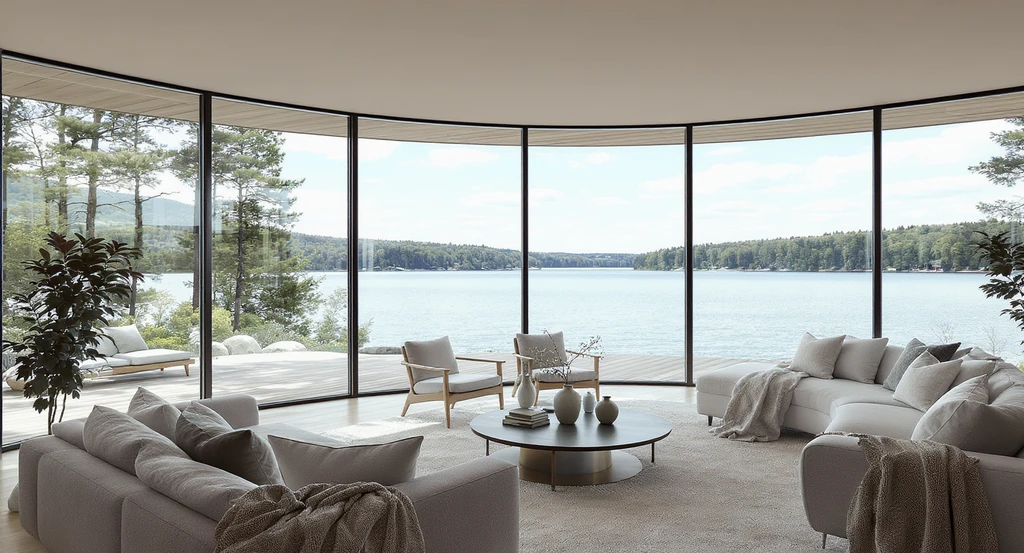
This ai visualization for lake house interiors reveals how floor-to-ceiling glass with open layouts makes natural light and lake views central, showing how ai transforms waterfront home design for emotional comfort.
Lake house architecture increasingly prioritizes windows, treating the landscape as the true focal point. Floor-to-ceiling glass, corner windows, and open layouts are used to maximize natural light and uninterrupted sightlines.
In many modern lake house designs, furniture is positioned as a secondary layer to the primary architectural experience, natural light, horizon framing, and continuous views toward water.
According to our analysis of future-focused interiors, this approach grounds each space in the daily rhythms of nature.
-
Practical Correction: Applying These Trends Step-by-Step
To align a lake house with 2026 buyer expectations, begin by removing visual blockages and excess decorative items, and prioritize integrated storage solutions that preserve spatial clarity.
Establish a grounded palette of soft earth and water tones to reinforce continuity between interior and exterior environments.
Ensure that walking paths remain open and window sightlines are completely unobstructed, allowing natural light and landscape views to remain uninterrupted.
Select materials that emphasize tactile comfort, linen over leather, matte stone over polished surfaces, and evaluate every design decision based on its contribution to visual silence and emotional comfort, not purely aesthetic appeal.
-
Spatial Reasoning: Why Some Beautiful Lake Houses Still Feel Wrong
Often, technically stylish lake homes still don’t feel quite right. This is usually due to subtle issues such as blocked circulation, poor light transitions, or overly dense seating arrangements.
These details can create subconscious tension and prevent full relaxation. Even a beautifully staged space may introduce mental effort if movement feels restricted or materials reflect light too harshly.
The solution lies in simplicity and flow, aligning furniture placement, sightlines, and surface materials to support ease, clarity, and effortless movement throughout the space.
-
AI Visualization: Testing Emotional Comfort Before Deciding
AI-driven interior visualization has introduced a new decision layer in lake house buying, where emotional response to a space can be simulated before physical viewing.
This reduces uncertainty in high-value purchases and shifts design evaluation from imagination-based prediction to experience-based validation.
With platforms such as REimagineHome AI, buyers and owners can preview how a space feels at different times of day, compare furniture layouts, and test material or color palette variations.
This process removes much of the guesswork in high-value second homes, where emotional resonance is a primary driver of decision-making. Ultimately, it is not just about appearance, it is about ensuring a home genuinely supports rest, clarity, and daily emotional ease.
Visualization Scenario
Picture yourself entering a 2026 lake house: daylight glides uninterrupted across muted wood floors, windows frame serene water at every turn, and there’s always a clear path forward. There is no sense of overcrowding, just tactile comfort, gentle light, and immediate calm. You relax before you even sit down, sensing the space is built for restoration, not show.
Lake House Interiors FAQ: 2026 Buyer Priorities
- What is the main lake house design trend in 2026?
- Warm minimalism, nature-integrated layouts, and low-visual-clutter interiors are the top trends. Each supports calm, effortless movement and real connection to the outdoors.
- Why are old-fashioned lake cabin styles declining?
- Themes with heavy rustic elements or dense décor now compete with the landscape rather than enhancing it. Modern buyers want serenity and restraint.
- How does AI improve lake house interior decisions?
- AI visualization lets buyers preview layouts, lighting, and material choices—helping them evaluate a space’s emotional comfort and flow before making major investments.
- What makes a lake house feel luxurious today?
- Emotional calm, seamless movement, rich textures, and unobstructed views—not decorative excess—are the new marks of luxury in waterfront home design.
- Are windows more important than furniture in 2026?
- Yes. Modern lake house layouts center around, and often subordinate furniture to, uninterrupted window views and natural light.
The New Definition of Lake House Luxury: Emotional Clarity First
The future of lake house interiors is not decorative evolution, but experiential optimization. Buyers now evaluate homes based on emotional response rather than visual complexity, favoring spaces that function as quiet environmental systems, simple, adaptive, and aligned with natural rhythm.
Rather than competing with the landscape, the most successful lake house interiors act as an extension of it. Design decisions are increasingly measured by how effortlessly a space supports calm, attention, and rest.
Luxury is no longer defined by addition, but by careful subtraction that allows light, view, and movement to breathe freely. The result is an environment that feels effortless, restorative, and deeply in tune with its setting.