Making Basement Furniture Work: Flow, Comfort, and Affordable Design
TL;DR
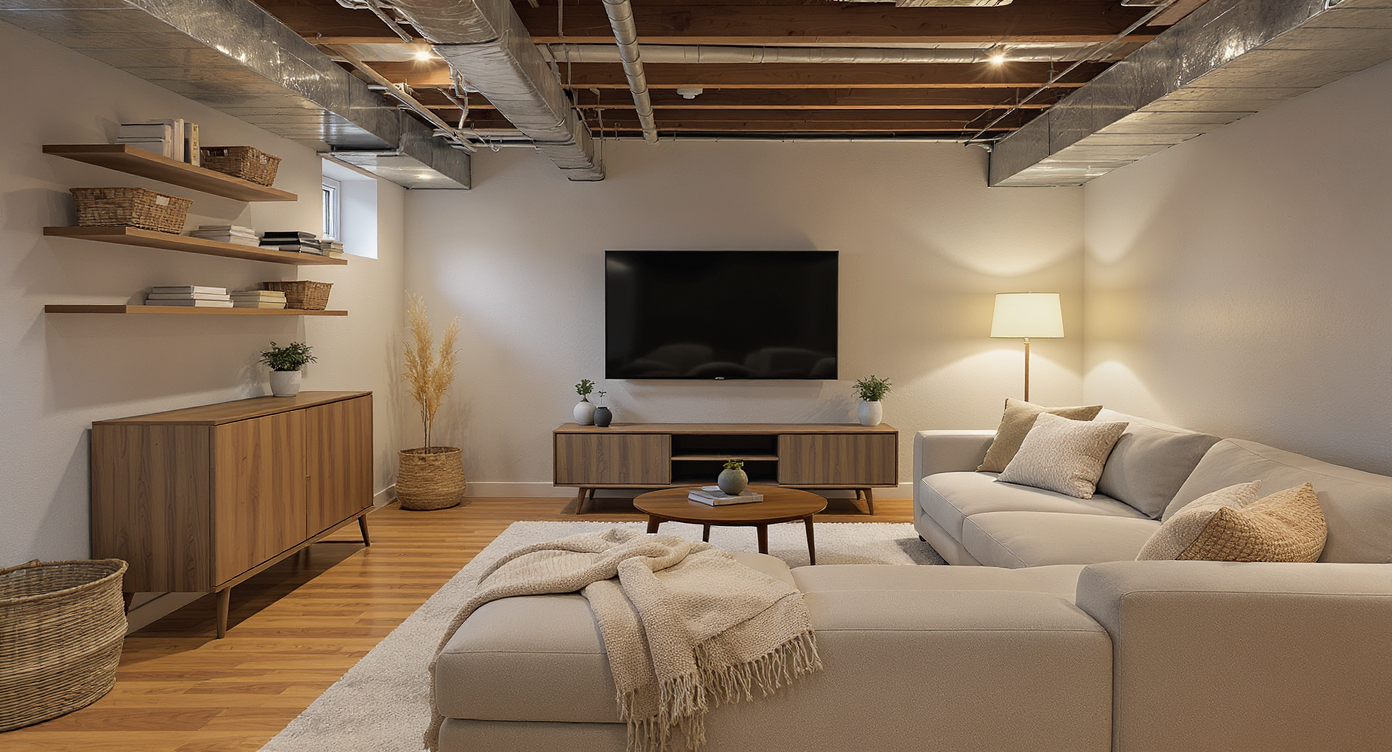
Basements can feel awkward or underused when furniture and flow don’t align, especially in compact spaces. Prioritizing layout changes, anchored zones, and affordable design choices makes even a challenging underground lounge both comfortable and engaging. Smart use of existing furnishings and small upgrades help maximize living potential and personal comfort, often without exceeding a modest budget.
Why Basement Spaces Challenge Even Design Enthusiasts
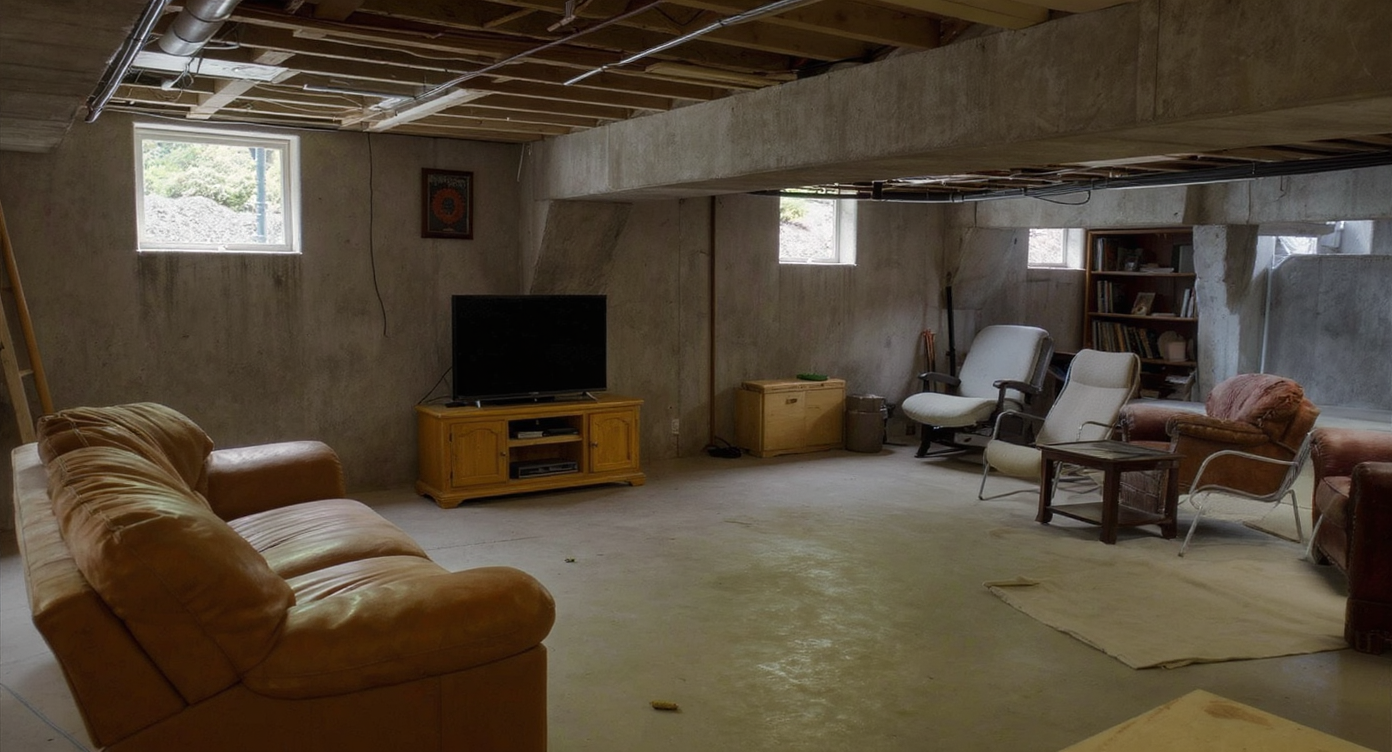
A compact basement living space with low ceilings, awkward furniture placement, and separate zones for lounging, gaming, and reading.
Basements have a reputation for being difficult to decorate, with low ceilings, odd layouts, and a tendency toward feeling disconnected from the rest of the house. When a basement becomes your primary living space, the pressure to make it feel like home increases. Whether you’re sharing the space or carving out a multifunctional zone for lounging, gaming, and reading, every furniture decision seems magnified. The good news: with a few well-considered layout changes, affordable upgrades, and a little creative problem-solving, any basement can provide comfort and style even on a tight budget. Many first-time basement dwellers initially struggle with placement—finding that the room never feels quite balanced no matter how they arrange their couches, TV, or shelves. This challenge is rarely about having the wrong furniture. More often, it comes down to furniture & flow, and whether functional zones actually fit the ways you live. Designers often suggest stepping back, surveying the space with fresh eyes, and considering whether the overall arrangement is working for your real needs.
-
Understanding Furniture & Flow in Compact Basements
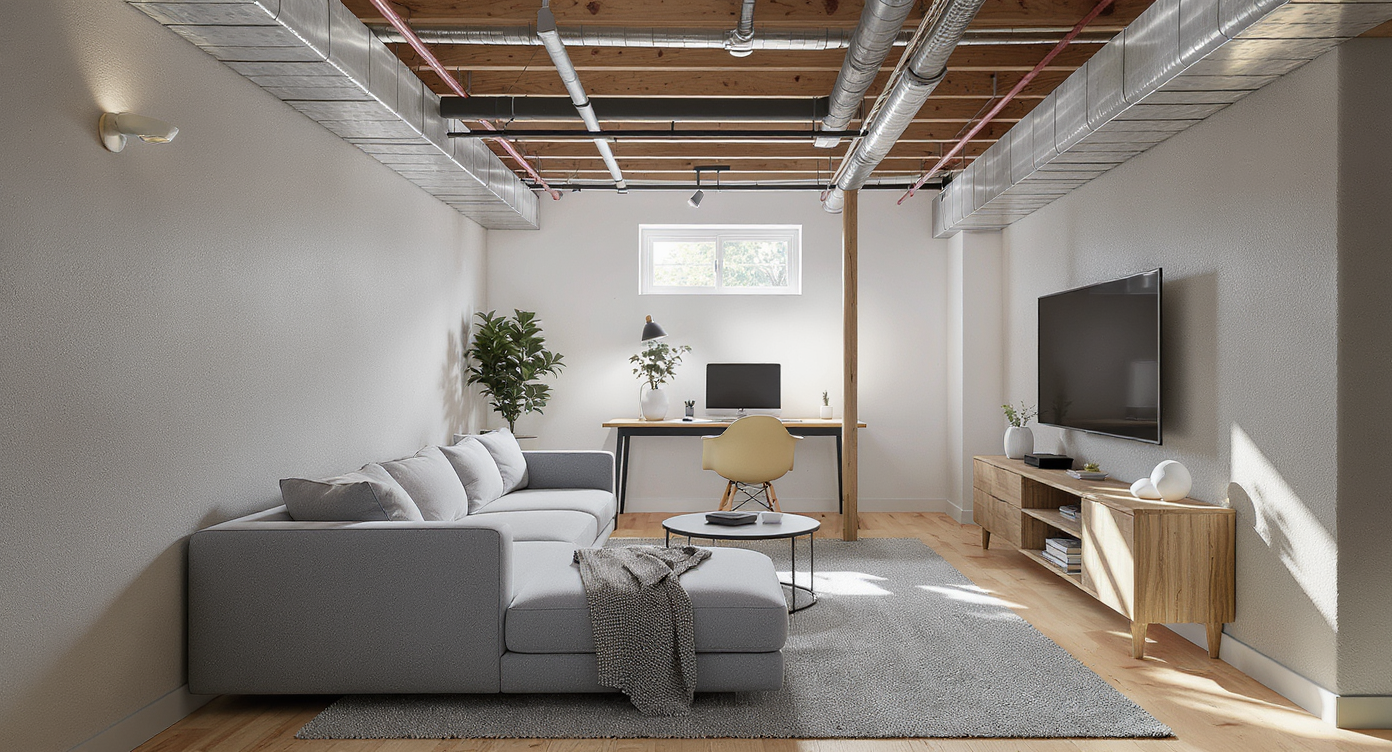
Smart basement furniture placement emphasizes clear walkways, anchoring each zone for smooth movement and an uncluttered, usable space.
Flow is the silent engine behind any successful room, but it is especially critical in basements where architectural elements, such as posts, fireplaces, or awkward entrances, break the space’s symmetry. When working with compact spaces that double as entertainment hubs, anchoring each use area is essential. For basements that serve as everyday living rooms, the position of your main seating, TV, and work zone will determine whether the room feels spacious or cluttered. Consider how walkways and visual sightlines impact your movements from one part of the room to another. According to our sofa size vs. living room layout overview, even if furniture appears to fit numerically, it is the everyday traffic that reveals the real usability. Protect at least 30 to 36 inches for walkways, especially between couches and any frequent destinations such as desks, TVs, or entrances to laundry rooms. Leaving this clearance helps the room breathe and avoids the bruised shins and frustration that can follow a haphazard arrangement.
Expert Insight
Shortly after moving into a shared basement, Laura and Jasmine spent a weekend debating whether to buy new furniture or change their layout. Their frustration vanished once they rotated their largest couch perpendicular to the window and used their existing shelving as a TV stand. With a thrifted lamp and a soft rug, the basement felt less like an afterthought and more like the heart of their home, illustrating how creative arrangement trumps endless shopping.
-
Affordable Design Choices That Add Warmth and Balance
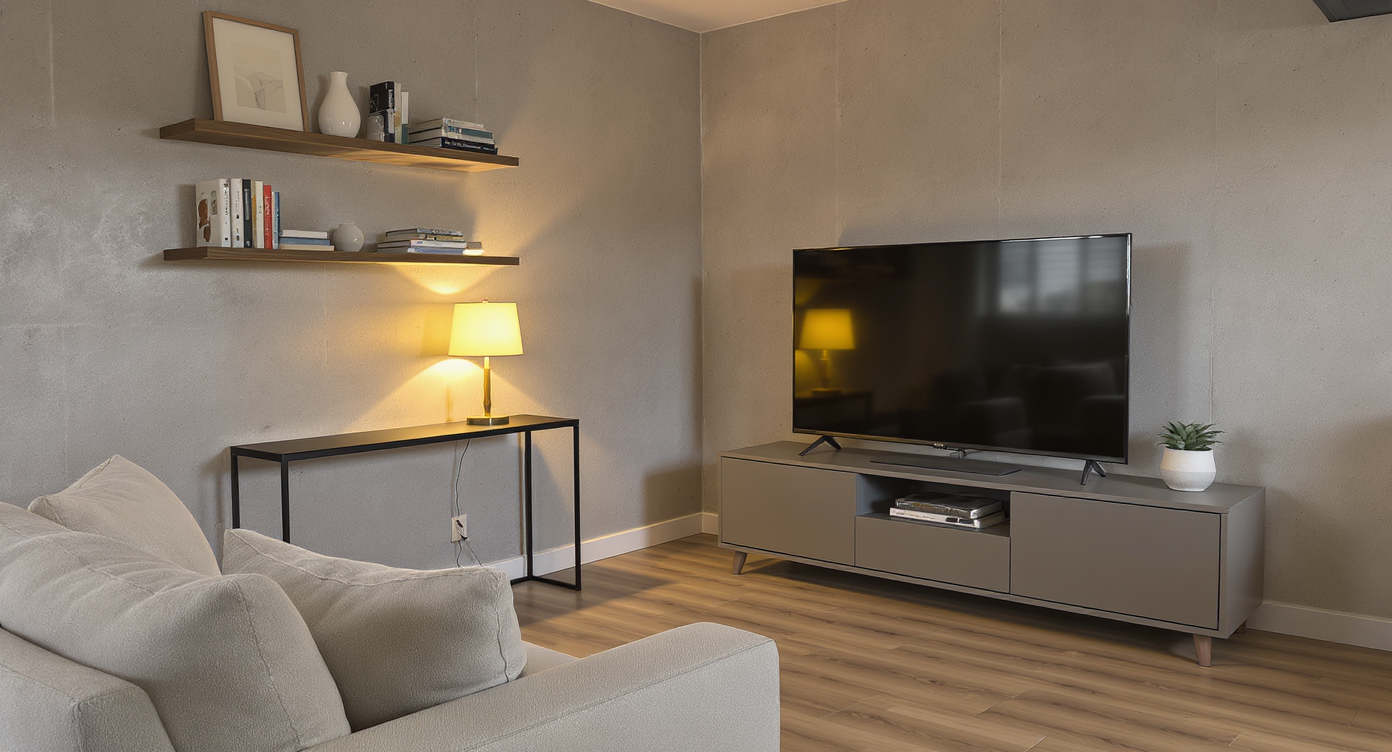
Basement with layered affordable upgrades—repurposed cube storage as a TV stand, floating shelves, and a warm lamp boost coziness and flow.
Basements often inherit an assortment of furnishings—couches, entertainment units, makeshift desks—making it tempting to ‘make do’ rather than invest in new items. Yet, with a modest budget, small upgrades feel transformative. Rethink the purpose of each furniture piece: for example, a simple shelving unit can double as a TV stand. Flipping cube storage on its side creates a low-profile media center, freeing up space for better couch placement and cleaner lines. Unused corners or areas adjacent to less appealing spaces, like those near laundry rooms, can be made visually engaging without turning them into high-traffic zones. Installing floating shelves or a slim console along a ‘cold’ wall provides display opportunities for books, art, or even a low-maintenance lamp, drawing the eye and subtly extending the room’s purpose. Floor and table lamps add both illumination and psychological warmth, particularly valuable in windowless corners as outlined in strategies for decorating empty living room corners.
-
Maximizing Comfort Through Layout Changes
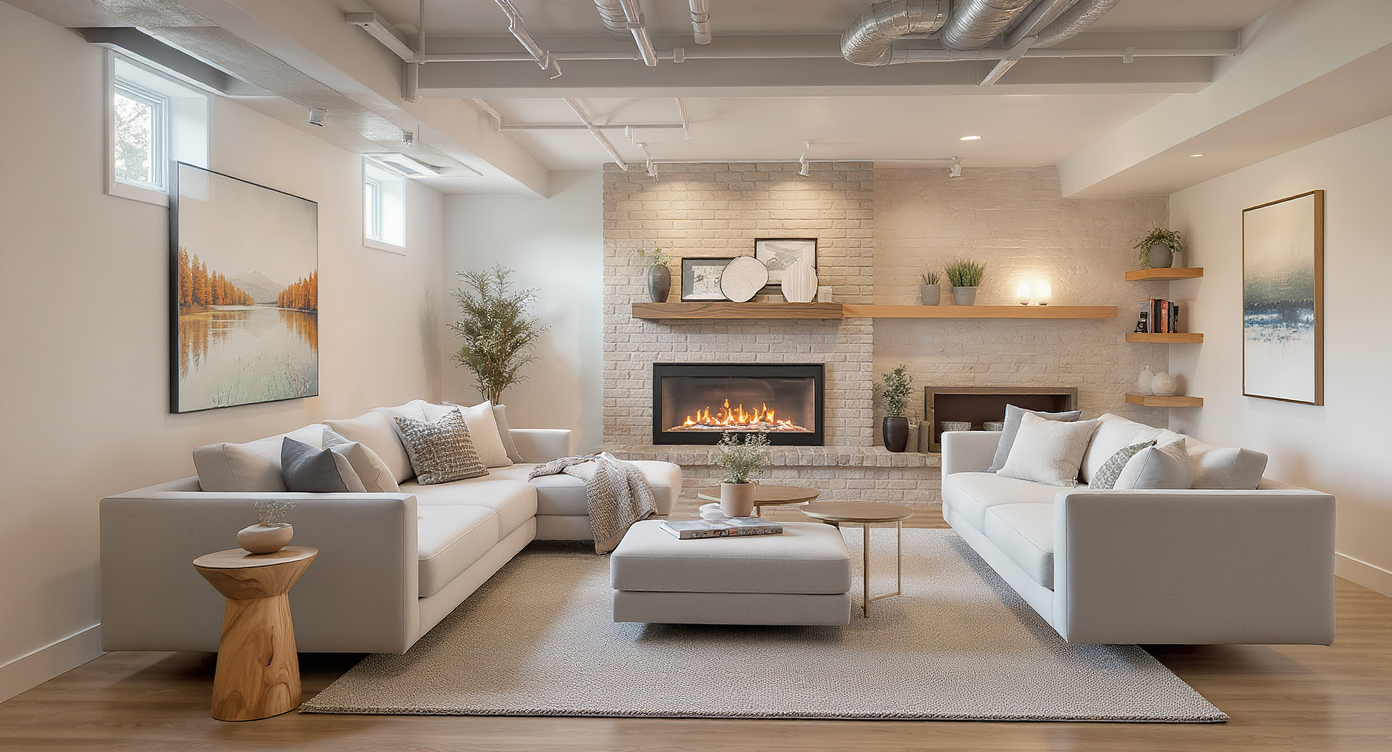
L-shaped couch arrangement, modular furniture, and a defined rug zone demonstrate how layout changes maximize comfort in a compact basement.
Seating arrangement is the heart of the multifunctional basement lounge. When two similarly sized couches dominate the footprint, the easiest way to encourage conversation and comfort is to position them in an L-shape. This creates a gathering area for gaming, movies, and friends alike, while also opening up the center of the room. Placing the main entertainment setup—such as a TV—on a shorter wall, especially when repositioned from over a fireplace, can drastically improve ergonomics for viewing and preserve the fireplace as a cozy visual anchor instead of a mere shelf. Designers frequently recommend using modular or flexible furniture if additional pieces are needed. Select items with storage—ottomans, nesting side tables—to maintain tidiness in compact spaces. According to furniture arrangement strategies for flow, use rugs to ground the seating zone and distinguish between activity areas, even when space blends together. Experimenting with layouts virtually before lifting or buying can prevent costly mistakes.
-
Anecdote: Designing a Basement That Finally Feels Like Home
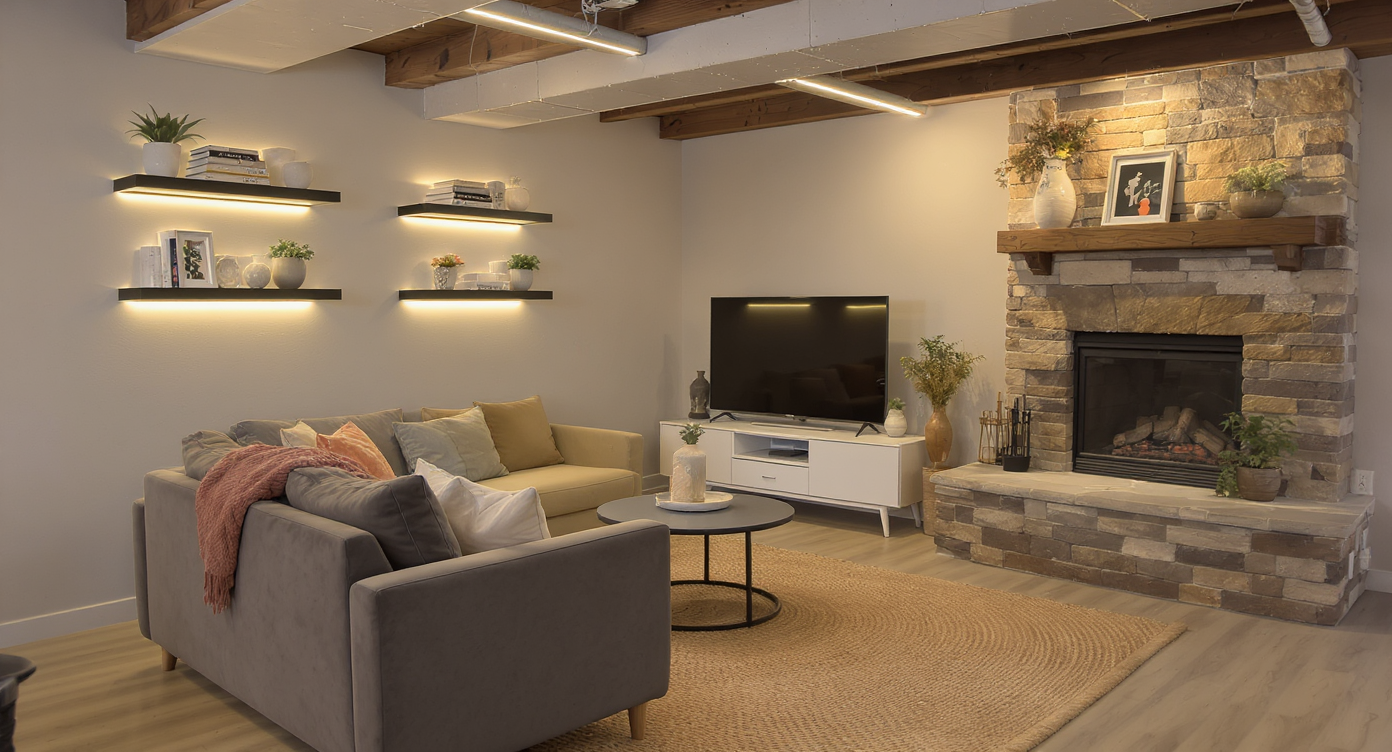
How smart layout changes—like an L-shaped sofa, relocated media center, and warm lighting—transform a compact basement into a true haven.
Chelsea and Mira recently moved into a one-room basement that doubled as their lounge and work-from-home space. After two exhausting nights of pushing sofas, they realized nothing fit because every path felt blocked and the room had no obvious focal point. By rearranging the two sofas into an L, moving the media center away from the fireplace, and layering the coldest corners with wall-mounted shelving and warm accent lighting, they finally created a space where they could game for hours or enjoy a quiet evening without tripping over power cords or feeling like everything was out of place. Their small budget stretched further than expected, showing how a few smart swaps offer more value than constant upgrades.
-
Common Mistakes to Avoid
A frequent misstep in basement design is overlooking traffic flow and defaulting to lining walls with bulky furniture, which makes a compact room feel smaller. Mounting TVs over fireplaces may be convenient but rarely aligns with eye-level comfort or optimal sightlines. Skipping lighting upgrades leaves many basements feeling dim and cold. Forgetting to zone the room for different activities, such as reading or working, leads to the whole space feeling undefined. Trying to fill every empty wall is rarely a solution—instead, curate with select shelves, art, or a single statement piece, as described in solutions for small living room arrangements.
-
Tips and Expert Insights for Budget-Friendly Basement Design
Start by planning zones based on your must-haves: a seating zone for conversation and TV watching, a gaming area, and a workspace if needed. Use existing furniture in new ways—shelving doubles as both storage and display, while an unused corner becomes a reading nook with an adjustable lamp and small armchair. Floating shelves and inexpensive lighting solutions, often available from mass retailers, stretch a small budget. If cables or outlets feel like eyesores, utilize ceiling panels or baseboard covers for clean runs. Aim to make each improvement additive rather than overwhelming, reinforcing the room’s comfort and function.
-
How to Use This in Your Next Designs
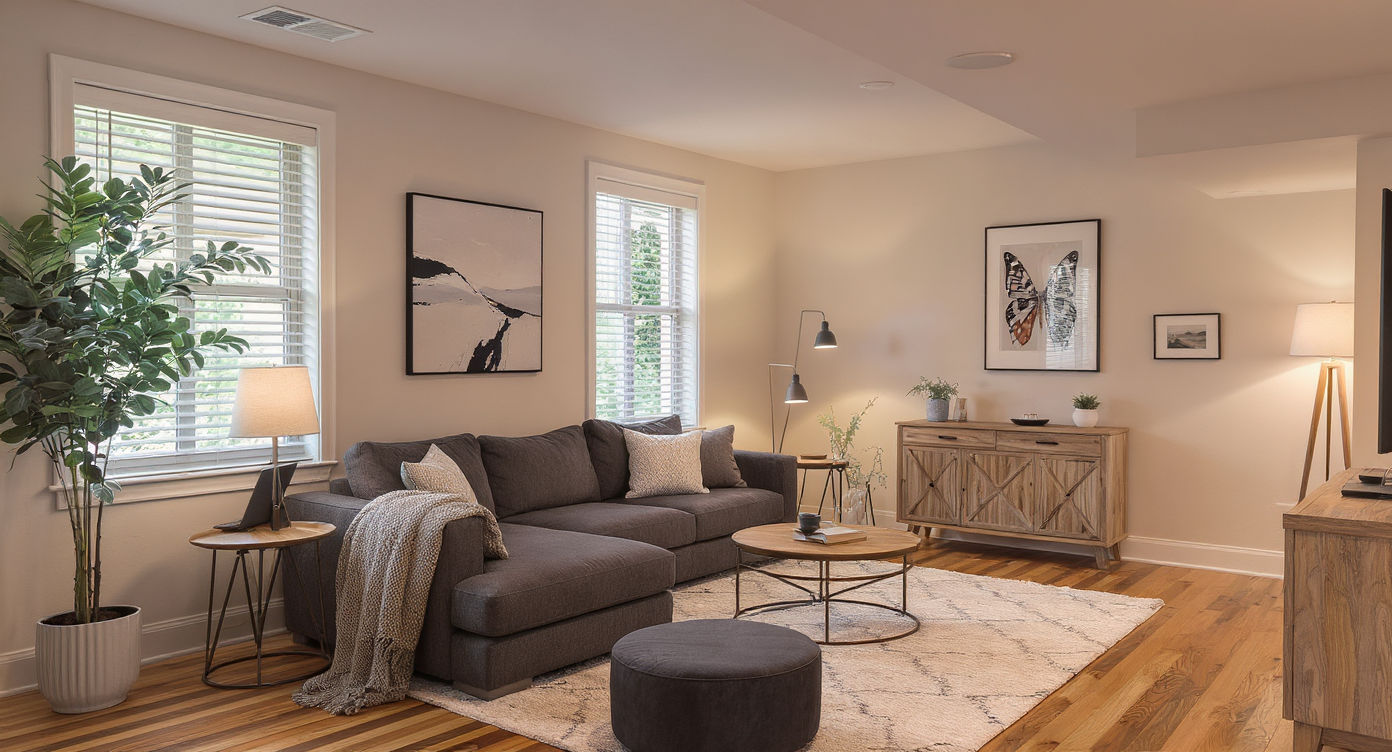
A thoughtfully arranged compact basement living area showcasing clearances, anchored furniture, cozy lighting, greenery, and versatile zones.
Approach any challenging living space, basement or not, with the core principles highlighted here: respect comfortable clearances, anchor main zones, and avoid filling every available corner. Redefine what each piece of furniture does. Bring in visual warmth through lighting, textiles, and a splash of greenery or art where possible. With every change, consider how it supports the activities you value most—lounging, working, entertaining, or unwinding—and how it might easily adapt if your needs shift. Small design projects succeed when you visualize the outcome, test ideas virtually if possible, and remain flexible about how each area is used. This methodical yet creative approach leads to rooms that feel both intentional and inviting.
-
Visualization: Picture the Perfect Basement Retreat
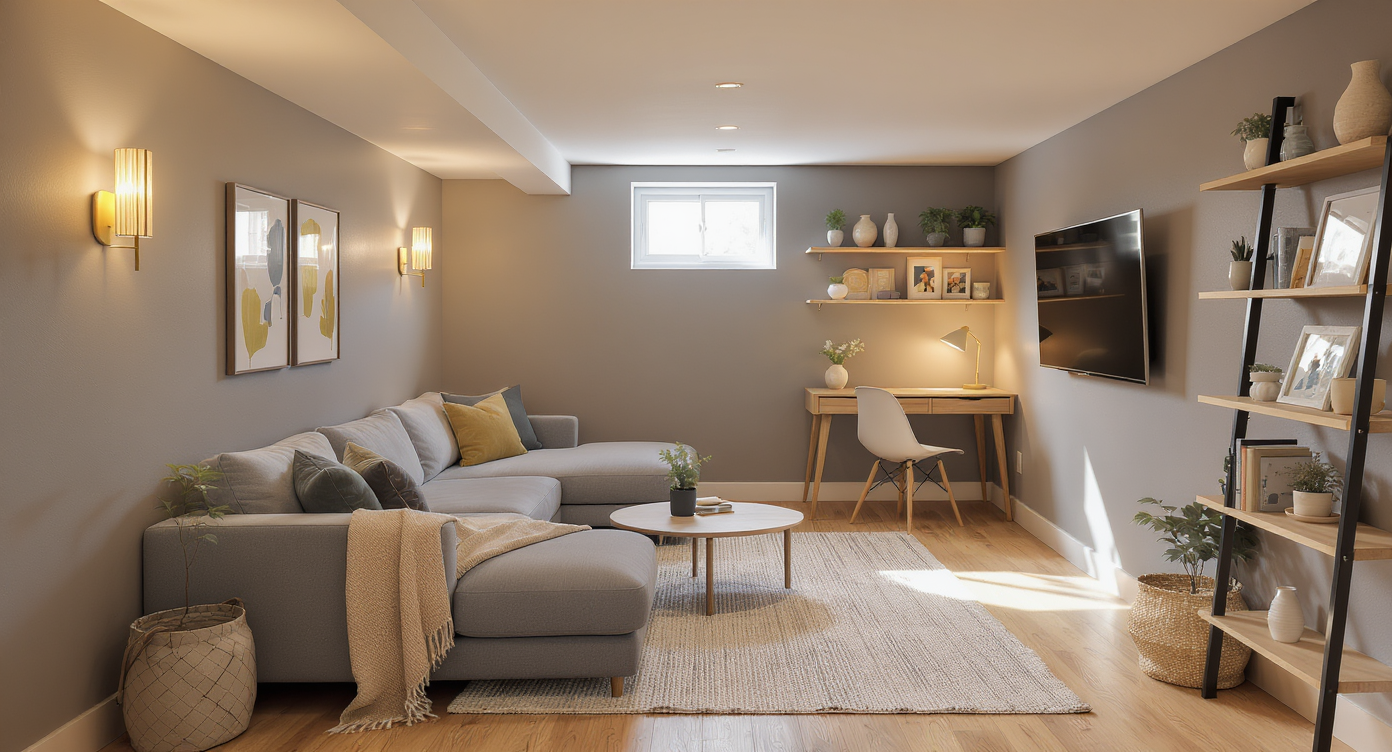
A thoughtfully designed basement retreat featuring layered lighting, sectional seating, a TV, workspace, display shelves, and a cozy reading nook.
Imagine walking down into a once-cold basement, now softly illuminated by layered lighting along the walls. A wraparound L-shaped seating area, grounded by a textured rug, invites friends to sink in for a movie night. Across from a tastefully repositioned TV setup, a desk is tucked by the window, commanding a peaceful view and not interfering with traffic flow. Along the least-used wall, floating shelves showcase framed photos, favorite books, and quirky collectibles. In a cozy reading corner, an armchair offers a perching spot beneath a warm lamp. Every functional area flows naturally into the next, and empty space is treated with intention rather than neglect. Affordable design touches—subtle but transformative—make the whole room feel like an extension of your best self.
Visualization Scenario
Envision an L-shaped lounge anchored by two matching sofas, their dark fabric softened by a vibrant throw and oversized pillows. Against one wall, low-profile shelves support a TV at the perfect height, while a vintage-style lamp glows in the reading corner. Floating shelves on the coldest side offer a spot for travel mementos, making every corner intentional. Even on a rainy evening, every zone feels balanced, illuminated, and entirely yours.
Basement Furniture Arrangement FAQ
Check circulation routes first. Make sure you have at least 30–36 inches for walkways, and consider testing layouts virtually to visualize spacing.
What’s the best way to add warmth to a basement space?
Use layered lighting: add floor lamps, table lamps, and wall sconces where possible. Incorporate soft textures, curtains, and area rugs for comfort and warmth.
Is it possible to make a basement lounge work with a small budget?
Absolutely. Repurpose shelving as media centers, use floating shelves for display storage, and shop affordable retailers for accent pieces. Flexible furniture and lighting deliver transformational effects without high costs.
How can I deal with visible cables or awkward outlets?
If your ceiling has panels, run wires above them. Use baseboard covers or decorative cable sleeves for tidy results.
Where can I find tools to help me visualize different room layouts?
Platforms like ReimagineHome.ai let you test different layouts digitally and see which designs best fit your space.
Final Thoughts: Every Basement Can Become a True Living Space
A well-designed basement is less about perfect symmetry and more about feeling at ease in your own space. By prioritizing flow, anchoring zones, and making affordable upgrades, you can turn any basement into an inviting retreat—without overspending or feeling stuck with what you have. Visualize your options, experiment before committing, and let comfort guide your decisions. If you want to explore more possibilities, ReimagineHome.ai can help you see your space in a new light.