Finding the Best TV Position: Rethinking Living Room Furniture and Flow
TL;DR
Lowering your TV for comfort means considering both layout and living habits. Achieving the right height and spot requires balancing walkways, conversation zones, and existing focal points like fireplaces. Creative reconfiguration, tailored mounts, and furniture swaps open up practical, beautiful solutions.
Why TV Placement Shapes the Main Social Space
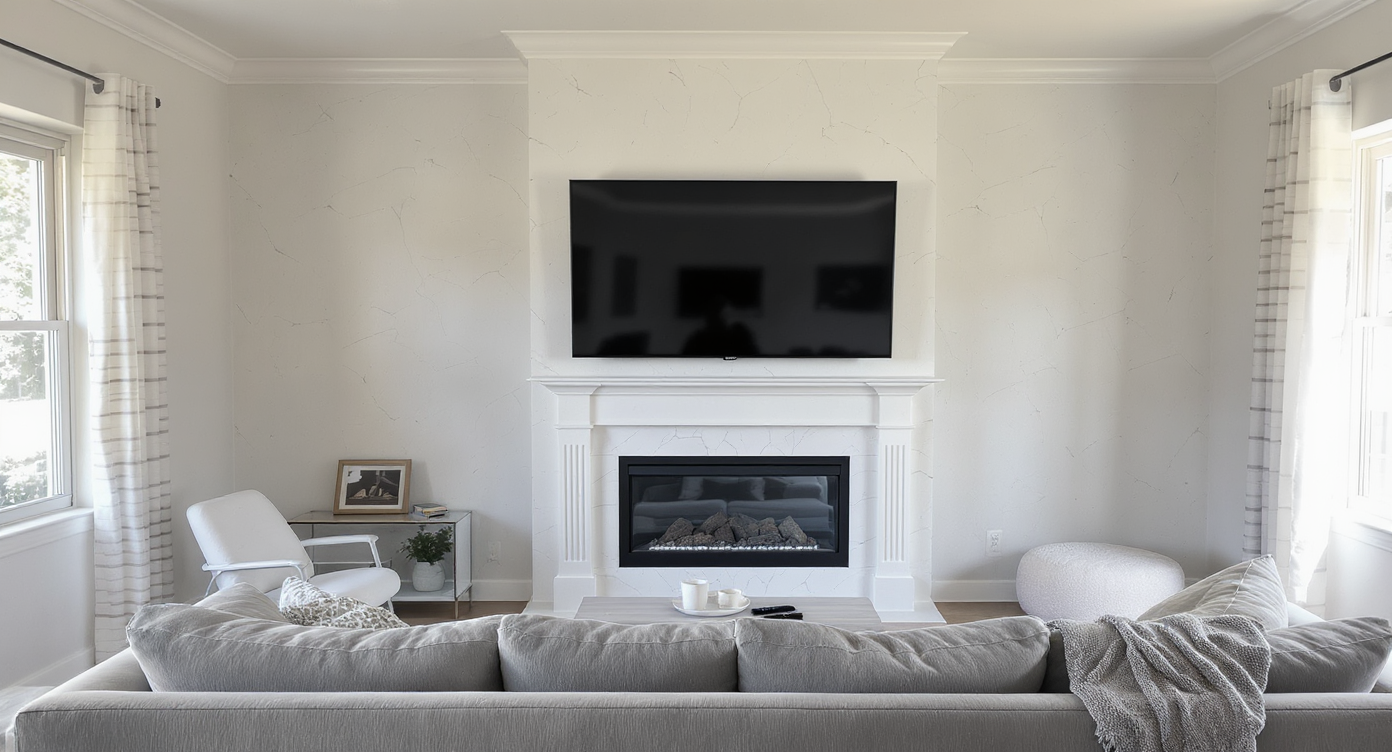
A real-life living room setup showing a high TV above a mantel, with seating arranged to balance comfort and natural room flow.
Anyone who’s craned their neck to watch a television mounted too high feels the struggle—especially when fireplace mantles or quirky wall shapes limit options. Moving a TV down for better comfort seems simple, but often reveals much deeper layout challenges. A living room’s main social space must cater to relaxation, conversation, and natural flow. How you resolve the puzzle of TV, sofa, and sightlines deeply impacts everyday enjoyment. In 2026, more households are turning to flexible furnishings and new placement ideas to solve familiar dilemmas and put function before form.
-
TV Height, Comfort, and Real Life
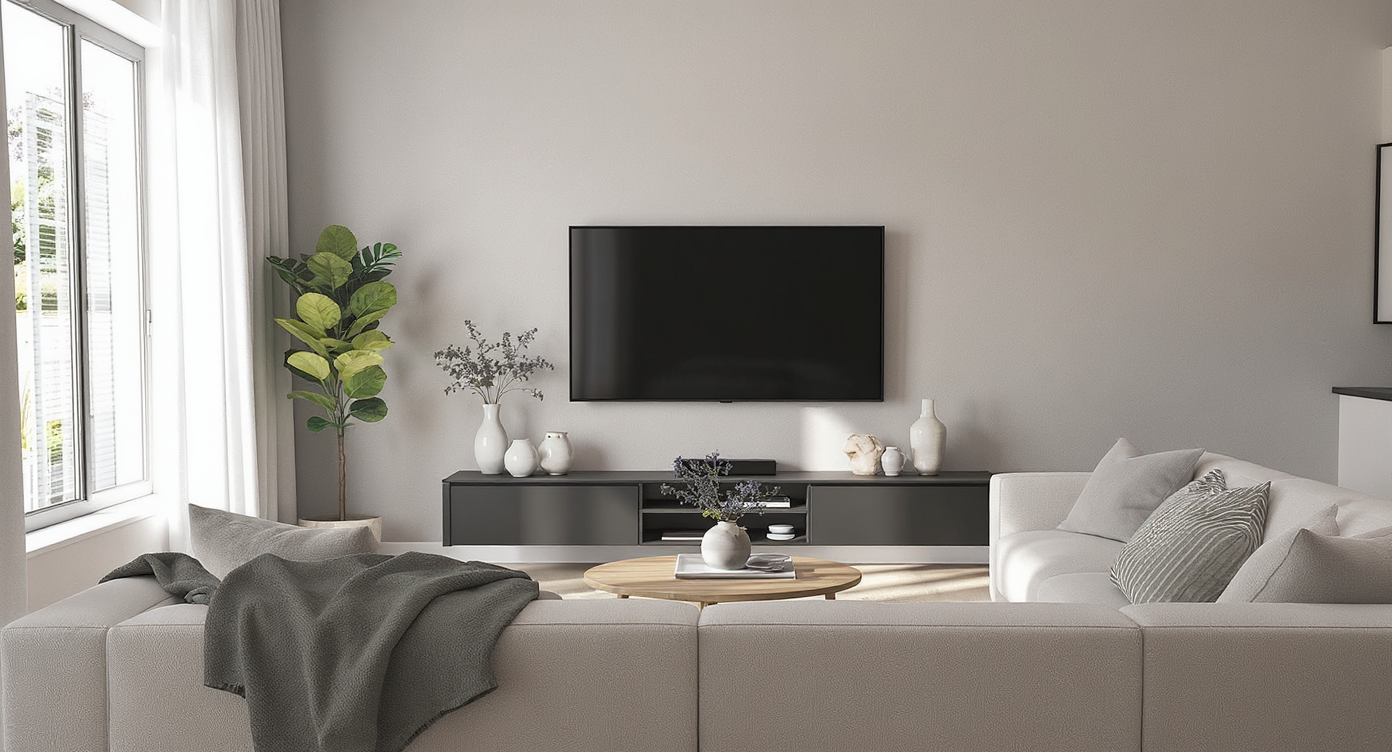
A realistic living room scene showing a TV mounted at the perfect eye-level height for comfort, with seating thoughtfully positioned.
Television mounting used to be an afterthought—just find some wall or perch it above the fireplace. Yet, experts and homeowners now agree: a too-high television quickly leads to eye and neck strain, making even the most beautiful living room uncomfortable. Designers frequently recommend that the center of your TV aligns as closely as possible with your seated eye level. For most people, this translates to a center height of about 42 to 48 inches from the floor, a principle confirmed in detailed discussions about TV height and mounting location. Real-world living means adjusting for daily use: who watches, when, and how. Lowering your TV is rarely just about the mount; it’s about integrating your furniture and anchoring the main social space comfortably.
Expert Insight
Years ago, a friend inherited a living space that sparkled—until turning on the TV. Perched high above a grand fireplace, every movie night ended with stiff necks and squinting. After months of unhappy viewing, a creative weekend saw the sofa pivoted, the TV repositioned to a side wall, and accent chairs angled in for conversation. Along with a lush, oversized rug anchoring the different zones, comfort soared. More than one guest commented that the new setup felt like a real gathering space—not just a viewing zone.
-
Room Layout Design: Beyond the 'Just Move It Lower' Fix
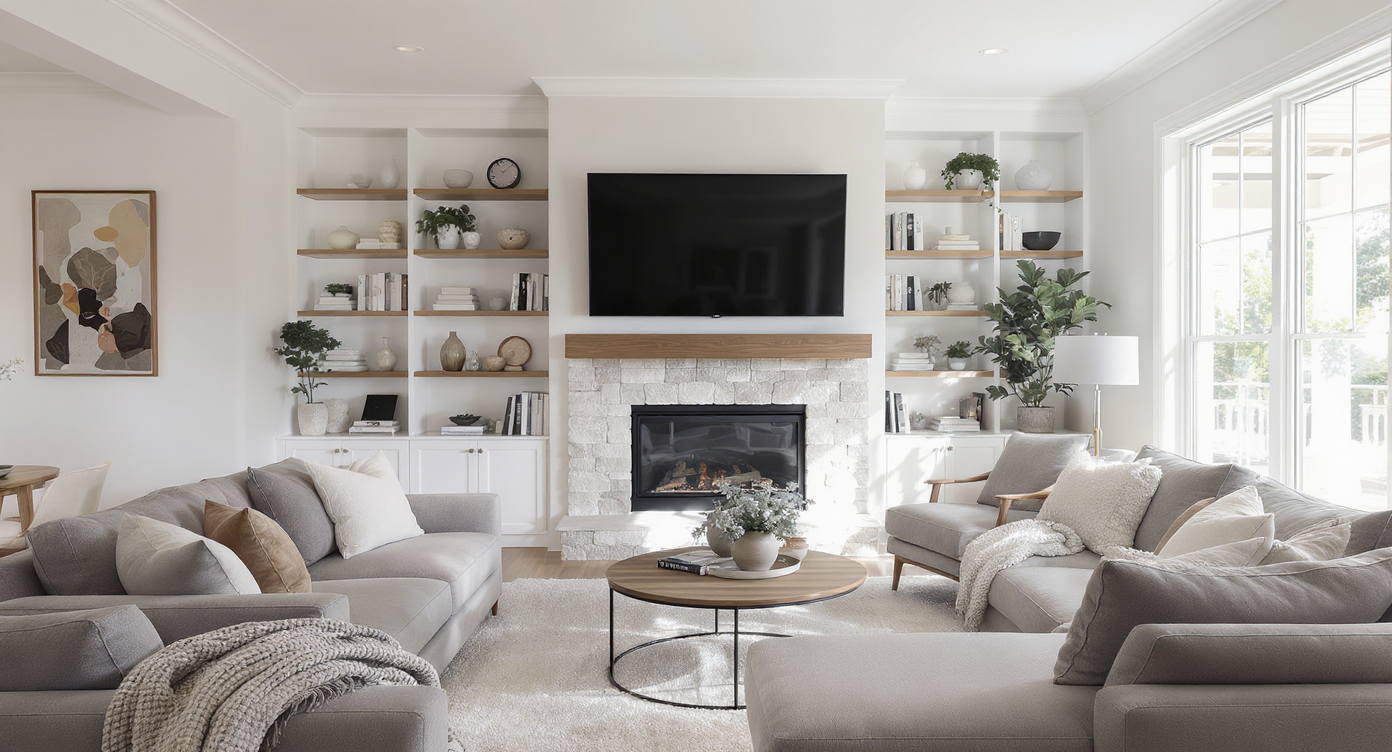
A thoughtfully arranged living room with a pull-down TV mount, modular shelving, flexible seating, and clear pathways for easy movement.
Once you decide the TV needs to move, the next question is: where does it actually fit? This is where room layout design (and sometimes a little trial and error) comes into play. True comfort and style start from understanding your room’s boundaries and the flow of movement. You may need to swap entire zones, change how seating faces the fireplace, or even question if a dining zone belongs at all. Flexible furnishings—like a swivel chair, moveable sofa, or modular shelving—can help test new configurations before committing. In homes where the TV must stay close to architectural features, specialized mounts have now evolved. Pull-down and swivel brackets grant flexibility, while also preserving clean sightlines and walkways. Homeowners increasingly seek out these solutions to reimagine the main social space without sacrificing comfort or visual balance.
-
Furniture, Focal Points, and Main Social Space Dynamics
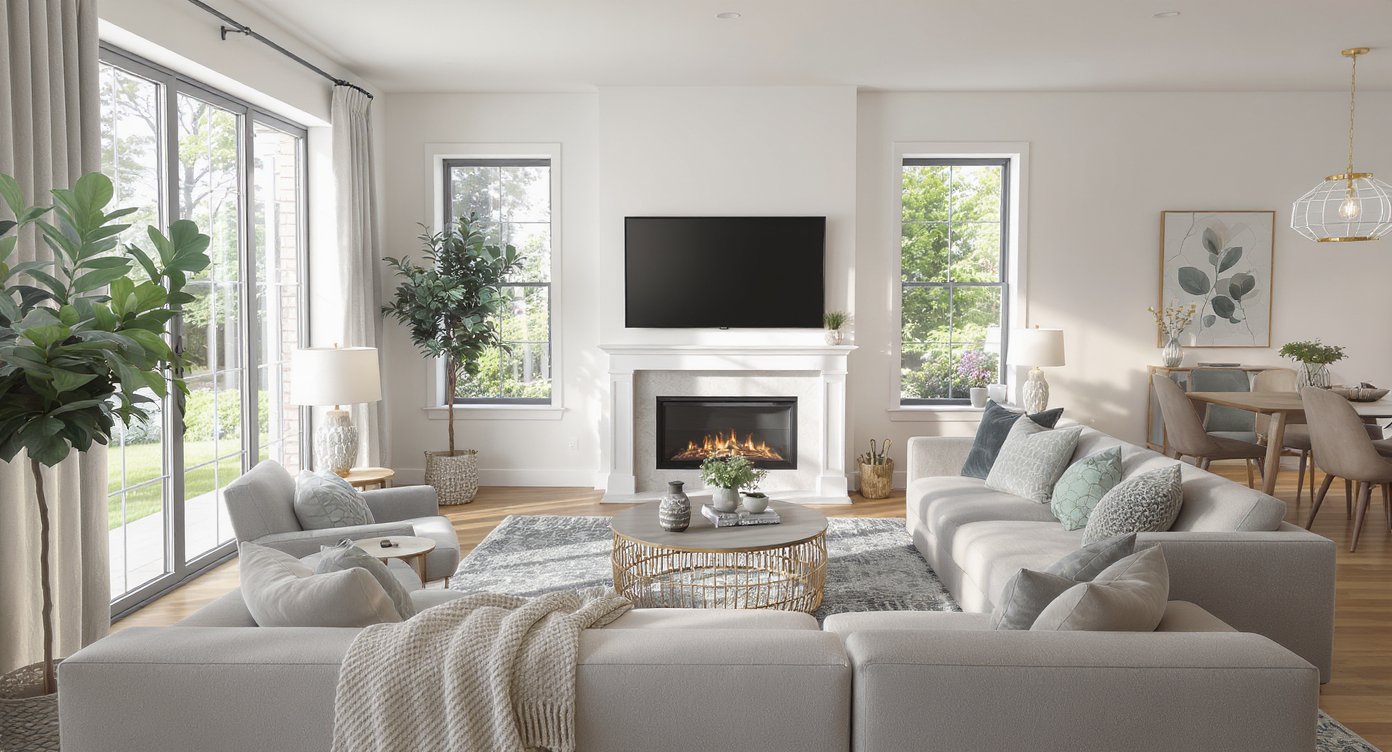
A carefully zoned living room, where the sofa faces a properly positioned TV, fireplace and windows balance as focal points, and layered seating creates harmony.
Every room develops its own natural focal point. Sometimes it’s a fireplace, often it’s the TV, and occasionally a collection of windows steals the spotlight. When the TV hovers too high above a mantel, it disrupts both comfort and visual balance. The challenge is not merely technical—where to put the TV—but creating harmony between competing focal features. For example, our research into sofa size and layout shows that shifting your main seating area to face a new TV wall can transform the way the room is used. Some creative households relocate the dining set, re-anchor the main social hub, and introduce layered seating options to maintain intimacy and flow. A well-placed area rug and strategic lighting reinforce new zones, turning awkward corners into conversation nooks or reading spots.
-
A Living Room Reimagined: Mini-Scenarios in Practice
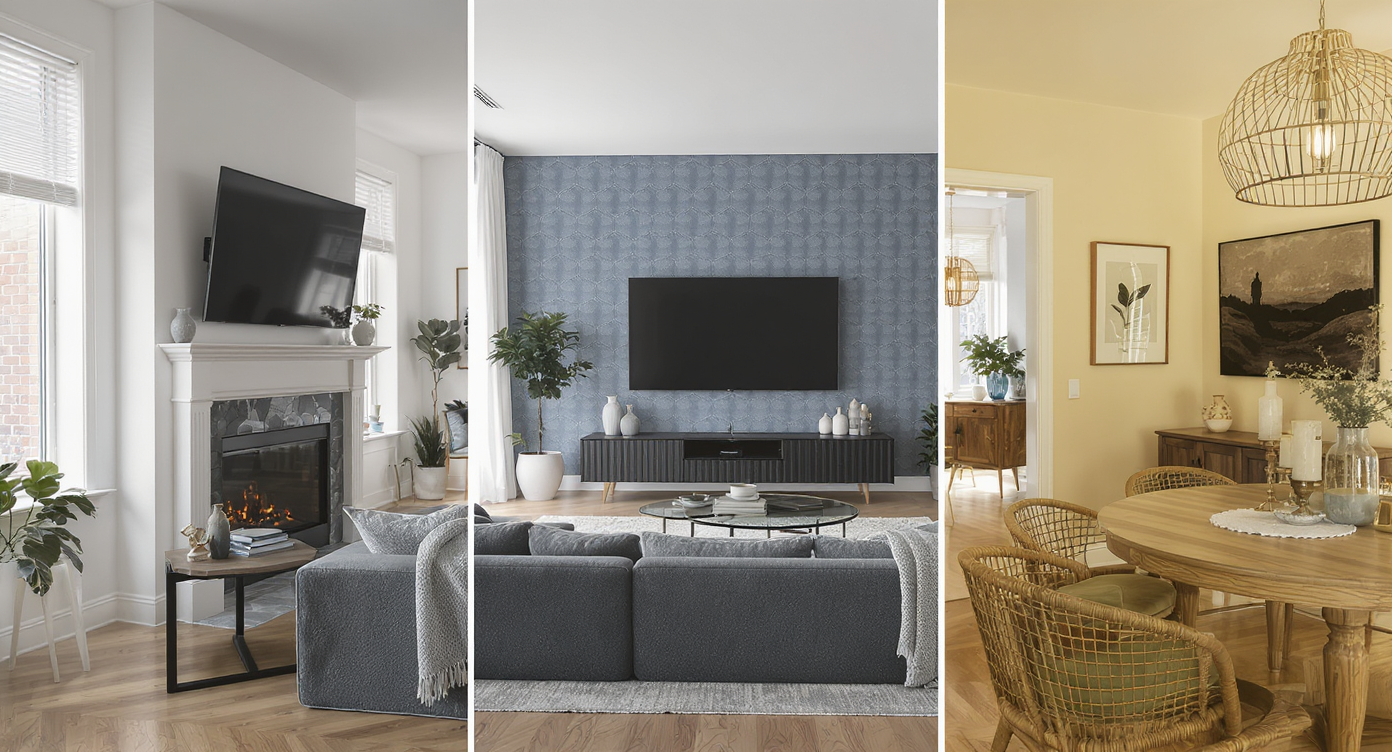
Editorial-quality scene: three TV placement strategies—lowered mount above mantel, wall-mounted in former dining zone, and credenza setup.
Imagine a room where the only plausible TV location is above the mantel. A couple chooses a modern mount that lowers the screen to eye level when needed, minimizing neck strain but swiftly returning visual dominance to the fireplace when guests arrive. In a second scenario, a family swaps their dining area with the living zone, discovering that a lower, wall-mounted television (set on the former dining wall) now anchors a cozy, multifunctional entertainment space. In another clever layout, the TV sits on a slender media credenza, tucked between two windows, while small armchairs angle gently around the fireplace, creating dual gathering areas. Each approach emphasizes the need to link furniture and flow, ensuring comfort is never an afterthought.
-
Common Mistakes When Rearranging for a Lower TV
One of the most frequent missteps is treating the TV as a solitary object rather than a central piece within a network of furnishings and pathways. Homeowners sometimes focus only on lowering the screen, without rethinking how sofas, chairs, and traffic lanes interact. Placing the TV too close to windows often leads to glare and lighting conflicts, while squeezing it into a corner may strain necks or isolate viewers. Rushing to shift both dining and living spaces without measuring can leave you with mismatched scales or blocked walkways. Designers encourage planning circulation areas (at least 30–36 inches), and carefully considering both the social use and sightline experience. Swapping focal points isn’t about following trends, but about building a room that feels welcoming every day.
-
Expert Tips: Shaping Furniture and Flow Around the TV
Experienced designers often start by mapping the main walkways and visual anchors before touching heavy furniture. When lowering a screen, prioritize its relationship to your primary seating—usually the largest sofa or sectional. Modular shelving or thoughtfully placed plants can help integrate a TV visually into a wall, softening the transition if it lands somewhere unconventional. Consider symmetry and balance: if moving a hefty piece to one wall, balance it with a gallery, shelving, or art elsewhere. And never forget function—clearances matter and so does comfort. For those with open-concept or multifunctional rooms, dividing elements such as low bookcases or partial screens can help define spaces while providing places to land remotes, artwork, or extra lighting. Learn more about these essential strategies and practical dimensions in our arrangement and size overview.
-
Bringing It to Life: How to Use These Insights
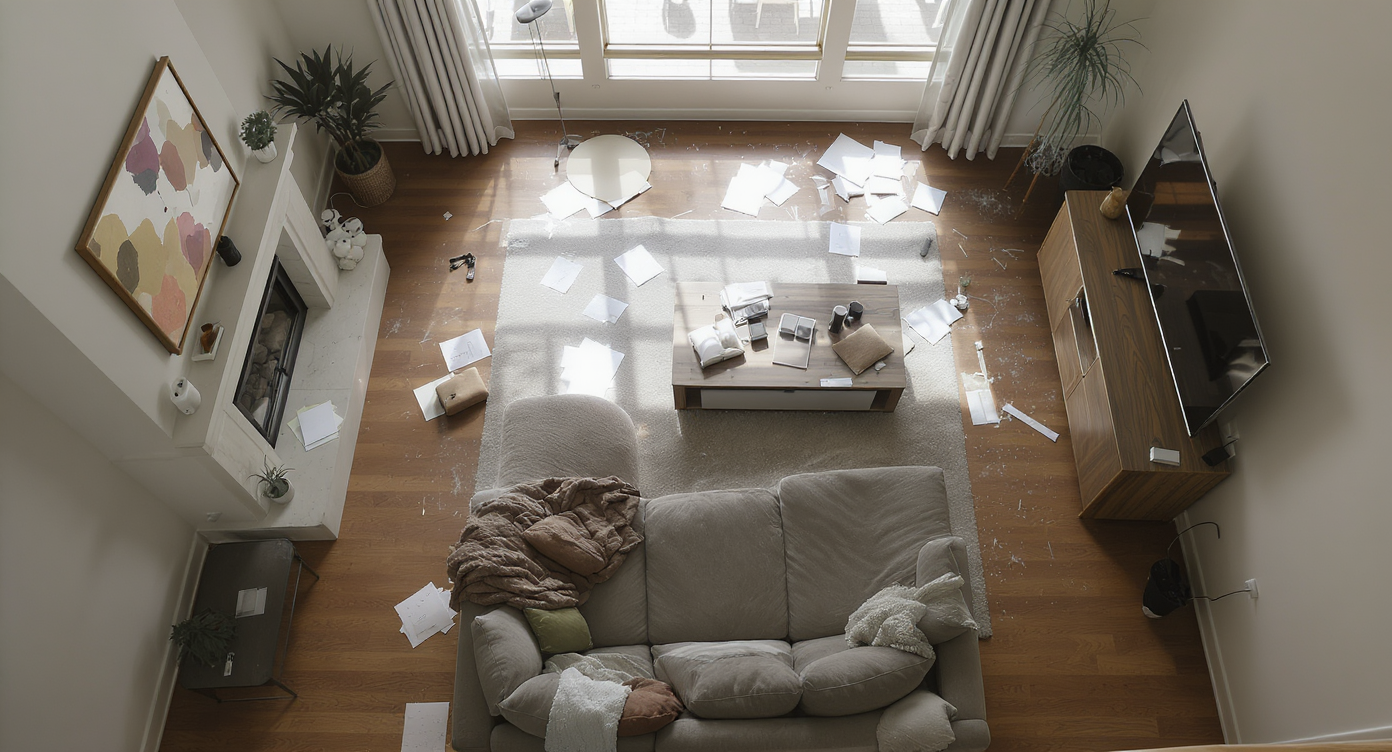
A realistic living room mid-rearrangement, with furniture shifted, architectural obstacles in view, and hand-drawn sketches guiding the new layout.
Start by sketching your current setup and noting architectural obstacles: doors, windows, fireplaces, and traffic lines. Think about how you actually use the social space most: is TV viewing essential, or do you host more conversations? Trial different seating arrangements—maybe just repositioning the sofa uncovers new possibilities, or swapping the dining zone with the living space brings everything together. Experiment virtually or move pieces incrementally to test what feels natural, as recommended in our piece on room flow and comfort. Rethink focal points as needed, and don’t hesitate to blend solutions, like pairing a pull-down TV mount with layered seating. Sometimes a simple change sparks a cascade of improvements.
-
Visualization: Reimagining Rooms with New Tools
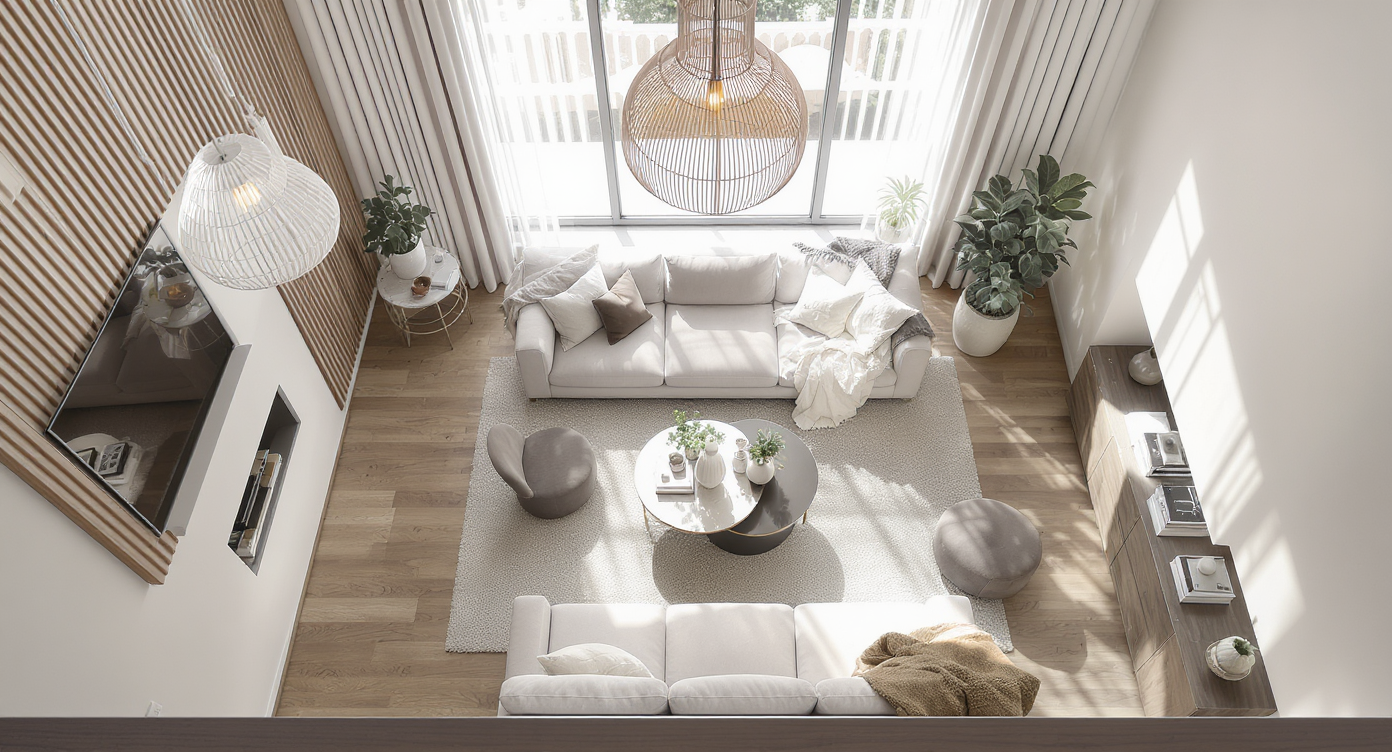
A modern living room showcasing digital tools that visualize alternative TV and furniture arrangements before making physical changes.
The age of guesswork is fading. In 2026, advances in room layout design ai now enable homeowners to visualize new furniture and TV placements virtually, before making a single move. Snap a photo, drag and drop seating, rotate tables, and preview how a lower TV will look and feel from anywhere in the room. Even if a fireplace remains an unmovable anchor, digital tools allow nuanced tests of every option—anchoring your main social space around what works best for comfort and flow.
Visualization Scenario
Picture a room flooded with afternoon light, windows on two sides, a fireplace anchoring one wall, and limited available surfaces. Using a digital layout tool, you model the sectional facing the window, with the TV now standing at eye level on a media console opposite. Plush chairs angle in next to the hearth, maintaining a cozy conversation area. The flow between kitchen, dining, and living zones feels natural, and both screen time and conversation happen with ease. No one ever asks about neck pain again.
Frequently Asked Questions
The center of the TV should generally align with seated eye level, about 42–48 inches from the floor. This minimizes neck strain and promotes a comfortable viewing experience, as explained in guidance about TV mounting heights.
Can I place a TV above a fireplace?
It’s possible, but not always recommended due to awkward viewing angles and heat exposure. If space demands it, consider mounts that lower or tilt the screen to reduce strain. Visual examples are found in TV and fireplace combinations.
How do I make competing focal points (TV, fireplace, windows) work together?
Balance is key. Create distinct zones if possible—a conversation area near the fireplace, with primary seating aimed at the TV but angled to maintain eye contact across the space. Layered lighting and a thoughtful rug can help establish coherence, as seen in five-room sofa layout explorations.
Are there specific measurements for pass-throughs around sofas and tables?
Plan for at least 30–36 inches of clearance in main walkways. This ensures comfortable movement and a sense of spaciousness, as discussed in our overview of clearance and flow recommendations.
What digital tools can help me visualize these changes?
ReimagineHome.ai lets you upload a photo of your space and experiment digitally with layouts, furniture, and TV placement, reducing guesswork.
The Art and Science of TV Placement
Moving your TV to a more comfortable, lower position is just one part of making a living room truly functional. Success lies in seeing television placement as a catalyst for broader changes—rethinking how furniture, focal points, and daily activities interact. Today’s tools and expert guidance make it easier than ever to design for both comfort and style. If you’re ready to experiment visually or need specific inspiration, ReimagineHome.ai can help bring your ideas to life with instant layout previews.