9 Creative Ways to Blend Modern Tech with Classic Design in Your Living Room
TL;DR
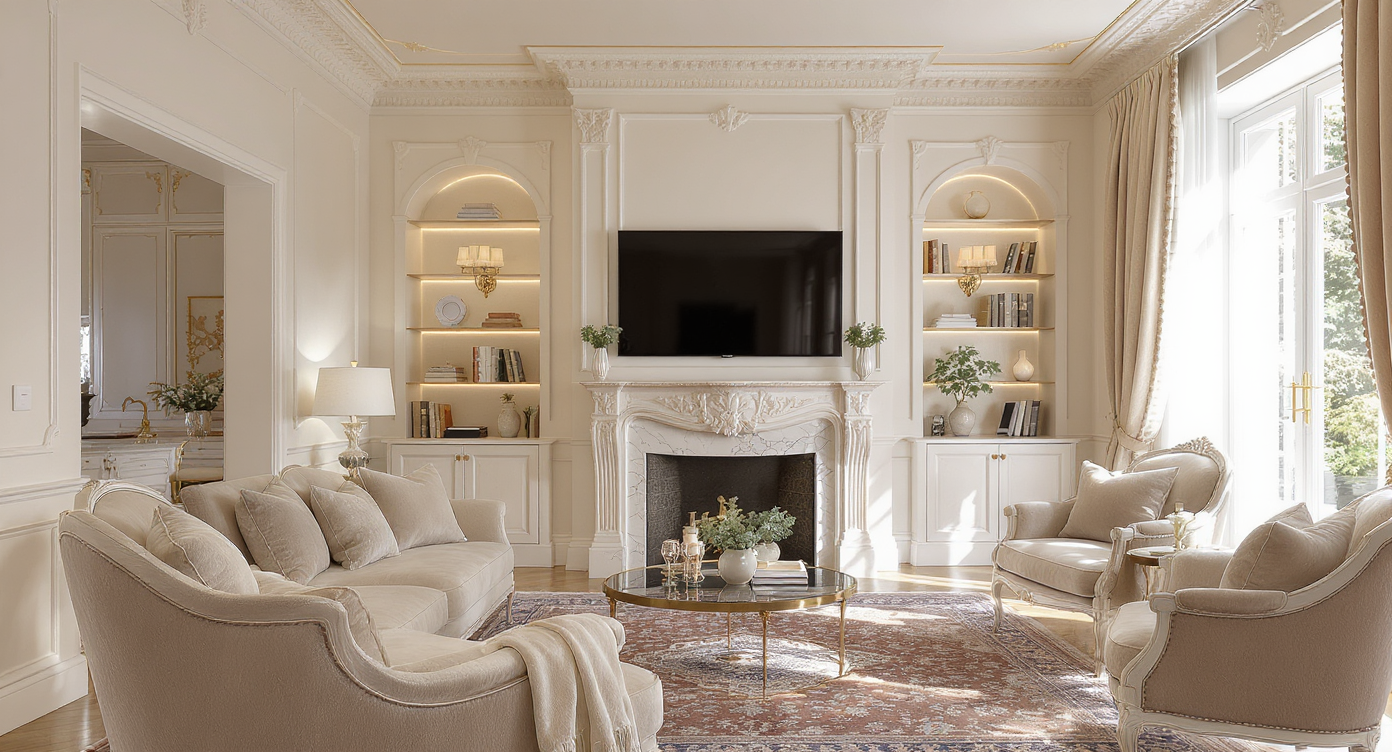
Merging contemporary technology and classic decor requires creativity and finesse. This list explores nine impactful strategies for integrating modern essentials like televisions and speakers with vintage, mid-century, or character-rich interiors. Each approach balances current functionality with enduring design for a living room that feels purposeful and stylish.
Marrying Present Day Tech and Classic Living Room Aesthetics
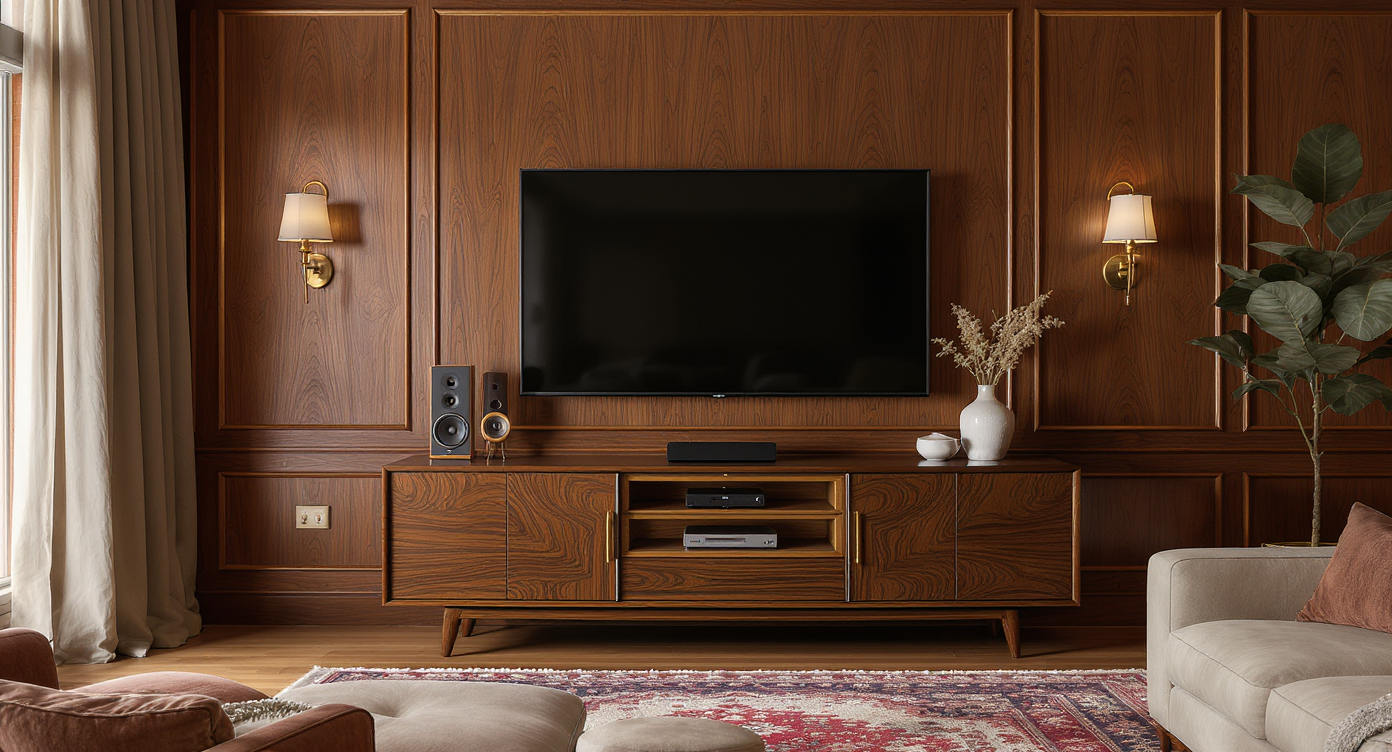
A living room that thoughtfully merges vintage design elements and integrated modern technology, setting the stage for stylish, functional harmony.
Striking a balance between the necessities of today’s lifestyle and the appeal of timeless interiors is a familiar challenge for home design enthusiasts. Many face the conundrum of making room for flat-screen TVs, streaming boxes, and sound systems in spaces defined by wood paneling, vintage details, or a mid-century sensibility. The risk is clear: insert technology carelessly, and the charm of your main social space might evaporate. However, thoughtful remodel projects and design interventions can ensure technology enhances rather than detracts from your living environment. Whether your goal involves preserving architectural details or incorporating custom furniture, the key is to allow functionality and style to coexist. This list presents practical, design-infused solutions that respect history while embracing modern living.
-
1. Conceal Technology in Custom Furniture Solutions
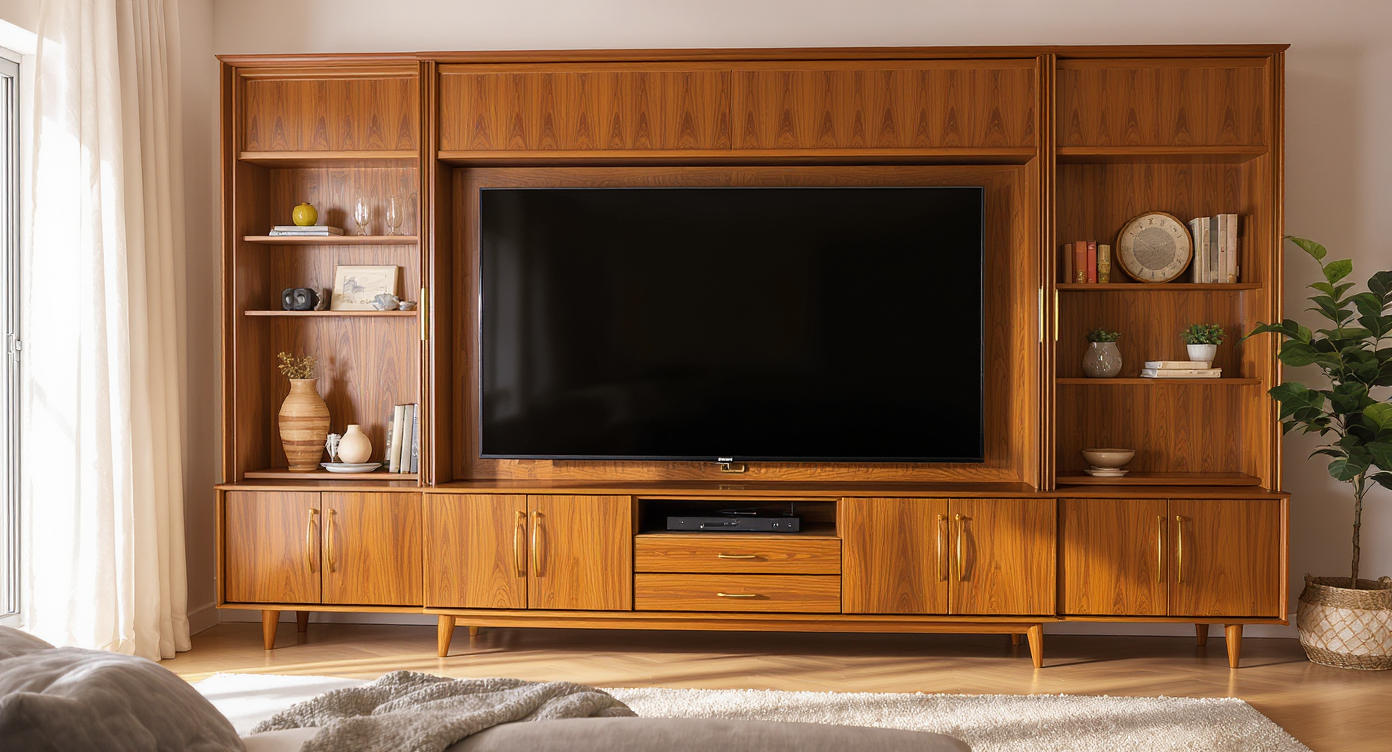
A custom media cabinet with vintage-inspired detailing cleverly hides a flat-screen TV and speakers within a classic, wood-paneled living room.
One of the most effective ways to integrate devices into a classically styled living room is through custom furniture. A purpose-built cabinet, for example, can house a modern TV while recalling the design language of a vintage radio or mid-century console. These solutions allow screens and speakers to be hidden when not in use, creating visual calm. Many designers suggest motorized lifts, sliding panels, or bi-fold doors finished to match surrounding millwork. The inspiration draws from those who want their media to blend with paneling or bookcases, and a well-designed unit can turn a television into a subtle design feature rather than a visual intrusion.
-
2. Repurpose Vintage Forms for Modern Devices
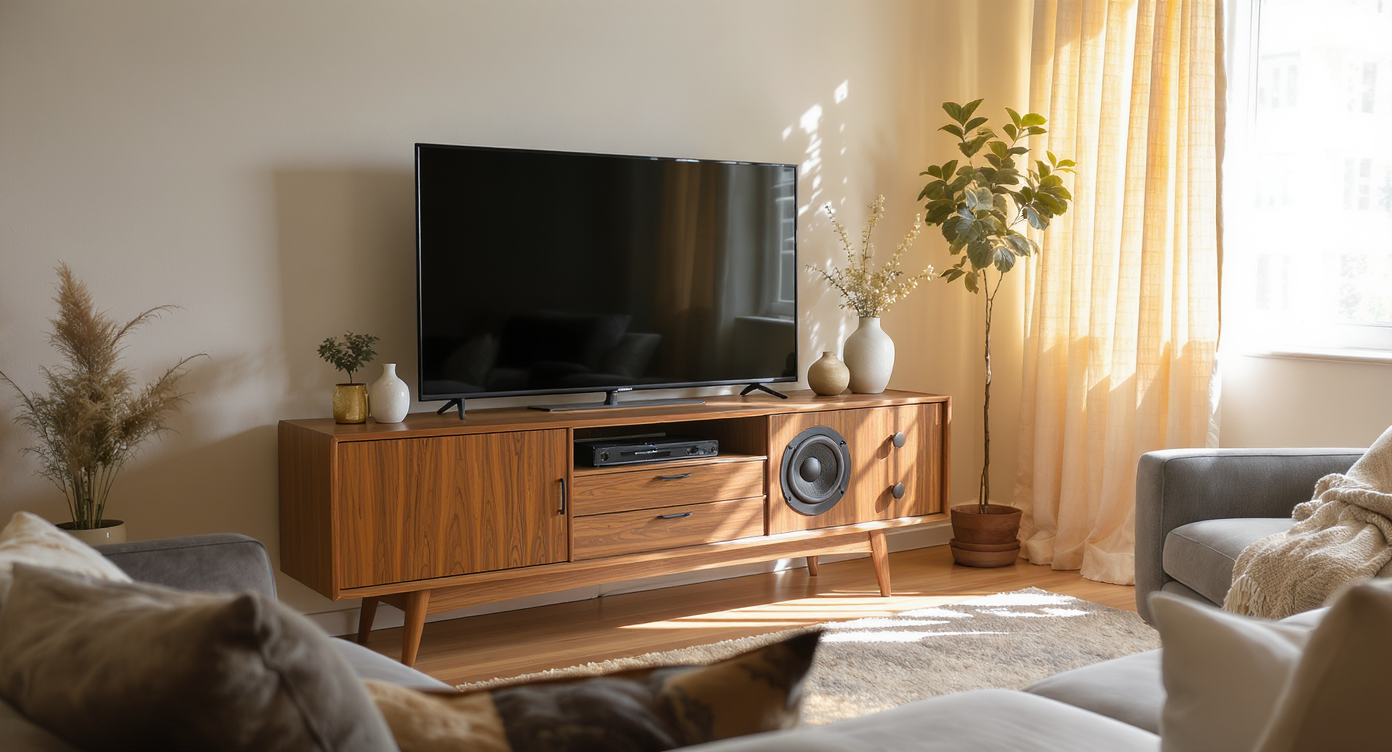
A flat-screen TV retrofitted into a vintage TV shell and a classic radio cabinet adapted for modern audio gear, blending eras thoughtfully.
Repurposing vintage furniture or facades—such as placing a flat-screen inside a retro TV shell or adapting a classic radio cabinet for audio equipment—provides a playful nod to nostalgia while serving modern needs. This technique can preserve the distinctive look of a period room, lending character and irony. Designers often recommend ensuring good ventilation and access to ports for practical use. The result channels the authenticity designers prize in mixing eras, much like suggestions found in approaches to integrating antiques in contemporary decor.
-
3. Embrace Paneling and Wood Tones with Balanced Contrast
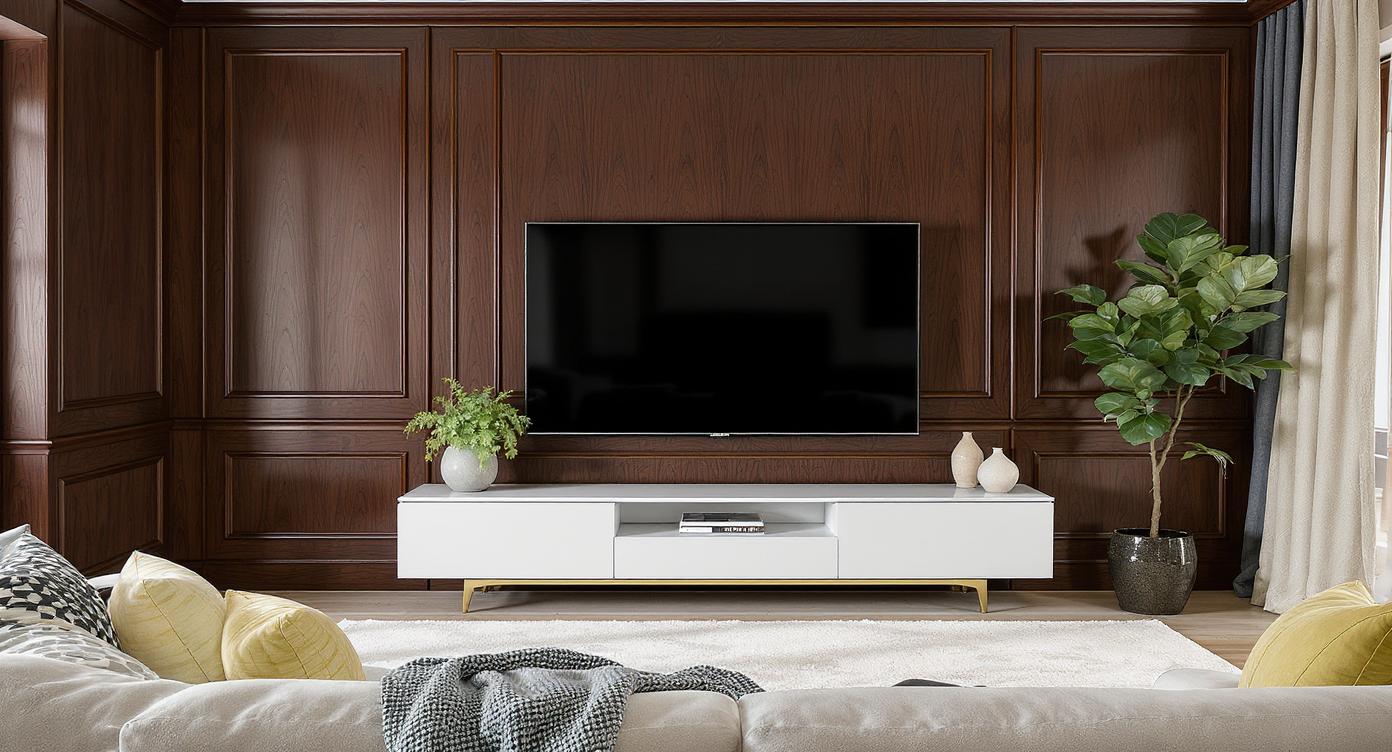
A balanced living room blending rich wood paneling, a modern TV console, greenery, colorful accents, and a light area rug for harmony.
When a room features substantial wood paneling or trim, introducing technology requires sensitivity to warmth and color. Homeowners can "break up" heavy wood by placing a television on a contrasting console, layering in colorful textiles, or introducing greenery, as discussed in strategies for wood-heavy spaces. The goal is to highlight both organic materials and modern features, rather than hiding either. Achieving balance allows both elements to shine—sometimes by adding light-toned area rugs or artwork to attract the eye away from tech when not in use.
-
4. Use Discreet or Integrated Audio Solutions
Bulky speakers and subwoofers can dominate a room if not addressed with intention. Modern remodel projects often embrace low-profile soundbars, in-wall speakers, or even vintage-inspired mesh grilles that double as decor. Concealing devices within cabinetry, placing them behind acoustically transparent fabrics, or stacking them in a styled vignette can preserve a period-appropriate look. Integrating controls and remotes into the design—perhaps via classic dial replicas or subtle switches—enhances usability without telegraphing modernity.
-
5. Accentuate the Main Social Space with Mixed-Era Styling
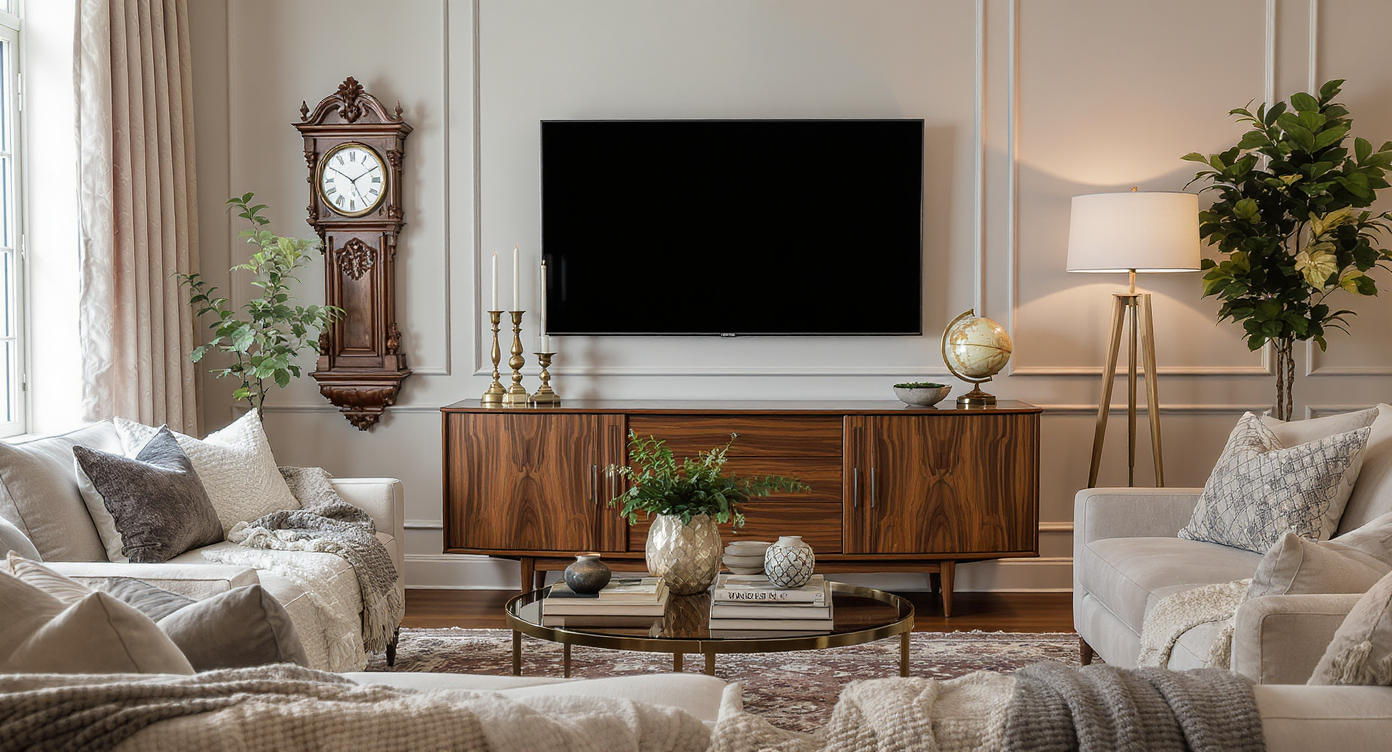
Mixed-era living room featuring a modern TV, antique accents, and plush seating, demonstrating a harmonious 70/30 classic-to-modern blend.
Blending technology into the central gathering area is easier with a thoughtful mix of old and new. Positioning a statement television amid curated antiques, plush seating, and layered textures creates a sense of intentional design. Achieving this look often involves following a 70/30 or 60/40 ratio of classic to contemporary elements, as evidenced by expert guidance. The aim is a space that feels collected, not cluttered, where every addition—modern or vintage—has a reason for being.
-
6. Opt for Creative TV Placement and Orientation
Contemporary screens need not dominate the room. Placing a TV at a lower sightline within a retro-styled console, mounting it behind doors or a sliding panel, or even orienting it off-center can reduce its presence. This is especially effective in small living rooms or those with statement architectural features. Creative solutions build a sense of discovery, encouraging guests to interact with the space and its features rather than one fixed focal point.
-
7. Experiment with Color, Texture, and Unexpected Details
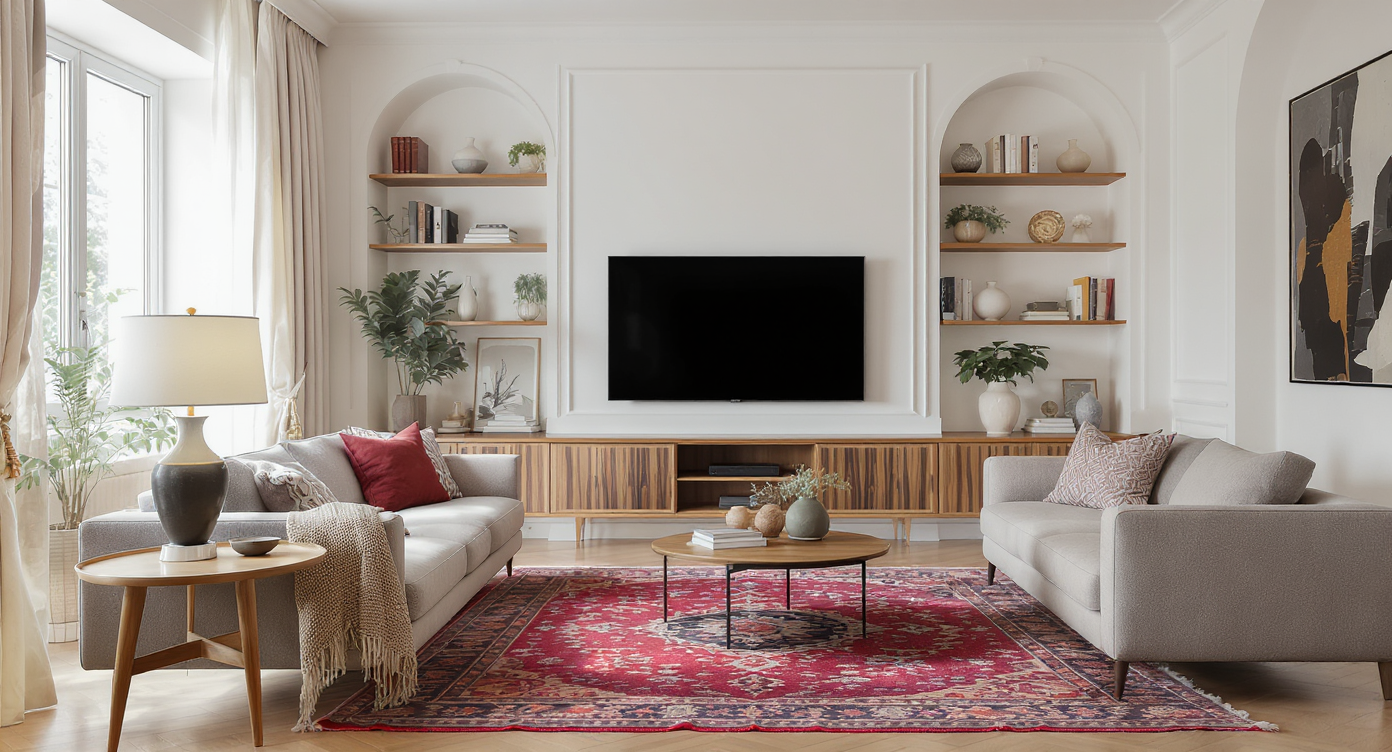
Layered rugs, textured pillows, unique lamps, and vintage accessories create visual interest, drawing focus away from integrated technology.
A visually engaging palette can draw attention upward or outward, away from technology. Layering vivid rugs, unique lamps, textural throw pillows, or even vintage accessories can ground the main social space and make technology feel less intrusive. According to advice on updating dated interiors, changing a few high-impact accessories often makes as much difference as a complete overhaul. The right mix invites conversation without sacrificing functionality.
-
8. Prioritize Functionality in Remodel Projects
Purposeful renovations weigh daily use as heavily as aesthetics. In practice, integrating ample cable management, ventilation, and futureproofing with accessible ports ensures that technology remains convenient but unobtrusive. For shared social areas, this might mean furniture designed for device storage or planning smart lighting that accentuates both old and new. Tools like REimagineHome.ai allow homeowners to visualize these configurations and see how modern additions affect an existing architectural shell before beginning work.
-
9. Take Cues from Iconic Design Eras
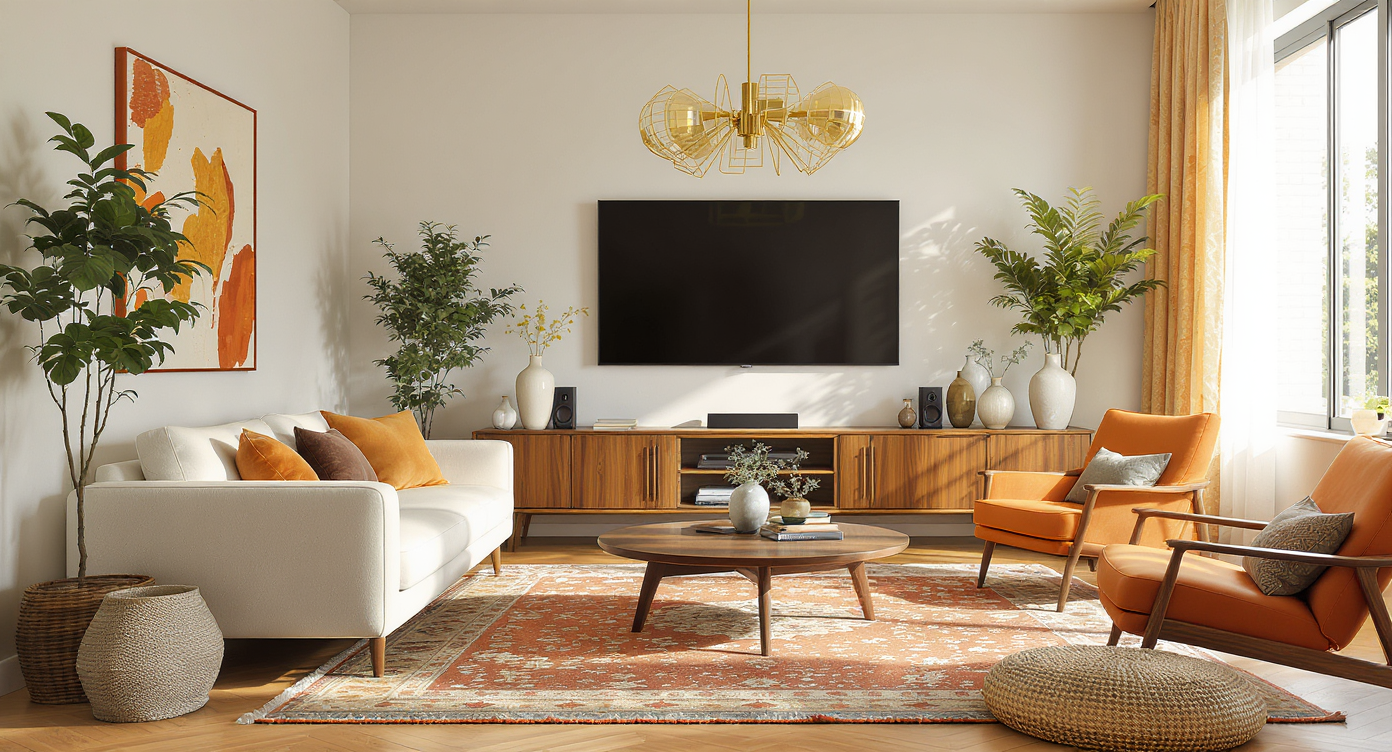
A living room artfully blends retro mid-century and bohemian design elements with contemporary technology for a cohesive, timeless look.
Look to signature periods such as mid-century modern or bohemian California cool for lessons in mixing practicality with distinct style. Whether it is integrating sculptural lighting reminiscent of the 1960s or pairing warm, curved woods with sleek home theater components, these looks provide a framework for resolving old-versus-new conflicts. Desk research suggests that working within a particular design vocabulary helps keep projects grounded, much like insights from mid-century boho spaces demonstrate. Each era offers cues for hardware, colors, and placement that can guide even the most challenging balancing acts.
Frequently Asked Questions
Custom cabinets, sliding panels, or vintage-inspired enclosures can conceal a flat-screen and allow the space to transition easily from entertainment to conversation. Tools like REimagineHome.ai can help visualize these interventions.
Do hidden speakers impact audio quality?
Invisible or integrated speaker systems can deliver high-quality sound when installed with proper materials, such as acoustically transparent fabrics or carefully ventilated cabinetry.
What is the benefit of blending old and new decor?
This approach creates a layered, authentic space that feels collected over time and avoids the sterility of strictly modern rooms.
Can I use vintage accessories without making my home look outdated?
Mixing antiques with contemporary pieces, as advised in our blog post on integrating antiques into modern decor, keeps the look fresh and intentional.
How do I balance heavy wood paneling with technology?
Strategies like adding light-colored rugs, layered window treatments, and greenery—as seen in our guide to balancing wood tones—can harmonize tech with traditional millwork.
Balancing Comfort and Character in the Modern Living Room
Classic living rooms do not have to forego modern conveniences to retain their charm. Instead, remodel projects focused on custom furniture, period references, and balanced stylistic choices can ensure the main social space remains both functional and inviting. Thoughtful integration, rather than concealment or rejection of either element, leads to rooms that feel genuinely lived in. Using visualization and planning technology at REimagineHome.ai makes it easier than ever to test possibilities and refine the result before committing to major changes.