Curved Fit Index: The Complete Guide to Choosing Curved Furniture That Fits Your Room
TL;DR
Curved furniture softens interiors and improves flow, but selecting the right size and shape is key to avoiding crowding or awkward layouts. This guide introduces the Curved Fit Index—a practical framework to ensure your curved sofa or sectional is proportional to your space, and walks you through rug pairing, clearance needs, and planning for timeless comfort.
Why Curves Are the Shape of Now
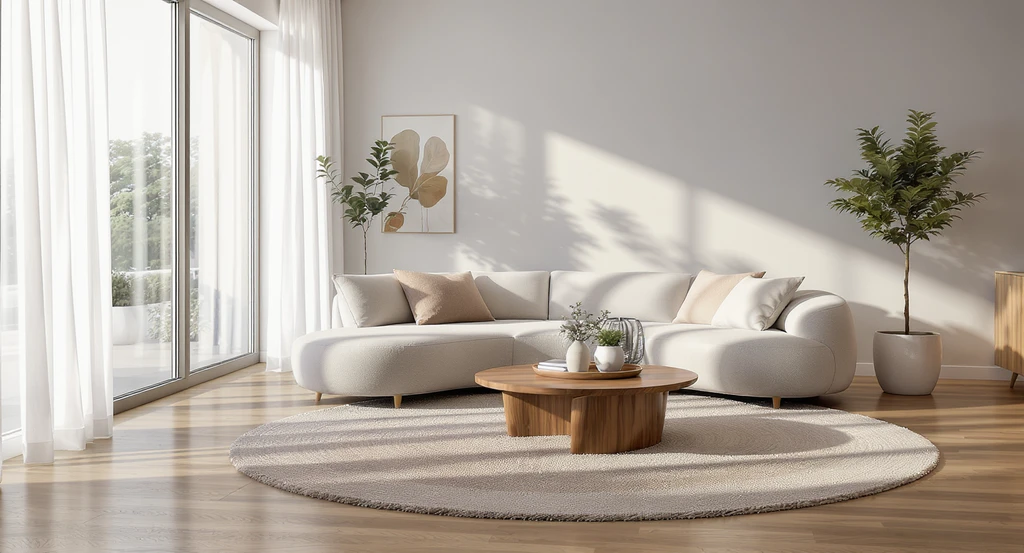
How to choose curved furniture that fits your room: This living room scene demonstrates a curved sofa size guide for small spaces and explores why curved furniture can look different at home than in the showroom, while offering layout inspiration for the best rug shape for curved couches.
After years defined by minimalism and sharp, geometric interiors, curves are making a major comeback in furniture design. From social media trends to international trade fairs, round-edged sofas, tables, and accent chairs are shifting how we experience and arrange our homes. Curved furniture offers much more than a fleeting moment of style. Its real allure stems from how it softens a space, improves everyday movement, and invites people to gather. But “will a curved sectional fit in my living room?” or “why does curved furniture look so different at home versus in a showroom?” are essential questions to answer—especially as more homeowners embrace these sophisticated silhouettes. By blending expert insights and the new Curved Fit Index™, you can confidently select, arrange, and enjoy curved pieces tailored to your space.
-
Introducing the Curved Fit Index
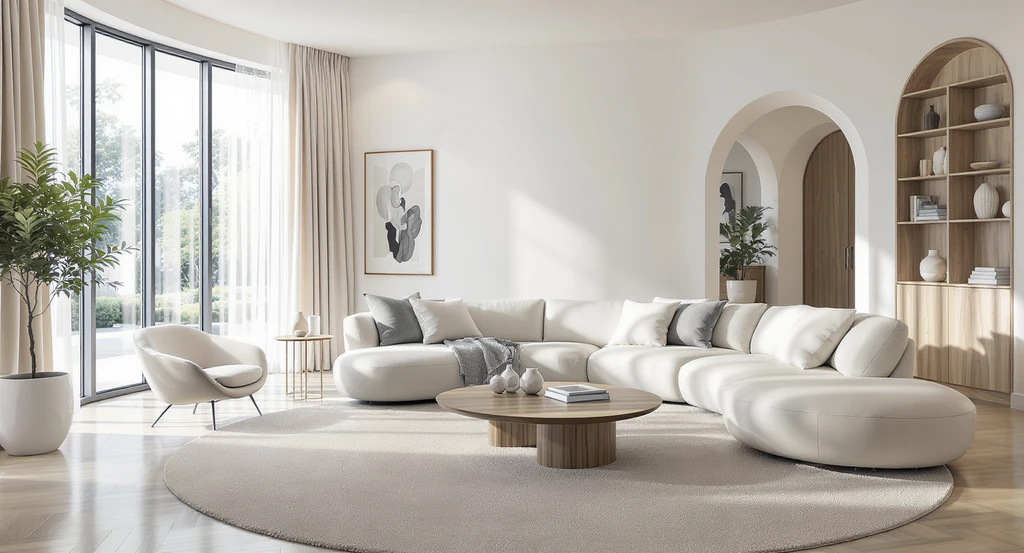
See how to choose curved furniture that fits your room using the Curved Fit Index™—a curved sofa size guide for small spaces and larger living areas, demonstrating the best rug shape for curved couches and why curved furniture looks different at home.
Choosing curved furniture that not only looks stunning but fits your room is about balancing three essentials: how much space the arc consumes, optimal walkways, and how the piece harmonizes with other furniture. The Curved Fit Index formalizes this approach so you’re never left guessing. It’s rooted in industry research on proper furniture scale and offers a clear framework before you commit to that artful, plush crescent. The Curved Fit Index™ uses the Radius-to-Room Ratio Rule, which recommends:
- For rooms under 10 feet wide, opt for sofas or sectionals with a shallow arc and keep main walkways clear at 30–32 inches.
- Rooms between 10 and 14 feet comfortably accommodate a moderate curve; plan 32–36 inches clearance around the deepest edge for flow.
- In expansive spaces over 14 feet, fully curved sectionals shine—just ensure a minimum of 36 inches for walkways to avoid cramped corners.
-
Curved Furniture Decision Matrix: Find Your Fit Fast
A visual curved furniture decision matrix shows how to choose curved furniture that fits your room, offering a curved sofa size guide for small spaces and best practices for rug pairing to help you decide: will a curved sectional fit in my living room and why curved furniture looks different at home.
This matrix acknowledges that budget, customization, and the desired visual “wow” all influence which curved style is right for you. For maximum harmony, first measure your room, apply the Radius-to-Room Ratio Rule, then use the table above to pick the right curves and rug shape for your context. For more advice on arranging sofas and planning clearances, visit our furniture arrangement guide.Room Width Max Recommended Curve Depth Walkway Clearance Best Rug Shape for Curved Couches Design Tier Customization Space Penalty vs Visual Benefit <10 ft Shallow arc only 30–32 in Large rectangle Budget Standard modular Low penalty, subtle effect 10–14 ft Moderate curve 32–36 in Round or layered Designer or mid-high Custom radius possible Medium penalty, bold effect 14 ft+ Full curved sectional 36 in+ Oversized zone rug High-end/statement Fully custom High penalty, dramatic effect -
How to Choose Curved Furniture That Fits Your Room: The Nuances
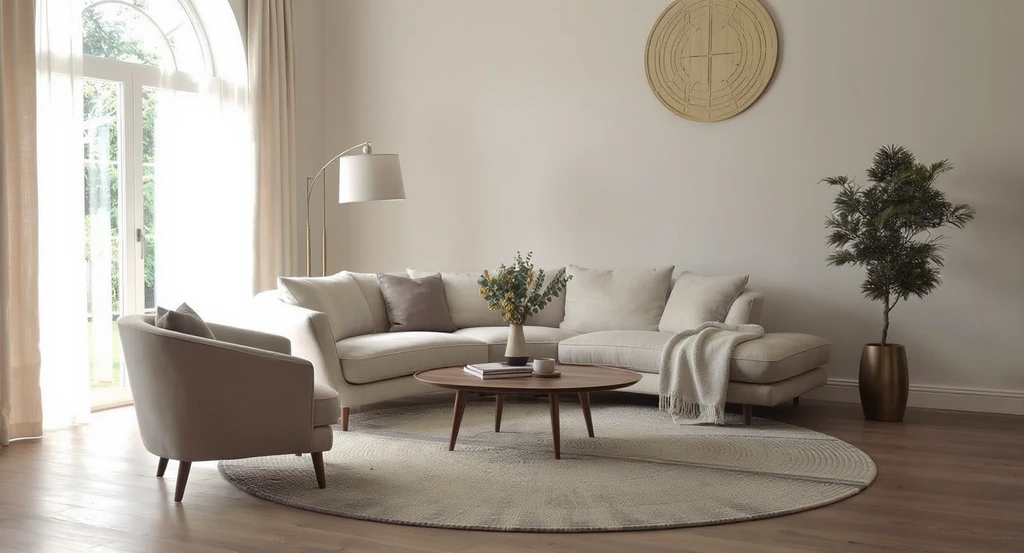
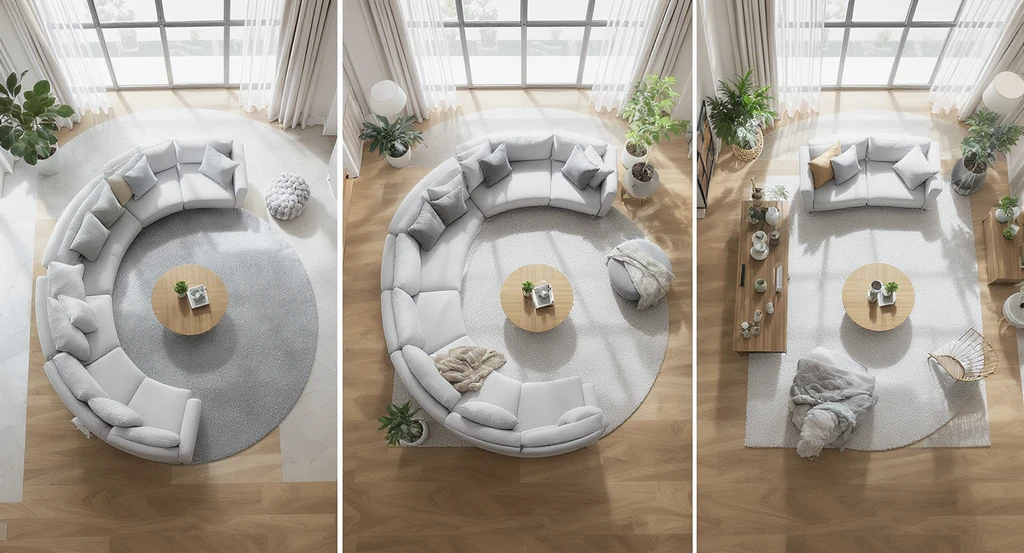
How to choose curved furniture that fits your room: This curved sofa size guide for small spaces pairs a round rug with proper traffic flow, showing why curved furniture looks different at home and ensuring a curved sectional will fit in your living room.
Scale and proportion are key in making curved furniture feel intentional rather than overwhelming. Before falling in love with a statement sofa, consider these essentials:
- Measure both the width and depth of the piece, understanding that curved arms and backs can extend further into the room than a straight sofa.
- Balance with existing architecture—if your home has arched doorways or bay windows, curves can echo these lines beautifully.
- Test traffic flow. Anything less than 30 inches between a curved edge and a wall or table will feel cramped.
- Pair with the right rug shape so your seating area reads as purposeful, not haphazard. Curved couches respond best to round, oval, or layered organic rugs, which enhance flow and soften angles. Learn more from this comprehensive rug and sofa size guide.
-
Will a Curved Sectional Fit in My Living Room?
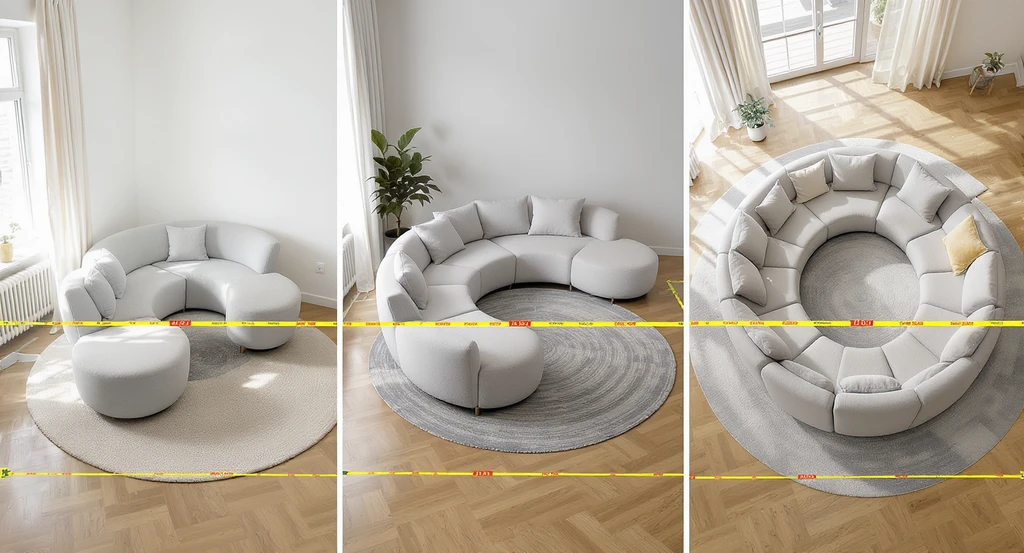
Will a curved sectional fit in my living room? This curved sofa size guide for small spaces and large rooms shows how to choose curved furniture that fits your room, revealing why curved furniture looks different at home.
A common question with no single answer—yet the Curved Fit Index makes it approachable. Begin by measuring your living room’s widest width. For smaller spaces, straight or shallow arc designs minimize crowding. In mid-sized to large rooms, consider modular curves or even a sweeping full-circle sectional, so long as you maintain the 32–36 inch walkway rule. It’s crucial to remember that while curve depth can wow visually, it does demand more floor space—compare your room’s square footage to the sectional’s footprint before committing. For professional insights on fitting large or unconventional sofas, see our sofa style and size explainer.
-
The Best Rug Shape for Curved Couches
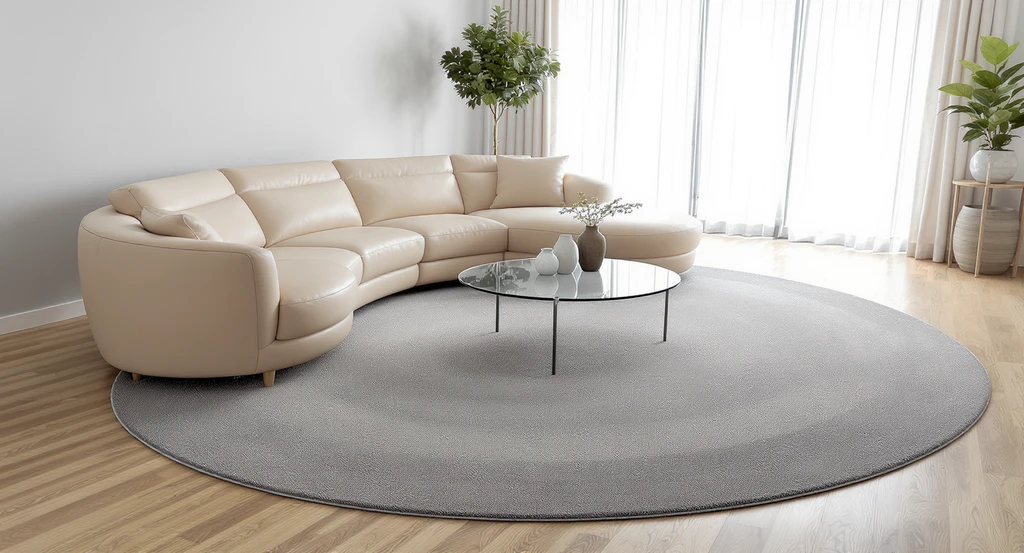
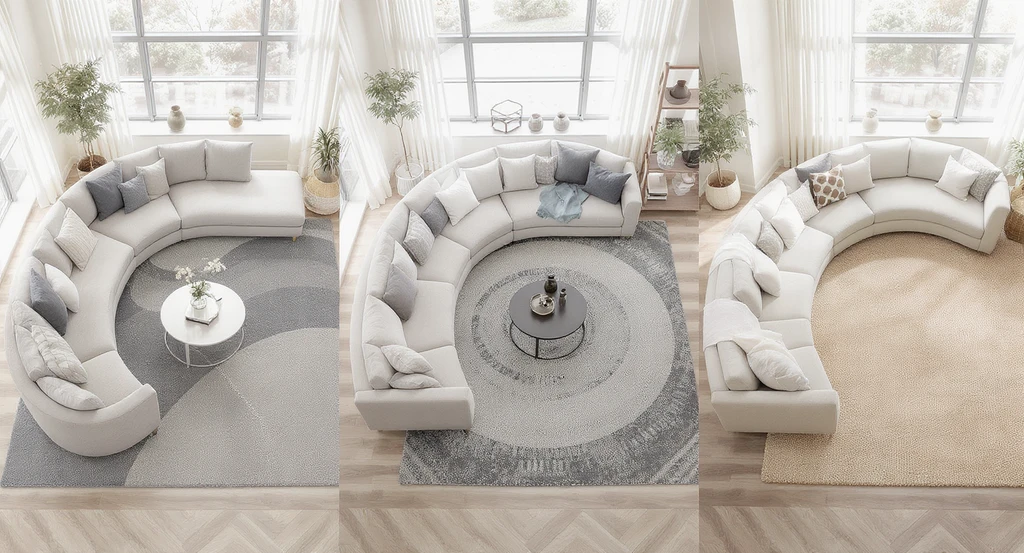
Best rug shape for curved couches: A curved sectional sofa on a large round rug with an organic accent layer embodies how to choose curved furniture that fits your room and explains why curved furniture looks different at home.
Curved seating brings energy into a space—but the wrong rug can undermine its effect. Round and oversized area rugs excel at anchoring curved sofas and harmonizing furniture groupings. Layering organic, asymmetrical rugs under a curve can add depth and sophistication, as explored in our rug and arrangement guide. Rectangular rugs work in compact rooms if sized generously enough to frame the curve and leave plenty of open floor around it, but avoid standard small rectangles that chop up the flow. The goal: a seamless, visually unified seating zone.
-
Why Curved Furniture Looks Different at Home
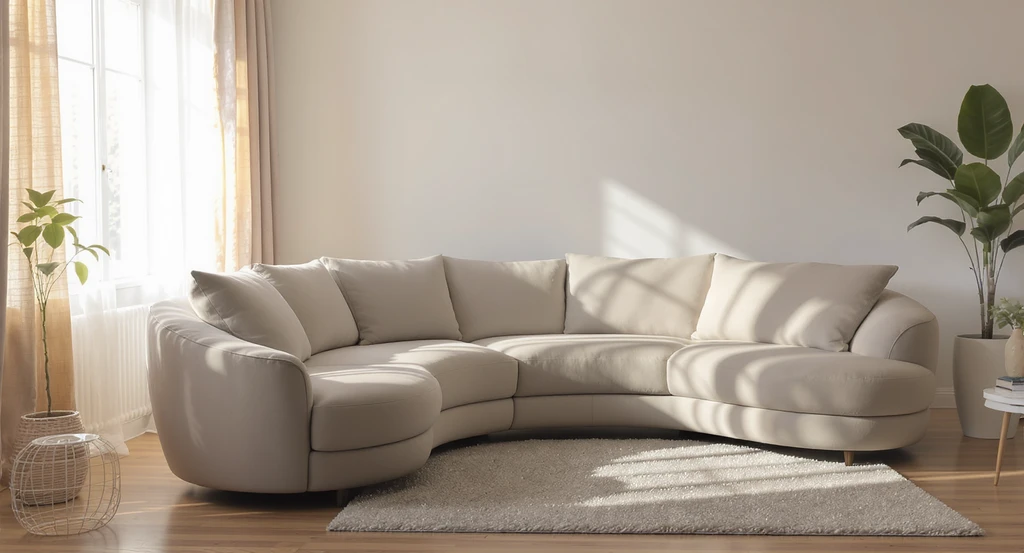
See why curved furniture looks different at home—this living room demonstrates how to choose curved furniture that fits your room, plus a curved sectional size guide for small spaces and tips on the best rug shape for curved couches.
Showrooms are vast and expertly lit, often making curved furniture appear lighter and smaller than it might in your living room. At home, spatial realities like wall proximity, existing furniture, and lighting can change how curves read—sometimes making them feel bulkier or more dramatic. Applying the Curved Fit Index to your measurements ensures what you fell in love with at the store actually delivers comfort and flow at home. As we explored in our trend forecast, rounded silhouettes feel softer and more fluid, but their true effect depends on real-life scale and context.
-
Budget vs Designer Tier: Cost & Customization
Curved furniture spans all price points, but options vary widely by budget. Standard modular curves suit tighter budgets, delivering the look with fewer customization choices. Designer and high-end tier pieces often allow for custom curve depths, luxury textiles, and finishes—ideal for those with more specific requirements or unconventional room layouts. When weighing space penalty against visual benefit, consider both the lasting comfort and the potential trade-off in usable square footage. For detailed insights on balancing investment with longevity, see this comfort-first buying guide.
-
Mixing Curved and Straight Lines: Achieve Lasting Visual Balance

A curved sofa with a rounded rug and straight-lined coffee table demonstrates how to choose curved furniture that fits your room. This realistic scene shows the curved sofa size guide for small spaces and reveals why curved furniture looks different at home.
A successful space rarely relies solely on curves. Designers recommend the 70/30 rule: keep about 70% of lines straight (walls, shelving, major casegoods), then use curves for the remaining 30% in furniture and accents. Balancing curved pieces with straight-edge elements—like pairing a rounded sofa with a geometric coffee table—keeps the room anchored, as shown in our style mixing guide. Leaning into this interplay delivers sophistication and prevents the “space-age spaceship” trap sometimes associated with too many organic forms.
-
The Curve Effect on Comfort and Flow
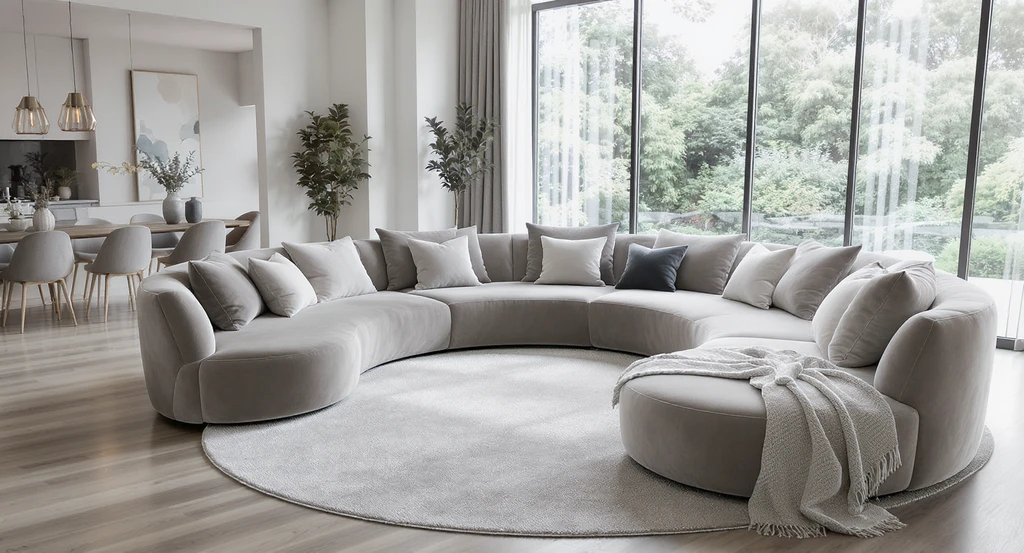
Curved sectionals and matching rugs demonstrate curved sofa size guide for small spaces, helping answer will a curved sectional fit in my living room and how to choose curved furniture that fits your room.
Much of the appeal behind curved sofas and chairs is more than visual. Scientific studies point to our instinctive comfort with rounded, rather than sharp, shapes—they subconsciously signal safety and approachability. Curved silhouettes also encourage better conversation, especially in open-plan rooms, by gently focusing guests toward each other and discouraging rigid, TV-centric layouts. Curved edges also improve daily safety, especially for families or those with pets, by reducing hard corners. Explore this comfort-driven trend analysis for more on the psychology of organic shapes in interiors.
-
Maintenance and Longevity: Curved vs Straight
Curved furnishings often require a bit more attention to maintain their shape and fabric tension. Regular dusting of curved backs and arms, plus mindful placement away from harsh direct sunlight, can help extend their lifespan. Designer-tier upholstery tends to handle tension and wear better, but even budget-friendly curved pieces last longer with proper care, such as frequent cushion fluffing and avoidance of overloading the backs and arms. Get more maintenance strategies from our practical care guide.
-
Ready to Reimagine Your Layout?
If you’re curious how a statement curve could reshape your own floor plan, explore more expert tools at ReimagineHome. Their room planners and style guides simplify the process of visualizing, customizing, and ultimately enjoying curved furniture that feels tailor-made for your lifestyle.
Curved Furniture FAQ
- Is curved furniture a trend or here to stay?
While curves are certainly trending for 2025 and beyond, their comfort-forward design and psychological benefits suggest they’ll remain a mainstay. As we note in this comfort-first trend guide, craftsmanship and organic shapes are rising in lasting appeal. - How much space do I need for a curved sectional?
The Curved Fit Index recommends at least 30–36 inches of walkway clearance around any curved sofa or sectional. Select the arc depth based on your room’s width, as outlined in our sofa sizing advice. - What type of rug works best under a curved couch?
Round, oval, or organic-shaped rugs typically anchor curved seating best, enhancing the smooth lines and movement—consult our rug pairing guide for specifics. - Can I mix curved and straight furniture in the same space?
Absolutely. In fact, design experts encourage a 70/30 blend of straight and curved lines to retain balance and prevent gimmicky looks. More tips can be found in our mix-and-match guide. - Is custom curved furniture worth the investment?
For unique floor plans or specific style goals, custom curves offer the best fit and most dramatic visual impact, especially in high-end projects. Modular or off-the-rack options can still provide excellent results on a budget.
Key Takeaways: Curves Done Right
Curved furniture can transform even the boxiest room into a sanctuary of comfort and flow—when approached with scale, clearance, and visual balance in mind. By applying the Curved Fit Index and referencing proven planning frameworks, you’ll avoid common pitfalls and create a dynamic, inviting space that feels current yet timeless. Whether you go bold with a sweeping sectional or introduce gentle curves through accents, the right fit is always within reach—especially when backed by expert resources.