6 Easy Ways to Make Your Eclectic Home Feel Beautifully Cohesive
TL;DR
If your eclectic home is called 'unhinged,' it's likely a matter of layout, scale, or flow, not personality. Here are practical corrections to create cohesion and comfort while keeping your unique style.
Is Your Eclectic Home Actually 'Unhinged', or Just Misunderstood?
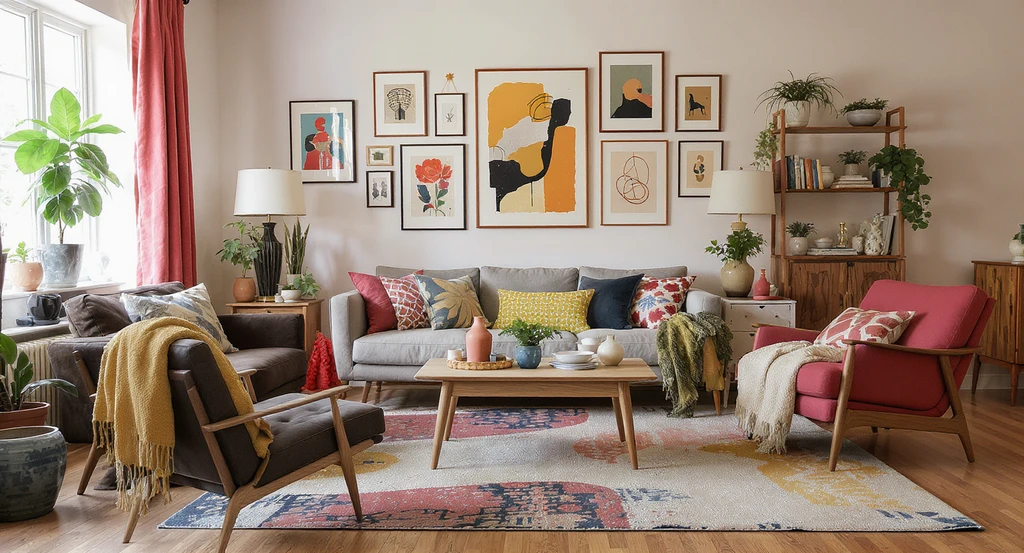
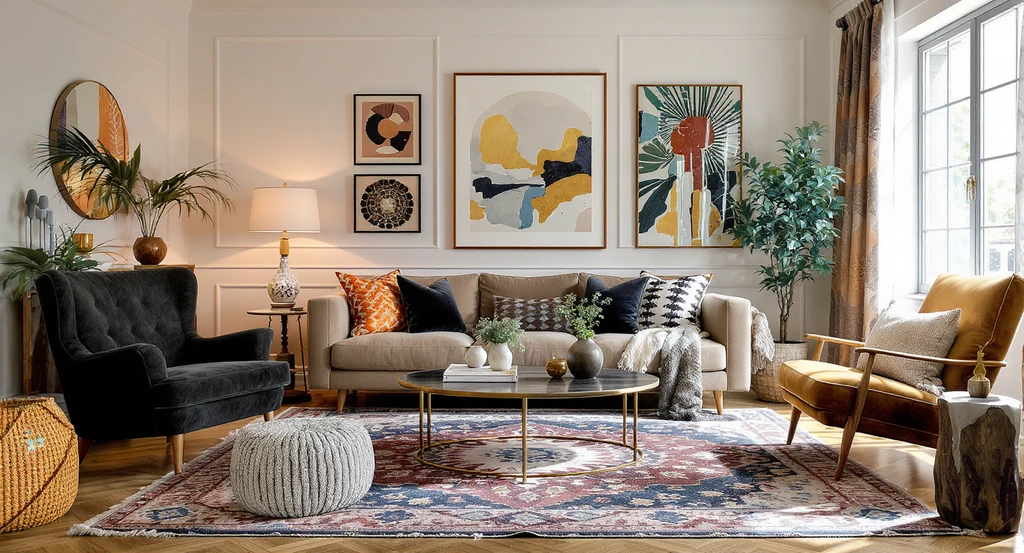
Using AI to visualize eclectic home decor, this editorial image reveals how ai room makeover tools assess personal taste and correct layout issues for unique styles.
If you’re hearing that your home looks 'unhinged,' the truth is it’s probably just eclectic, and possibly suffering from a few fixable layout issues. The simple answer is: strong personality in decorating only feels off-key when core design fundamentals are overlooked.
If you're unsure how to balance your unique collection, the key is to address proportion, alignment, and visual flow. This guide explains what actually causes a home to feel 'off,' points out typical errors, and gives clear steps to correct them, without erasing character or individuality.
-
01. Furniture That Doesn't Follow the Room Layout
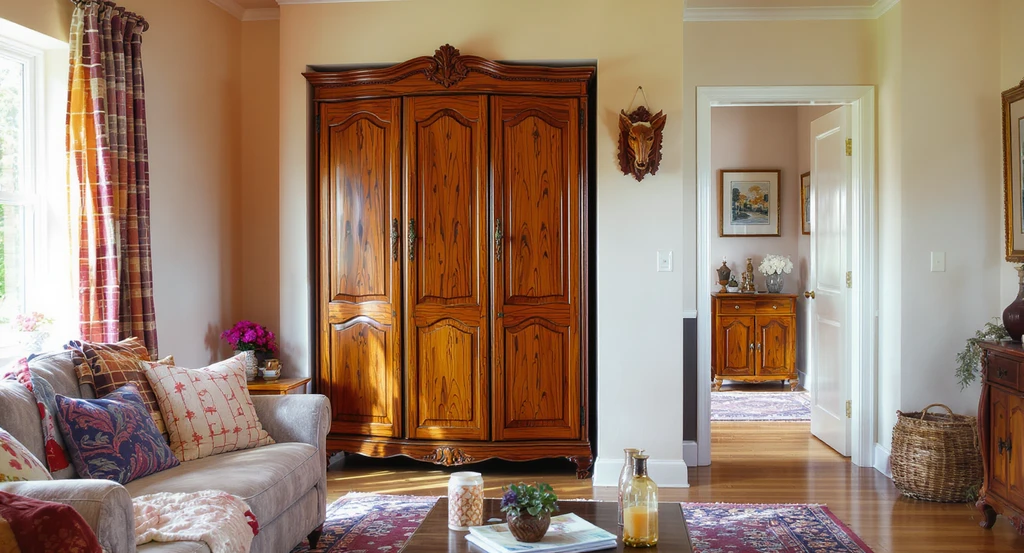
Using AI to visualize eclectic home decor, this image highlights how misaligned furniture—like an armoire jutting past a wall edge—can disrupt room flow. AI room makeover for unique styles reveals the importance of coordinating furniture depth with wall lines for functional, visually cohesive layouts.
A common layout mistake is placing large pieces, cabinets, dressers, or armoires, so they jut out past the edge of walls or crowd doorways. This usually happens when the visual anchor of a room is misaligned or when the furniture is sized for a different wall.
Easy Fix: If an item hangs significantly beyond a wall break, trims the corner, or spills into a hallway sightline, adjust its position so the depth coordinates with the wall's edge. Measure the wall and select furniture that fits the available width, allowing for door swings and walking space (at least 18-24 inches clearance at entryways). When in doubt, test the layout by shifting pieces and photographing from various angles for alignment. A room feels more coherent when pieces line up with built architecture, not just flooring boundaries.
-
02. Rugs That Don't Anchor the Space
Layering smaller rugs over carpet is a valid way to add interest, but using an undersized or unanchored rug often contributes to a disconnected look. This happens when the rug floats in the center of the room or is too small for the main seating area, making the furniture arrangement feel incomplete.
Easy Fix: Use a rug that is proportional to the grouping of furniture, ideally large enough so at least the front two legs of each major piece rest on it (a measurable rug-to-furniture guideline). For living or dining zones, a rug should extend 8-12 inches beyond the sides of the furniture to create grounding and visual unity. If replacing the rug isn’t possible, try repositioning your furniture to better anchor it, as described in our guide to fixing rooms that feel 'off'.
-
03. Clashing Window Treatments and Bed Linens in Bedrooms
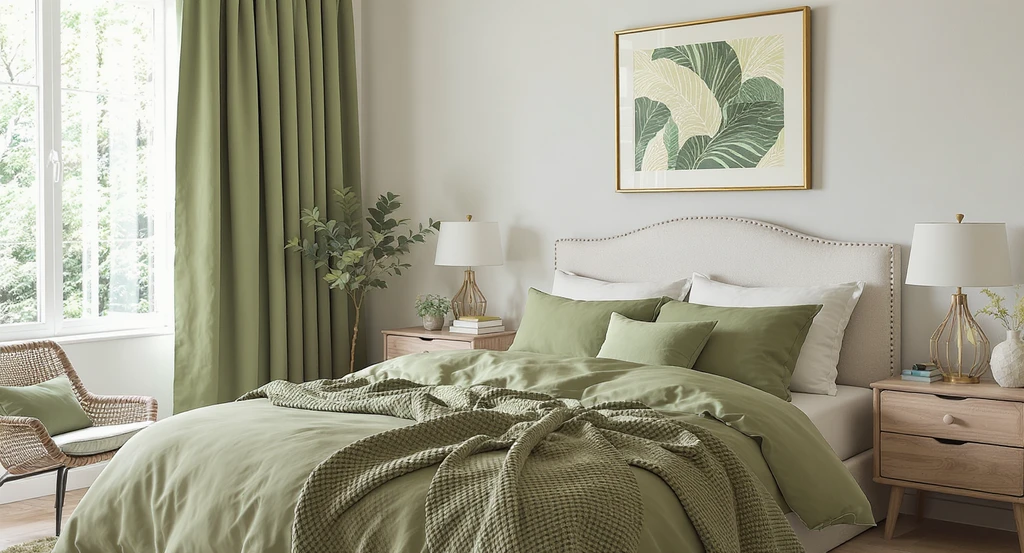
AI room makeover tools help unify eclectic bedrooms by repeating key colors and textures, creating harmony in window treatments, bed linens, and accents.
Misaligned color temperature and mismatched textures, especially in the bedroom, often create the impression of chaos rather than intentional eclecticism. This happens when curtains, bedspreads, and pillows are chosen in isolation.
Easy Fix: Apply the principle of intentional repetition, a signature color or material recurs at least three times within the view. Unify disparate elements by repeating one tone (e.g., green) across the drapes, a pillow, and a piece of wall art, or choose bed linens that echo the wall color or dominant shade in the curtain. This cohesive approach aligns with our strategy in making spaces feel intentional and grown-up. Avoid high contrast pairings unless you balance them elsewhere in the room.
-
04. Artwork That Feels Too Small or Poorly Placed
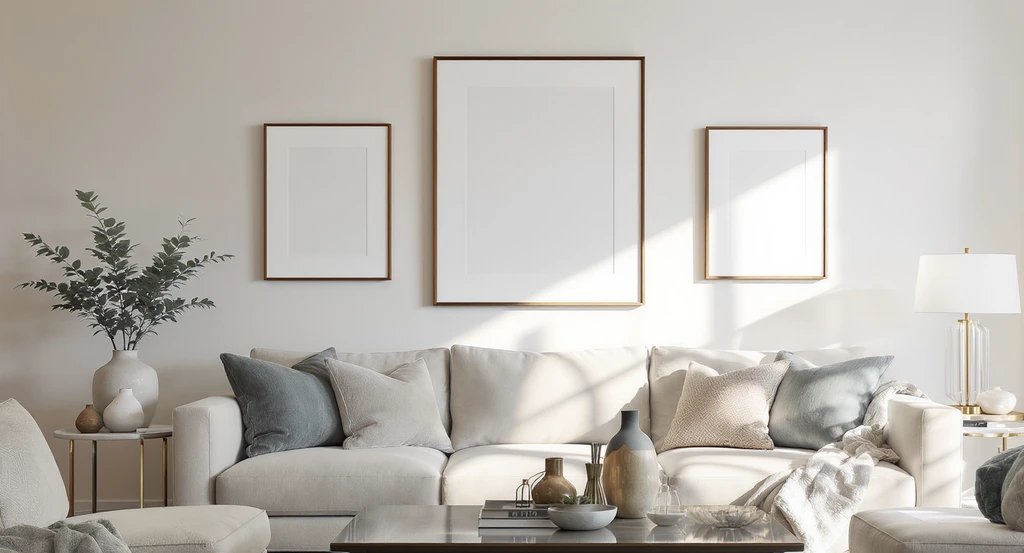
Using AI to visualize eclectic home decor, this image shows correct wall art placement—sized and centered per the 57-inch rule, ideal for unique room styles.
Small frames flanking large prints, or artwork hung too low above furniture, make walls feel awkward and scale feel off. These mistakes typically happen without a clear spacing principle being used.
Easy Fix: For impactful wall art, use the 57-inch rule, the center of artwork should hang at 57 inches from the floor, which matches average eye level. If grouping multiple pieces, treat them as a unified shape and center accordingly. Choose art sizes that are roughly ½ to ⅔ the width of the furniture below. Adjust spacing between frames to 2-3 inches, never flush together. Referencing our blog about why unique decor feels good, preview arrangements before hanging to get the right balance.
-
05. Rooms That Feel Unrelated
Transitioning between rooms with vastly different color palettes or styles, such as a moody vintage bedroom and a bright, modern living area, can feel visually jarring. This often happens when decorating individual spaces with little thought to the whole-home flow.
Easy Fix: Identify a recurring color, motif, or finish and carry it subtly through each room for continuity. For example, extend a green tone from the dining area into adjacent art, cushions, or accessories elsewhere. This repetition of color or material in sightlines creates a subtle thread tying the spaces together, rather than each room feeling like a separate design experiment. More on this is explored in our breakdown of modern eclectic style.
-
06. Too Much 'Stuff' or Competing Focal Points
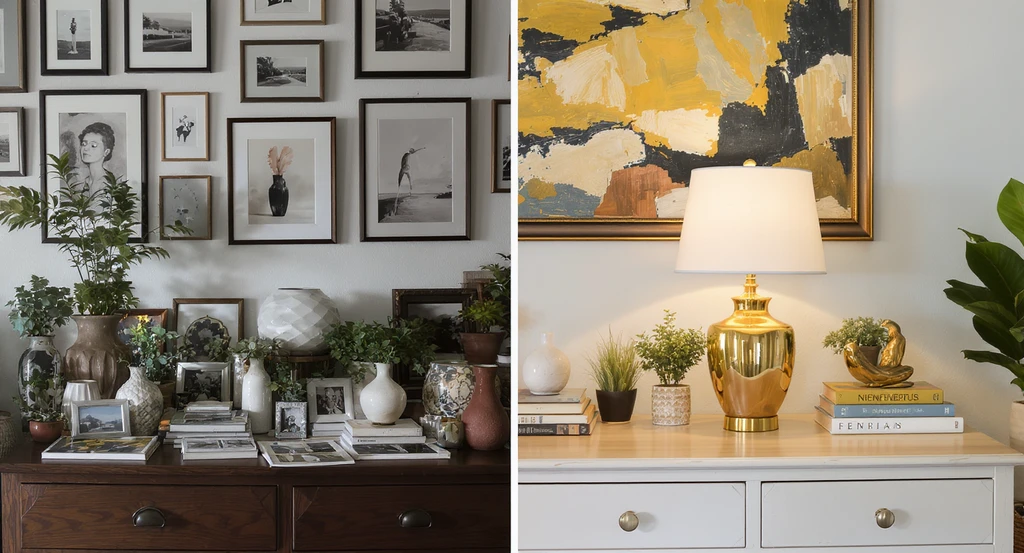
Using AI to visualize eclectic home decor, this image contrasts over-accessorized clutter with an edited, balanced tabletop, showing how ai interior tools assess personal taste and improve unconventional room layouts.
Crowding every surface with decor, plants, or art can tip a space from layered to chaotic. Over-accessorizing is common when sentimental items or thrift finds accumulate without a preview of their combined impact.
Easy Fix: Use a simple visual balance checklist:- Edit surfaces to feature one focal point per major wall or zone—such as a key painting, plant, or lamp. Group smaller objects in odd numbers (3, 5, 7) for natural rhythm.
- Leave negative space: at least one-third of tabletops and open shelves should remain clear, which allows the eye to rest.
- Test arrangements by removing half the accessories and adding back only what creates visual balance. Preview layouts digitally or with a phone camera to spot clutter.
Common Questions About Eclectic Layout Corrections
- How can I tell if my eclectic home is actually cohesive?
- Look for repeating colors, motifs, and a balanced use of open space. If walking through your rooms feels visually smooth, your layout is likely working. For step-by-step advice, learn more about building cohesion.
- Should I replace mismatched furniture, or just rearrange?
- Often, better placement and alignment correct most "clash" issues before new purchases are needed.
- Is it okay to mix vintage and modern pieces?
- Yes. Eclectic style thrives on mixing different eras and influences, as long as a common thread—such as color, scale, or material—connects the pieces. See how to master the new eclectic.
- What if my space still feels off after these corrections?
- Try previewing changes digitally with a tool like REimagineHome AI to identify layout, balance, or flow issues that may be difficult to notice in person.
Your Style Isn't the Problem, Your Layout Might Be
When your home reflects diverse influences and collected pieces, it can easily be misread as 'unhinged' if layout and proportional basics are ignored. Focus on proper alignment, repetitive motifs, and grounded zones to unify your unique selections. For more ideas, review our post on transformative fixes for off-kilter rooms, because a layered home should feel welcoming, not chaotic.