7 Foundational Steps to Designing a Fresh Space When You Move In
TL;DR
Moving into a new home can be overwhelming, but a methodical approach to layout and furniture selection leads to a functional and inviting space. This guide breaks down key steps from identifying must-haves to refining comfort zones so you can settle in thoughtfully. Designers and industry experts agree: starting with essentials and planning for real life is more effective than filling up rooms all at once.
Why Your First Layout Decisions Shape Your Entire Home
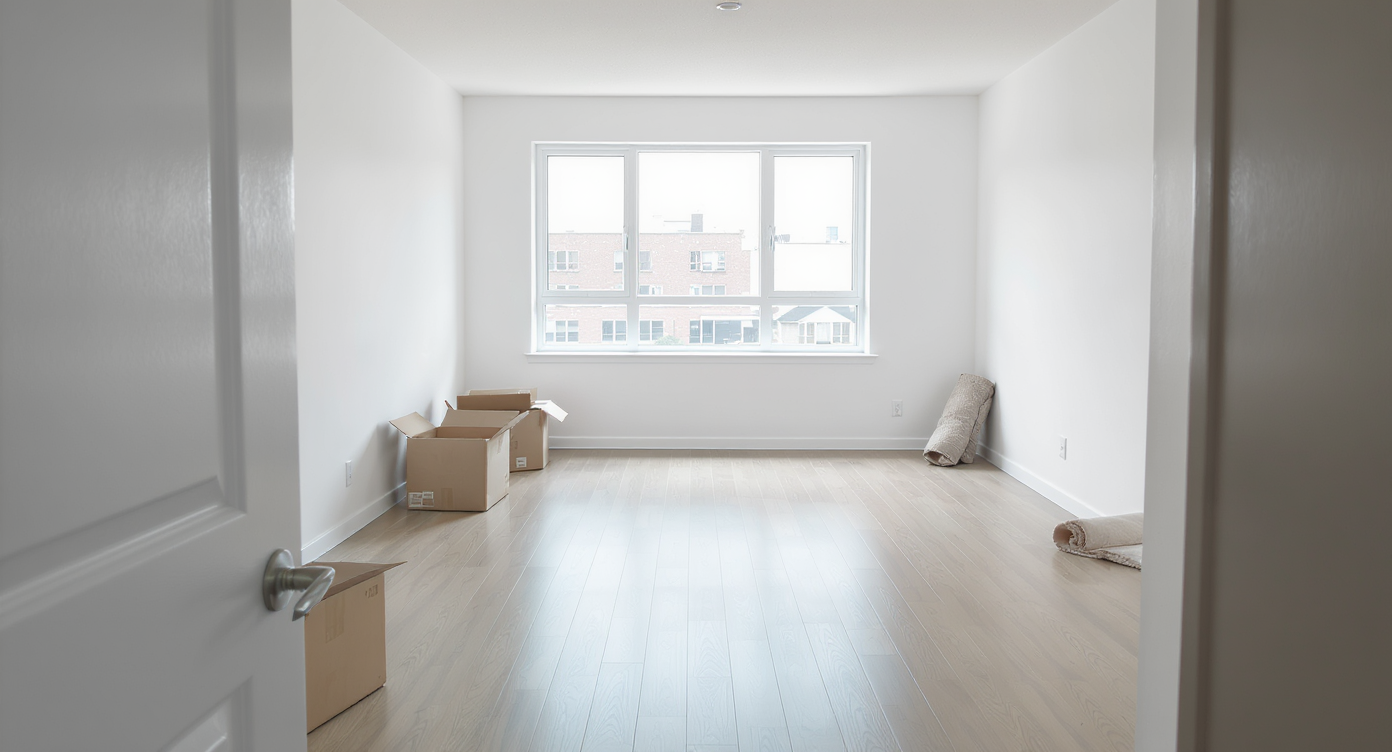
A freshly moved-into, unfurnished apartment with blank walls, clean floors, natural light, and boxes awaiting the start of interior design.
Arriving at a new place holds equal parts excitement and challenge, especially when you're facing blank floors and white walls. Many people rush to furnish immediately, but interior designers often note that the best results come from a slow, deliberate approach that prioritizes comfort, effective furniture arrangement, and adaptability. Whether your home is under 600 square feet or spans a larger footprint, making good early choices on bedroom comfort, main living zones, and storage sets the foundation for a space that works for both work and relaxation. This list offers a clear path from selecting your first piece to creating a compact, beautiful home that evolves with your needs.
-
1. Map Out Zones Before Buying Anything
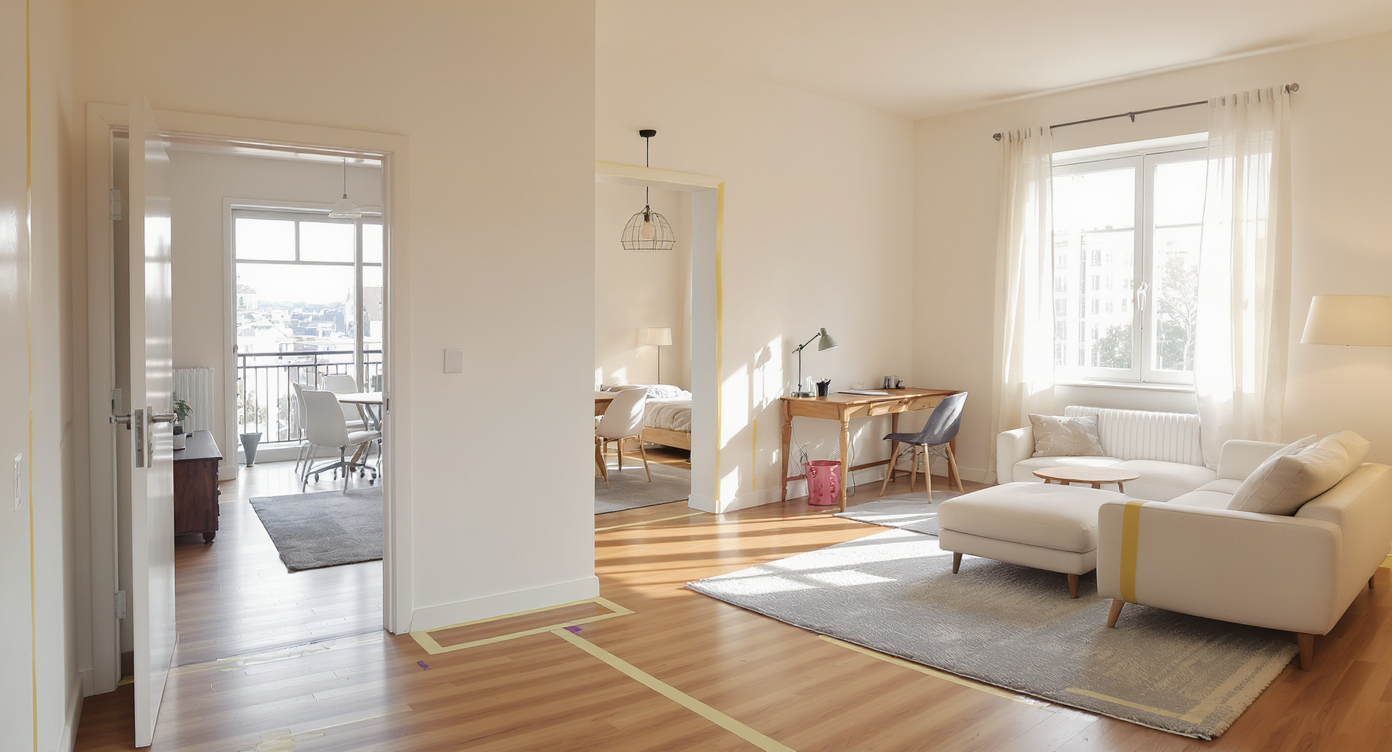
A realistic apartment setup showing how to visually map out distinct zones for living, dining, working, and sleeping before buying furniture.
Resist the urge to start with impulse furniture purchases. Instead, visually map out your space, dividing it into clear areas for living, dining, working, and sleeping. Consider the natural flow from the entrance to windows and balconies. For compact spaces, use area rugs or subtle changes in lighting to create boundaries between zones. As explored in our guide on furniture arrangement and flow, strategic layout can help even a small studio feel organized and multifunctional.
-
2. Prioritize Bedroom Comfort First
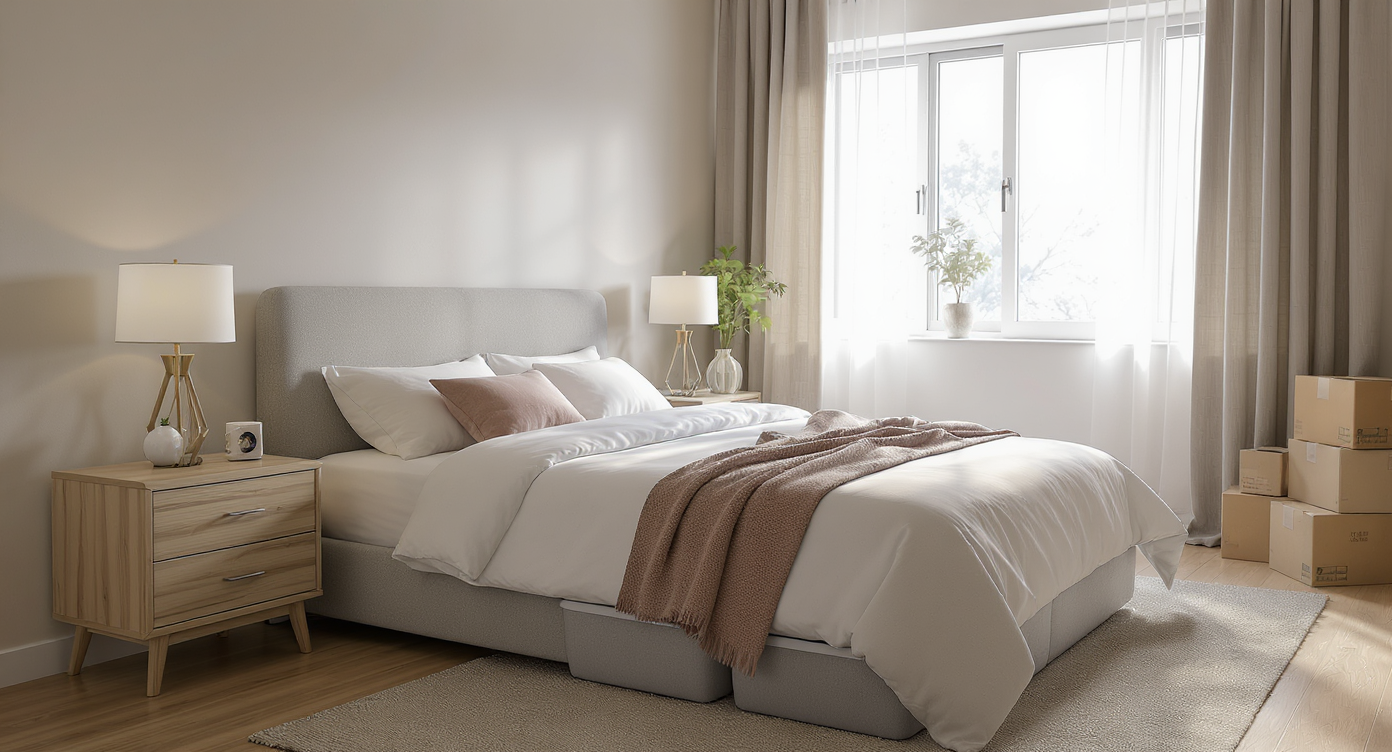
A freshly arranged bedroom, bed placed for privacy, with under-bed bins, slim dresser, minimal bedside table, and a wall-mounted light.
A well-rested start makes unpacking and decision-making easier in the first weeks. Place your bed first, experimenting with headboard orientation to maximize privacy and light control. Integrate practical storage—under-bed bins or a slim dresser—and a minimal bedside table. If your bedroom is compact or separated by a sliding door, opt for pieces that do double duty, like a wall-mounted light that preserves floor space. According to our advice for furnishing your first home, sleeping well is the best initial investment.
-
3. Start with Essential Living Area Furniture
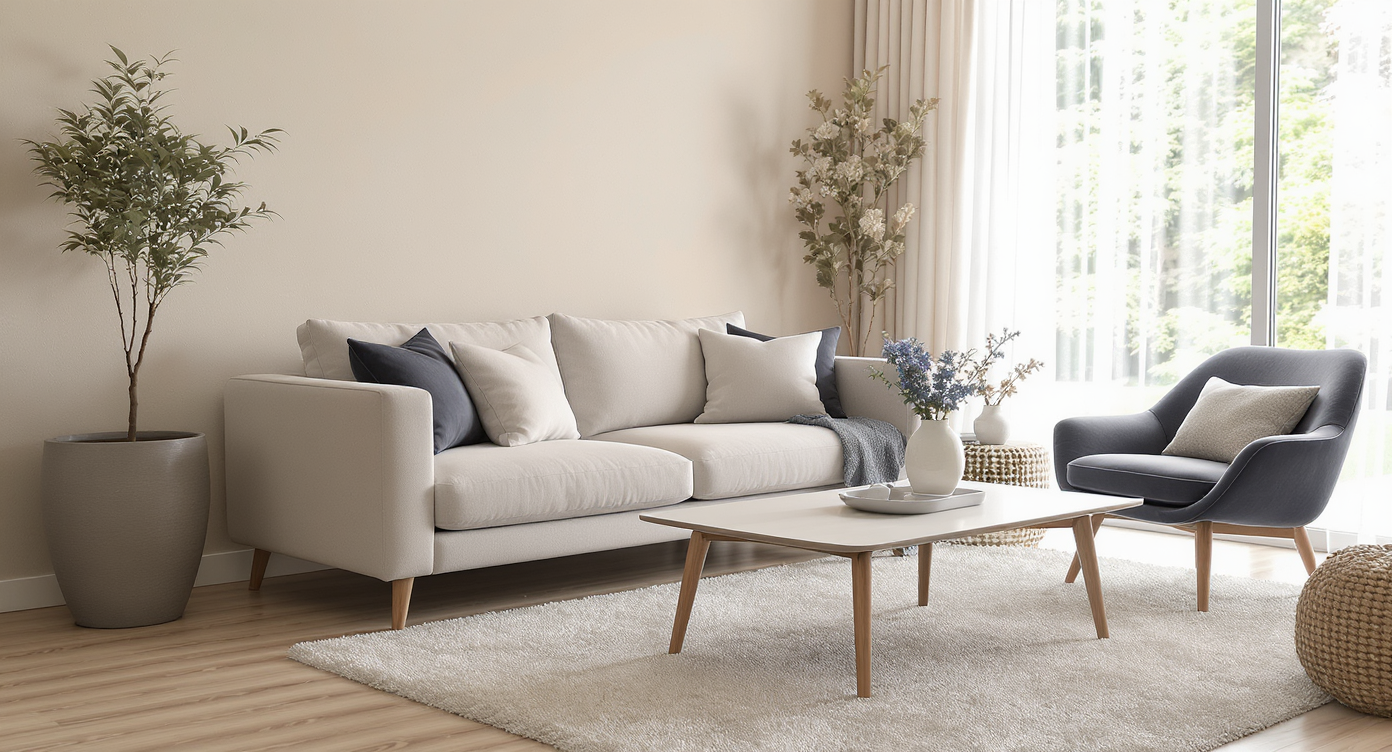
Thoughtfully arranged living area with a well-sized loveseat and coffee table, emphasizing clear pathways and visual openness.
For living zones, anchor the space with a sofa or loveseat that fits both your actual dimensions and your day-to-day lifestyle. Avoid large sectionals that crowd walkways in smaller homes. Reference room measurements before purchasing, as suggested in our sofa and furniture size guide. Add a coffee table that leaves at least 16-18 inches clearance from the seating, and leave pathways unhindered. With compact spaces, furniture with exposed legs can visually open up rooms.
-
4. Plan a Multipurpose Dining Solution
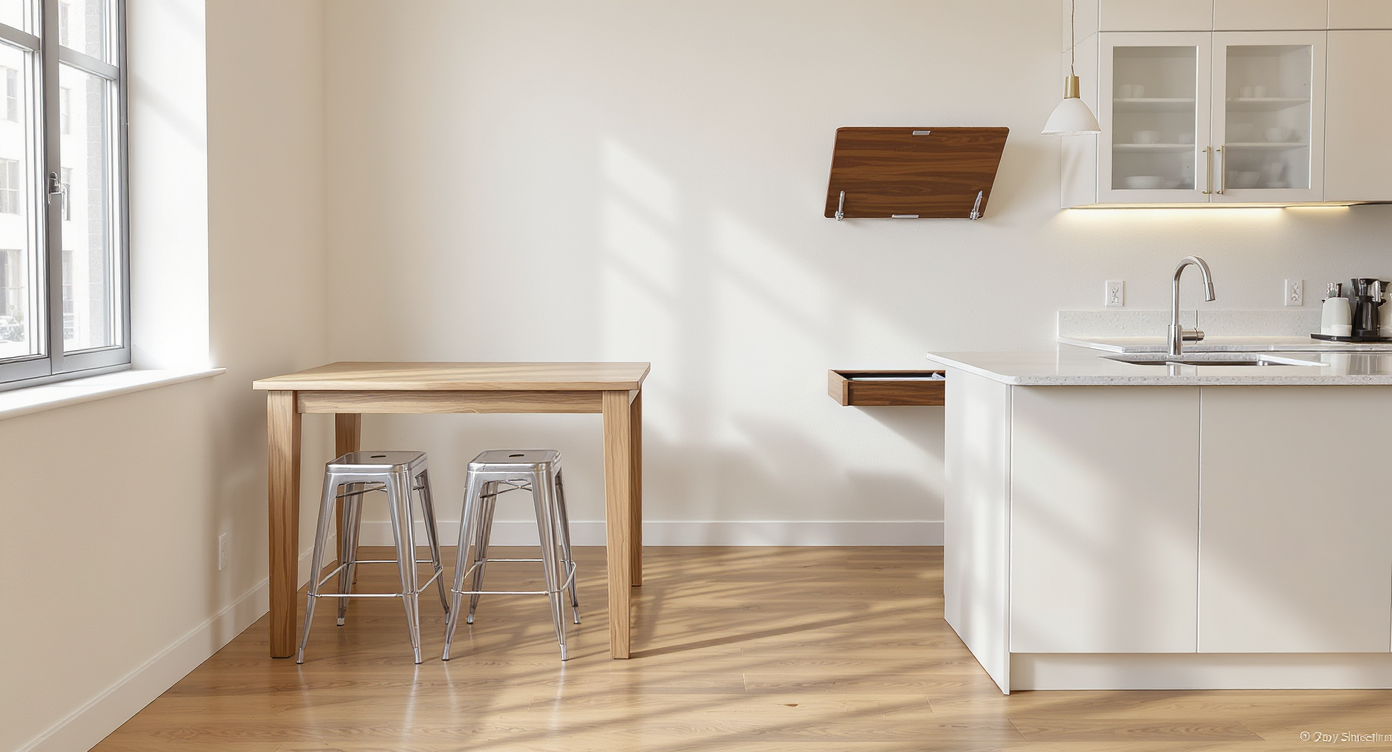
Realistic multipurpose dining area: a mobile island, tucking stools, and fold-down table ensure flexible use and clear walkway flow.
Dining solutions in smaller layouts often need to go beyond formality. A kitchen island on wheels or a counter-height table with tuck-in stools can double as a prep zone or workspace, as professionals see in many urban apartments. Fold-down tables or slim bar counters also serve this dual purpose without taking up permanent square footage. Carefully consider the distance between kitchen cabinetry and the next piece—leaving at least three feet for safe flow. Designers recommend treating dining furniture as flexible, not fixed, especially for budget-friendly small apartments.
-
5. Curate Work from Home Interior Design Separately
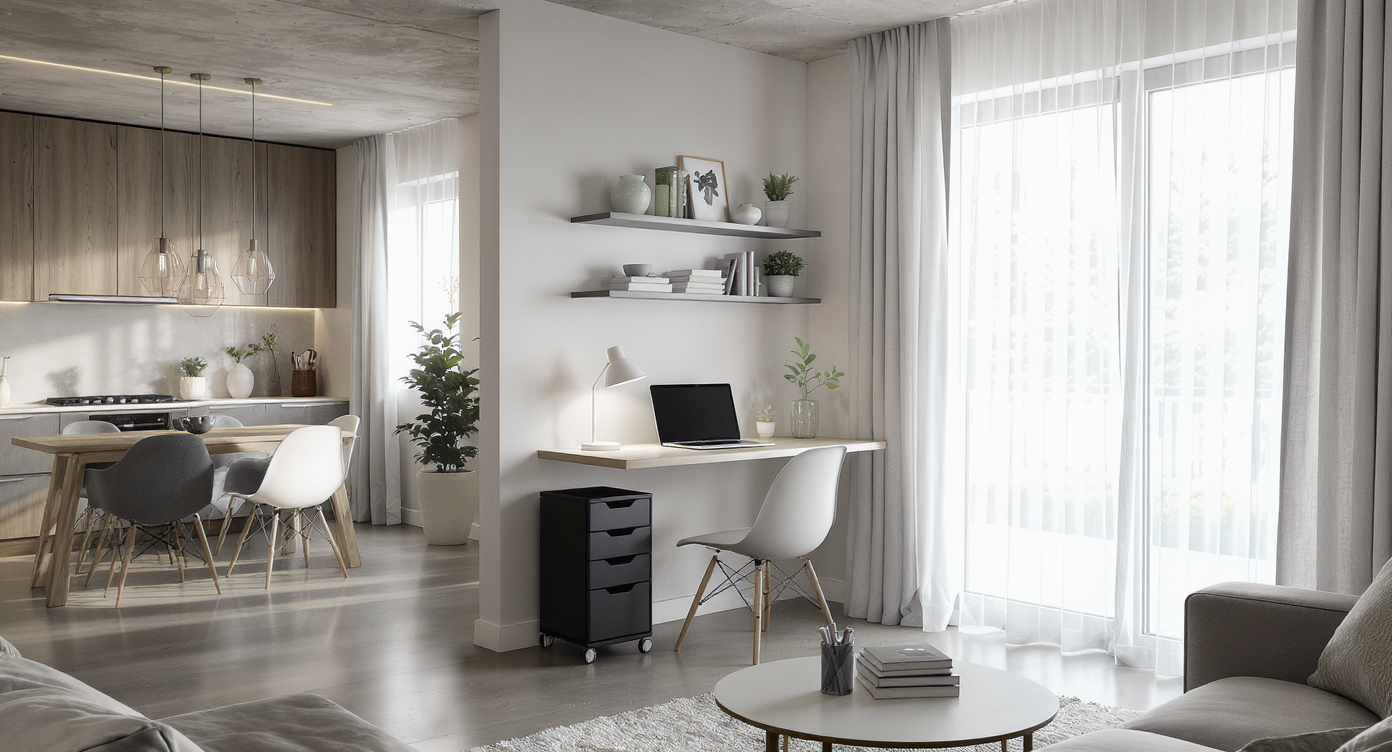
A small, tidy work-from-home setup in an open-plan living room, featuring smart storage and placement near natural light for comfort and efficiency.
With remote work now central to many lives, carve out a dedicated work-from-home area, even if it means repurposing a corner or shared surface. Choose a desk size that fits your actual needs—a too-large desk may dominate an open-plan kitchen or living room. If possible, place the workstation near natural light for wellness without glare on screens. Storage solutions like rolling carts or wall-mounted shelves keep the area tidy when work hours end. Designers often suggest noise management tricks, such as acoustic panels or thick curtains, for apartments with hard surfaces like concrete ceilings.
-
6. Define Spaces Using Rugs, Lighting, and Greenery
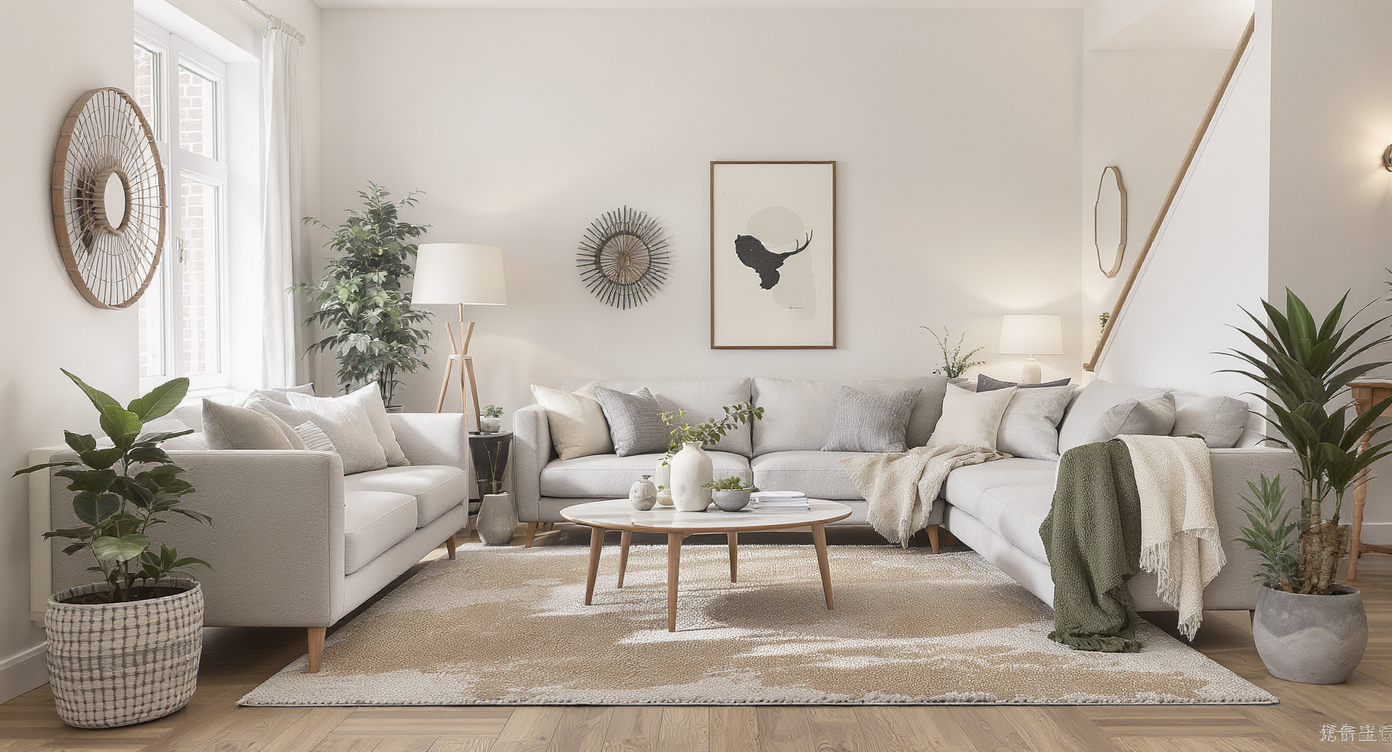
Layered lighting, area rugs, and curated greenery sculpt clearly defined, cozy zones within an open-plan living or sleeping space.
Establish clear visual areas by anchoring the living or sleeping zone with an appropriately sized rug—large enough so major furniture sits on it, but not wall-to-wall. Use layered lighting (floor lamps, wall sconces, table lamps) to create a cozy mood in the evenings, and soften sharp corners with potted plants. As shown in our recommendations for room flow and rug choices, these details make even open layouts feel comfortable and intentional. A few well-placed plants can also help define transitions between work, rest, and leisure spaces.
-
7. Let Your Style Evolve—Go Slowly with Decor
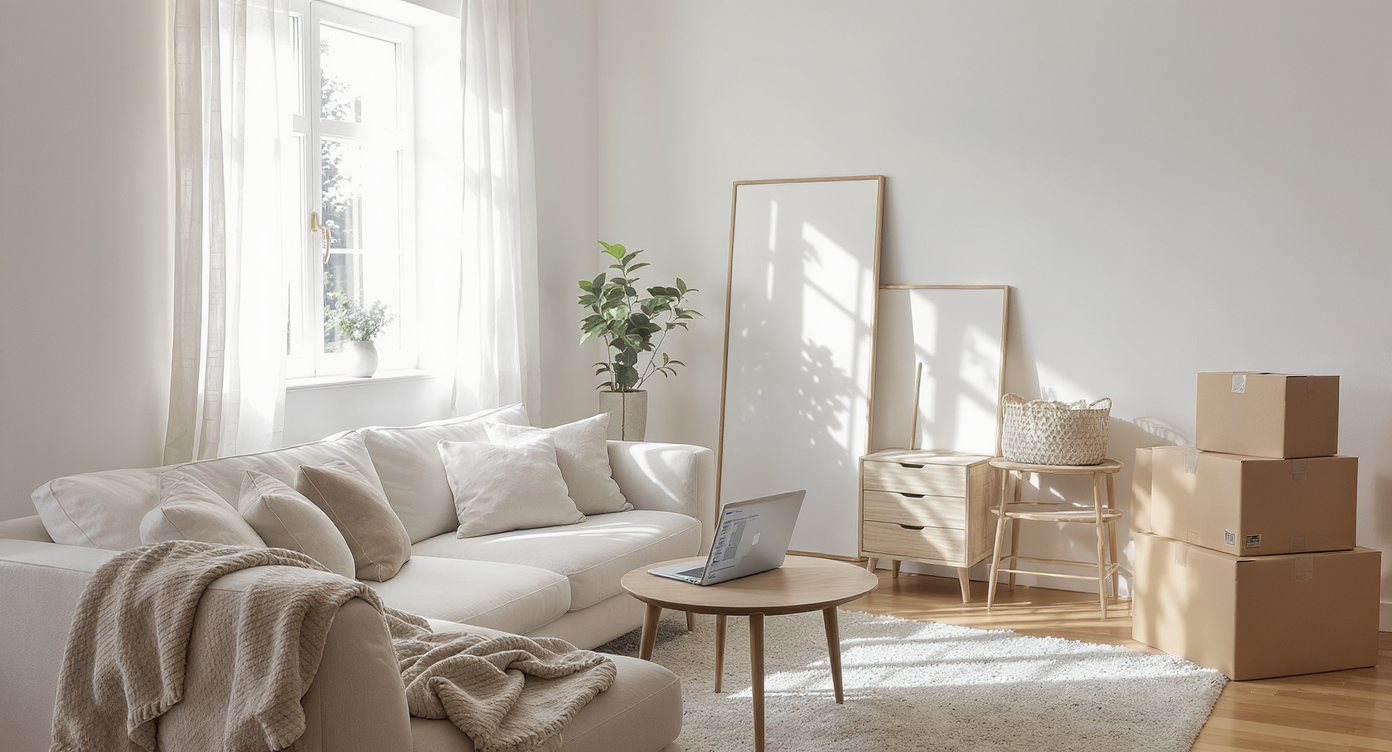
A realistic living room in transition: essential pieces in place, digital planning underway, with art and accessories awaiting thoughtful final placement.
Commit to essential comfort early, but be patient with art, accessories, and secondary storage. Many professionals recommend living in the space for several weeks before making final decor decisions. This approach allows you to observe light patterns, storage needs, and practical habits before adding finishing touches. Use digital planning tools such as REimagineHome.ai to visualize layout changes and design ideas at your own pace. Over time, layer in art, textured pillows, mirrors, and shelving according to what you genuinely need and love. A flexible, iterative approach yields a more personal and sustainable home environment.
FAQ
Start with only what you truly need, such as a sofa, bed, or work desk. Maintain clear walkways by leaving at least two feet between major pieces. Before buying, test arrangements digitally with planning tools like REimagineHome.ai. For more, reference our guide on arranging and sizing furniture for flow.
What should I buy first when moving into a new apartment?
Focus on daily comfort: get a good bed and basic seating before anything else. As explained in our blog on furnishing your first home, add items in stages based on your routines, not just for aesthetics.
How can I combine work-from-home needs with home aesthetics?
Choose a workspace that tucks away clutter during off-hours. Use shelving, baskets, or rolling storage to keep supplies orderly. Consider acoustic tweaks and soft lighting for transition from work to relaxation.
Is there a way to visualize new layouts before buying furniture?
Yes, use platforms like REimagineHome.ai to upload a room photo and test arrangements with real furniture dimensions and styles before committing to a purchase.
Design for Today, Adapt for Tomorrow
Designing a home after a move is a journey best taken step by step. Prioritize foundational needs like sleep, functional living areas, and dedicated workspaces, especially in compact spaces. As you refine bedroom comfort or experiment with furniture & flow, trust that your space will grow with you. Use digital planning tools such as REimagineHome.ai whenever you want to test layouts or finishes before committing, ensuring each choice suits your real daily life.