7 Key Considerations for Building a Floating Deck with Pergola in Frost-Prone Regions
TL;DR
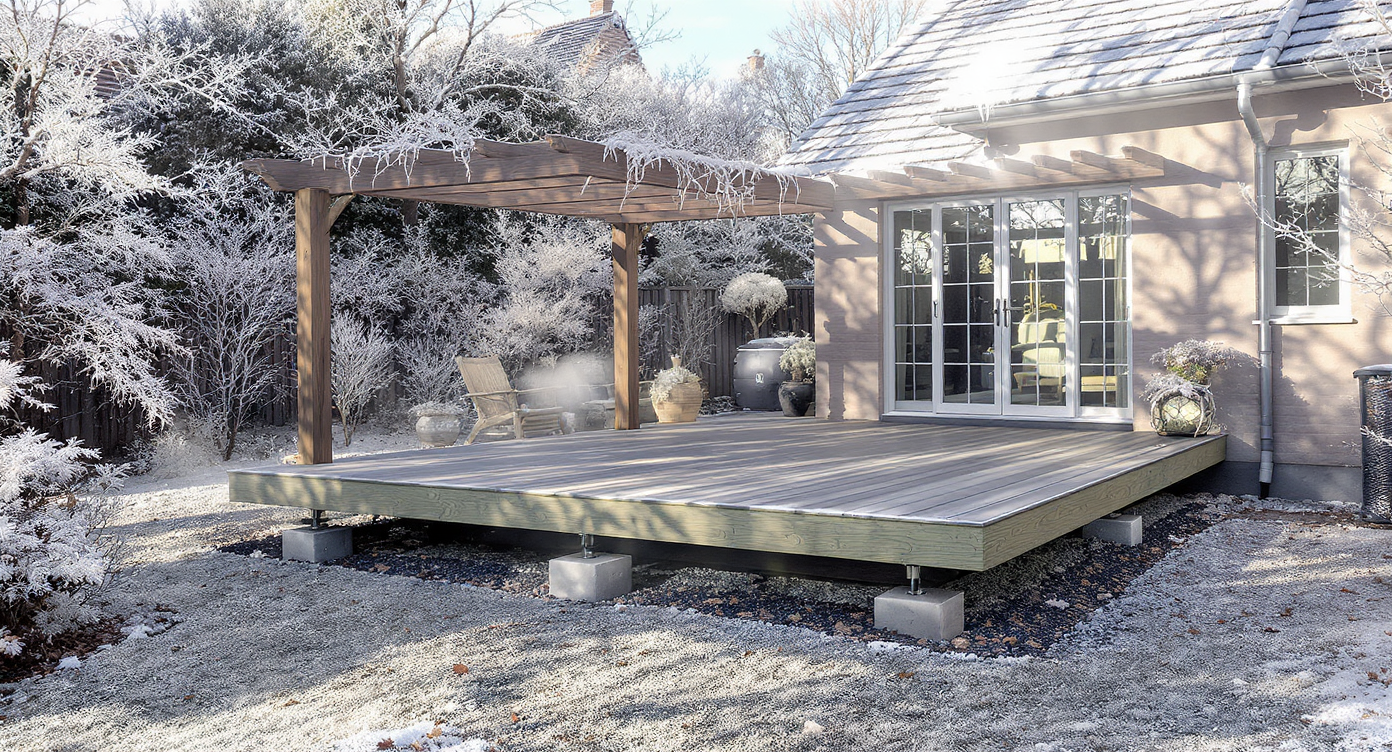
Constructing a floating deck with a pergola beside a house in a frost-prone region requires careful attention to foundation choices, wind conditions, building codes, and structural framing. This list details practical considerations and expert insights so your patio design stays beautiful and sturdy year after year.
Building Resilient Outdoor Extensions in Frost-Prone Areas
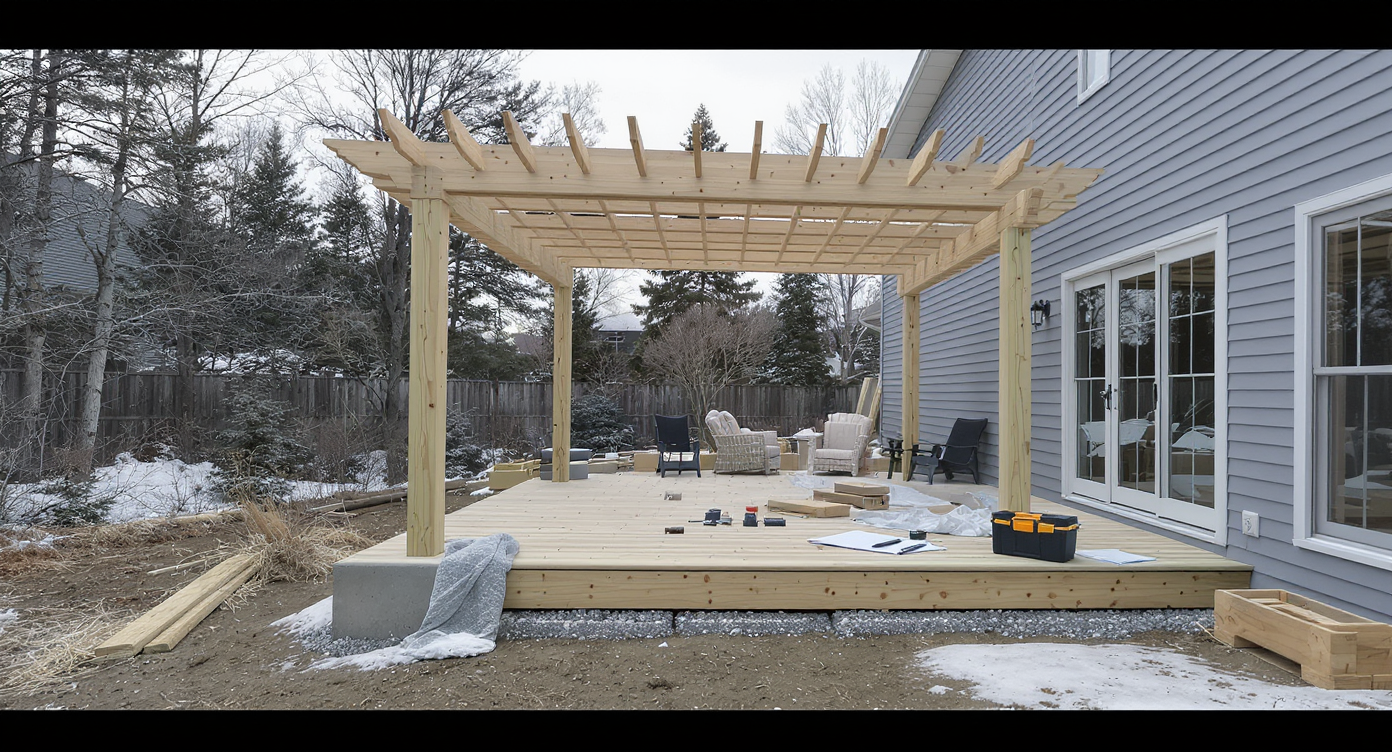
A floating deck and pergola project in progress on frost-prone ground, highlighting northern construction challenges and site conditions.
Designing a floating deck paired with a pergola is an appealing way to expand your living space into the outdoors, especially when patio design AI or similar tools are consulted during planning. However, for those tackling such projects in northern climates, special factors come into play—from fluctuating frost lines to punishing winds sweeping across open fields. These factors influence not only foundational decisions but also project complexity, cost, and long-term durability. This guide distills real-world advice and industry wisdom for homeowners and DIYers who want to build a sturdy, attractive deck and pergola without attaching it to the house. Whether your aim is to sidestep complex permitting, maximize longevity, or ensure a safe and enjoyable extension of your interiors, each section addresses a distinct concern that can make or break your project.
-
1. Understanding Floating Deck Foundations for Frost Resistance
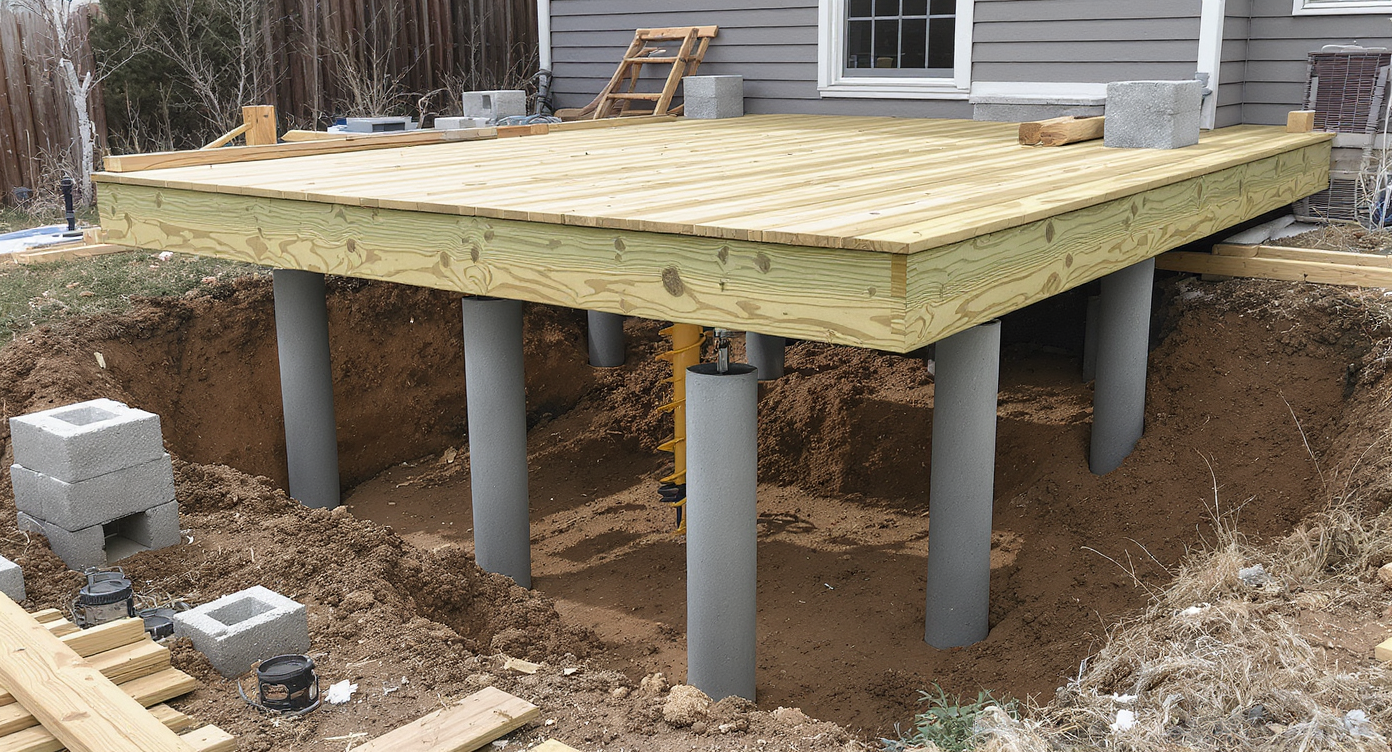
Pouring deep concrete footings for a floating deck prevents frost heave and ensures lasting support in cold-climate regions.
In regions with dramatic freeze-thaw cycles, like those prevalent in Minnesota and Ontario, proper deck foundations are non-negotiable. Floating decks rest directly on the ground or on concrete blocks, which might tempt some builders due to ease of installation. Yet, frost can heave these blocks and compromise stability. For any structure meant to support a pergola or endure regular use, experts often recommend poured concrete footings set below the frost line. While this involves renting an auger and digging deep—often to a depth of four feet or more—it offers unmatched resistance against ground movement and shifting. When the frost heaves, these deeper supports stay anchored, preserving your investment. Seasoned professionals note that skipping this step often leads to uneven surfaces and shortened deck lifespans. This approach is echoed in our exploration of budget retaining wall ideas for challenging climates.
-
2. Assessing Pergola Stability in High-Wind Environments
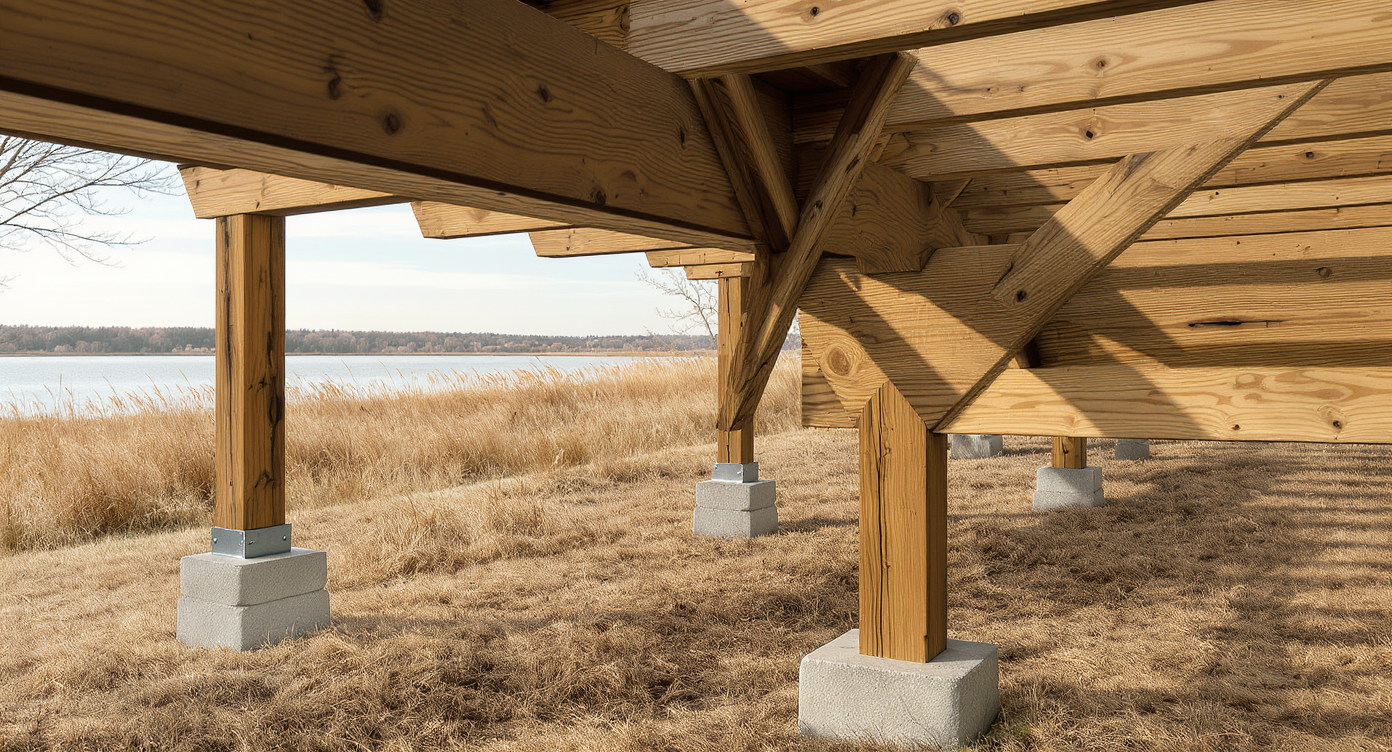
Pergola mounted to a floating deck in a high-wind site, showing deep-set footings, metal connectors, and diagonal braces for stability.
Adding a pergola to your deck introduces new structural challenges. Open landscapes adjacent to lakes or farmlands are notorious for strong, sustained winds, which act as a constant stressor on upright features. Pergolas are especially vulnerable, as their vertical posts and overhead beams catch forceful gusts. In practical terms, this means not just reinforcing the footings but also ensuring posts are adequately braced and anchored. A common technique involves tying pergola posts deeply into footings using galvanized connectors. Additionally, incorporating diagonal bracing between posts and beams can significantly boost wind resistance. Homeowners in similar windy locales report that skimping on anchoring hardware is a leading cause of premature structural wear and potential failure, sometimes resulting in urgent repairs.
-
3. Navigating Proximity to House Foundations
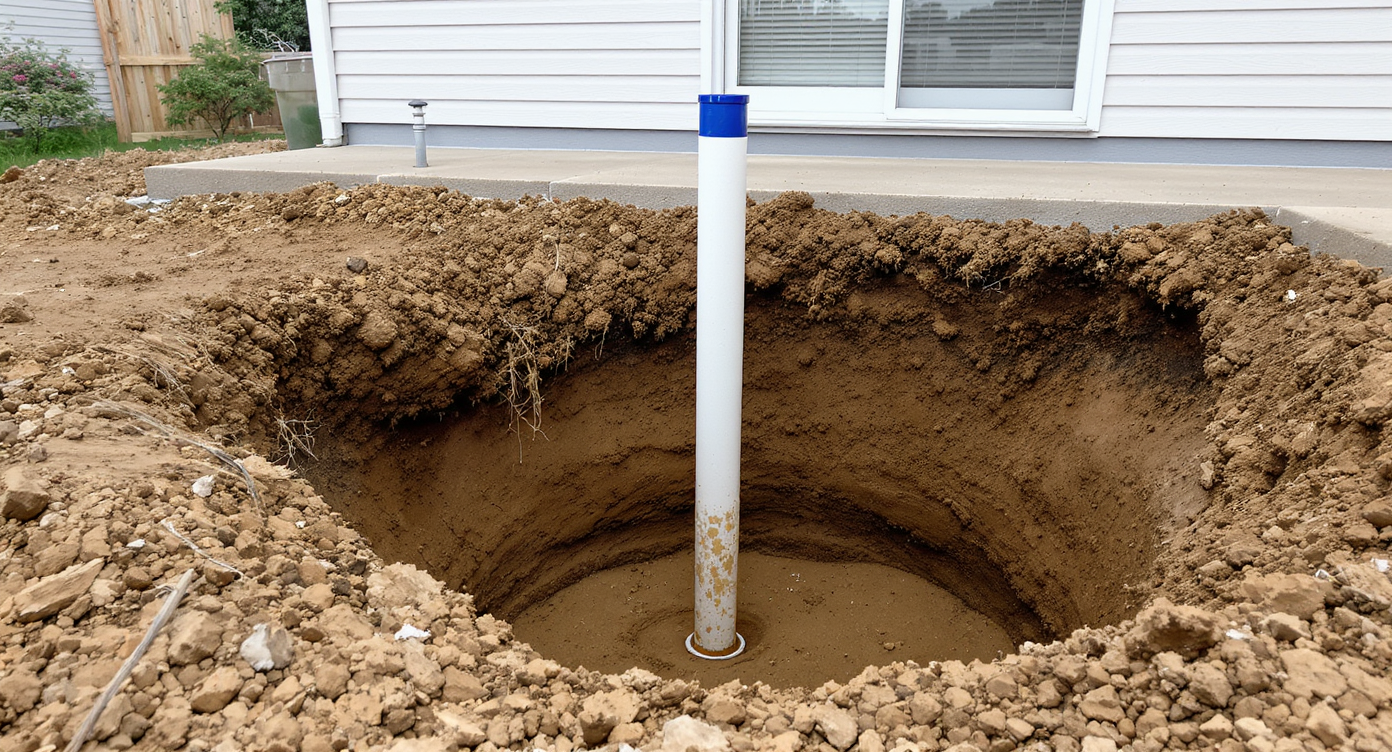
A concrete footing tube precisely placed 18 inches from a house foundation, showing safe excavation practices near existing footings.
Excavating for deeper footings close to a house is a frequent concern for DIY deck builders. Generally, pouring a four-foot-deep concrete tube near your home’s foundation is considered safe for houses built on slabs or standard footings, provided you avoid disturbing the original footing or drainage. Experts recommend keeping new excavations at least twelve to eighteen inches away from the house foundation when possible, which preserves integrity and avoids undermining structural support. When in doubt, consult a local contractor who understands regional soil and foundation practices. And if you’re considering this approach for cold environments, insights from our post on cold-climate landscaping and hardscaping may help you visualize and plan changes before breaking ground.
-
4. Deciding When to Seek Permits or Bypass Attachment
Many homeowners are drawn to floating decks because they can simplify permit requirements, especially if not attached to the home and kept under a certain height (often below twelve inches). If building codes are ambiguous or outdated for your locality, check neighboring municipalities for published standards. Floating structures generally avoid requirements for railings or extensive inspections, but pergolas—which add load and potential hazards—may complicate compliance. Consulting local authorities, even informally, helps reduce post-construction complications. Industry pros consistently advise erring on the side of caution: clarify your project’s scope and regulatory obligations before commencing work to prevent costly do-overs. This step integrates easily with a patio design AI plan, offering digital mockups and documentation for discussion with officials.
-
5. Choosing Lumber Dimensions and Joist Spacing for Strength
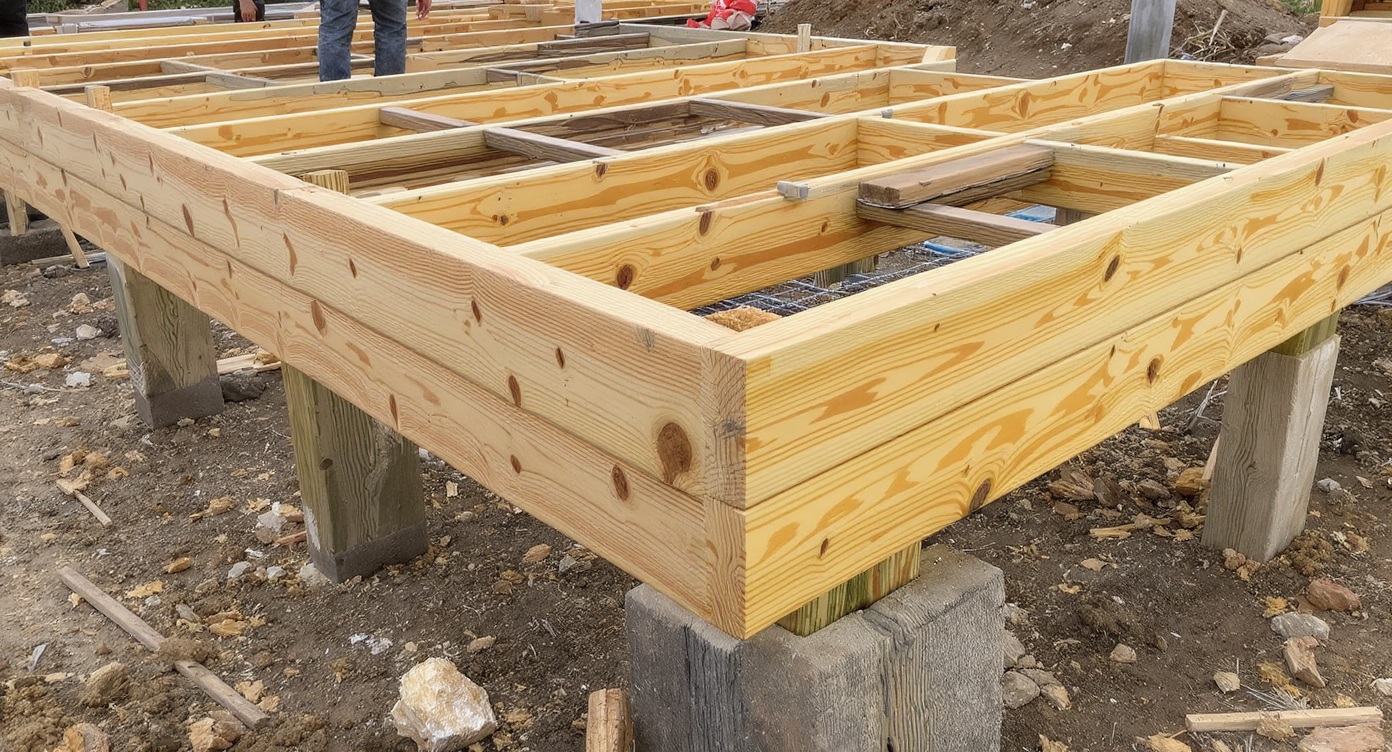
Sturdy floating deck framing with double perimeter joists and precise 16-inch on-center spacing over anchored 4x4 posts.
Selecting the correct framing is essential for any deck, regardless of elevation. While 2x10 boards may appear excessive for a ground-level project, they can offer added durability and minimize bounce, especially under a heavy pergola or frequent traffic. Double framing on perimeter joists can reinforce corners and span lengths, providing a solid base for upright posts. For a 16 by 8 foot deck, six evenly spaced 4x4 posts can suffice if properly anchored, though larger structures in wind-prone zones often benefit from either additional posts or upgraded 6x6 posts for extra strength. Pros emphasize that correct joist spacing—typically sixteen inches on center for 2x8 joists—reduces flex and prolongs deck performance. Remember, spending time on structural design pays dividends in lower long-term maintenance.
-
6. Integrating Hardscape and Landscape for All-Season Use
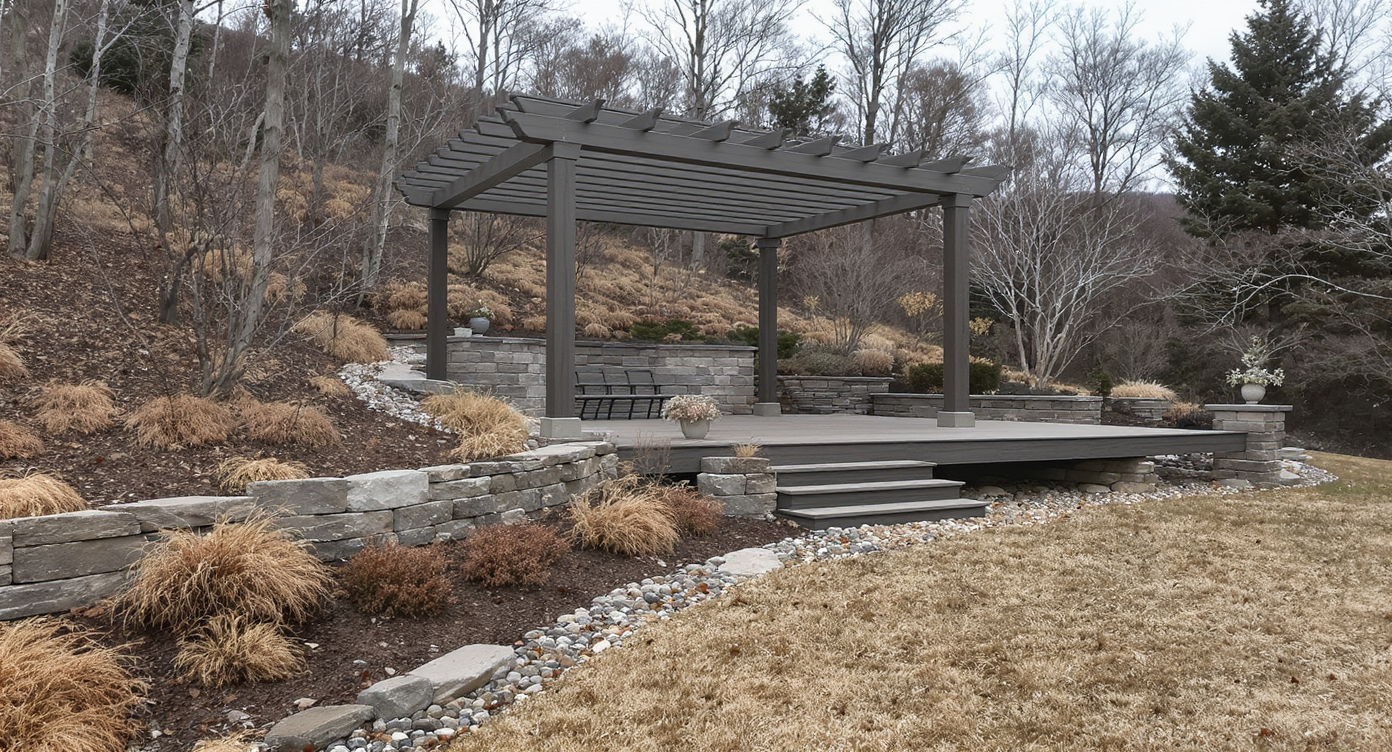
A floating deck with pergola, integrated hardscape features for drainage, and landscape elements like retaining walls and perennials for all-season use.
To make your outdoor extension an all-season haven, integrate hardscape features that accommodate heavy snow loads and seasonal runoff. Grade the soil away from the deck to deter water pooling and frost heave. Consider bordering the base with gravel or compacted stone for reliable drainage. Planting low-maintenance perennials or installing retaining walls at sloped edges, as seen in our advice for budget front yard retaining walls, creates a polished, enduring look while minimizing labor. Homeowners in northern climates often report that thoughtful blending of landscape and hardscape establishes a resilient, inviting space that looks good even after months of deep freeze.
-
7. Testing Design Choices Digitally Before You Build
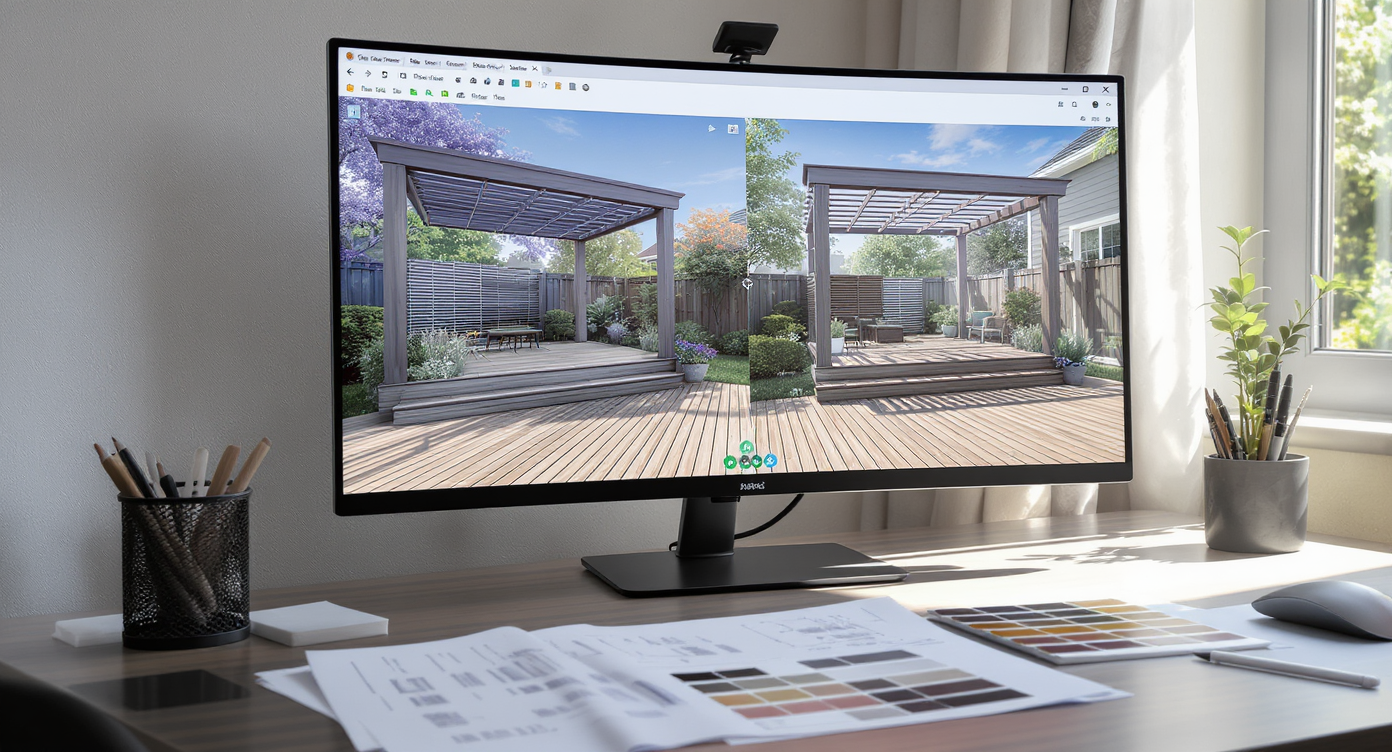
Digitally previewing multiple deck and pergola options using AI visualization tools, with blueprints and samples for real-world planning.
Recent advances in AI-powered visualization tools allow homeowners to test drive patio, deck, and pergola layouts before ordering materials. Uploading photos or blueprints into a system like REimagineHome.ai enables you to experiment with deck sizing, finishing details, pergola styles, and even shade patterns at various times of day. This helps catch potential errors and inspires more cohesive designs by previewing wild-card elements like integrated planters or privacy screens. Many find that planning their outdoor extensions in this way leads to higher satisfaction and fewer post-build regrets. For anyone balancing function, aesthetics, and cold-weather challenges, digital previsualization can be a transformative part of the process.
Common Questions About Floating Decks and Pergolas in Frost Zones
In most northern regions, footings should reach below the seasonal frost line, typically at least four feet deep, to prevent frost heave and shifting.
Is it safe to dig next to my house foundation when installing new posts?
It is generally safe if you keep post holes at least twelve to eighteen inches from the existing foundation and avoid disturbing the original structure or drainage systems.
Do I need to use 2x10 framing for a ground-level 16x8 deck?
Although possibly considered overbuilt, 2x10 framing provides extra rigidity and accounts for the additional load from pergolas or heavy furnishings.
What happens if I do not anchor pergola posts deeply enough?
Pergolas built on shallow or poorly anchored footings are likely to shift, tilt, or even fail in strong winds, especially in exposed settings.
Can I use patio design AI to test layouts before construction?
Yes. Inputting site photos and project details into a platform like REimagineHome.ai lets you preview deck and pergola placement, enhancing design outcomes and minimizing surprises after installation.
Building Outdoor Extensions That Withstand Every Season
Designing a floating deck with a pergola in frost-sensitive regions requires a blend of practical construction methods, sound material choices, and early-stage planning. Paying close attention to foundation depth, wind considerations, and appropriate permitting can help your patio design AI-guided project remain safe and visually inviting over decades. Modern tools such as REimagineHome.ai can help visualize, refine, and adapt your outdoor extension plans to stay one step ahead of local climate risks, ensuring both resilience and style.