How to Make Sure Furniture Fits Balcony: Real-Product Staging Under $2000
TL;DR
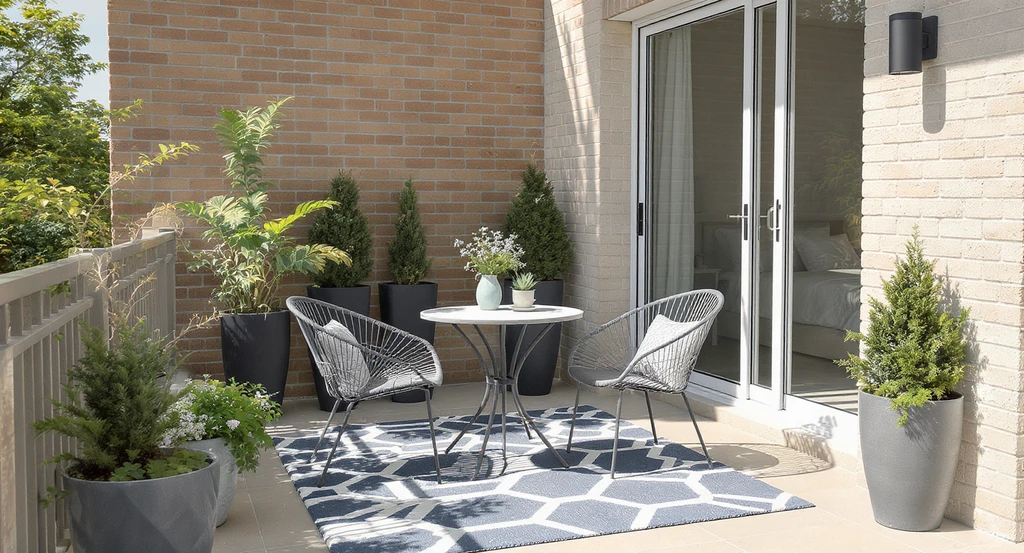
We staged a large bedroom balcony using real shoppable products, transforming it into a private lounge retreat for under $2000. Careful layout testing, privacy upgrades, and practical product swaps delivered both comfort and seclusion, while maintaining visual balance and circulation. Learn what to prioritize, what to skip, and how to make furniture truly fit your outdoor space.
From Wide-Open Balcony to Private Retreat
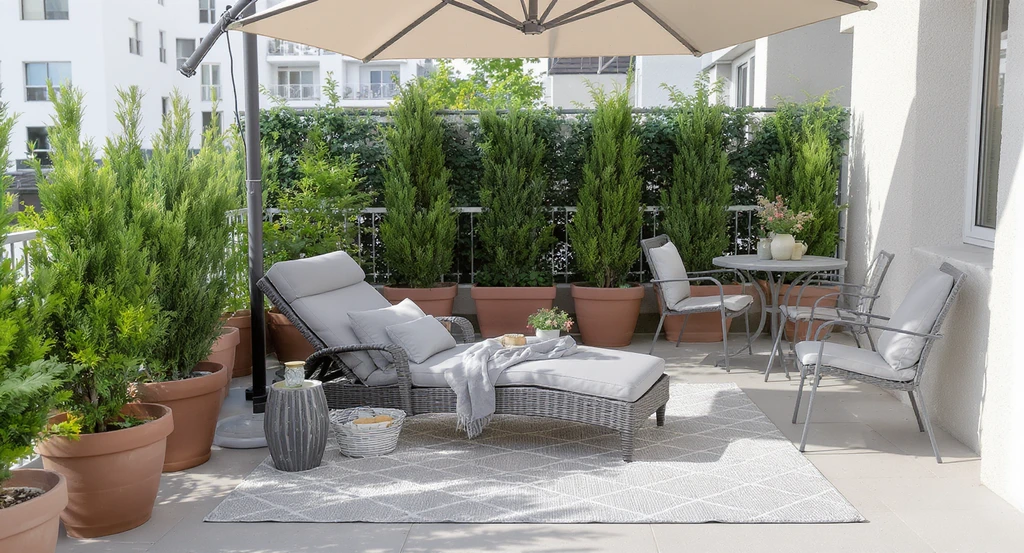
Learn how to make sure furniture fits balcony areas, from choosing the right rug size for balconies to privacy ideas for small bedroom balconies. This real-product balcony setup illustrates why furniture looks different at home versus in-store and addresses if a bistro set will fit on your balcony.
A sprawling bedroom balcony can feel like pure luxury—or pure exposure. For this real US balcony makeover, the goal was to transform a visible, underutilized deck into a welcoming lounge retreat on a $2000 budget. The final setup balances seclusion and relaxation, anchored by a double chaise, shaded by a cantilever umbrella, and ringed with clever privacy solutions.
For anyone wondering how to make sure furniture fits balcony spaces without overpowering them, the answer starts with scale testing, traffic flow analysis, and a willingness to edit the plan as you go. Here, the double chaise lounge became the main investment, while supporting pieces—like the outdoor rug and privacy hedges—kept the room feeling cohesive and cost-effective. Saving on smaller accents allowed for better privacy features and a more luxurious primary seat.
-
Architectural Observations and Layout Opportunities
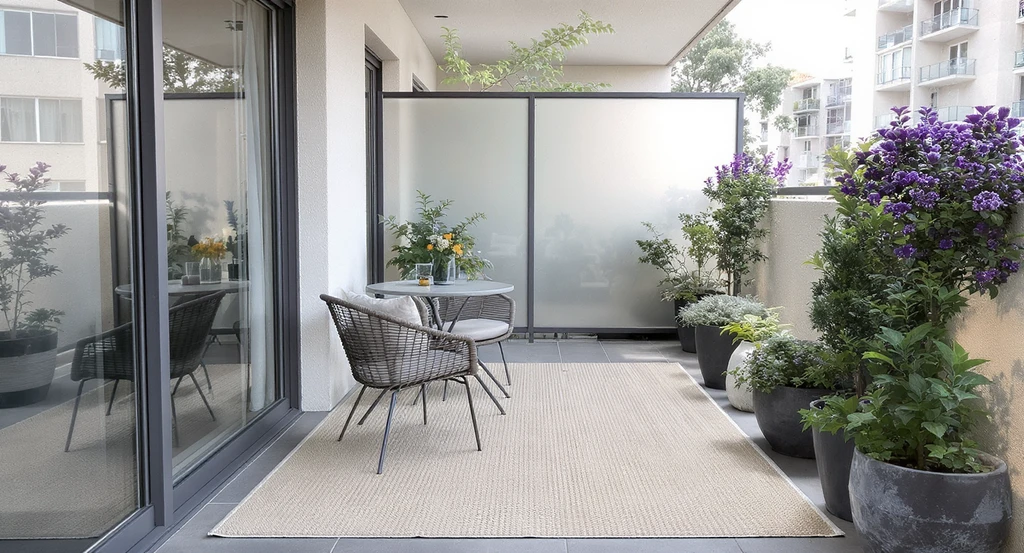
How to make sure furniture fits balcony: A compact bistro set, right rug size, and discreet privacy ideas create a functional, cozy bedroom balcony that feels seamless—revealing why furniture looks different at home versus the store.
The balcony’s generous footprint and open sides initially read as an opportunity, but quickly introduced unique site-specific challenges. Six key room-specific factors guided every design move:
- Exposure to neighbor sightlines from two sides, requiring robust yet unobtrusive privacy additions.
- Long, shallow proportions made it easy for furniture to crowd circulation if oversized or poorly placed.
- The original flooring and railing color visually fragmented the space, detracting from any cozy or unified lounge feel.
- Strong morning light made sun protection non-negotiable, influencing shade decisions.
- The wide view from the adjacent bedroom called for softening contrasts and creating a sense of visual retreat on entry.
- Preference for real product integration and shoppability, as the client wanted to preview actual pieces before buying.
Unlike a living room or garden, this transition zone needed to feel both accessible and secluded—a contradiction solved by staged, photo-based visualization. Tools like REimagineHome AI helped test layouts, furniture scale, and privacy solutions quickly, as described in our inspiration-to-transformation visualizer guide.
-
Budgeting: Where We Invested—and Where We Saved
With a $2000 ceiling, we needed intentional tradeoffs from the first sketch. The double chaise lounge was chosen as the anchor spend ($885.99), offering spacious comfort and maximizing the area’s main function—lounging or sunbathing. This move set the tone for the entire layout, dictating circulation and secondary furniture scale.
Savings surfaced through a pared-down bistro set (just $269.99), allowing for a side coffee spot without crowding. Rather than shelling out for custom woodwork, dense artificial boxwood hedge panels lined with subtle string lights (inspired by a similar Costco find) were selected to deliver privacy at a fraction of the cost and install effort compared to real plants or wood screens. Flooring and rug choices focused on neutral, textural options under $150, anchoring the seating zone without overcomplicating maintenance or breaking budget, echoing advice from our 2025 rug trend analysis.
Sun protection was handled by a quality beige cantilever umbrella, a relatively affordable $140 solution balancing shade and scale. Small decor, like a simple black floor lantern and cluster of planters, added finish without excess spend.
-
Material Choices and Durability—Choosing What Lasts
The final material strategy focused on products that visually lighten the deck while standing up to year-round outdoor exposure. While no specific product materials were noted in the shoppable list, selections prioritized outdoor-rated finishes, such as metal-frame bistro sets and weather-appropriate cushions on the double chaise.
Switching the deck’s original floor to grey wood-look planks (per owner specs) helped visually extend the space and complement the new brown railing and boxwood hedge palette, both nods to practical outdoor maintenance. Painting the railing a darker brown, such as the Sherwin Williams Anonymous range, unified the look and framed the greenery while reducing glare—a move that also improved privacy and comfort, as seen in our paint visualization tips. None of these changes required custom construction; each piece could be easily swapped or refreshed over time if needed.
-
Solving for Privacy, Circulation, and Flexible Use
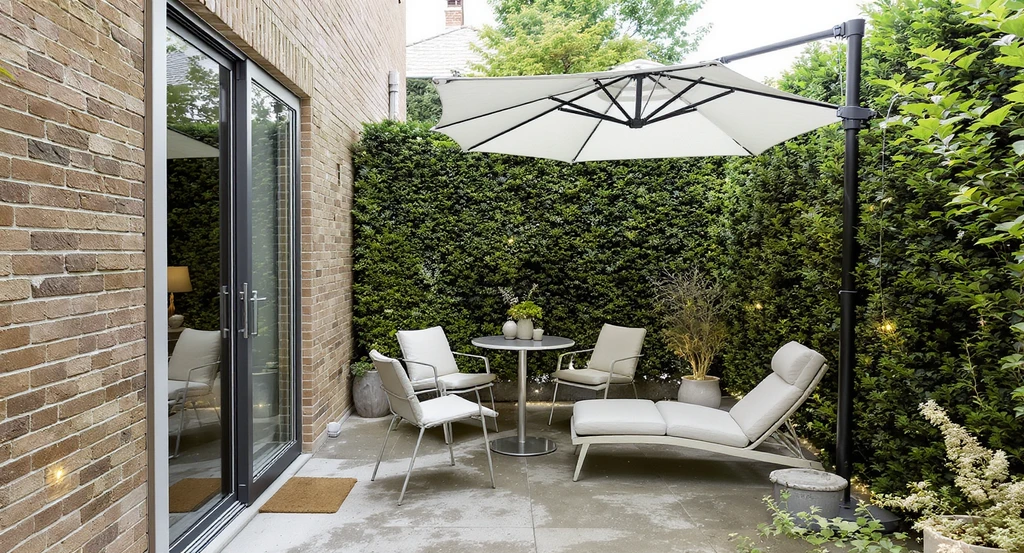
How to make sure furniture fits balcony: staged with bistro set, boxwood hedges for privacy ideas in small bedroom balconies, and flexible use. The clear walkway, correct rug size, and thoughtful shade placement show why furniture looks different at home versus store.
Early layouts experimenting with full conversational seating or clustered plants proved sub-optimal, quickly overcrowding the walkway from bedroom to railing. The more flexible, staged approach—testing different arrangements over a series of visualizations—made it clear that keeping the main walking path open was more impactful than maximizing total seating. Staging with photo tools prevented expensive errors, a method advocated in our guide to smarter layout visualizations.
Key privacy upgrades included trading large planters and screens for all-around artificial boxwood hedges, which wrapped the railing for even coverage. Subtle string lighting inside the hedge doubled as nighttime ambiance, giving the balcony a secluded, resort-like tone. The cantilever umbrella’s off-center placement preserved openness while still shading both the bistro table and the double lounge. Skipping extra accent seating and large planters meant every piece had room to breathe but that the deck never read as sparse or underfurnished.
The outcome: a setup that easily switches from solo lounging to breakfast coffee for two, all while maintaining light flow and uninterrupted views from the bedroom indoors.
-
Furniture and Decor Used in This Design
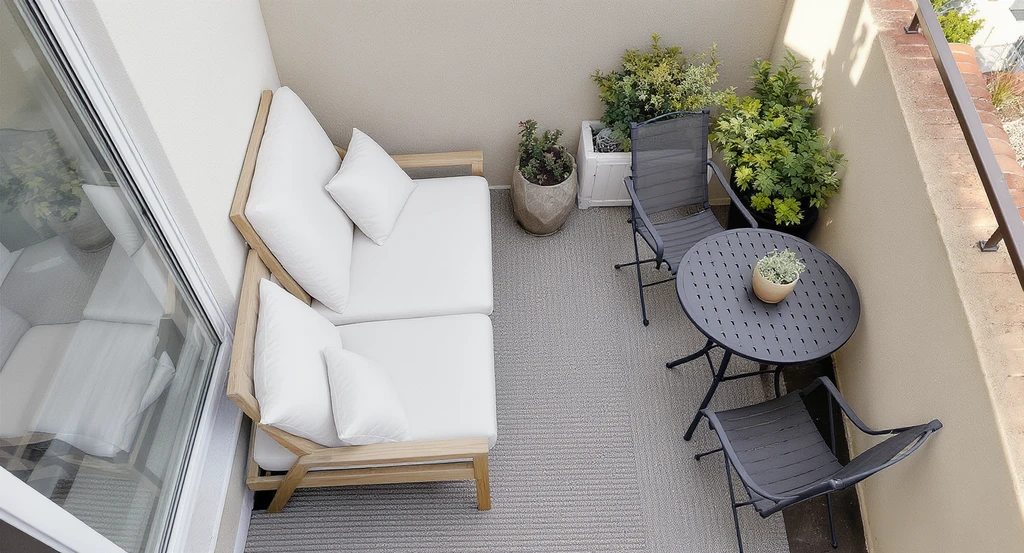
See how to make sure furniture fits balcony spaces: the right bistro set, chaise, rug size, and privacy ideas for a functional small bedroom retreat.
Each piece was selected to solve a real need, backed by scale layouts and visual trial. The double chaise lounge created a true destination for relaxation, acting as the spatial and budget anchor. Lightweight yet visually substantial, it fits the balcony’s scale while allowing traffic to flow on each side.
A simple black metal bistro set provided functionality for morning coffee or evening conversation without crowding, supported by a neutral outdoor rug for textural grounding. The cantilever umbrella, lantern, and faux boxwood lighting each handled comfort, nighttime ambience, or privacy without visual bulk. All items were chosen for immediate availability and compatibility with standard balcony layouts, and none require permanent installation.
Balcony Staging FAQ
- How do I choose the right rug size for balconies?
- Start with the footprint of your primary furniture group: the rug should extend at least a few inches past each side to anchor the arrangement, but not so far as to block circulation. Visual testing, like that explored in our rug size guide, can help you preview the proportions before buying.
- Will a bistro set fit on my balcony?
- Most balconies can accommodate a compact 3-piece bistro set. Test placement visually—ideally, leave a clear path between your seating and the door to preserve natural flow.
- What are some privacy ideas for small bedroom balconies?
- Consider artificial greenery, such as boxwood hedge panels, that cover railings while keeping light and airflow unobstructed. Flexible screens or planters provide modular options for increased seclusion.
- Why does outdoor furniture sometimes look different at home than in store photos?
- Lighting, deck finishes, and context can dramatically impact color and perceived scale. Tools like REimagineHome AI allow you to preview actual products in your space before you commit, minimizing surprises.
- Do I need to use a reference photo when planning my design?
- No, but it can help clarify your style and layout vision—especially useful when using design companions for photorealistic mockups or shoppable staging.
Key Takeaways: Budget Balcony Design That Feels Custom
This project shows that a large balcony off the bedroom can be staged for privacy, comfort, and flexible use—without custom construction or a huge budget. Testing furniture scale and layout with visualization tools ensures every piece fits, both visually and physically. Concentrate your spend on a standout relaxation anchor, then surround it with affordable privacy and comfort upgrades.
Real shoppable products—previewed in your space—close the gap between inspiration and finished reality, helping you sidestep costly mistakes and get exactly the room you want.