How to Warm Up White Interiors: Design Tips for a Cozy, Lived-In Home
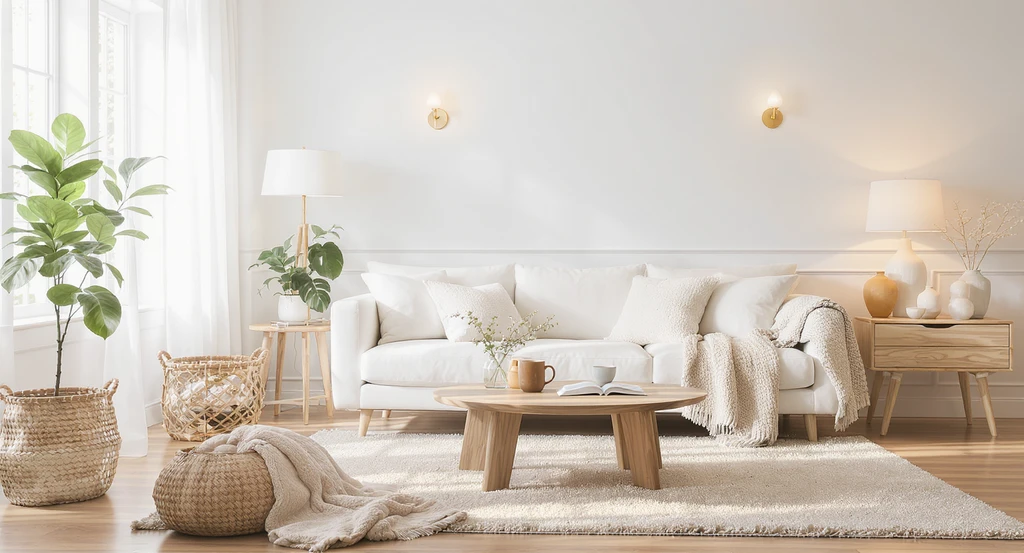
TL;DR
White walls offer crispness and versatility, but can sometimes leave a space feeling sterile. With the right balance of texture, lighting, and natural accents, a white interior transforms from cold and clinical to layered, inviting, and uniquely yours.
The Surprising Pitfalls of White Interiors
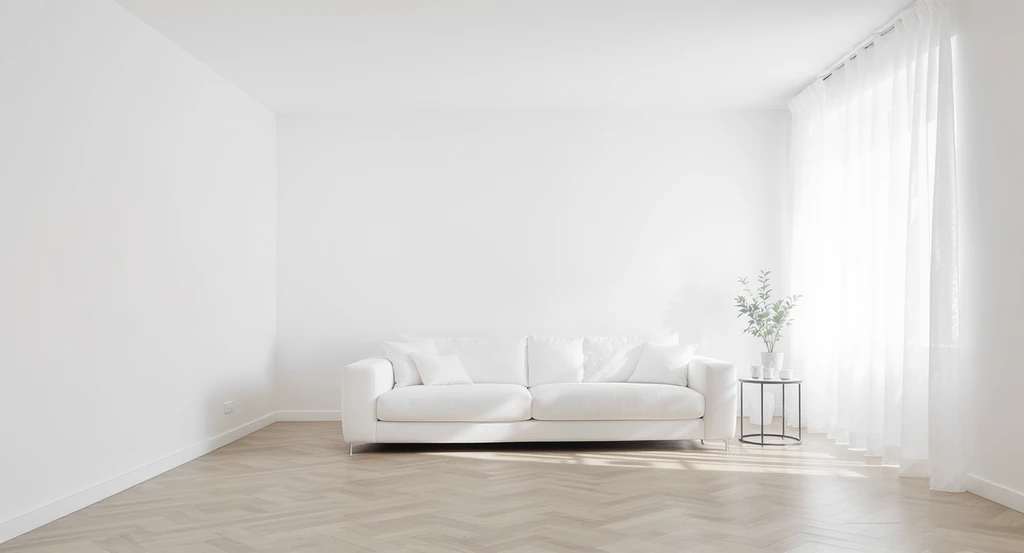
White interiors in home design may feel sterile without personal or cozy touches. See interior design tips for transforming cold spaces into warm, lived-in homes.
White paint is celebrated for its fresh, light-reflecting benefits and endless versatility in home design. Yet, homeowners often notice that all-white interiors can border on sterile instead of serene. Rather than inviting relaxation, these spaces may remind us more of a showroom or waiting room than a home. Why does a color so beloved by designers sometimes miss the mark? The answer lies not in the shade itself, but in how it’s used—and in the finishing touches that turn minimal into memorable. Understanding the dynamics of white walls allows you to unlock their real potential and avoid common traps, while effortlessly creating warmth and depth.
-
Why White Paint Can Feel Sterile
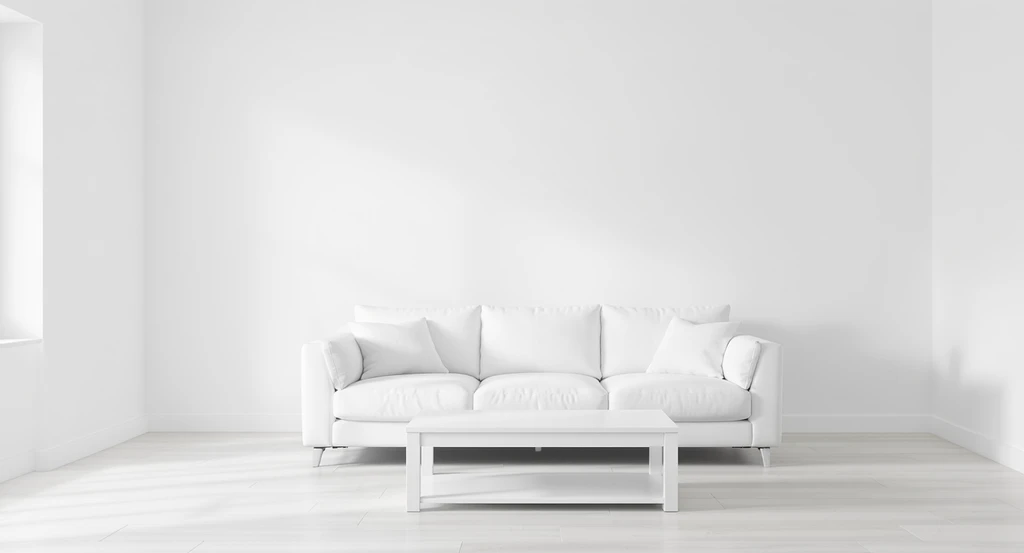
A white interior can appear flat and impersonal when lacking variation in finishes and tactile details—key home design tips for white interiors.
White’s popularity in interior design is undeniable. It amplifies natural light and creates a versatile foundation suitable for countless aesthetic directions. Still, when white is used in isolation—and paired with uniform finishes and cool-toned lighting—the result can be a flat, impersonal environment. The absence of contrasting elements, patterns, and tactile details makes it difficult for a space to feel engaging or emotionally resonant. As explored in our deep dive on elevating modern interiors with finishing touches, the difference between a lifeless room and a vibrant one often comes down to these subtle, yet critical, details.
Expert Insight
A client once shared that her new all-white open-plan living room left her feeling strangely unsettled, despite its designer origins. After layering in a chunky knit throw, hanging woven baskets, and swapping out a chrome lamp for a rustic wood one, the transformation was immediate—guests went from describing the room as 'like a hotel lobby' to 'finally home.'
-
The Science and Psychology of White Spaces
Color psychology associates white with cleanliness and purity, which can be positive in moderation, but overwhelming in excess. Without sufficient contrast or warmth, white interiors may impart a sense of emptiness or detachment—not exactly the lived-in comfort most homeowners want. Our brains seek depth and diversity, both visually and emotionally. Lighting further complicates matters. As analyzed in our guide to lighting’s impact on interiors, cold artificial lighting paired with stark white surfaces intensifies the clinical effect, washing out even carefully chosen furnishings.
-
Home Design Tips for White Interiors: Adding Warmth and Character
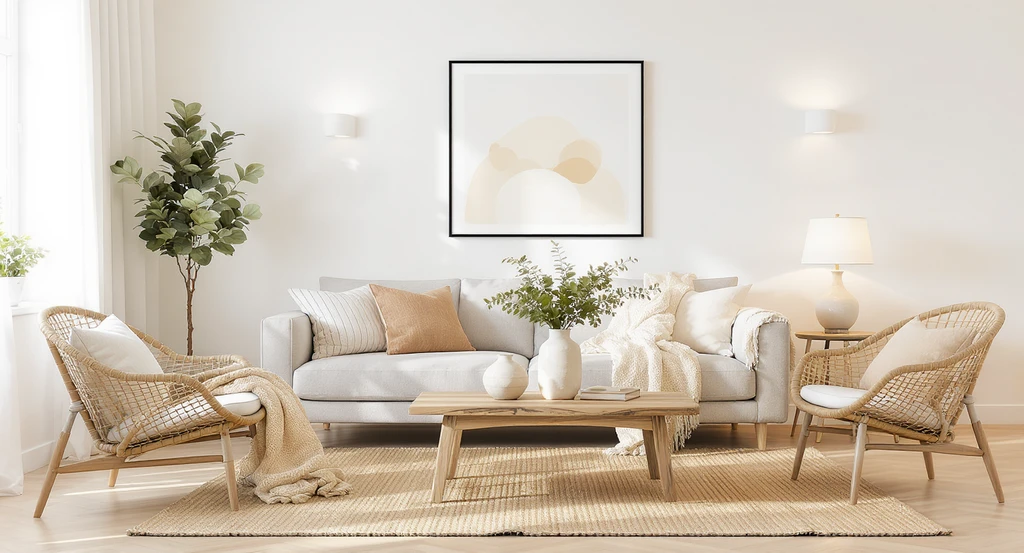
Home design for white interiors: Layering tones, textures, and natural materials adds character while interior design tips like warm lighting and greenery infuse coziness.
- Layer Tones and Textures: Mix warm whites, creams, and even soft greys across walls, textiles, and accessories. According to our recent exploration of neutral spaces, introducing pattern, woven fabrics, or matte finishes immediately adds dimension.
- Mix Natural Materials: Wood, linen, rattan, and stone accents inject personality. Even a subtle jute rug or handcrafted ceramic vase can shift a room’s energy from cold to welcoming.
- Thoughtful Contrasts: Incorporate statement furniture, black-framed artwork, or darker hardware to ground the room and prevent monotony.
- Play with Lighting: Swap harsh bulbs for warm-toned alternatives and add table lamps or wall sconces. As described in our lighting strategies guide, layered lighting both highlights and softens white interiors.
- Bring the Outdoors In: Greenery—whether lush plants or simple branches—introduces vitality that immediately dispels sterility.
-
Transforming Sterile Spaces: Real-World Inspiration
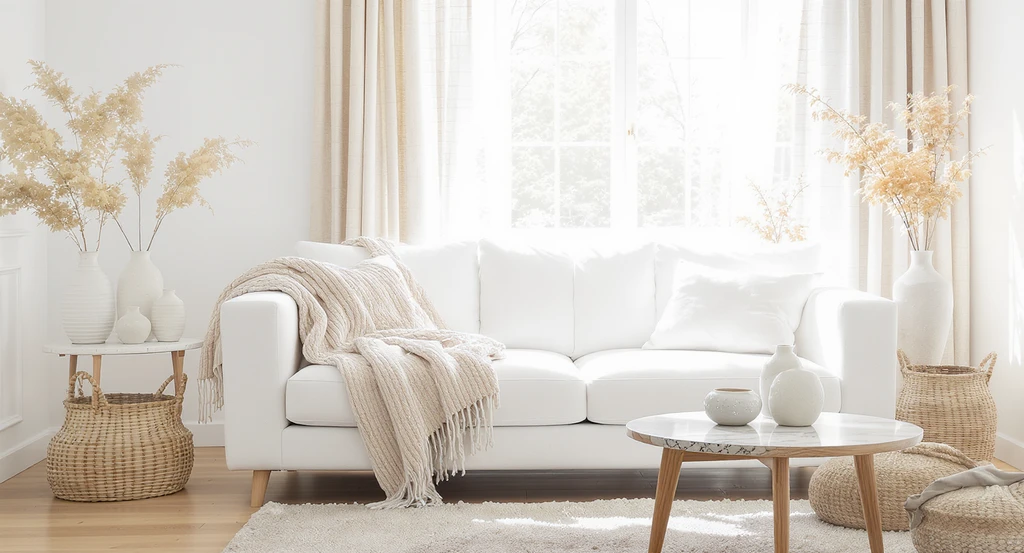
Interior design tips for sterile spaces: Warm up white interiors with wooden accents, textured throws, woven baskets, and subtle patterns for a cozy atmosphere.
Updating a sterile white interior doesn’t require a major renovation. Sometimes, all it takes is swapping out cold metallic accents for warmer wood tones, draping a textured throw over a pristine sofa, or scattering a few homey baskets and ceramics. Even introducing subtle pattern—for example, a tonal stripe curtain or a terrazzo side table—can have a dramatic effect, as highlighted in our post on adding pattern and texture to neutrals. For more ideas and personalized suggestions, platforms like ReimagineHome can help visualize new possibilities for your space.
Visualization Scenario
Picture yourself stepping into a previously stark white apartment on a chilly evening. Instead of hard echoes and bright overheads, the space now glows with softly layered light. Creamy throws are draped over a linen sofa, a cluster of leafy plants breathes life into the corner, and a textured rug softens each footstep. The atmosphere feels both spacious and genuinely warm—proof that white can be anything but cold.
Frequently Asked Questions
- Can white interiors ever feel cozy?
Absolutely. By introducing texture, contrast, warm lighting, and natural elements, all-white spaces can be as inviting as those with bold color palettes. - How do you add depth to a white-dominated room?
Combining different shades of white, textured textiles, and varied finishes—as discussed in our guide on finishing touches—prevents flatness and brings dimension. - What lighting works best with white interiors?
Layered, warm-toned illumination enhances comfort and showcases details, according to our study on lighting’s role in design. - Are there alternatives to adding bold color for warmth?
Natural materials, greenery, and subtle patterns can create warmth without departing from a soft, minimalist aesthetic, as explained in our advice for neutral spaces.
Embracing White—Without the Cold
White interiors can be both timeless and inviting when you move beyond the default and personalize your space with considered layers, textures, and natural touches. The transformation isn’t about abandoning white, but about building around it—adding depth, character, and warmth so your home feels lived-in and expressive.