How to Restyle Your Coffee Table Using the 3-Layer Rule

TL;DR
The 3-Layer Rule means building your coffee table in three tiers:
- Layer 1 — a tray or anchor base
- Layer 2 — stacked books and mid-height objects
- Layer 3 — a tall botanical or candle for height
Use 3–5 objects total, vary heights to create a visual triangle, and leave 40–50% of the table surface clear.
Introduction
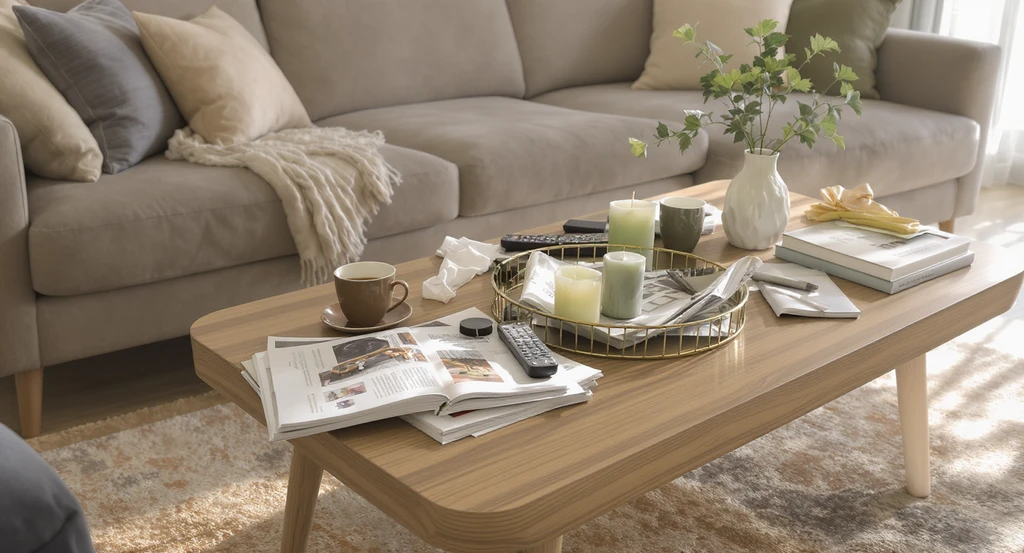
Learn how to style a living room coffee table and avoid decor mistakes by applying the 3-layer coffee table styling rule for a curated look.
Your coffee table is arguably the hardest-working surface in your home. It's a footrest, a drinks station, a remote control graveyard — and, if you get the styling right, the most striking focal point in your living room. Yet most of us treat it as an afterthought. The good news? You don't need a new table. You don't need to spend a penny. What you need is a framework. And the one designers reach for again and again is called The 3-Layer Rule — a deceptively simple approach to building a coffee table arrangement that looks intentional, balanced, and effortlessly stylish. This article breaks it down layer by layer, with expert-backed principles, material combinations that always work, seasonal swap ideas, and a list of the mistakes that quietly undermine every well-intentioned arrangement.
-
What Is the 3-Layer Rule for Coffee Table Styling?

Master how to style a living room coffee table with the 3-layer coffee table styling rule—using the best materials for trays and a thoughtful arrangement that avoids common decor mistakes.
The 3-Layer Rule structures your coffee table display into three distinct horizontal tiers — each serving a different visual purpose. Think less like stacking objects and more like composing a still life painting: every element has a role.
Layered Design Table 1LAYER 1The FoundationA tray, large book stack, or anchor object that grounds the entire arrangement and defines the zone on the table surface.2LAYER 2The BodyMid-height objects — stacked books, a ceramic bowl, a decorative box — that introduce texture, colour, and personal meaning.3LAYER 3The HeightYour tallest element — a candle, trailing plant, sculptural vase, or botanical stem — that draws the eye upward and adds life.The layers do not need to sit in a perfect row. In fact, the magic happens when you allow them to overlap slightly — a candle edge in front of a book stack, a plant trailing over a tray rim. This visual layering creates a unified story rather than a row of isolated objects.
-
Layer 1: The Foundation (Your Tray)
Every great coffee table arrangement begins with a tray. It is not purely decorative — it performs a critical visual function: it corrals smaller objects into a single cohesive unit, and it defines the zone so your arrangement does not bleed across the whole surface. Interior styling guidance from The Decorholic consistently recommends that your tray occupy 40–50% of your coffee table surface — no more. This preserves breathing room around the arrangement and prevents it reading as clutter.
As explored in 11 ways to polish your living room, even subtle, intentional editing transforms the entire atmosphere.Material Cards 🪵Wooden trayWarm, organic — works with virtually any décor style🪨Marble / StoneElegant and substantial — ideal for modern or transitional rooms✨Brass / MetalGlamorous, light-reflective — excellent in darker rooms🧺Rattan / WovenCasual, textural — for coastal, japandi, or earthy interiors🖤LacqueredSleek and contemporary — glossy finish adds sophistication🔵Ceramic / ResinArtisan quality — adds colour and individuality -
Layer 2: The Body (Books, Objects & Texture)
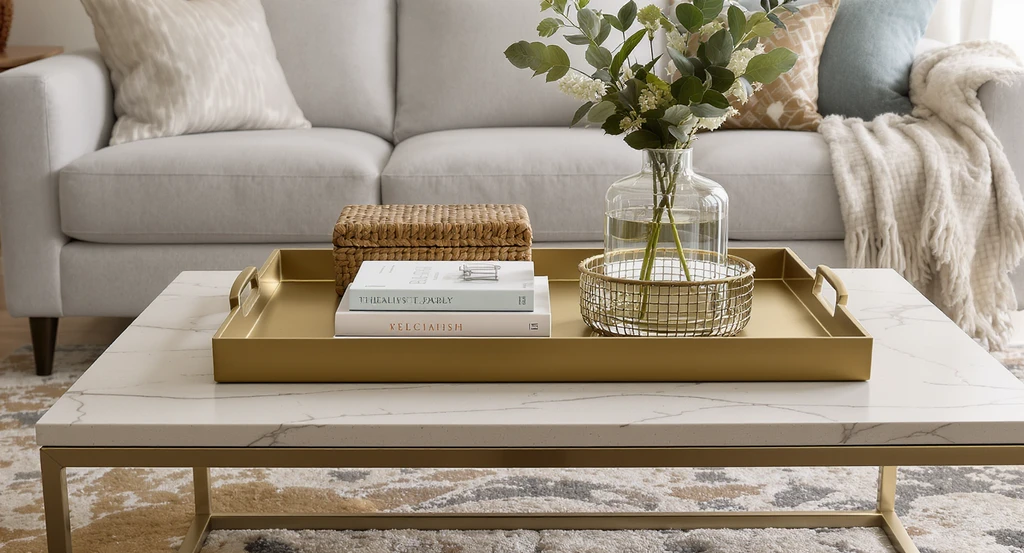
Discover how to style a living room coffee table using the 3-layer coffee table styling rule with the best materials for trays and tips to avoid common living room decor mistakes.
This is where the personality of your arrangement lives. Layer 2 is your opportunity to bring in texture contrast, personal meaning, and the kind of visual interest that makes people lean in and look closer.
The coffee table book — elevated and misunderstood
Coffee table books are far more than decoration. As Studio McGee's design team puts it, books placed here communicate a great deal about the people who inhabit the space — their interests, travels, and aesthetic sensibility. They also serve a practical styling purpose: they add a flat, stable base on which to rest smaller objects, effectively creating a mini "plinth" within your arrangement.
Use 2–3 books stacked horizontally. Vary the sizes slightly — a large format on the bottom, a smaller one on top. Remove dust jackets if the cover beneath is more beautiful, or if the jacket introduces a colour that clashes with your palette.
The Rule of Threes within Layer 2
When choosing objects to populate this layer, rely on the classic Rule of Threes — the well-established design principle that groups of odd numbers, particularly three, are more visually appealing than even-numbered arrangements. Michael Murphy Interiors notes that this is because odd numbers create a sense of rhythm and asymmetry that feels natural rather than staged.
Within your tray or mid-layer, aim for three objects that contrast in:
✓ Height — one tall, one medium, one low✓ Shape — one geometric, one organic, one linear✓ Texture — one smooth, one rough or matte, one reflective✓ Material — mixing wood, glass, ceramic, or metal
Frequently Asked Questions
Frequently Asked Questions
What is the 3-Layer Rule for coffee table decor?
The 3-Layer Rule structures your coffee table with three tiers: an anchor tray (foundation), mid-height objects like books or ceramics, and a tall item such as a candle or plant. This creates depth and cohesion without overcrowding.
How do I avoid coffee table clutter?
Keep total objects to 3–5, cover only 40–50% of the table surface, and let objects overlap slightly for unity. For added clarity, see our guide on making your living room feel complete.
What should always be on a coffee table?
Always include a foundation tray, 2–3 coffee table books, at least one tall element (like a vase or candle), and a personal object for meaning. For best results, echo your room’s color or material in at least one table piece.
How does styling my coffee table affect the rest of the room?
A cohesive arrangement anchors the entire space, connecting soft furnishings, rug, and accent decor. This forms a visual thread within your living room, as discussed in our post on designing cozy, inviting living rooms.
Conclusion: Achieving a Curated, Cohesive Coffee Table
Restyling your coffee table with the 3-Layer Rule ensures a balanced, visually compelling centerpiece. By thoughtfully selecting a tray, varying object heights, and echoing soft furnishing elements, you create unity across your living space. This decision structure boosts both daily enjoyment and appeal for future buyers or guests, while visualization tools drastically reduce regret. For more, see our expert guide to finishing your living room and explore living room design confidence on our main blog hub.