Sectional vs. Couch and Loveseat: Which Layout Makes Sense for Your Living Room?
TL;DR
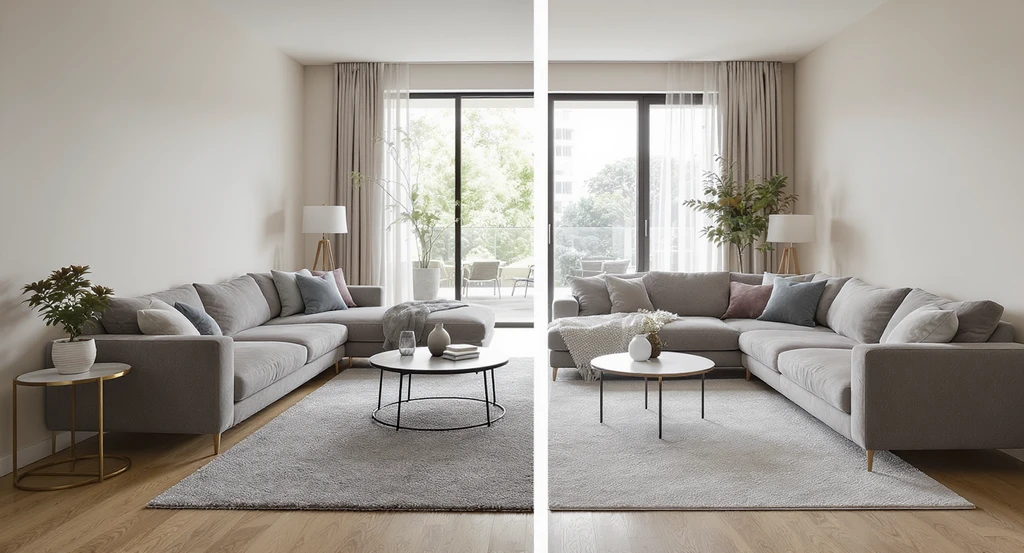
Choosing between a sectional or separate couch and loveseat means weighing flexibility, traffic flow, and how you actually use your space. Sectionals can maximize seating and anchor open plans but may restrict layout changes and walkways. Visualizing both options before you buy reduces regret and helps match the furniture to your lifestyle.
Rethinking the Sectional vs. Couch and Loveseat Dilemma
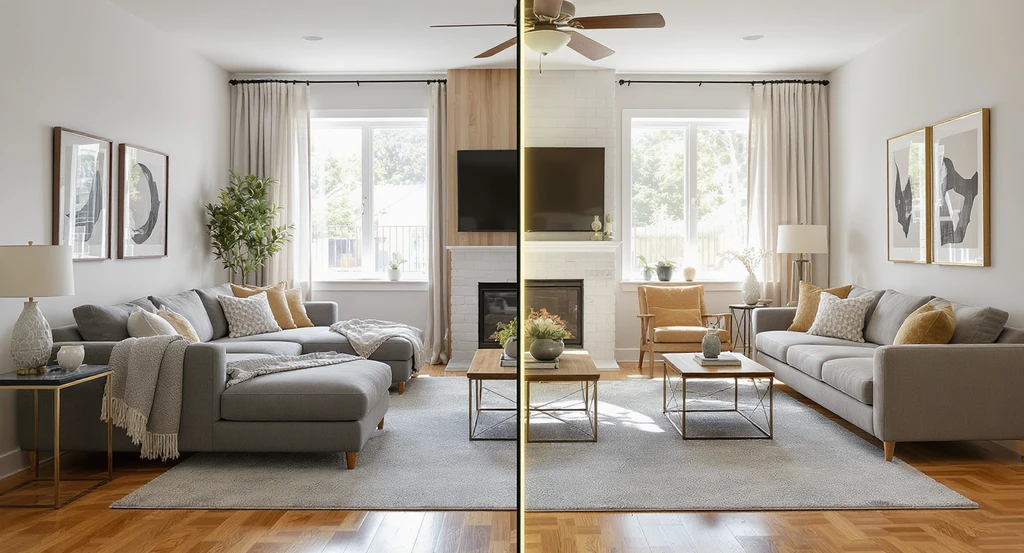
Easily compare a sectional versus a couch and loveseat layout in a realistic living room scene—ideal for how to visualize sectional or loveseat pros and cons, aphantasia interior design solutions, and picturing layout changes before buying new furniture.
Many homeowners and renters face a familiar crossroads when updating the living room: opt for a spacious sectional, or select a flexible combo of couch and loveseat? This classic question is more than style it's about how your furniture setup supports daily living, future changes, and visual harmony.
The right answer depends on factors like room traffic flow, family size, entertaining needs, and architectural features (think fireplace or TV position). Without a clear path forward, it’s easy to make a costly or inconvenient mistake. Let’s break down the difference and help you see the real impact in your home before you decide.
-
Defining the Choice: Sectional vs. Couch and Loveseat
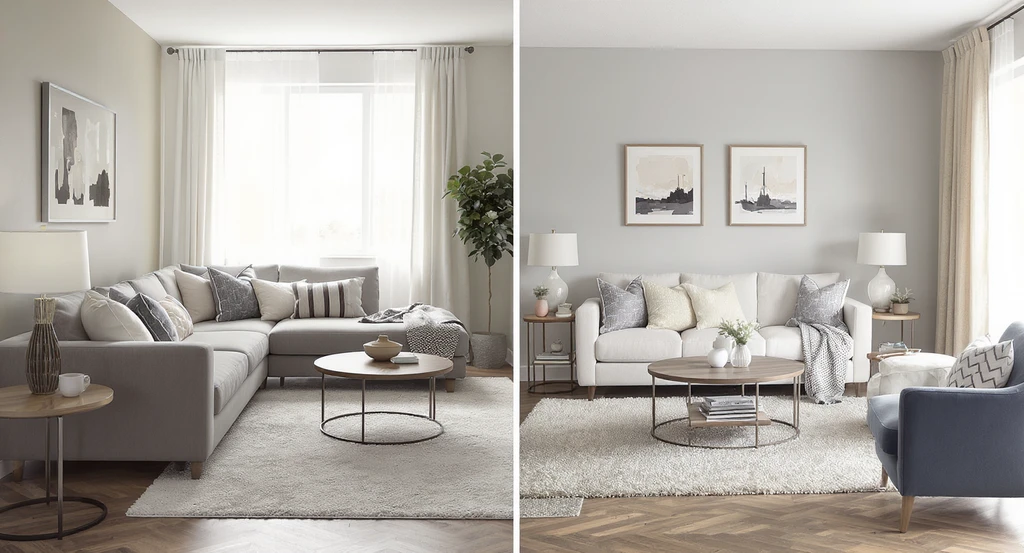
Easily picture room layout changes before buying with this realistic scene comparing a sectional versus couch and loveseat setup—an ideal aphantasia interior design solution.
A sectional is a large, often L- or U-shaped seating unit typically joined together, creating a unified presence in the room. A couch and loveseat arrangement uses two individual pieces, commonly paired with additional chairs for flexible seating zones. While sectionals create a single, anchored zone, the couch-loveseat setup allows more variety in placement and movement. Each option changes how you move through and use the room.
Expert Insight
A homeowner recently shared their struggle choosing a sectional versus separate pieces in an open living room. After virtually testing both options, they realized a sectional blocked their main walkway, making the room less usable. By switching to a couch and two accent chairs, they kept the space open and improved daily traffic flow—saving money by not returning oversized furniture.
-
What’s Really Happening in This Decision?
At first glance, many assume bigger seating equals better comfort. In reality, the core issue is how the layout shapes movement, sightlines, and social interaction. A sectional can anchor an open plan but may interrupt walkthroughs like blocking the corner or fireplace, as described in the Reddit scenario. Separate pieces maintain pathways and support flexibility, but can look disjointed if not sized and arranged well.
According to our guide on sofa size and living room layout, many layout issues blamed on the furniture itself are actually problems of space planning and flow—not just dimensions. -
Why Homeowners Misjudge This Decision
Most regret happens when people picture furniture floating in marketing photos not in their real, imperfect rooms. Sectionals look streamlined online, but in person can overwhelm, especially with architectural features like fireplaces or odd windows. Many underestimate the need for 30–36 inches of walkway around seating, or don't consider the impact of separating functional zones.
Separates offer more future-proofing, since you can rearrange or move into a new home with at least one fitting piece. But without careful attention to scale and clearance, a couch and loveseat can feel cluttered or dated. Learn more in our sofa size and furniture style guide. -
The REimagineHome AI Living Room Decision Structure
To clarify the sectional vs. couch-and-loveseat choice, use the REimagineHome AI 'Layout Flexibility Assessment':
- 1. Zone Mapping: Start by sketching your room’s zones: walkways, sightlines, and focal points (fireplace, TV).
- 2. Visual Obstruction Check: Overlay each layout—sectional and separate pieces—and note any blocked pass-throughs or sightlines.
- 3. Seating Need Audit: Count how many people regularly use the space. Sectionals offer contiguous seating, but may reduce overall available seats when walkways are blocked.
- 4. Adaptability Review: Ask if you’ll want to change the arrangement seasonally or for different events; separates offer more options.
- 5. Traffic Flow Test: Ensure there’s a minimum 30"-36" clearance route through all major movement paths, as detailed in our furniture arrangement and flow guide.
-
Sectional: When It Works and When It Backfires
A sectional shines in large, open-plan rooms where you want to anchor a gathering zone. It can maximize seating, reduce visual clutter, and create a luxurious lounge feel. However, a sectional often fails in spaces with multiple entry points, tight corners, or when you need to maintain access to features like a fireplace or large window. Once placed, it’s difficult to rearrange or repurpose a sectional without making the room feel crowded.
-
Couch and Loveseat: The Case for Separate Pieces
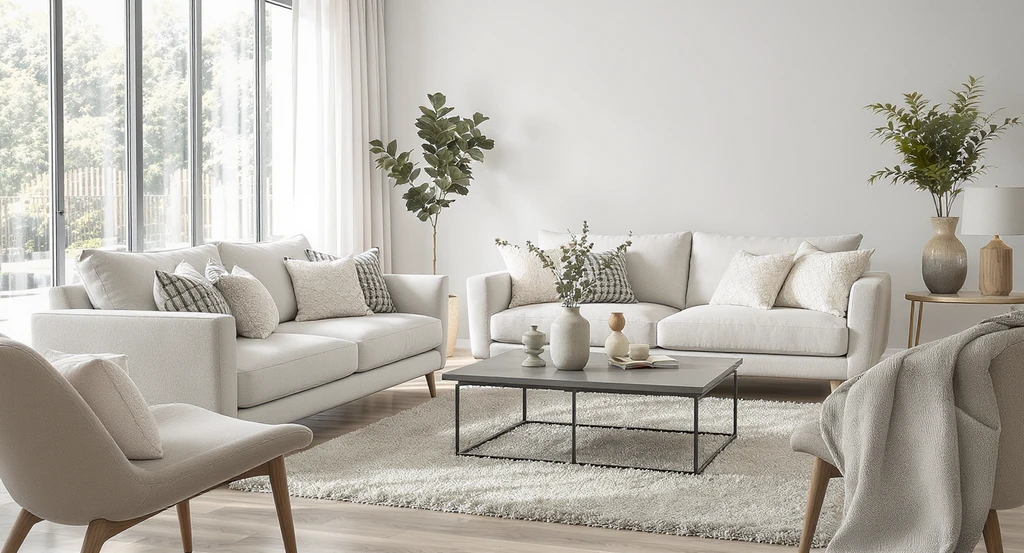
Explore how to visualize sectional versus couch layouts for your space—this realistic setup shows flexible furniture placement with a couch, loveseat, and accent chairs. Use online tools to see the pros and cons before buying, helping you picture room layout changes, even if you have aphantasia.
Choosing a couch and loveseat (or adding accent chairs) builds flexibility into your room—useful if you anticipate rearranging or moving in the future. This setup helps maintain clean walkways and allows you to fine-tune the scale and coordination for both comfort and style. The trade-off: more furniture legs can look busier, and mismatched sizes or styles may create a disjointed feel unless thoughtfully selected.
-
Trade-Offs and Visualization: Don’t Decide Blindly
Choosing one layout over another comes down to two main trade-offs: flexibility versus simplicity, and open movement versus maximum seating. With today's AI-powered visualization tools, you don't need to guess. Upload your floor plan or living room photo and test both arrangements virtually.
According to our sofa fit and layout guide, virtual previews reveal issues (like blocked walkways or awkward sizes) before purchase lowering regret and returns. This is especially crucial in homes with fixed features or irregular room shapes. -
Spatial Reasoning: Scale, Flow, and Light Matter
Proper furniture selection isn’t just about fit, but about the space’s volume and movement. For instance, in rooms with low ceilings, a bulky sectional compresses the space visually; in smaller rooms, it may block natural light. In urban apartments, where square footage is precious, flexibility often outweighs the unified look of a sectional. Suburban and larger homes can more easily accommodate sectional footprints without sacrificing walkways.
Definition: "Seating layout regret happens when furniture limits both movement and the ability to comfortably face focal points. Many homeowners believe seating problems come from size alone, but most regret comes from untested layouts and overlooked circulation needs." Consider this before you commit. -
How Visualization With REimagineHome AI Improves Decisions
Uncertainty before buying comes from an inability to predict how furniture choices translate to real flow and scale. Visualization lets you test sectional vs. couch-and-loveseat scenarios, seeing how each affects traffic, focal points, and proportions. Homeowners who test layouts virtually with REimagineHome AI reduce regret, avoid costly returns, and accelerate their decision-making—feeling confident about both form and function.
Visualization Scenario
Picture uploading your living room photo to a visualization tool. In one image, a sectional looks inviting but blocks the path to the fireplace. In another, a couch and loveseat combo leaves room to move, with space for a reading chair. You instantly see which layout fits your habits, not just the floor plan.
FAQs on Choosing Between a Sectional or Couch and Loveseat
A: Sectionals can fit, but may overwhelm small rooms or block walkways. Always prioritize clearances of 30–36 inches, and visualize placement before buying for best results.
Q: Are separate pieces more flexible if I move?
A: Yes, separate couches and loveseats are easier to move or reconfigure in future homes, especially with unpredictable layouts. This adaptability is a major benefit of the separate furniture approach.
Q: How do I avoid my space feeling cluttered with multiple pieces?
A: Focus on scale, leg style, and coordinated but not matching fabrics. As covered in our sofa size and style guide, maintaining balanced clearances helps avoid a crowded look.
Q: Should I match my loveseat to my couch?
A: It's not required. In fact, mixing complementary but not identical pieces can look more modern and intentional, as long as they balance in scale and height.
Final Decision: Sectional or Separate? Visualize Before You Buy
Both sectionals and separate couch/loveseat combos have valid strengths. The best layout is the one that matches your daily routines, preserves pathways, and feels visually balanced in your actual space. Try layouts virtually, validate clearances, and let your room—not just trends—guide your choice. Investing a bit of time in visualization can save years of discomfort and dissatisfaction.