How to Hide a Front Load Washer in a Small Space: Practical Approaches for Compact Laundry Nooks
TL;DR
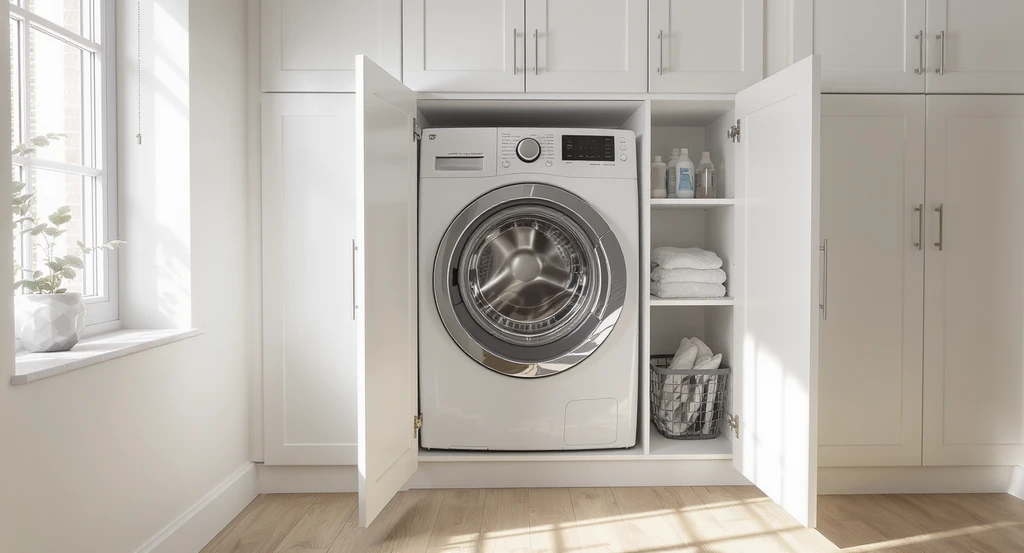
To hide a front-loading washer in a tight space, consider custom cabinetry, deep countertops, or sliding doors. Prioritize enough front access (at least 4 feet) and side clearance to avoid vibration issues. Each concealment approach has tradeoffs, especially regarding door swing, ventilation, and ongoing maintenance. See and map your changes before building to avoid regret.
Solving the Challenge of Concealing a Washer in Tight Quarters
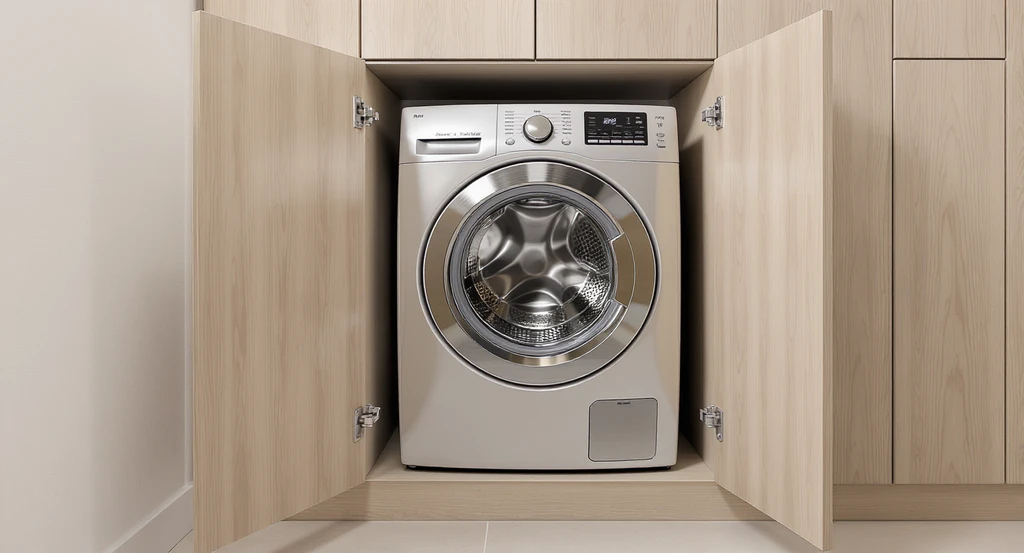
Smart solutions for how to hide a front load washer in a small space. Get the best renovation ideas for a laundry closet and tips for avoiding design regret with a compact washer installation, balancing open and concealed laundry nook options.
Fitting a front-loading washer into a small closet or nook can quickly turn into a frustrating dilemma. Many homeowners want a clean, integrated look, but finding a way to hide the machine that’s practical, accessible, and safe is rarely straightforward. The key is to balance aesthetics (so your laundry doesn’t dominate the space) with technical considerations: clearance, airflow, and maintenance. Below, I’ll walk through why most concealed laundry setups go wrong, the real spatial constraints at play, and how to adjust your approach for a regret-free, functional solution.
-
Common Mistakes When Hiding a Front Loader
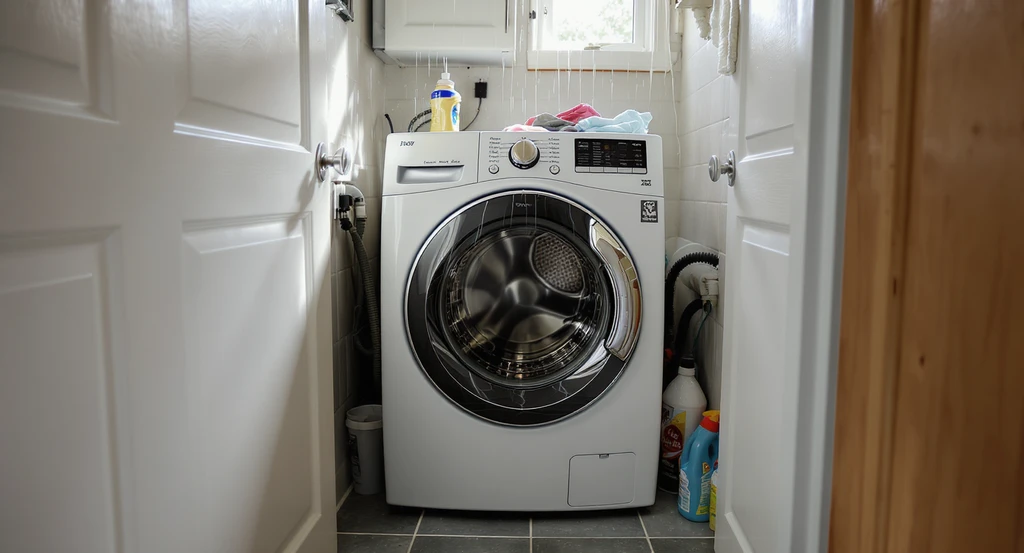
How to hide front load washer in small space: best renovation ideas for laundry closet start by avoiding design regret with compact washer installation. This cramped setup highlights common mistakes in choosing between open and concealed laundry nooks, stressing the importance of proper spacing and access.
Most issues come from prioritizing appearance over access or ignoring spacing needs. Common errors include:
- Forgetting to allow 4 feet of clearance in front for door swing and loading
- Cramming machines too tightly side-to-side, causing vibration or noise
- Blocking ventilation, which increases mold risk
- Using doors (bi-fold, barn, or sliding) that can’t fully open when the washer is in use
- Not planning for leaving the washer door ajar between uses (important to prevent mildew)
Without addressing these, you’ll constantly battle inconvenience or end up with a space that doesn't work day-to-day.
Expert Insight
A homeowner once insisted on bi-fold doors to hide a new front loader in a 31” closet. After struggling with machine vibration, constant door blockage, and zero airflow, they removed the doors and installed open shelving, solving both function and visual clutter while making day-to-day laundry noticeably easier.
-
Why Space Planning Matters for Laundry Nooks
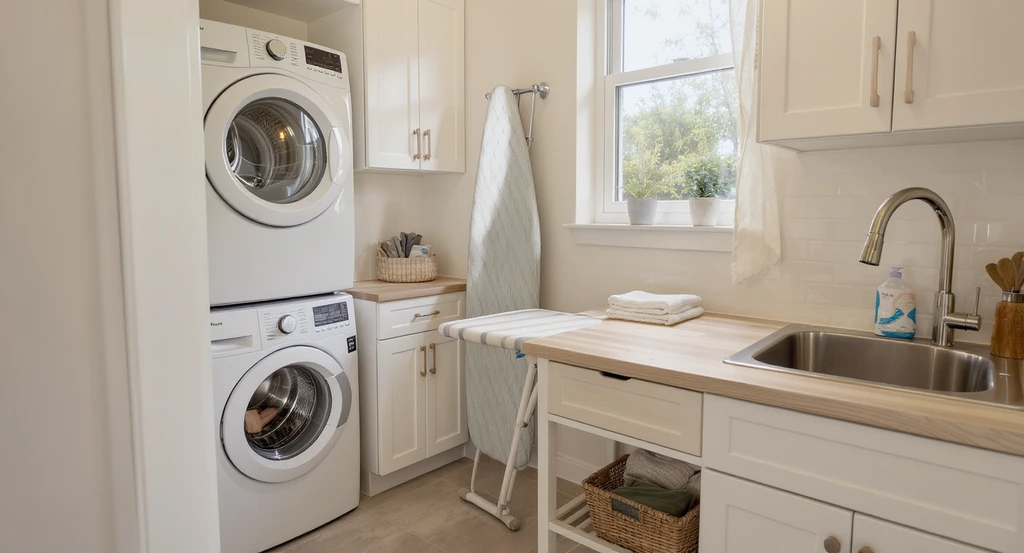
Why Space Planning Matters for Laundry Nooks Image
Front-loaders demand more than just a tight fit. When evaluating a laundry closet, check these minimums:
- Front clearance: At least 48" unobstructed for loading/unloading
- Side clearance: 1–2" to prevent machine vibration and ensure installation flexibility
- Depth: Confirm the closet or cabinet is deep enough for machine + hoses (measure appliances and don't forget extra hose space)
- Airflow: If hidden behind doors, integrate ventilation grilles or vents to prevent heat and moisture buildup
Poor planning often leads to regrets, doors that can’t close, inaccessible filters, or musty odors. As we explored in our guide to affordable renovation planning, accuracy in measurement and realistic layout mockups save time and cost later.
-
Evaluating Concealment Methods: Pros, Cons, and Corrections
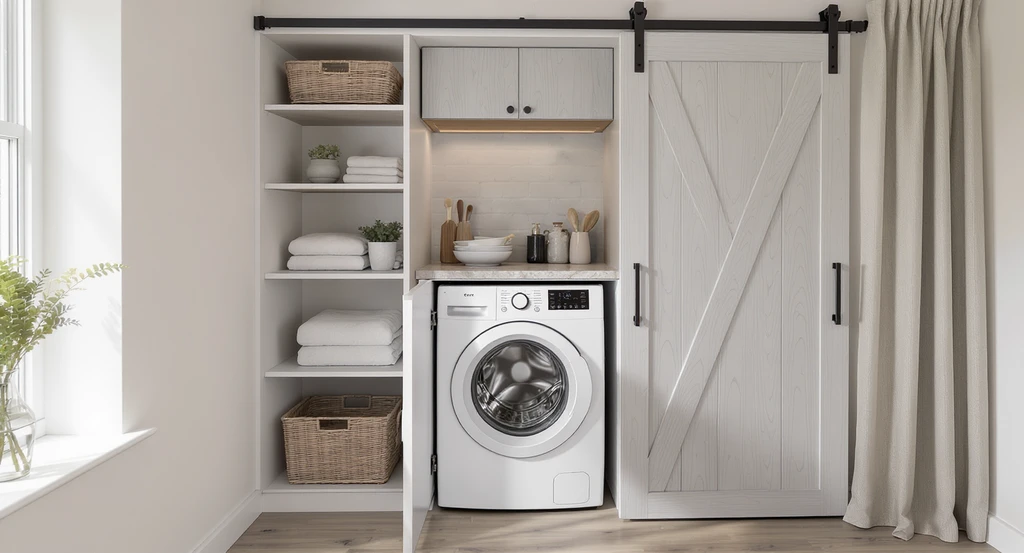
Evaluating concealment options for how to hide a front load washer in small space: this editorial laundry nook features best renovation ideas for laundry closet and compact washer installation—showing both open shelving and concealed solutions to help avoid design regret when choosing between open and closed laundry nooks.
Let’s compare common ways to hide a front-loading washer in a compact setting:
- Custom Cabinetry or Closet: Offers full concealment. Must design for at least 4' front clearance, swing room for doors, and leave extra space for airflow. Prioritize removable panels for maintenance access.
- Deep Countertop/Built-in: Placing the washer under a countertop (665mm/26.2" minimum depth) creates a seamless look. Works best where you can pull the machine out for service; integrate surface above for folding and storage.
- Sliding/Barn/Bi-fold Doors: Good for shallow or multi-use spaces. Track placement may eat into valuable depth; sliding doors block part of the opening when open. Consider external tracks or offset mounting to gain a few extra inches, but measure to avoid blocking hallways.
- Curtain or Screen: The fastest fix, but often looks temporary unless using high-quality, heavy drapery. Allows flexible access but does little for noise or vapor control.
- Open Nook Styled as Built-In: No doors, just shelving, baskets, and tidying above the washer. Surprisingly effective for maintaining function and airflow, if visual clutter is managed.
Avoid the temptation to pick a solution based solely on looks. Always model how each option’s door swing, depth, and air control will feel in daily use.
-
Step-by-Step Correction: A Functional Framework
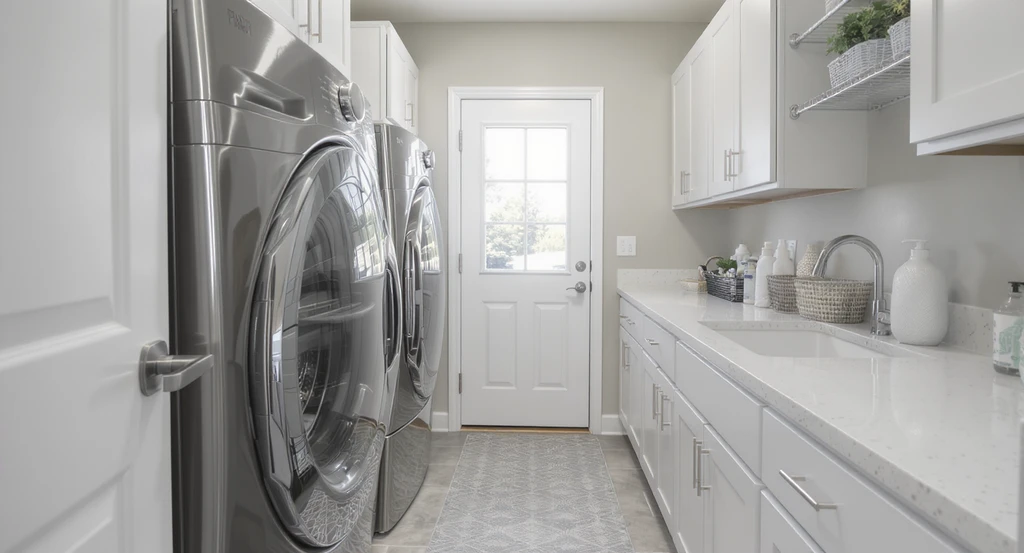
Step-by-Step Correction: A Functional Framework Image
- Map Precise Dimensions: Measure depth (with hose room), width plus 2” each side, and vertical allowance (stacking? shelf above?).
- Check Door Function: Plan for at least 48" uninterrupted in front. Trial where each chosen concealing element (cabinet, door, curtain) will sit when open and closed.
- Ventilation Planning: If using enclosed cabinetry/closet, add vent grilles or cut-outs. For curtains, avoid fully sealing at floor or ceiling to allow airflow.
- Access for Maintenance: Machines will eventually need servicing. Incorporate removable panels or enough loose space for occasional removal.
- Operational Habit: Plan for regularly leaving the washer door ajar between cycles to prevent mildew. If your concealment method won’t allow this, mold risk increases.
Refine designs by including visual previews before building, many design decisions benefit from a 3D layout tool, as discussed in our small apartment designer guide.
-
Spatial Reasoning: Scale, Light, and Visual Balance
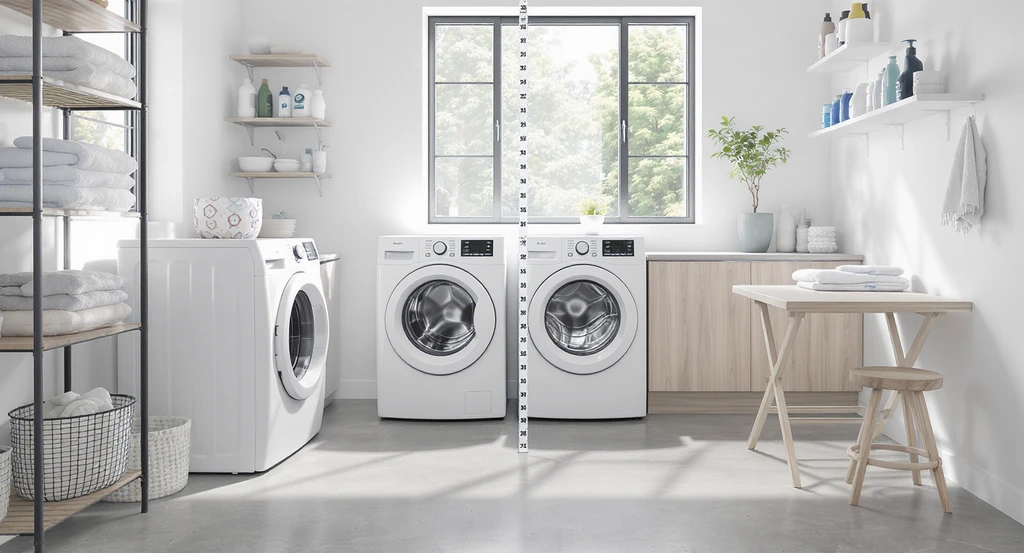
Spatial Reasoning: Scale, Light, and Visual Balance Image
A hidden laundry unit shouldn’t turn into a black box or make the room feel cramped. Here’s what to check:
- Choose light-colored finishes and reflective surfaces (white cabinetry, glossy doors) to prevent the nook from drawing in darkness.
- Align cabinetry heights and hardware lines with nearby fixtures for a built-in, cohesive look.
- If adding doors/curtains, make sure that adjacent circulation paths (doorways, hallways) aren’t blocked when open. Sliding tracks may require wall reinforcements.
- For stacked machines, ensure wall anchors can support the weight and vibration; use anti-vibration pads and check manufacturer installation guides.
Always preview how the new form looks from adjacent spaces (kitchen, hallway) to assess visual weight and traffic impact.
-
REimagineHome AI: Visualize Before You Build
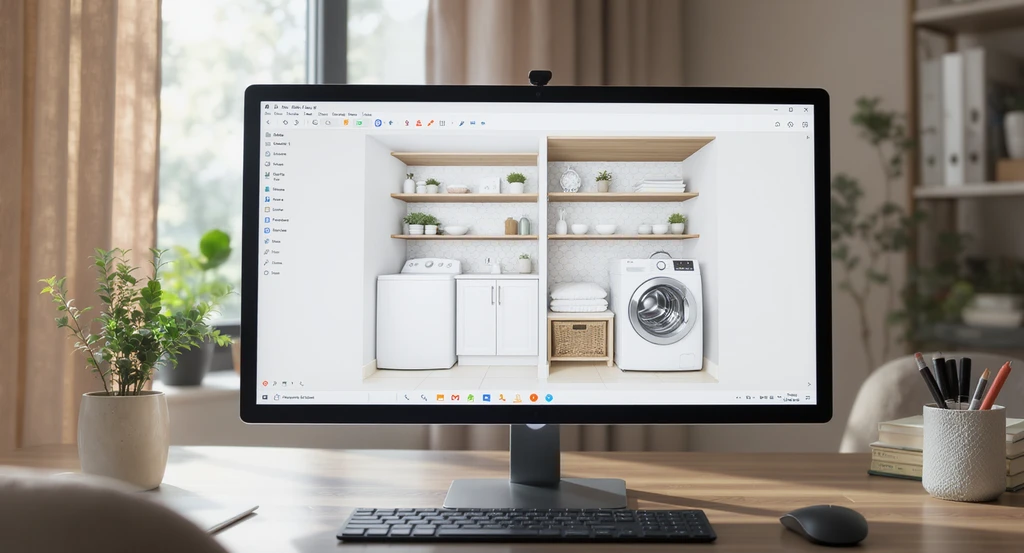
Preview design options for how to hide a front load washer in a small space—see best renovation ideas for laundry closet, avoid design regret with compact washer installation, and choose between open or concealed laundry nooks before building.
Before making permanent changes, use a visualization tool like REimagineHome AI to preview how cabinetry, doors, or laundry shelves will actually look and function in your room. Adjust layouts virtually to spot issues with depth, sightlines, or lighting before committing. This approach reduces costly mistakes, especially in small or multi-purpose homes.
Visualization Scenario
Before choosing cabinetry or sliding doors, imagine opening your laundry nook’s doors fully while carrying a laundry basket. Use REimagineHome AI to visualize different layouts. You’ll quickly spot if the new enclosure will block circulation or make it impossible to leave the washer ajar for drying.
FAQ: Concealing Front Load Washers in Small Spaces
- What’s the minimum space needed for a front-loading washer in a closet?
- Allow at least 4 feet of open front clearance, 1–2 inches side clearance, and enough depth for the unit plus hoses (measure carefully). This ensures safe installation and full door swing for maintenance or daily use.
- Can I use curtains to hide a washer?
- Yes, but use good-quality, heavy drapes on a sturdy rod for best results. Light curtains often look temporary and don’t control noise or airflow. Leave some gap at the top or bottom for ventilation to prevent mildew buildup.
- Is stacking washer and dryer always possible?
- Stacking is only an option if the closet is tall enough and the machines are designed for it. Check ceiling height, weight limits, and always use anti-vibration pads or anchoring hardware per manufacturer’s instructions.
- Do I have to leave the front load washer door open after each use?
- Leaving the door cracked open prevents mold and mildew inside the seal. If your concealment method doesn’t allow the door to stay ajar, consider alternate solutions—vented cabinetry or even an open shelving approach styled to look intentional.
Key Takeaways: Prioritizing Function with Concealed Washers
Hiding a front load washer in a small space can be done, but the best results come from balancing access, airflow, practical clearance, and visual integration. Avoid overvaluing style at the cost of liveability, and always confirm your final design with accurate measurements and visualization. Need help with your renovation plan? Refer to our tips on making small, affordable upgrades in tight spaces.