7 Modern Home Gym Design Principles That Improve Comfort, Zoning, and Spatial Performance
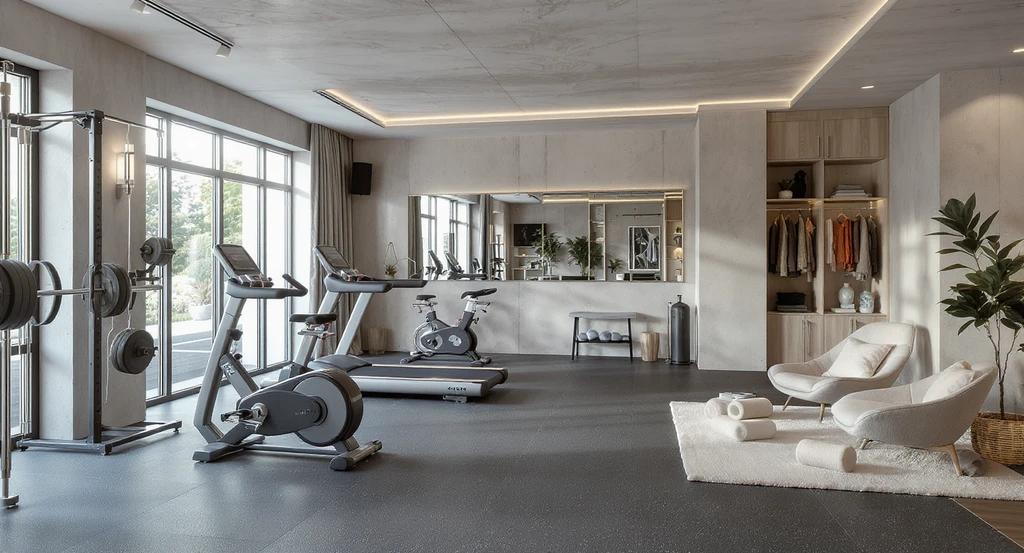
TL;DR
Zoning a modern home gym by function prevents clutter and boosts usability for couples with different routines. Smart material and equipment choices reduce acoustic, visual, and safety regrets. Visual validation lets you preview luxury details and spatial layouts, maximizing comfort, longevity, and resale appeal.
Why a Purpose-Driven Home Gym Works for Modern Lifestyles
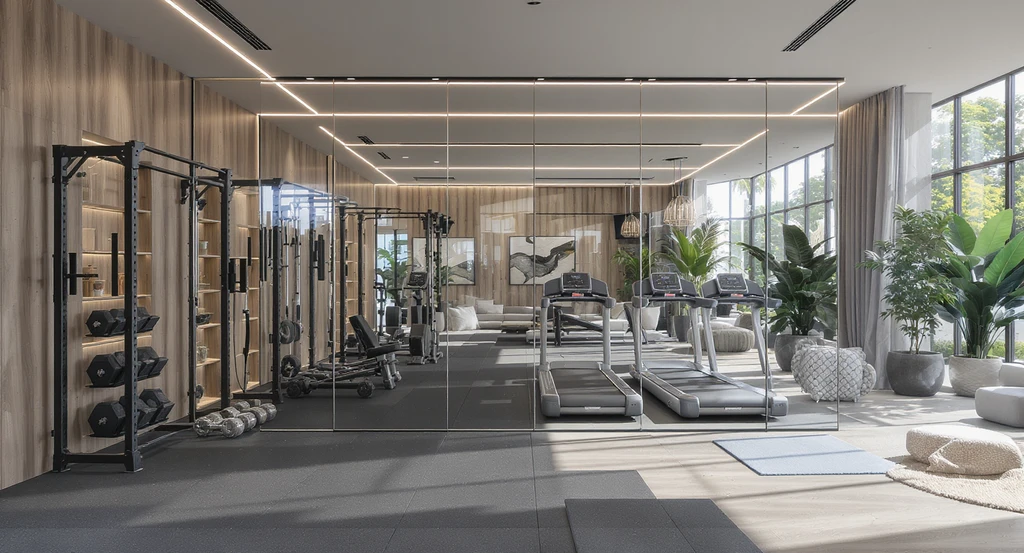
Explore modern home gym room design ideas with dedicated workout zones, premium flooring, and a recovery lounge—luxury features that elevate comfort and function.
A well-designed home gym does more than collect equipment; it shapes daily routines, mood, and even long-term motivation. When a gym is tailored to individual workout styles and clearly divided into functional zones, households avoid overcrowding and equipment regret. The result? Each partner has space for their unique training preferences, plus recovery and social areas that actually get used. Modern home gym room design ideas now prioritize clean aesthetics, lighting strategies, durable comfort, and seamless transitions between activity types. These decisions matter especially when working within a generous footprint and premium finishes. According to our summary on 2025 interior design trends, beautiful, multi-layered spaces anchored by tactile materials and adaptable layouts are increasingly linked to long-term satisfaction. The most effective gyms blend luxury with intentionality, ensuring that your investment supports both health and home value.
-
01. Physically Separate Zones Using the Three-Function Assessment
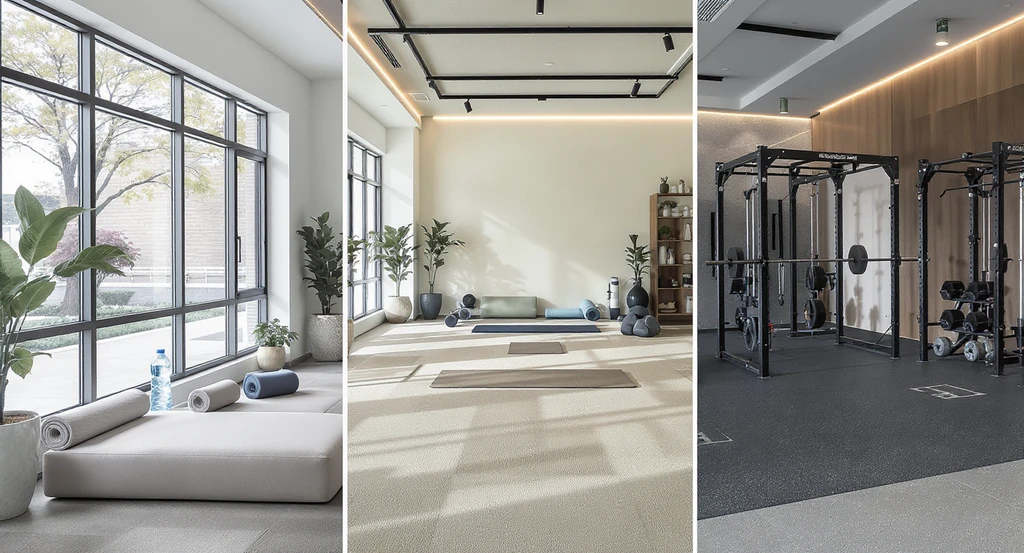
Explore modern home gym room design ideas that divide your gym into clear zones—recovery, gentle exercise, and intensive training—with the best flooring and clutter-free luxury features for enhanced comfort.
Segmenting your home gym into distinct functional zones Recovery/Social, Gentle Exercise, and Intensive Training ensures efficient use and minimizes spatial conflict. This three-function assessment clarifies equipment needs, empowers clutter-free storage, and defines logical pathways. Spatial reasoning dictates that grouping activities by needed surface, clearance, and noise levels preserves both comfort and aesthetics. For example, placing the Recovery zone nearest windows maximizes natural light for stretching and cooling down, while the Intensive Training zone benefits from durable, impact-resistant flooring in the deepest part of the room. This method reduces visual chaos and travel distance between activities, keeping the space motivating and intuitive.
Expert Insight
A couple built a home gym with an elegant recovery nook, but only after previewing their floorplan did they realize the original bike placement blocked the stretching mat during morning light. Their eventual solution—moving cardio equipment closer to the interior—retained both aesthetics and function, proving that visual validation saves time, money, and frustration.
-
02. Choose Floor Materials That Balance Cushion, Cleanliness, and Visual Cohesion
Install wood-effect foam flooring in activity areas and non-slip mats in high-impact zones to balance joint protection with modern design. Use a measurable rule-of-thumb: place high-density foam panels at least 1.5cm thick under any free weights or bike to prevent floor indentations. Material reflectivity directly affects perceived spaciousness and light quality. Matte finishes reduce glare during yoga or Pilates, while easy-clean surfaces in weight and bike zones minimize maintenance. Investing in continuous, tone-matched flooring across zones visually expands the room and supports the modern, cohesive look described in our review of material drenching and quiet luxury. Budget considerations should include cost per square meter and replacement rates for heavy-use zones.
-
03. Place Key Equipment Using the Dynamic Circulation Decision System
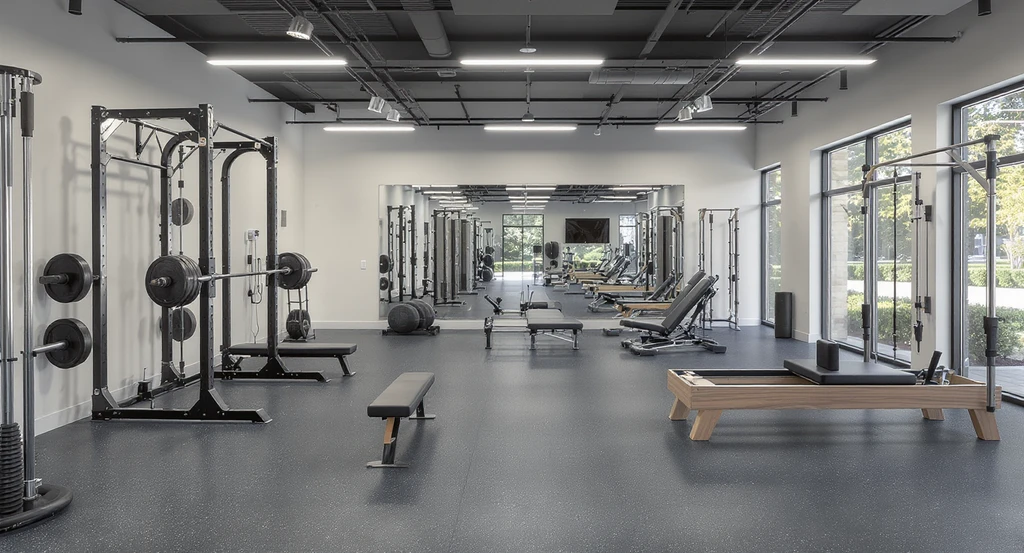
Modern home gym room design ideas shown here demonstrate how to divide a home gym into zones, optimize circulation, and select the best flooring for luxury and comfort.
Position anchors like the weight rack, bike, and reformer based on clearance requirements: 1.5m free space for benches/racks and at least 90cm circulation around equipment hubs. The Dynamic Circulation Decision System organizes heavy-use and gentler zones logically, limiting bottlenecks. Circulation logic prevents collision of pathways, especially when two are training simultaneously. Placing cardio equipment near a wall with power access and the reformer parallel to the windows lets you reuse vertical space for wall racks or mirrors. Ceiling height also impacts safety avoid placing tall machines where overhead fixtures or sloped roofs intrude. Defining these spatial flows is essential for a clutter-free and frustration-resistant experience.
-
04. Maximize Storage Integration to Avoid Visual and Functional Overload
Built-in benches, concealed cupboards, and wall racks should each address a single category bands, free weights, or towels rather than general catchall. Use a definition-grade rule: any piece of equipment that is not used weekly must have a concealed storage solution. Most homeowners believe that open shelving keeps motivation high, but actually, exposed clutter increases cognitive load and erodes clean lines over time. Real-world home gyms remain visually harmonious only when every piece has a dedicated, out-of-sight spot. Prioritizing storage bench seating or vertical pull-out drawers in the Recovery zone reduces the temptation to pile equipment and preserves the calming effect of minimalist design.
-
05. Layer Lighting by Zone for Both Safety and Ambience
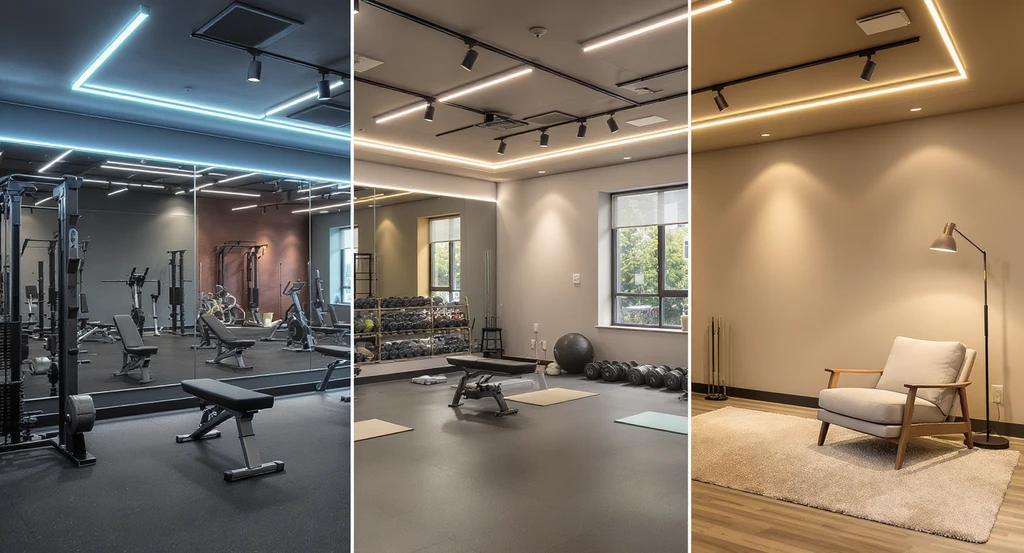
Layering lighting in a modern home gym helps divide workout zones for safety and comfort. Dimmable LEDs, natural light, and luxe flooring create optimal training and relaxation spaces.
Install dimmable overhead LEDs for the Intensive Training area, diffuse natural or accent lighting for Gentle Exercise, and a floor or table lamp for Recovery. The spatial reasoning method here uses task-versus-ambient contrast: brighter, cooler light elevates alertness where needed, while warm, lower-level lighting supports relaxation zones. Lighting placement must avoid casting glare onto mirrors or creating hard shadows that hinder safe lifting. With tall ceilings, consider lowering lighting with pendants or track systems to maintain intimacy and avoid a gymnasium feel. Trade-offs include balancing energy use, bulb longevity, and cost to upgrade fixtures. A layered approach future-proofs the gym and adapts to changing workout routines and resale trends, as discussed in our outlook on 2026 design trends.
-
06. Add Recovery Comforts and Social Touches Without Sacrificing Flow
A mini fridge, water station, and comfortable seating belong in the Recovery zone, not the central gym area. The measurable rule-of-thumb: recovery features should occupy no more than 15% of total floor area to avoid encroaching on workout zones. Spatially, placing comforts near the entrance supports easy pre/post-workout access and spontaneous conversation, without interrupting exercise traffic. Most assume luxuries make gyms feel more inviting; in reality, improper placement can disrupt movement and safety. Intentional separation ensures luxury feels integrated, not intrusive, as wellness and personal connection continue to shape home features per emerging wellness trends.
-
07. Use Visualization Tools to Validate Zone Divisions and Avoid Regret
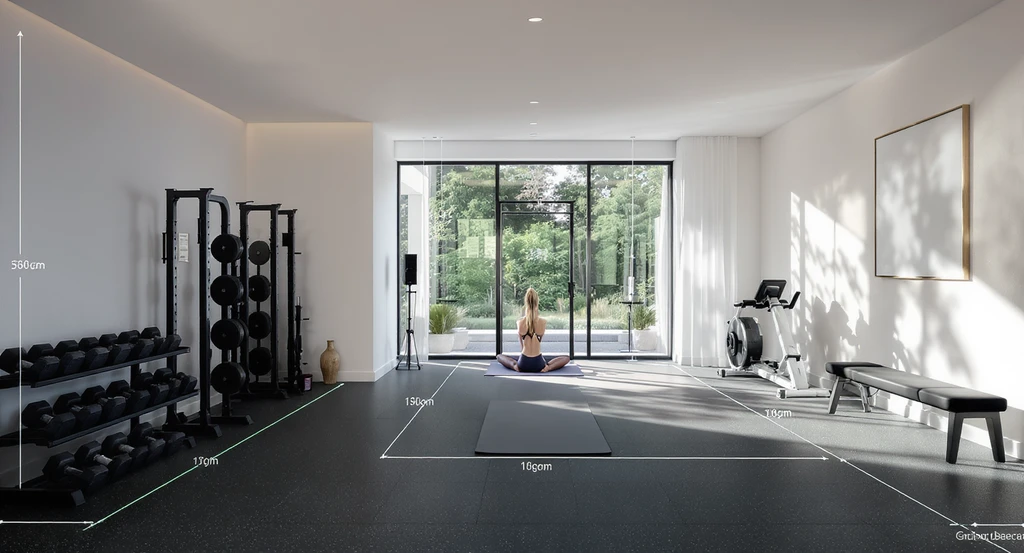
Visualize modern home gym design ideas with precise zoning, luxury gym features, smart floor choices, and optimal layout for diverse routines.
Previewing your room with a zone overlay or 3D walkthrough resolves uncertainty about scale, light effect, and walkways before any purchases. Visualization reduces regret probability by exposing overlooked pinch points, dark corners, or equipment crowding. Prior to visual validation, uncertainty often takes the form of guessing whether the weight rack will feel cramped or if light will reach your yoga mat. After previewing with a tool such as ReimagineHome, the impact of each luxury upgrade on real use and spatial harmony becomes clear. This aids in faster, more confident decision-making, especially on higher-cost equipment and finishes. Visualization ensures that every luxury—be it a WaterRower, a custom bench, or designer wall color—will truly fit lifestyle and design goals.
Visualization Scenario
Picture a light-washed gym with three clear zones. As you virtually navigate, sunlight tracks across the stretching zone while the Intensive Training area remains safely tucked away. You test different bike and bench placements, instantly seeing how circulation remains open—with preview tools showing how even tall equipment and specialty finishes work together seamlessly, so every inch is both beautiful and functional.
Frequently Asked Questions
What’s the best flooring for home gym interiors combining luxury and durability?
High-density foam with a wood-effect finish balances shock absorption, easy cleaning, and a luxury look. Pair this with specialized non-slip mats under weights or bikes for extra safety and longer floor lifespan.
How do I divide a home gym into recovery, gentle, and intense workout zones?
Begin with functional assessment: dedicate areas based on noise, activity level, and equipment size. Use storage and lighting to establish visual boundaries and preview divisions to ensure clear circulation.
What luxury small home gym features should I add without reducing usable workout space?
Include only compact luxuries such as built-in storage benches, integrated sound systems, and a mini fridge—together these should not exceed 15% of the room’s total area to maintain openness.
How can visualization help me decide on paint, equipment layout, or feature upgrades?
Visualization tools show real lighting, clearance, and material effects, helping you confidently confirm choices and prevent regrettable purchases or ill-fitting layouts.
Key Takeaways for Your Zoned, Modern Luxury Home Gym
Creating an effective, visually clean, and future-proof home gym requires discipline in planning zones, material continuity, and storage. Use the Dynamic Circulation Decision System to avoid equipment regret and preview your design with visualization tools to spot comfort or layout issues in advance. Borrowing from current trends, balance function-first decisions with comfort and character to maximize your investment’s value, usage, and long-term satisfaction.