8 Practical Ways to Make Your Living Room Feel More Inviting
TL;DR
If your living room feels "off", it's usually a result of layout, color, scale, and cohesion mistakes. Simple layout shifts, balancing visual weight, and scaling furniture correctly will help create a more inviting, usable room. Start with the checklist below to address the most common issues and create a unified space.
Why Does This Living Room Still Feel Off?
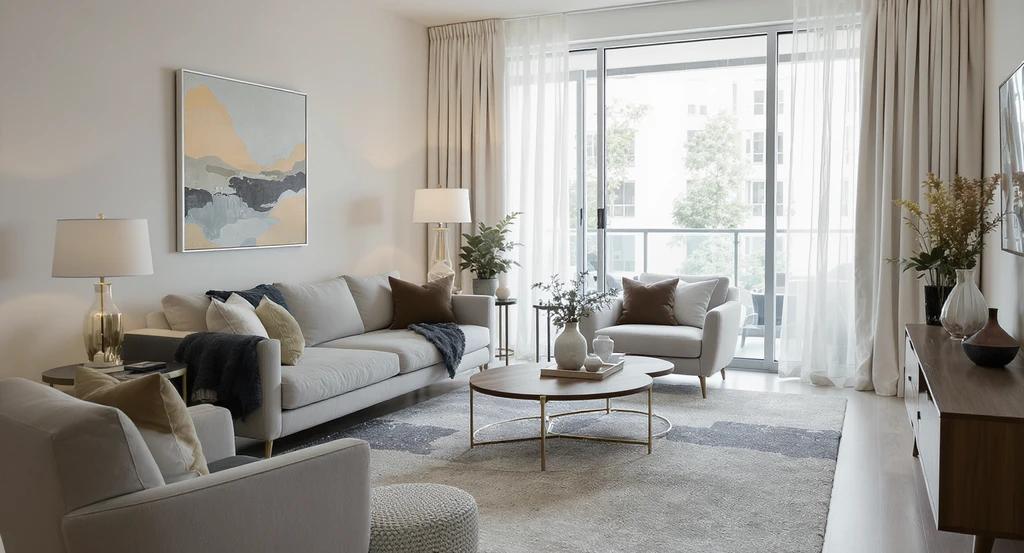
A realistic living room with subtle design layout problems shows how ai room makeover suggestions for living rooms and virtual staging ai tools help identify and fix common interior mistakes.
If you’re looking at your living room and can’t quite put your finger on what feels wrong, you’re not alone. Many spaces look polished but somehow lack comfort, flow, or personality. The simple answer is that practical layout mistakes, especially with furniture placement, scale, and color balance, are often the cause.
If you’re unsure whether your living room needs just a few tweaks or a more structured overhaul, focus on correcting fundamental design logic before adding more decor. Start with these core fixes:-
01. Furniture Spacing Too Wide – Creates Disconnection
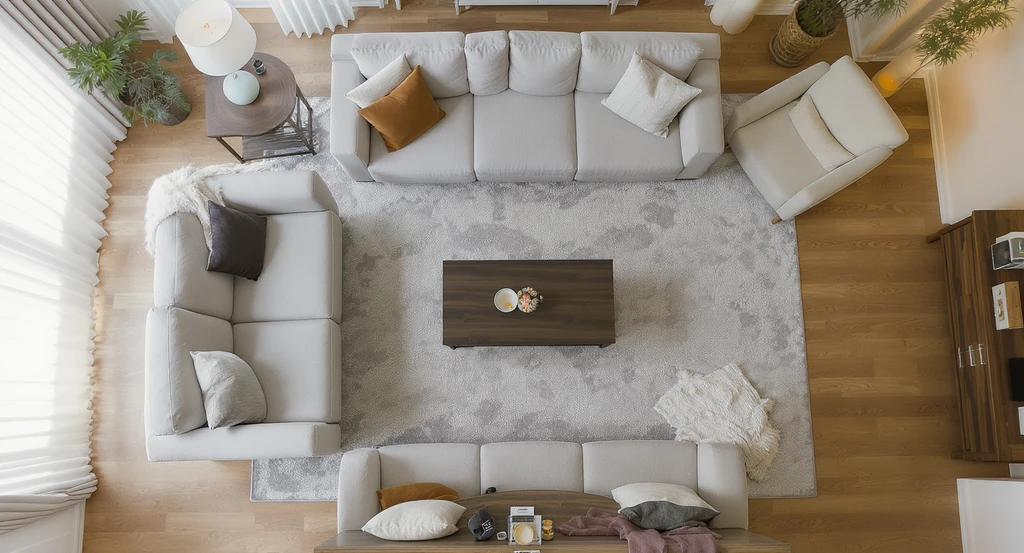
This living room reveals a common interior design mistake, where ai room makeover suggestions for living rooms and using ai to improve furniture layout can help identify when seating is too far apart, leading to a disconnected space.
A common issue is seating that's too far apart, often leaving a large, unusable void in the center. This mistake makes the room feel more like a waiting area than a comfortable lounge.
Why it happens: People tend to push sofas and chairs against walls or keep them too separated, aiming for spaciousness but sacrificing intimacy and function. According to our guide on fixing awkward living room layouts, an ideal distance is 18–24" between the coffee table and the sofa to allow easy access while encouraging conversation.
Correction Steps:- Pull seating closer together, leaving roughly 18–24" between seats and tables.
- If needed, remove surplus chairs to prevent overcrowding.
- Test different layouts until every seat feels part of a cohesive group.
-
02. Visual Weight Imbalance – All the Color is at the Base
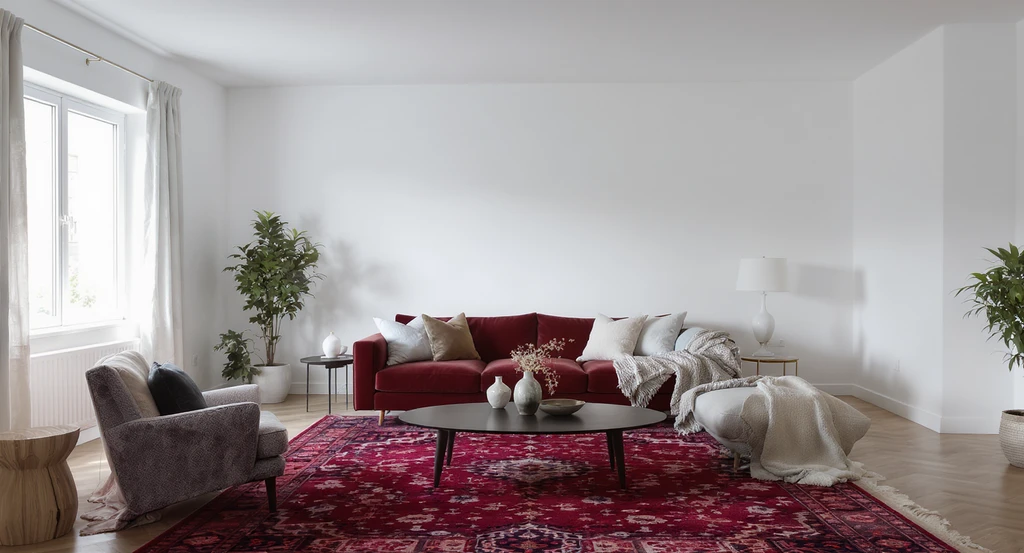
This living room visually demonstrates how using ai to improve furniture layout and virtual staging ai can highlight the impact of color imbalance, ensuring the best ai tools for visualizing home decor address common interior design mistakes.
Rooms can feel visually heavy when all the color and pattern is concentrated at floor level, the rug, sofas, and coffee table, while the upper walls, windows, and ceilings remain bare and light. This creates a top-heavy versus bottom-heavy effect, making the space feel 'pulled down.'
Why it happens: People choose bold rugs or colored sofas but leave the rest undecorated, missing vertical balance. Bringing some of these colors up, through art, curtains, or tall objects, prevents the eye from being dragged downward.
How to Fix:- Add tall plants or floor lamps to draw the eye up.
- Install curtain rods close to the ceiling with panel lengths all the way to the floor.
- Use artwork above the fireplace or on walls that reflects or contrasts with your main furniture colors.
-
03. Rug and Seating Alignment Mistakes – Poor Zoning
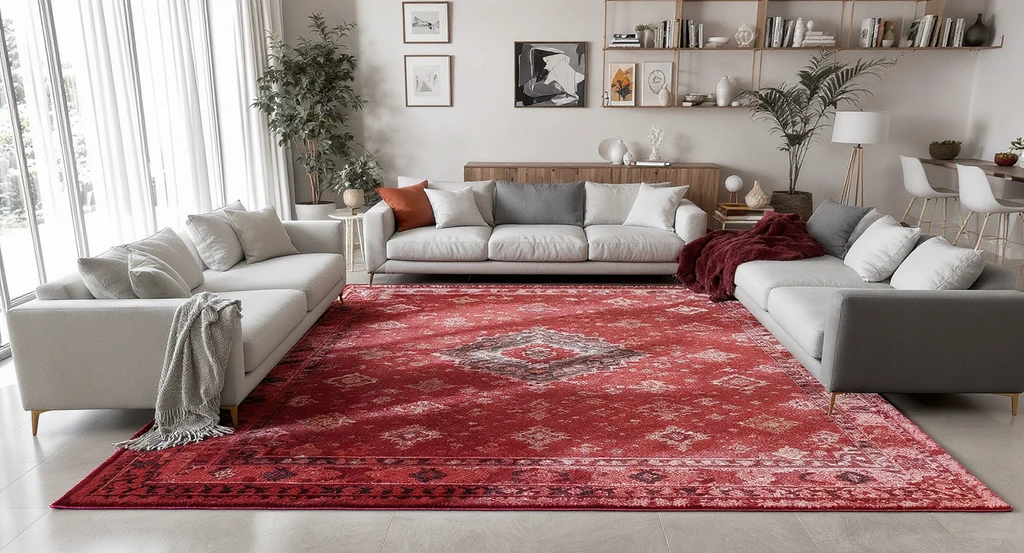
Proper rug and seating alignment addresses common interior design mistakes. Using ai room makeover suggestions for living rooms, homeowners can visualize best practices like positioning all main furniture at least partially on a contrasting rug to define clear zones.
Incorrect rug placement is another source of spatial discomfort. If sofas or lounge chairs run along the short edge of a rug or the rug is too close in color to the surrounding furniture, it causes zoning errors and makes the space feel compressed or undefined.
Why it happens: Frequently, rugs are placed for color matching rather than for defining the seating area, or their dimensions don’t fit the arrangement. The result is a room that lacks an obvious zone for conversation or relaxation.
Correction Steps:- Use the rug to define the main "zone" for the seating group, all key pieces should have at least their front legs on the rug.
- Align the long side of the rug with the long side of the largest seating piece and parallel to the room's architecture.
- Choose a rug that offers color or pattern contrast with nearby furniture.
-
04. Clashing Style and Texture – No Visual Connection
Mixing too many unrelated materials, shapes, or styles makes the room feel disjointed. For example, pairing a cold, blocky stone coffee table with curved, plush sofas and rustic floating shelves can disrupt cohesion.
Why it happens: Often, individual pieces are chosen for their uniqueness, but without a common thread, the space loses unity.
How to Correct:- Choose a common design element (color, material, or era) and repeat it at least twice.
- Pair warm wood or soft textures with existing warm upholstery to add flow.
- Use shape variation (e.g., a round table if most lines are straight) for balance, but avoid too many "statements."
-
05. Lack of Layered Lighting – Flat and Uninviting
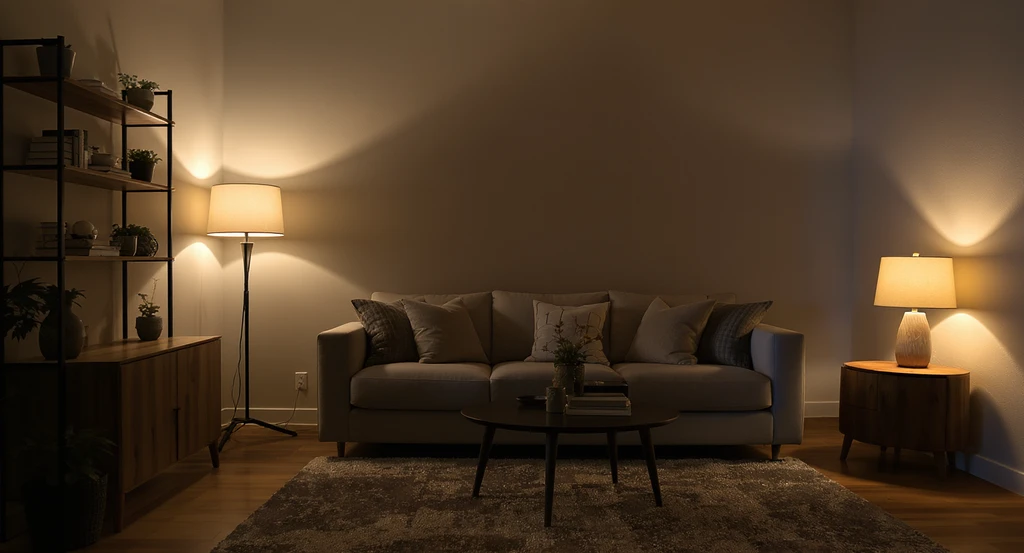
Layered lighting brings warmth and depth to a living room—an essential ai room makeover suggestion and a key strategy for avoiding flat, uninviting spaces.
Relying only on an overhead fixture gives a cold, sterile feel and creates harsh or insufficient illumination, especially at night. Without lamps or accent lights, the room misses depth and ambiance.
Why it happens: Overhead fixtures are often installed first, and additional lighting is forgotten. Floor lamps, table lamps, or wall sconces are inexpensive ways to correct this.
Lighting Correction Method:- Layer ambient overhead lighting with at least two other sources, table lamps, floor lamps, or wall sconces.
- Use bulbs of varying warmth for flexibility across day and night.
- Place lights at different heights to add depth and interest.
-
06. No Clear Focal Point – Directionless Space
Rooms without a defined focal point (like a fireplace, artwork, or view) feel unfocused. When all elements have similar size or prominence, the eye wanders and the room lacks direction.
Why it happens: Multiple objects compete for attention, or the focal point is left underemphasized.
Correction Logic:- Decide the main focal point (often a fireplace, picture window, or TV).
- Orient primary furniture to face or encourage viewing toward this element.
- Support the focal point with complementary art, lighting, or textural elements nearby.
-
07. Missing Soft Layers and Personal Accents – Sterile Vibe
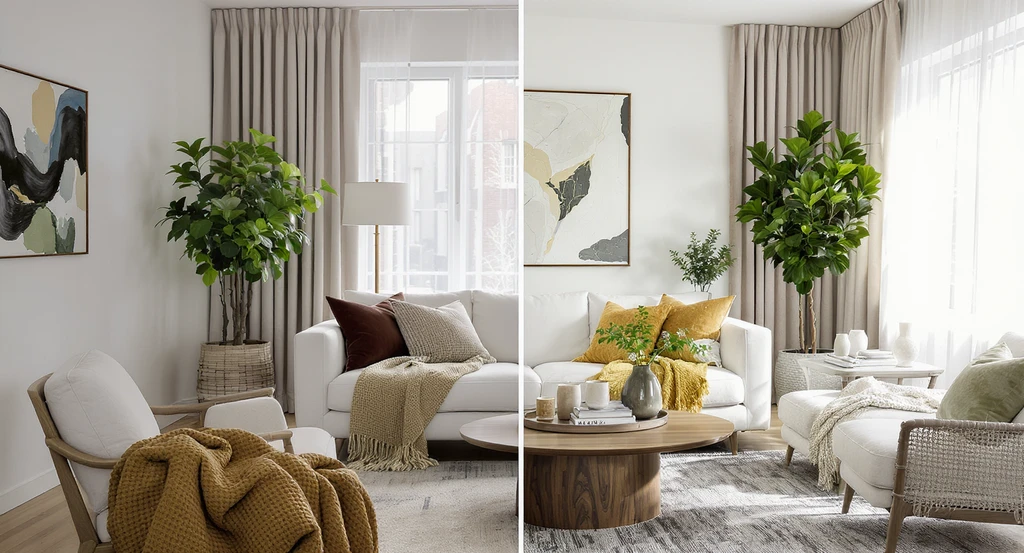
Using ai room makeover suggestions for living rooms, this space showcases layered decor, improved furniture layout, and virtual staging ai techniques to transform a sterile setup into an inviting, personalized retreat.
A room filled only with large-scale furniture and functional pieces can feel impersonal. The absence of throws, pillows, books, curtains, and greenery makes the space look staged instead of lived in.
Why it happens: Finishing details and personal touches are often skipped in favor of "clean" lines, but the result is a sterile effect. As we explored in Sofa Placement Rules, layers make a living room feel inviting and customized.
What to Add:- Larger pillows or textural throws on sofas and chairs.
- Colorful or personal objects (like books, trays, candles) on tables.
- Sculptural plants or ceramics for height and personality.
- Window curtains (ideally ceiling to floor) for warmth and balance.
-
08. No Flow Around Furniture – Compromised Walkways
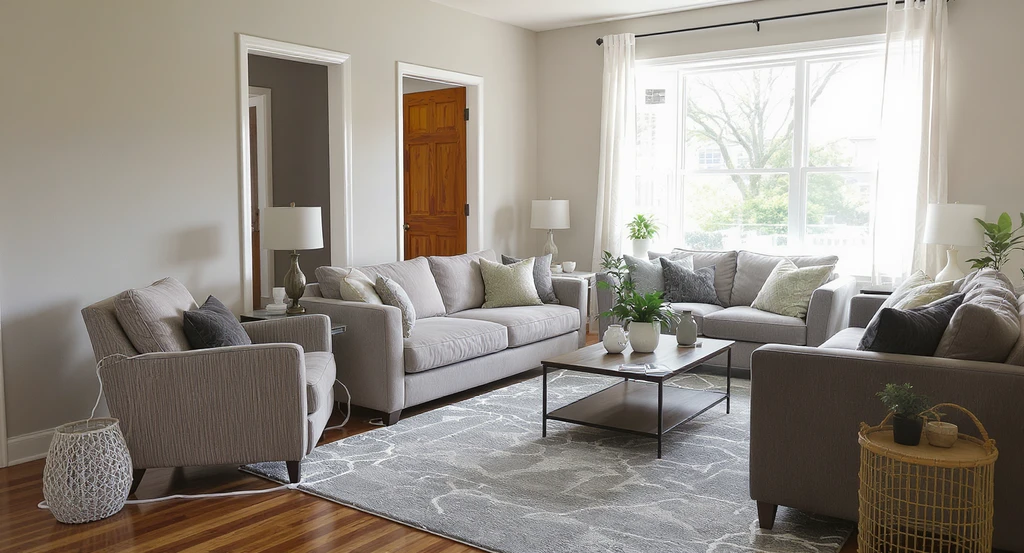
Using AI to improve furniture layout, this scene spotlights common interior design mistakes like blocked walkway clearances, crucial for living room flow.
Inadequate traffic clearance is a final but common problem. Furniture blocking doorways, windows, or compressing walkways makes everyday movement awkward.
Why it happens: Large pieces, extra chairs, or placing everything on the rug can squeeze clearances below minimums. The result is a space that's hard to use.
Spacing Guideline:- Maintain at least 30–36" of walkway behind and around primary seating.
- Arrange major pieces so doors and access points remain fully functional.
- Remove any piece that disrupts movement patterns.
Frequently Asked Questions
How do I know if my living room layout is wrong?
If the space feels disconnected, awkward to gather in, or doesn’t let you reach tables easily, the layout likely needs adjusting. Refer to the checklist above and try moving pieces incrementally, as detailed in our guide on awkward layouts.
What’s the ideal distance between sofa and coffee table?
Keep 18–24" for comfort and accessibility. This ensures use and conversation are natural.
Can I keep mismatched furniture?
Yes, but unify them with repeated materials, colors, or accent styles as explained above.
How do I choose a rug that fits?
Look for a rug big enough that all your seating can sit at least partially on it, and make sure its palette complements both the floor and upholstery.
Do I need to buy all new decor?
No. Make targeted changes—move furniture, add a few accents, shift lighting, or update the rug before replacing major pieces.
Key Takeaway: Improvement Through Small, Smart Adjustments
Living rooms rarely need a complete overhaul to feel right. Fixing layout, spacing, and visual balance will immediately make the room more welcoming and practical. Layer in softness, balance color from floor to ceiling, and ensure every piece fits the scale and function of the space. If you’re struggling to picture these corrections in your own home, visualizing the changes first can save both time and money.