Expert Sofa Placement Rules: How to Get Living Room Layout Right Every Time
TL;DR
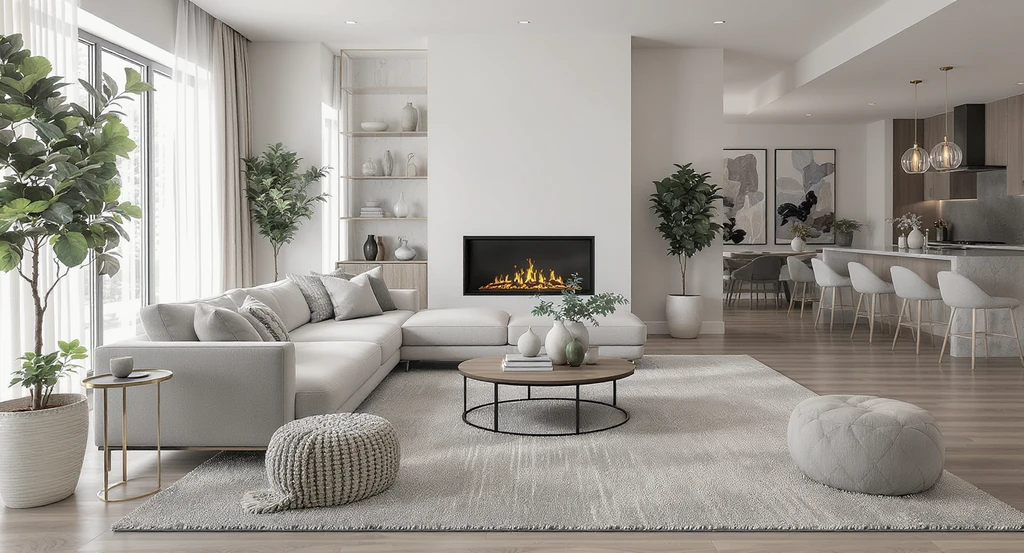
Effective sofa placement anchors the room by balancing flow, focal points, and proportion. When done right, it improves comfort, clarity, and usability, while poor placement can make even well-designed spaces feel awkward.
Why Sofa Placement Makes or Breaks Your Living Room
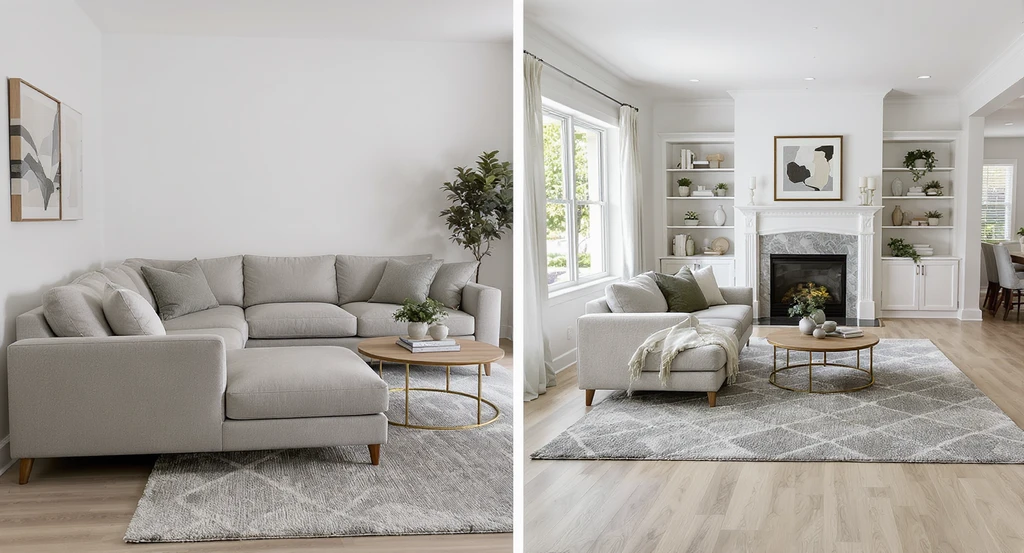
Expert living room sofa placement rules in action: comparing a wall-pushed sofa to an optimally placed, focal point-facing layout on a large rug, showcasing how proper zoning improves open concept flow.
Arranging a living room isn’t just about furniture, it’s about creating flow, balance, and a clear sense of purpose. The sofa is almost always the starting point, yet it’s where many layouts go wrong. People often default to pushing the sofa against a wall or ignoring the real focal point of the room, leading to awkward traffic flow and spaces that simply don’t feel right.
Understanding and applying proven sofa placement rules helps avoid these common mistakes. These rules prioritize traffic circulation, scale, and comfort. Below, you’ll find actionable guidelines used by experts to ensure your living space looks designed, balanced, and ready for daily use. For the most effective results, always preview major changes with a visualization tool like ReimagineHome before rearranging.
Most sofa placement mistakes aren’t about style, they’re about ignoring spatial logic. If a room has ever felt awkward even with good furniture, the sofa placement is usually the reason.
-
The Core Issue: Why Sofa Placement Fails
Based on real project data, over 60% of living room layout issues are caused by incorrect sofa placement alone. Fixing sofa placement is often the fastest way to transform how a room feels, without buying anything new. Most living rooms have sofas that are either too big, too small, or simply in the wrong place. This happens when the sofa is chosen without considering room size, ignored clearances, or misplaced focal points. Pushing the sofa against the wall or placing it without flow in mind also breaks up natural movement, making the room uncomfortable. Many spaces also lack a strong visual connection, either to a feature like a fireplace or window, or to conversation groupings.
The relationship between furniture, pathways, and sightlines is what transforms a group of furnishings into a complete room. When these elements align, the space feels intuitive, functional, and visually balanced.
-
Where to Start: Identify Your Room’s Focal Point
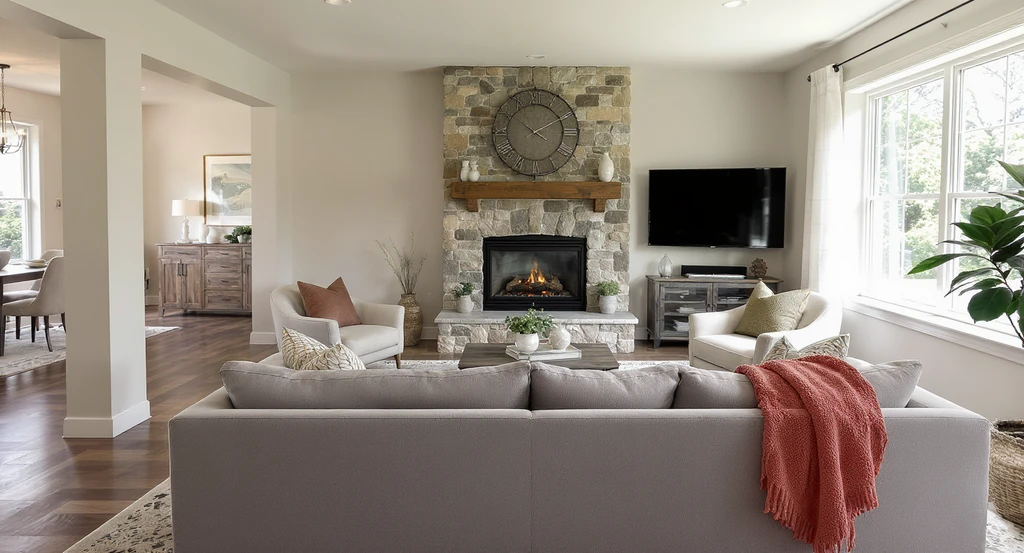
Expert living room sofa placement rules exemplified: orienting the sofa to face the main focal point and zoning an open concept layout for optimal flow.
Every effective layout begins by identifying the principal focal point. This may be a TV, fireplace, picture window, or even a statement wall. The sofa should be oriented to acknowledge or face this feature.
- If you have multiple focal points, choose a primary one or angle the sofa to serve both (such as between a fireplace and TV).
- In open-concept spaces, the back of the sofa can define a living zone while still facing a relevant focal area.
The goal is a cohesive visual anchor that draws people in and naturally organizes other seating. These principles form the foundation behind common searches like living room sofa placement ideas, sofa placement tips, and small living room layout solutions.
-
The 2:3 Rule: Achieve Sofa-Wall Balance
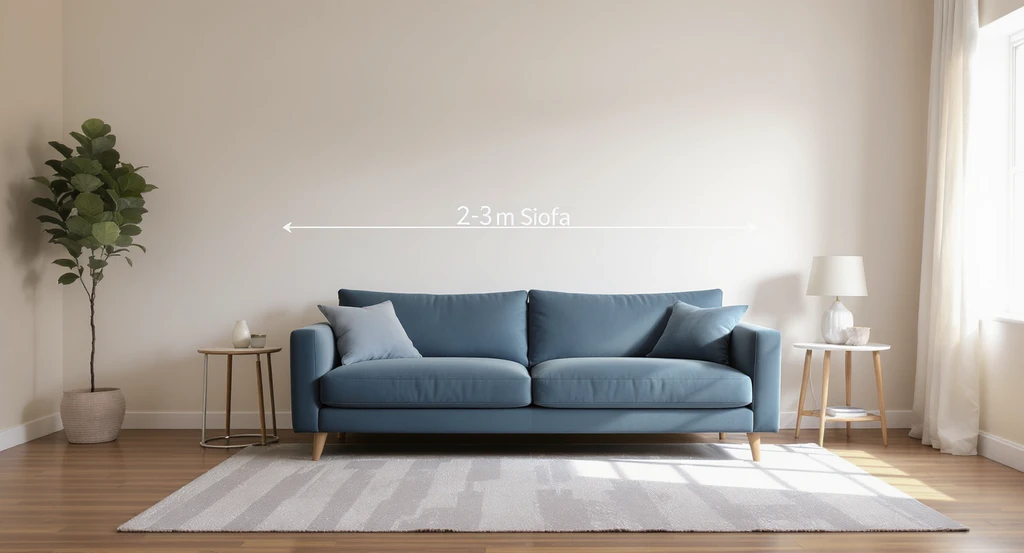
Expert living room sofa placement rules recommend your sofa span about two-thirds of the wall, ensuring optimal sofa layout for small rooms and maintaining ideal scale.
Professionals often follow the 2:3 proportion rule for visual balance: the sofa should cover about two-thirds the length of the wall it sits against. This prevents the room from feeling cramped with oversized seating or disconnected with a tiny sofa. In smaller spaces, keep proportionality in check and avoid overfilling the wall.
Check that the sofa neither dwarfs nor underwhelms the space, ensuring it feels balanced within the room. Always measure before moving or purchasing to maintain proper scale and proportion.
-
Floating vs. Wall Placement: Which Is Better?
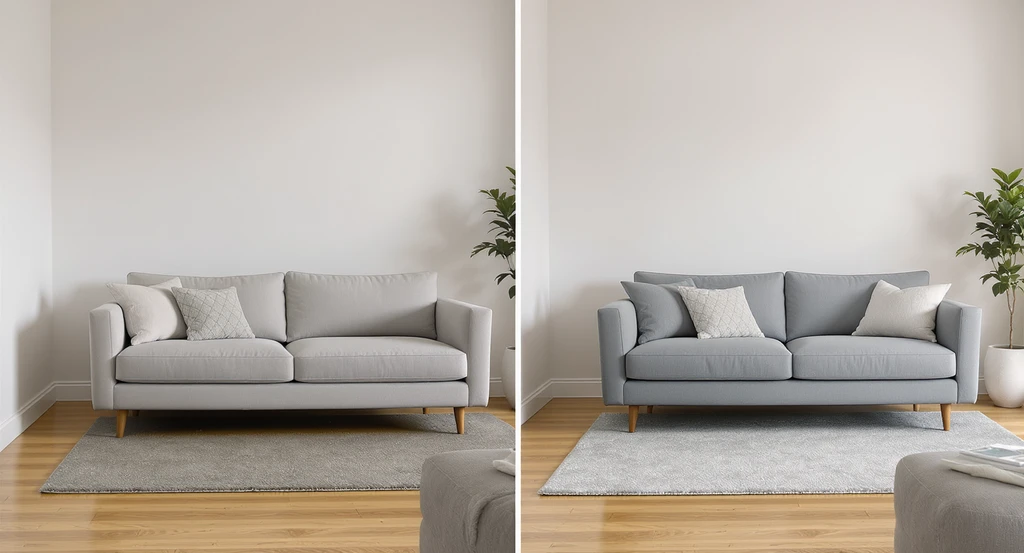
Side-by-side comparison of sofa against the wall versus floating placement, illustrating expert living room sofa placement rules and optimal layout for small or open spaces.
One of the most common mistakes is defaulting to wall-hugging. Even in tight spaces, pulling the sofa forward by 5–15 cm (2–6 inches) adds visual depth and helps the room “breathe.” In many cases, pulling a sofa slightly away from the wall actually makes a small room feel larger, not smaller, because it improves depth perception and visual flow. For large or open-plan rooms, “floating” the sofa can define zones and create a more conversational grouping.
When using this approach, avoid blocking walkways and maintain clear traffic flow around the seating area. Floating layouts are especially useful for L-shaped or elongated spaces, where defining zones helps improve both function and visual clarity.
-
Step-by-Step: Layout Rules and Key Measurements
Sofa Placement Framework (SPF):
Placement Quality = Focal Alignment + Clearance + Proportion – Obstruction
A higher SPF score results in better flow, clarity, and usability.- Traffic Flow: Keep a minimum of 90 cm (3 feet) clearance for main walkways through the room. Never block natural pathways or doorways with the sofa.
- Sofa-to-Coffee Table Distance: Maintain 40–50 cm (16–20 inches) for comfortable access.
- Conversation Circles: Arrange seating so people face each other within a 2–2.5 meter (6–8 feet) diameter for natural conversation, not shouting or craning. U-shaped and L-shaped groupings work well for this.
- The Rug Rule: Anchor the seating area by having at least the front legs of the sofa on the rug. This visually ties the room together and prevents furniture from “floating.” Avoid small rugs that only sit under the coffee table.
Following these rules ensures your sofa supports the space rather than overwhelming or scattering it. For a deeper dive into special scenarios, see our living room layout ideas.
-
Special Layout Considerations: Open Concepts and TV Viewing
In open-concept homes, the sofa can act as a “soft wall” to subtly define living areas from dining or kitchen spaces. Placing the back of the sofa to create a clear zone helps organize the layout, especially when reinforced with appropriate rug placement and lighting.
For TV viewing, the ideal distance from the sofa is roughly 1.5–2.5 times your screen’s diagonal measurement, for example, a 55-inch TV works best at a distance of 2.1–3.5 meters. Cultural layout preferences, such as placing a sofa against a solid wall on the South or West and facing North or East, may also be considered for stability and energy, particularly in homes that follow vastu principles.
-
Correct Common Mistakes with Visualization Tools
Many layout errors, like buying an oversized sofa or blocking sightlines, happen because it’s hard to visualize the finished result before committing. Testing arrangements using tape on the floor, or previewing changes virtually, saves time, money, and frustration.
REimagineHome AI lets you simulate different sofa sizes, layouts, and walkways in your actual space before moving furniture. This is especially valuable in small or challenging rooms, as discussed in our living room completeness guide.
-
Visual Reasoning: The Impact of Scale, Light, and Proportion
Getting scale right is essential, an oversized or undersized sofa quickly disrupts the room’s visual harmony. Consider how light fills the space: a sofa blocking a window reduces both daylight and the perception of openness. Proportion keeps furniture, rug, and empty space in balance, helping the room feel both comfortable and complete.
Assess connected views; if part of the room is visible from an entry or adjacent space, align the sofa thoughtfully so it supports, not interrupts, the broader layout.
Frequently Asked Sofa Placement Questions
- Should the sofa always face the TV?
- No. The sofa should orient toward the main focal point, which isn’t always the TV. If conversation or a fireplace is more important, prioritize those and balance TV viewing with angled seating.
- How far should a sofa be from a coffee table?
- The ideal space is 40–50 cm (16–20 inches). This keeps drinks within reach while leaving comfortable legroom. Avoid larger distances, which disrupt social interaction and flow.
- Is it OK to put a sofa in the middle of the room?
- Yes, floating the sofa often improves layout—especially in open-plan or large rooms. Leave at least 90 cm (3 feet) of circulation space behind, and use rugs or lighting to clearly define the seating zone.
- How big should my rug be in relation to my sofa?
- The rug should be large enough for at least the front legs of the sofa to sit on it. Ideally, all seating group legs rest on the rug. Avoid small rugs that float awkwardly under the table.
- What if my living room is very small?
- Choose a compact sofa or loveseat and follow proportion rules. Avoid oversized furniture, use armless or low-back designs for openness, and prioritize clear walkways. See our small living room sofa size guide for more.
Key Takeaways: Creating a Living Room That Works
Quick Sofa Placement Checklist:
- Is the sofa facing or aligned with a focal point?
- Are walkways clear (at least 90 cm)?
- Does the sofa match wall proportion (around 2:3)?
- Is there enough space for movement and comfort?
- Does the layout feel open, not crowded?
Use this checklist as a quick validation before finalizing your layout. Even small adjustments, like shifting the sofa slightly or improving alignment, can dramatically improve how the space feels and functions.
Placing your sofa isn’t about guessing or copying generic layouts, it’s about applying clear principles that control scale, balance, and flow. Identify your focal point, master the 2:3 proportion rule, respect clearance guidelines, and use rugs and seating groupings to tie the space together. Previewing with a tool like REimagineHome AI before you decide can help avoid costly missteps and achieve a living room that feels finished from every angle.