Small Living Room Sofa Size Guide: 9 Expert Rules to Maximize Space and Comfort
TL;DR
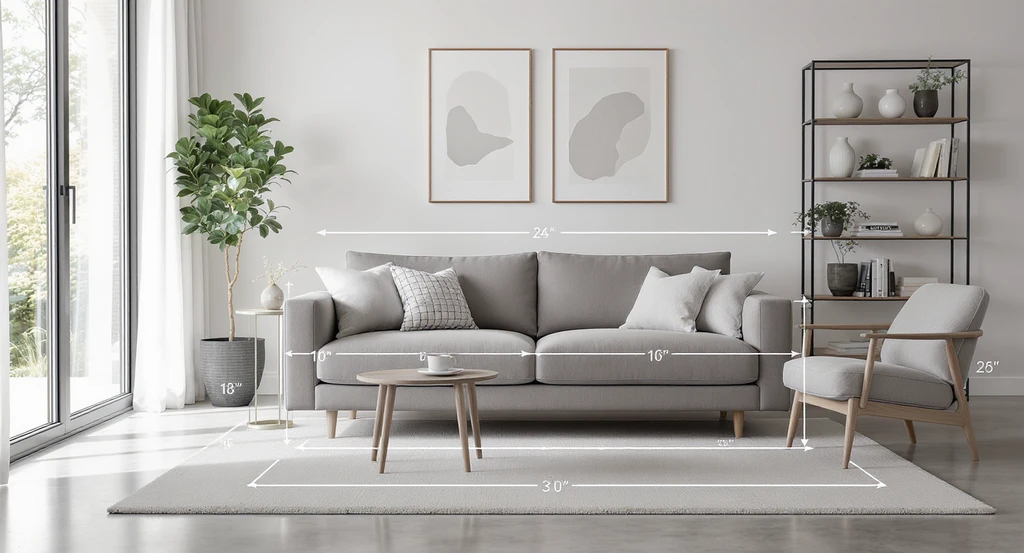
The best sofa size for small living rooms is determined not just by width, but by depth, walkway clearance, and layout alignment. Use the Room-to-Sofa Fit Ratio and essential clearance principles to ensure the right fit, avoid congestion, and visualize arrangements before you buy. Compact sofas or small sectionals carefully measured unlock daily comfort in tight square footage.
Why Small Living Room Sofa Sizing Demands Precision
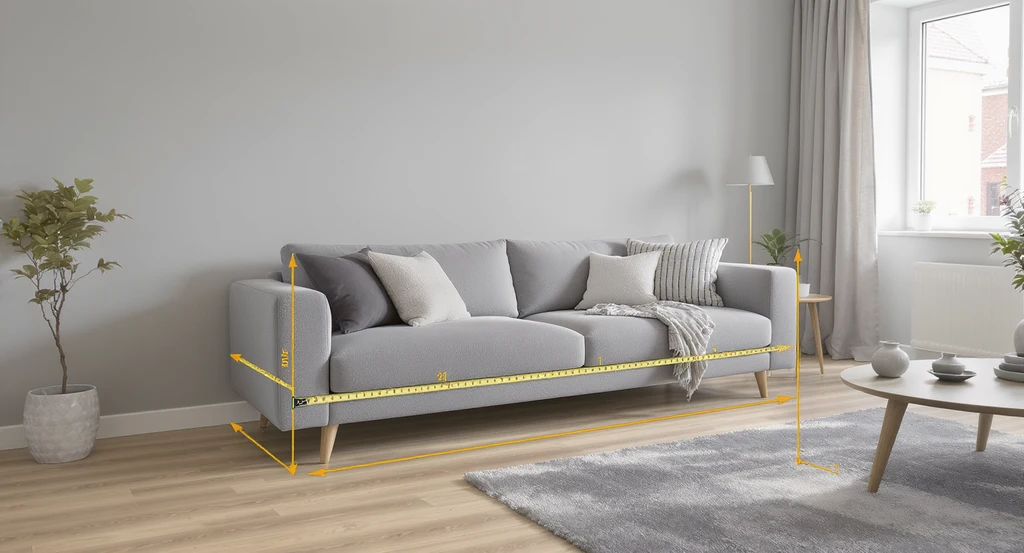
Properly measuring your living room is crucial to choosing the best sofa size for a small space. This setup demonstrates how to measure living room for sofa placement, apply clearance rules, and select comfortable sofa depth—ensuring your sectional or compact sofa fits perfectly in any apartment.
A few inches of miscalculation can make a small living room feel cramped and uncomfortable for years. Because the sofa dominates both the visual and spatial flow, precise sizing down to width, depth, and clearances is critical. Even the best-looking sofa will underperform if it restricts movement or blocks essential sightlines. This guide delivers a structured, step-by-step framework tailored for real-world apartments, helping you turn spatial limitations into functional comfort. Begin with precise measurements, apply universal clearance standards, and use our original Room-to-Sofa Fit Ratio to confidently determine the ideal sofa dimensions and layout for your living room.
-
1. The Room-to-Sofa Fit Ratio: Never Exceed Two-Thirds
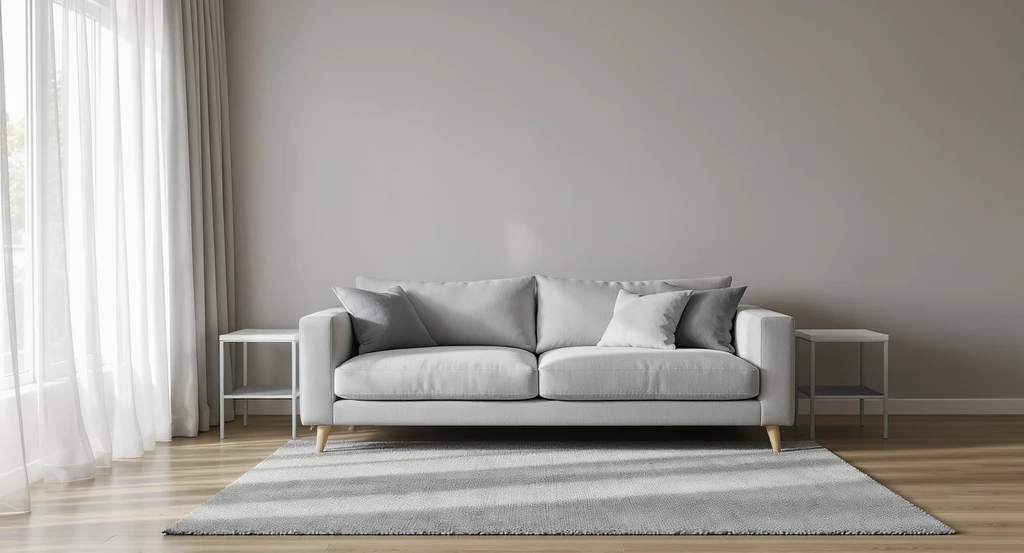
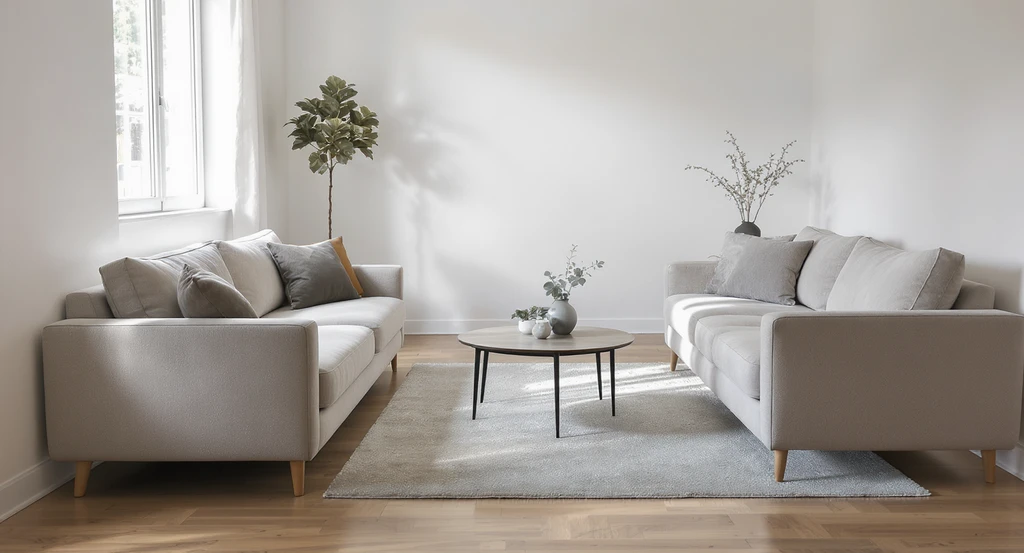
Demonstrating the best sofa size for a small living room, this setup follows clearance rules to prevent crowding—showing how to measure living room for sofa placement and maximize layout comfort.
A sofa should never exceed two-thirds (66%) of the wall or zone it occupies, as defined by the Room-to-Sofa Fit Ratio (RSFR)—a practical rule for avoiding crowding and ensuring spatial comfort. For a 10-foot wall, this means a maximum sofa width of 80 inches, leaving enough space for end tables and natural breathing room. The RSFR prevents both visual and physical congestion, especially in rooms under 150 square feet. This principle helps avoid the common regret of buying a sofa that technically fits but dominates the space. RSFR also provides an objective threshold; whenever a proposed sofa width approaches this two-thirds limit, reassess the layout or downsize. For more on applying this concept across furniture types, explore our sofa size and furniture style guide.
-
2. Measure Doorways, Obstacles, and Delivery Paths Before Shopping
A sofa that fits your living room but not your entryway is a costly error, so measure all access points doorways, stairwells, and elevators before considering any model. Record the narrowest part of the path and compare it to your sofa's diagonal depth (from top backrest to bottom front edge). If the diagonal exceeds the entry width by more than two inches, delivery will be problematic. Many apartment sofas now feature removable legs or modular construction. Always check these specs to ensure your careful living room measurement isn’t wasted at the front door. This step is vital for apartment dwellers and those in older buildings, where clearance can be unexpectedly tight.
-
3. Always Use Painter’s Tape or Visualization Tools to Test Layouts
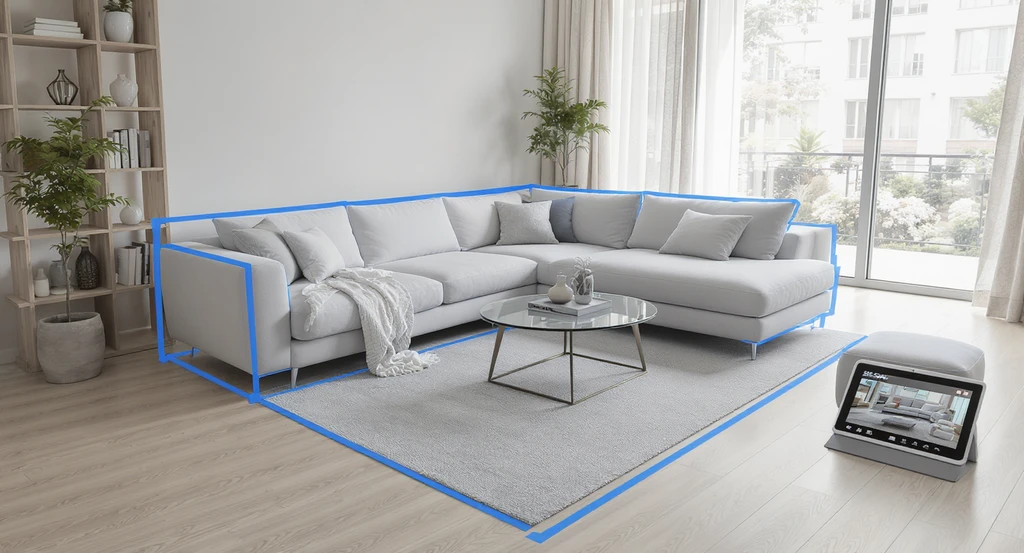
Using painter’s tape on the floor is an effective way to determine the best sofa size for a small living room and measure sofa clearance, helping decide if a sectional will fit and ensuring optimal furniture placement.
Map out your intended sofa footprint with painter’s tape on the floor before purchasing, or leverage visualization technologies to preempt regret. This physical method quickly reveals spatial pinch points and flow issues, allowing you to move freely before spending a cent. For higher confidence, use platforms like ReimagineHome to visualize multiple sofa choices and walkways virtually especially helpful for awkward layouts or if you’re between sizes. Physically or virtually, this layout test prevents the psychological trap of “optimism bias”—believing the room will feel bigger once the sofa is in. As reinforced by our analysis of sofa fit and layout challenges, visualization helps spot issues early and improves final satisfaction.
-
4. Target Ideal Sofa Widths: Cheat Sheet by Room Size
Use empirical width guidelines to simplify your search: - 8×10 ft rooms: 55–70 inch loveseat or slim 2.5-seater - 10×10 ft: 65–75 inch apartment sofa - 10×12 ft: 70–80 inch 3-seater or small sectional - Studio/corner: sectional 70–80 inches on the long side Cross-check these recommendations with wall space and pathway needs. Any features like fireplace protrusions, bay windows, or doors on sofa walls require further size reduction (subtract 6–10 inches). This approach delivers both functional clearance and visual balance in compact settings.
-
5. Sofa Depth Matters More Than Most Realize
Comparing sofa depths shows how choosing a shallow seat advances the best sofa size for small living rooms, improves clearance, and ensures you maximize space.
Select a sofa depth between 20 and 24 inches (measured from seat front to backrest) for rooms below 150 square feet, since every extra inch projects further into scarce floor area. Deeper sofas (over 26 inches) rob walkway space and are rarely justified unless your room exceeds 12 feet in width. Prioritize shallow depth sofas for both physical comfort and uninterrupted flow, even if it means sacrificing a plush look.
-
6. Protect Walkway and Coffee Table Clearances—Non-Negotiable Zones
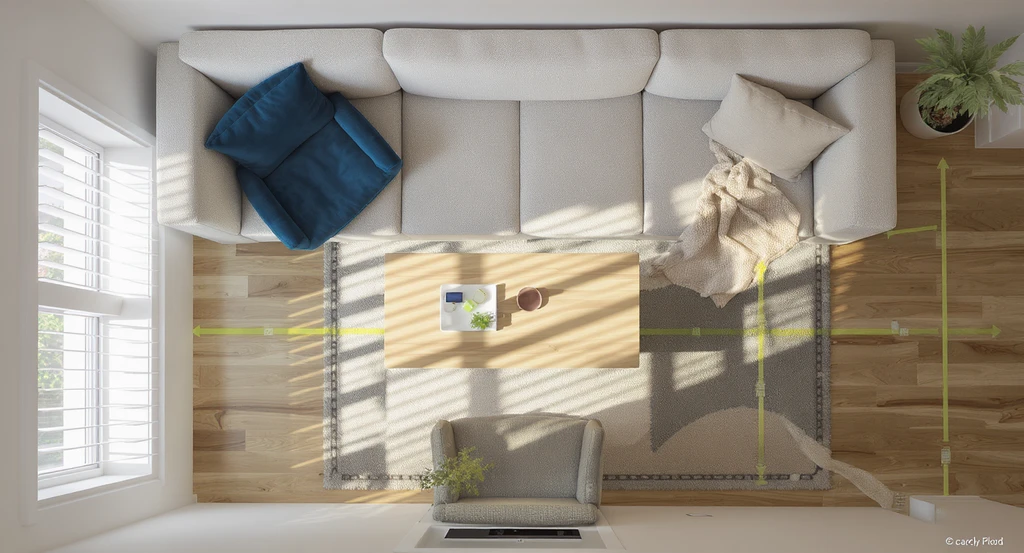
Proper spacing in a small living room—shown here—ensures the best sofa size, ideal coffee table distance, and crucial walkway clearance, following clearance rules for compact spaces.
Maintain a minimum of 30–36 inches for all primary walkways, and ensure 14–18 inches between sofa and coffee table, as these spacing rules drive both comfort and usability. Encroaching on these zones forces sideways movement, impacts daily use, and reduces adaptability over time. Short individuals may be comfortable with 14 inches to the table, but taller users need closer to 18 inches so plan accordingly. If you must trade off space, prioritize walkway clearance over additional seating. These rules are reinforced in our guide to primary clearances in living room layouts.
-
7. Prioritize Low-Profile Sofas to Expand Perceived Space
A low-profile sofa (with a back height of 28–34 inches) preserves sightlines and encourages a more open, airy feel. High-back sofas (over 36 inches) visually fragment the room, while lower backs visually merge with the horizontal zone, making the space appear larger. Aim for sofa backs under 32 inches if positioned away from the wall or in front of windows. This manipulation of vertical plane is especially useful for visually expanding small, closed rooms.
-
8. Use the ‘Sectional vs. Sofa Decision Matrix’ for Compact Spaces
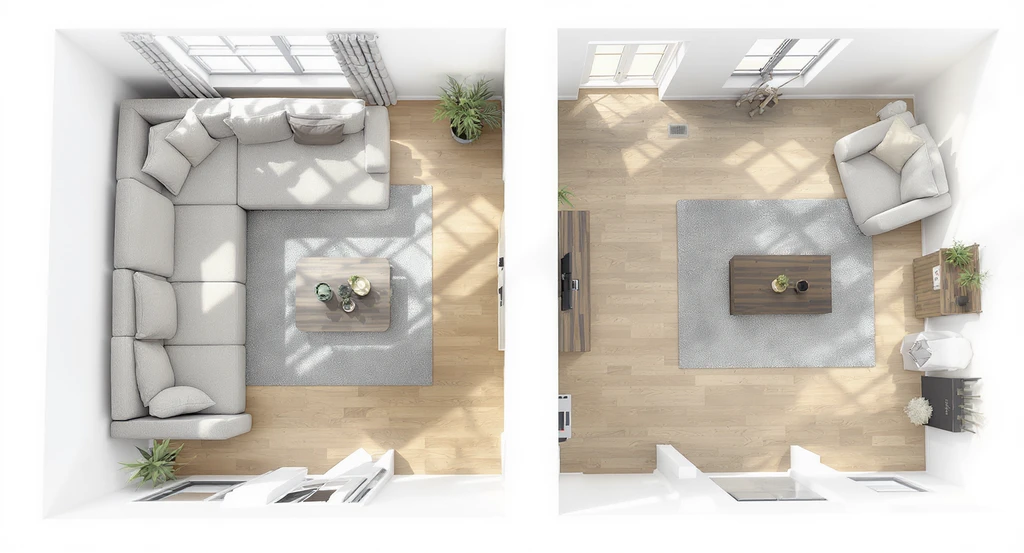
Side-by-side examples reveal best sofa size for small living room layouts—compare a compact sectional for defining a zone with a loveseat for flexibility. Use these clearance rules and tips for choosing sofa depth and measuring living room for sofa to ensure the perfect fit.
Apply the Sectional vs. Sofa Decision Matrix: Choose a compact sectional if you have an open corner, consistent seating for 4+, and a need to define a zone. Select an apartment-size sofa or loveseat for rooms with multiple doors, irregular walls, or when flexibility and frequent rearranging are priorities. Sectionals should never exceed 90 inches on their long side in rooms under 150 square feet. Refer to our detailed breakdown on sectional layout pitfalls and solutions for more nuanced recommendations.
-
9. Avoid the Top Five Small Living Room Sofa Mistakes
The most common failures in compact living rooms include: (1) selecting sofas wider than the usable wall span, (2) exceeding optimal depth—typically 26 inches in tight layouts, (3) obstructing primary circulation paths, (4) overlooking delivery and entry clearance constraints, and (5) failing to maintain required spacing behind and beside the sofa. Each of these errors compromises comfort, flexibility, and long-term satisfaction. Before purchasing, reassess your layout using the Room-to-Sofa Fit Ratio, tape-mark all required clearances on the floor, and validate the configuration with a visual layout tool to ensure proportional accuracy..
Visualization Scenario
Imagine you’re considering a modern, 74-inch-wide sofa for your compact 10×10 living room. You mark out its position with tape, then layer in a virtual end table and a coffee table, leaving a clear, 32-inch walkway through the zone. Using ReimagineHome, you visualize several layouts—discovering that shifting the sofa just three inches left enables easy movement while still centering the space visually. Moments like this, grounded in careful measurement and technology, reveal how the right prep transforms frustration into satisfaction.
Small Living Room Sofa Fit: Key Questions Answered
The optimal width for most small living rooms is 66 to 78 inches, with a depth between 20 and 24 inches. Always maintain 30–36 inches of clearance for walkways, and 14–18 inches to the coffee table.
How do I measure my living room for a sofa?
Record wall-by-wall dimensions, note all doorways, windows, and obstacles, and mark out the sofa footprint on the floor with painter’s tape before committing to any size.
Will a sectional fit in my apartment?
A compact sectional works if you have a clear corner, with the long side under 90 inches and preserved walkways of at least 30 inches. Avoid sectionals in narrow rooms or those with dense crossing paths.
How close can a sofa be to a coffee table?
The recommended clearance is 14 to 18 inches. This range provides comfort for reaching the table and easy passage in and out of seating.
How can I avoid buying a sofa that won’t fit?
Use the Room-to-Sofa Fit Ratio, test layouts with painter’s tape or visualization apps like ReimagineHome, and always measure all doorways and delivery paths before buying.