Renovation vs Redecoration: How to Determine the Right Upgrade for Your Home
TL;DR
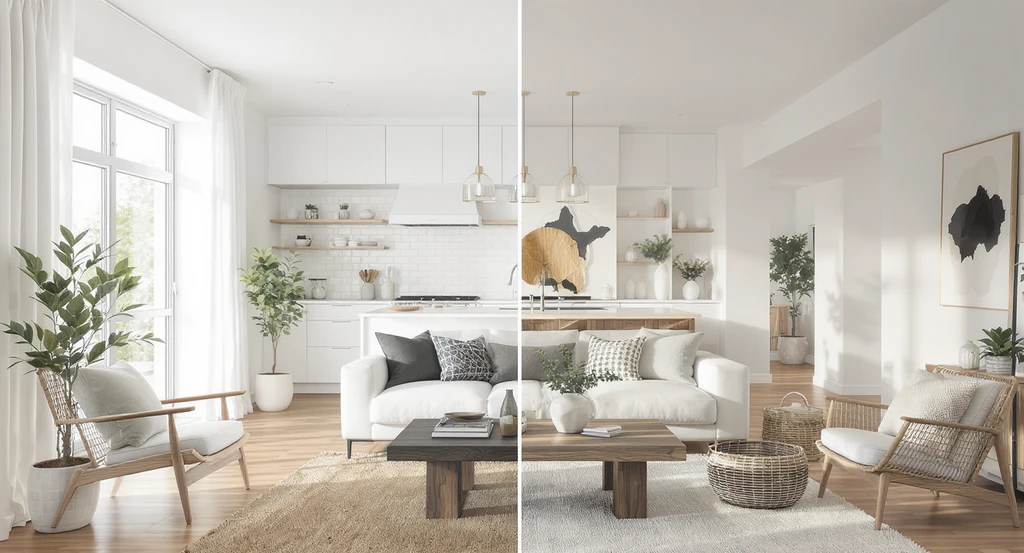
Renovation and redecorating are often confused, but the right choice depends on your goals, budget, and the current state of your home. Renovation changes a space’s structure or core features, while redecorating focuses on updating furnishings and finishes. Evaluating immediate needs, future plans, and visualizing changes can clarify which approach will bring the biggest value and satisfaction.
-
Renovating vs. Redecorating: The Direct Answer
Renovating involves modifying the structural or foundational elements of your home, such as walls, flooring, or built-in features, often requiring professional expertise and higher investment. Redecorating centers on surface-level updates paint, furniture, decor that change the look and feel without altering structure. To choose, assess your functional needs, budget, and timeline. Use visualization tools like REimagineHome AI to preview outcomes before committing.
-
What Actually Happens: Renovation vs Redecoration in Real Homes
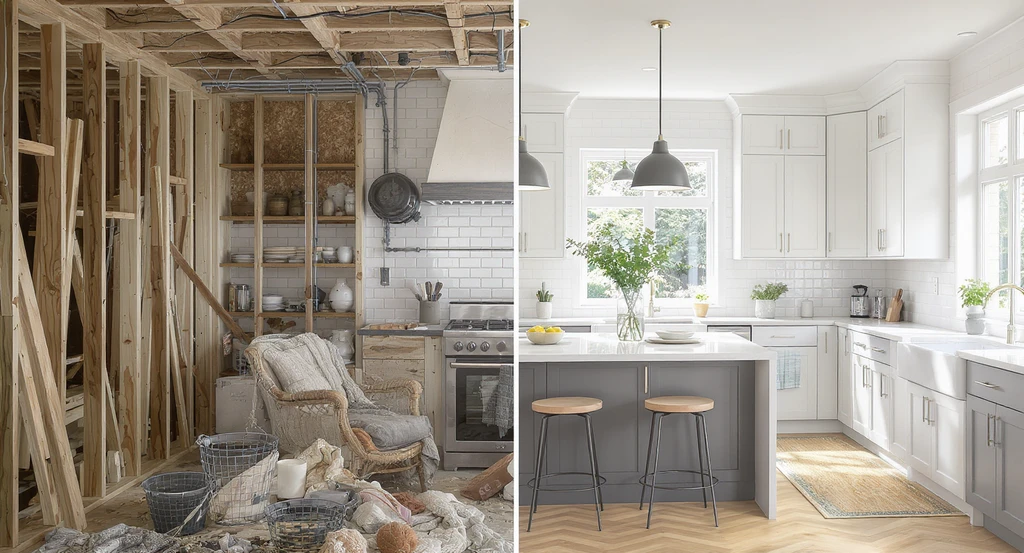
See the real difference in a kitchen renovation and redecoration—helping you decide between renovating and redecorating, avoid regret when remodeling your home, and ask the right questions before redecorating or making kitchen layout decisions.
Renovation fundamentally alters a space removing walls, relocating plumbing, or installing new floors. These actions extend beyond appearance, impacting daily function and resale. Redecorating, however, refreshes your home’s style through non-permanent changes. Homeowners sometimes overestimate the power of decor, expecting transformative results where a renovation might be necessary. Understanding the mechanics prevents investing in low-impact fixes when deeper changes are warranted.
-
Why Homeowners Misjudge This Choice

Why Homeowners Misjudge This Choice Image
Homeowners often misjudge the difference due to wishful thinking about quick results or fear of complexity. It’s common to believe that new paint and furnishings will solve flow or brightness problems rooted in layout or poor lighting. However, as explored in our guide on the resale value of DIY renovations, underestimating the effort or overreaching with DIY can lead to disappointment, delays, or budget overruns. Proper assessment is vital.
-
The REimagineHome AI Home Upgrade Decision Structure
The Home Upgrade Decision Structure from REimagineHome AI maps your needs along two axes: Functional Change (structural, layout, core systems) and Visual Refresh (cosmetic updates, decor). If your priorities require improved function, traffic flow, or code compliance, renovation is justified. If the house functions well but style feels tired, redecorating is sufficient. Visual simulation using AI brings these options to life, reducing uncertainty.
-
Trade-Offs: High Effort, High Reward vs Small Tweaks, Fast Turnaround
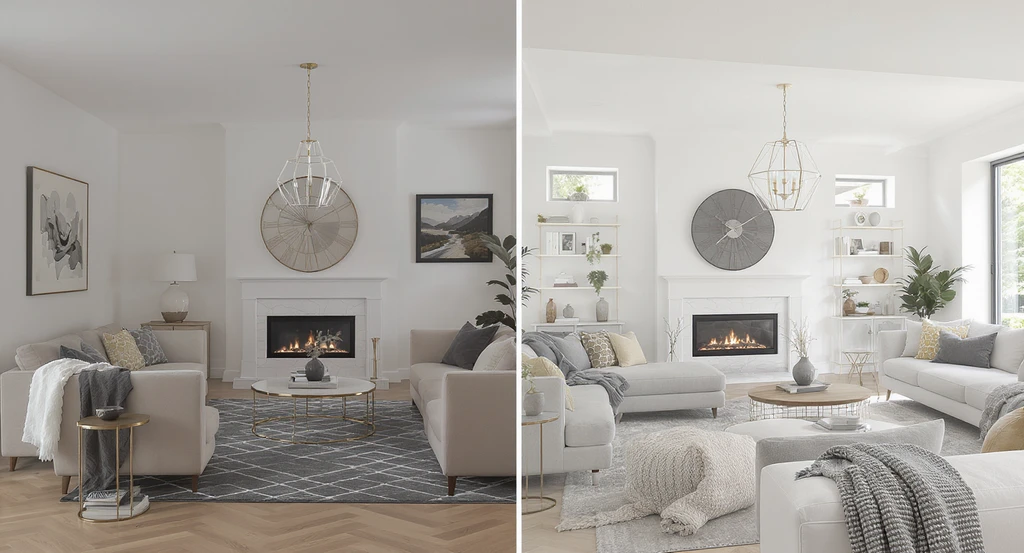
Trade-Offs: High Effort, High Reward vs Small Tweaks, Fast Turnaround Image
Renovations come with higher costs, time commitments, and stress but typically yield greater customization and can unlock market value, especially in spaces with outdated layouts. Redecorating is faster and less disruptive. However, the impact is capped when foundational issues exist. According to our recommendations in affordable renovation planning, pair small decor projects with strategic upgrades for a balanced, budget-smart approach.
-
Practical Steps: Deciding What Your Home Truly Needs
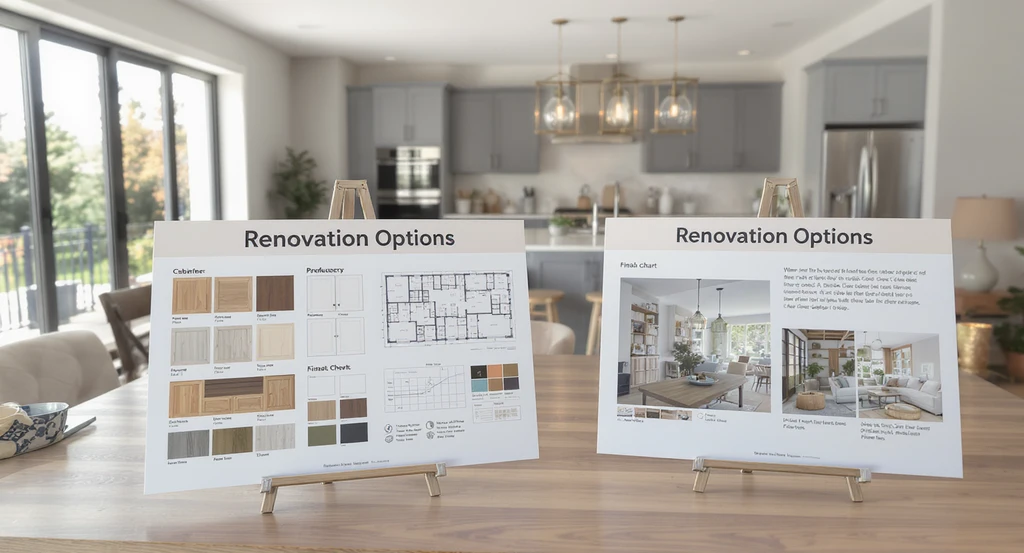
A side-by-side presentation of renovation materials and redecorating options illustrates how to decide between renovating and redecorating, focusing on kitchen layout decisions, questions to ask before redecorating, and tips for avoiding regret when remodeling your home.
1. Identify your primary frustrations—flow, light, storage, aging finishes, or simply dull decor.
2. Map changes against time, budget, resale horizon, and your household’s disruption tolerance.
3. For renovations, build a project timeline with buffers (see our timeline planning guide).
4. For redecorating, start with high-impact elements like paint, lighting, or textiles.
5. Visualize before you commit—side-by-side previews reduce regret. -
Visualization: Before and After Clarity
Undecided homeowners experience visual uncertainty—worrying if big investments will look and feel right. Visualization tools like REimagineHome AI allow you to preview a renovated kitchen layout or swap decor styles virtually. This process shifts decision-making from guesswork to evidence-based clarity, increasing confidence and lowering buyer’s remorse. Especially when considering whether to refinish or replace (explored in our hardwood floor decision guide), visualization can be a deciding factor.
-
Definition: The Difference Between Renovating and Redecorating
Renovating refers to making structural or functional changes to a property such as moving walls, updating core systems, or replacing major finishes for improved utility or significant visual impact. Redecorating describes non-structural, cosmetic updates like paint, decor, and furnishings. Many homeowners confuse redecorating with renovation, but true renovation is driven by underlying needs for improved function or compliance, not just surface-level aesthetics.
-
Resale Value and Buyer Psychology: Which Option Adds More?
Renovations, when aligned with market trends and executed professionally, add measurable resale value—particularly if they resolve flow or major maintenance issues. However, over-renovating or poorly executed DIY can work against you; as real estate agents advise, focus on updates that matter to buyers and photograph well. Redecorating makes a powerful first impression but usually doesn’t move the appraisal needle significantly. Choose renovations strategically for big return, and redecorate for immediate appeal.
Visualization Scenario
Imagine uploading a photo of your outdated kitchen to REimagineHome AI. You preview it first with new paint and lighting—then with an open layout, new cabinetry, and flooring. Seeing these side-by-side helps you immediately spot whether you just need fresh style or a full renovation, clarifying your path and preventing costly mistakes.
Frequently Asked Questions About Renovating vs Redecorating
Renovating includes removing walls, upgrading plumbing, or new flooring. Redecorating involves changing paint, curtains, or furniture.
Is redecorating worth it if I want to sell soon?
Yes, redecorating can refresh your home quickly and make it more appealing. However, for higher appraised value, targeted renovations may be necessary. Learn more about resale-focused updates here.
How do I avoid renovation regret?
Start with visualization tools so you know what changes will look like before committing. Include buffers in timelines, as detailed in this planning guide.
Does redecorating increase home value?
Redecorating improves buyer perception and may help your home sell faster, but usually doesn’t increase appraisal value significantly.
Can I combine both for best results?
Yes—many successful makeovers combine renovation for function and redecorating for final polish. For budget tips, read our advice on affordable upgrades.