Renovation Before & Afters: Seeing Beyond the Pictures to What Makes Them Work
TL;DR
Renovation before-and-after images do more than impress; they reveal which changes deliver the biggest shift in how a home feels and functions. The most impactful transformations combine light, proportion, material and layout—often with fewer style rules than people expect. By observing these elements, you can make clear decisions that suit your own space, even when your renovation is still in progress.
What Actually Changes in a Successful Renovation?
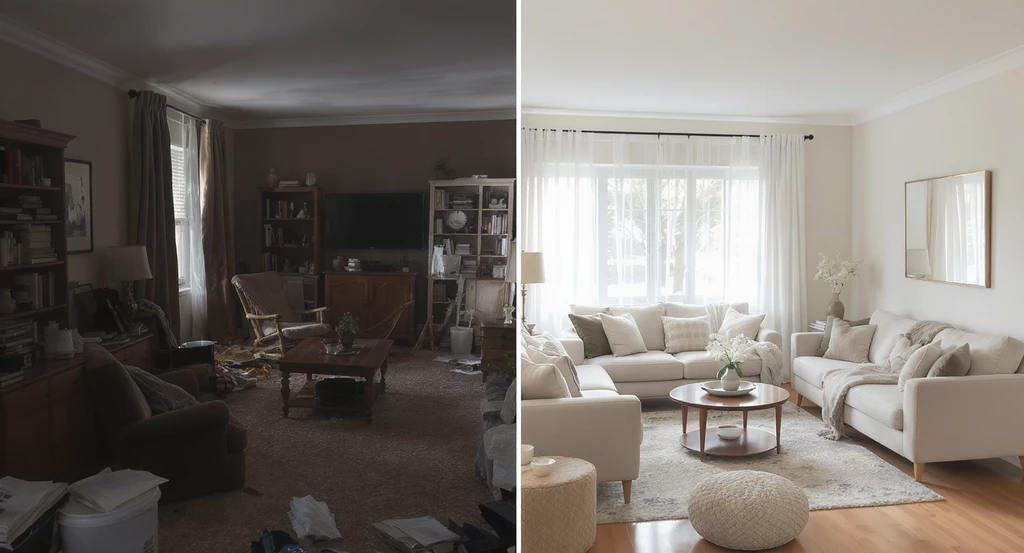
See how to visualize home renovation changes with a step by step before and after visualization, using the best tools for aphantasia interior design and digital furniture placement. This process helps anyone picture upgrades and use helpful apps for visualizing room makeovers effectively.
A great renovation before and after isn’t just about visual drama. It’s about understanding what was unsettled in the original space, what caused those feelings, and how the changes created balance, clarity or comfort. Before and after photos are most useful when you can articulate exactly what shifted: more light, better flow, new proportions, upgraded materials, or just a different spatial logic. The core decision for anyone planning a renovation is: “Which changes will actually make my home feel finished, not just updated?” Before-and-after galleries can inspire, but they are most valuable when you can extract specific lessons on why some alterations feel transformative and others leave spaces still feeling incomplete. Definition: A successful renovation creates a perceptual and functional shift—by altering layout, light, material, or flow—so the end result feels inevitable, not decorative.
-
The Decision: What Makes a Before and After Useful?
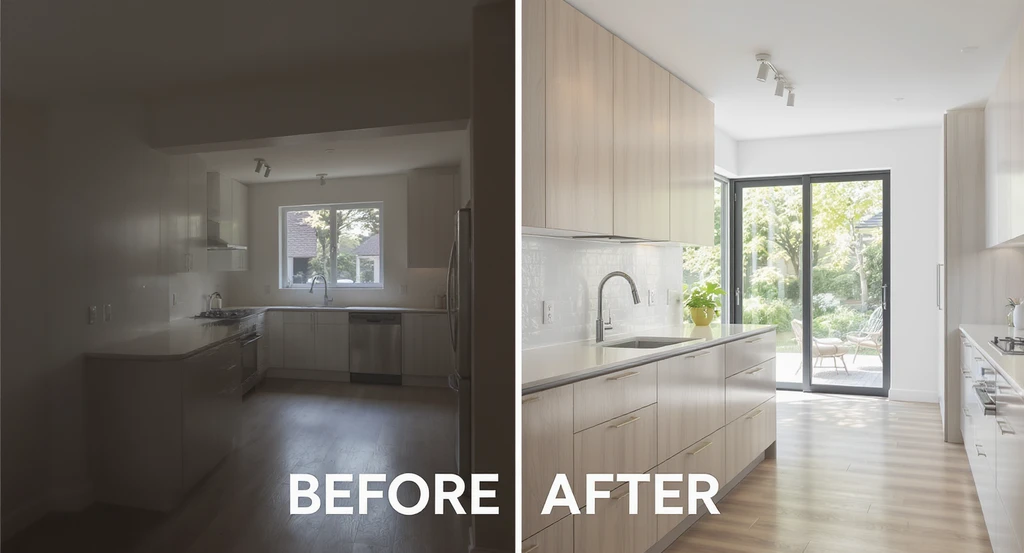
How to visualize home renovation changes and achieve step by step before and after visualization: This detailed comparison of a kitchen and entryway shows best tools for aphantasia interior design, illustrating digital furniture placement and the impact of new daylight sources for anyone considering a room makeover.
Before-and-after renovation images have real value only when they clarify which changes caused the improvement. The most effective visualizations reveal exactly which elements now feel more settled: proportion, sightlines, daylight, and materials. If you can specify, “The new sliding door doubled the natural light, the wall removal created an open kitchen sightline, and built-in storage now activates the entry,” then the images become tools for decision—not just decoration. A before-and-after is useful if it helps you confidently answer: • What wasn’t working with the old layout or finishes? • Which new elements fixed the lack of comfort, light or function? • Would these moves make sense in my own space—not just in theory, but in application? As explained in this guide on turning mockups into real renovation plans, meaningful visualization lets you preview both the results and the mechanisms behind the changes, providing clarity that goes beyond inspiration.
Expert Insight
When the Cape Town homeowners replaced a walled kitchen with an open layout and added a sliding door to the balcony, they didn’t just gain square footage—they gained a light-filled daily routine where mornings now start with a view. Their ‘after’ felt inevitable, not because of formal style, but because scale, light and material now worked in harmony.
-
Why Does a Space Feel Unfinished? (And How the Best Renovations Fix It)
A space feels incomplete when scale, light, or flow is disrupted. Common reasons include cramped layouts, harsh artificial lighting, too many unrelated materials, or obstructed sightlines. In the Cape Town renovation discussed here, the transformation succeeded because it used three concrete mechanisms: • Converting a brick wall to a sliding glass door, unlocking a panoramic view and bringing in balanced natural light • Unifying the flooring with engineered hardwood, so rooms feel visually connected • Reorganizing closets and adding built-ins to resolve clutter zones without closing the space Definition: Visual balance is achieved when elements—light, color, shape, and texture—are distributed to keep rooms from feeling lopsided or visually crowded. This balance often matters more than matching to a named style. As shown in many successful before-and-afters, personal selections that suit the architecture—and the climate—tend to have more lasting impact than strictly following style trends.
-
Style Without Stress: Personalized Design vs. Prescriptive Aesthetics
Many homeowners think every successful renovation needs to follow a clear style. But the Cape Town project highlights a subtle principle: the most ‘finished’ spaces often result from choosing each item for its fit with the architecture, climate and daily life, not to chase a label. Clients sometimes struggle to name their style. What matters more is clarity in proportion (how furniture fits), harmony in material selection (wood, stone, tile), and rhythm in how the eye moves through the space. This ‘style-neutral’ approach leads to rooms that feel both distinctive and emotionally safe. According to our affordable renovation tips, prioritizing material quality and lighting over surface trends delivers upgrades you’ll still love years from now.
-
Defining the Mechanism: Light, Material, and Proportion Are the Levers
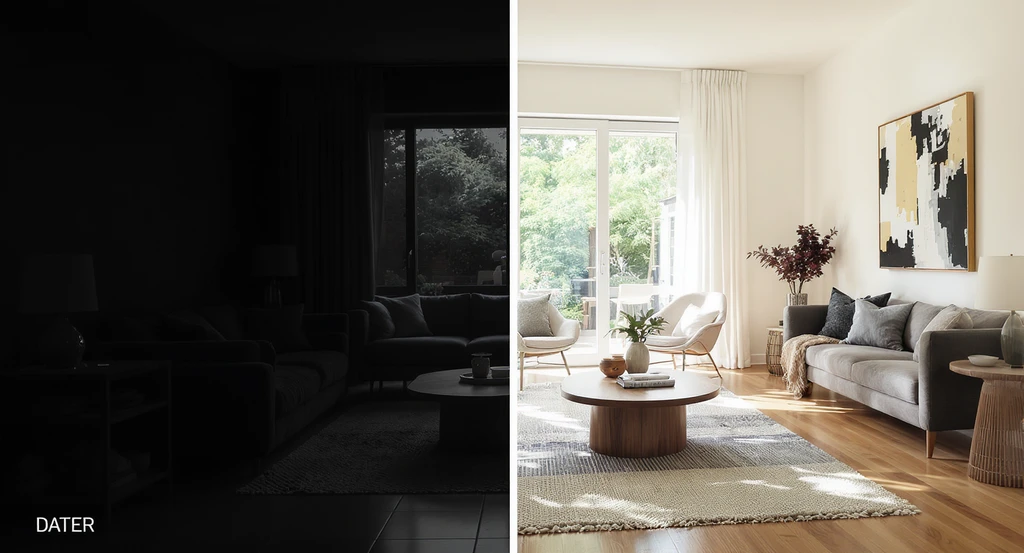
A photorealistic side-by-side living room transformation illustrating how changes in light, material, and proportion drive satisfying before and after results. See how to visualize home renovation changes and use the best tools for aphantasia interior design to picture furniture placement digitally.
Three main elements drive the emotional ‘after’ in any renovation: • Light — A new source of daylight (such as a glass door or extra window) expands the perceived space and erases the visual heaviness of dark corners. • Material — Changing from cold tile to warm hardwood, or from busy surfaces to continuous tone, impacts how a room feels beneath your feet and in your line of sight. • Proportion — Realigning storage or seating so rooms don’t feel pinched, underfurnished, or blocked promotes comfort and daily flow. A core insight: The reason some before-and-after images feel deeply satisfying isn’t just about color or trend. It’s because the underlying space now supports daily life and feels visually balanced—even if no formal style is followed.
-
Where Most People Get Stuck: Hesitation and Invisible Trade-Offs
Homeowners often hesitate in the final stages of renovation—when furniture hasn’t yet arrived, or finishing touches aren’t in place—because something still feels unsettled. This is rarely about decor choices and more about unresolved proportion or missing layering of light and storage. The impulse to keep tweaking comes from subtle tension in how the room holds together. Trade-offs occur when maximizing one gain (more openness, for example) reduces storage or privacy. Noticing these hidden trade-offs is as important as measuring square footage. Previewing your options can reveal if a wall removal, window addition, or layout shift is truly worth it for your climate, habits, and budget. Learn more about sequencing and stay-on-schedule tactics to reduce mid-project regret.
-
How Visualization Prevents Regret and Hones Your Eye
Visualization bridges the gap between abstract ideas and concrete decisions. When you use before-and-after mockups, you can: • Test how changes in light, color, and proportion affect lived experience before committing • Spot awkward transitions or balance problems that might otherwise go unnoticed • Communicate clearly with contractors about what matters most According to our exploration of visualization tools for renovation, seeing finished mockups in advance gives confidence, reduces change orders, and produces results that match the hoped-for experience. The goal is not just to picture decorative upgrades, but to identify and solve underlying spatial tensions.
-
When the After Still Feels Unfinished: What Next?
If a newly renovated home still gives you a sense that something isn’t complete, look at the practical and perceptual layers: • Is there enough layered lighting (overhead, task, accent) to avoid shadowy corners? • Can you move through without interruption or re-routing? • Are textures, colors, and materials coordinated rather than clashing or fighting for attention? • Have you built in enough accessible storage so surfaces can stay clear? Small additions—a plant, a textile with warmth and texture, a single artwork—often bring the eye to rest, easing the sense that the space is waiting for ‘something more.’ But substantial discomfort usually points to a deeper issue in flow or balance. Previewing your adjustments with visualization prevents hesitation and moves you from “not quite right” to “finally complete.”
FAQ: Before-and-After Renovation Insights
Look for changes in natural light, improved layout, unified materials, and visual balance. Ask what feels easier or more comfortable after the renovation.
Why do some spaces still feel unfinished after a renovation?
Common causes are unresolved proportions, lack of harmony in lighting or materials, or missing functional elements like storage or flow. Solutions are rarely just decorative.
How can I visualize possible changes before committing?
Use digital room mockup tools that allow you to test variations in material, color, lighting, and layout before any physical work is done. This approach is detailed in our visualization guide.
What should I prioritize for maximum impact in a renovation?
Focus on natural light, open sightlines, consistent flooring, and coordinated materials. These elements drive both comfort and perceived spaciousness.
Where do hidden trade-offs appear in major renovations?
Trade-offs appear when openness reduces storage, when dramatic material choices create maintenance issues, or when maximizing light impacts privacy. Previewing options helps clarify these risks in advance.
Key Takeaways: Seeing the Real Change Behind Before-and-After Transformations
Renovation before-and-afters are not just about showing progress, but about making visible what truly makes a difference. The most satisfying transformations use light, proportion, materials and architectural logic—not just style—to build homes that feel finished and adaptable to real life. By focusing on these mechanisms, supported by visualization, you can approach your own renovation with more clarity, less second-guessing, and fewer regrets. For a successful remodel, see every change through the lens of flow, balance, and how you want to live day to day.