Achieving Rustic Pottery Barn Style with Accessories on a $300 Budget: A Real Room Case Study
TL;DR
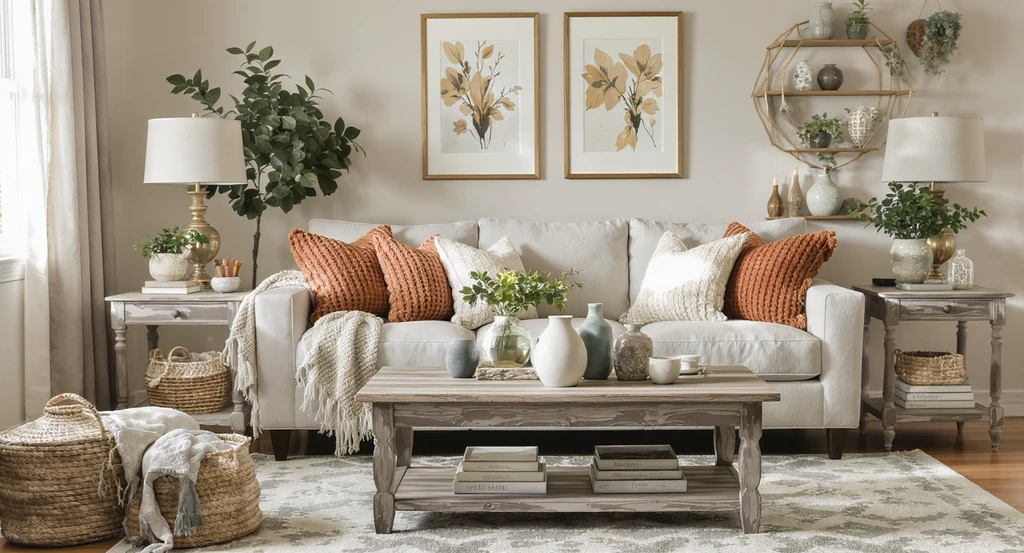
This living room transformation shows how small, intentional accessory updates—like a rustic rug, wall sconces, and simple console styling—delivered a Pottery Barn-inspired look on a tight budget. Swapping busy decor for fewer, well-chosen pieces created a more restful, cohesive space while using real, shoppable products ensured every change was practical and accessible.
Designing a Restful, Rustic Living Room Within Budget
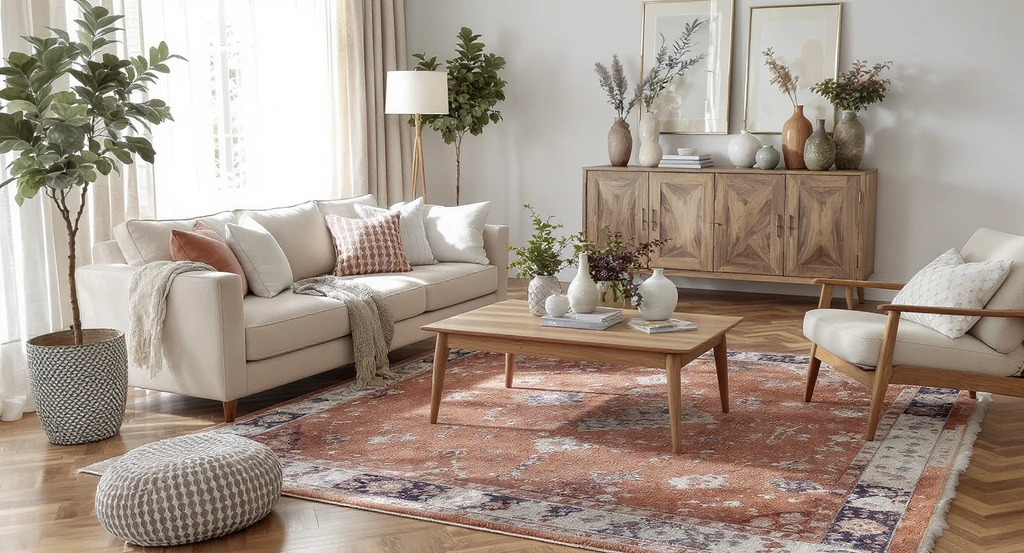
Editorial image of an ai-powered home decor shopping experience using real-time visualization of purchasable products. Example of how to use ai for room makeovers: budget-friendly styling, virtual staging tools, and trustworthy ai design recommendations online.
This editorial details the step-by-step accessory update of a suburban living room using a $300 budget and the Real Shoppable Products feature. The homeowner’s goal: shift from a somewhat traditional, busy mood to a more restful, rustic Pottery Barn-inspired feel—without changing the main furniture or layout. Each new element was visualized in the actual space and selected so that every dollar counted for warmth and character.
For readers asking how to use AI-powered real products to edit a living room with just accessories on a budget, the answer is clear: with targeted swaps, a vintage-look rug, black rustic sconces, and pared-back console styling, this project shows that you can achieve a high-impact transformation at minimal cost. Anchoring the spend on a substantial area rug and exercising restraint with tabletop decor were the keys to staying on budget and keeping the style cohesive. For example, skipping extra lamps next to an existing floor lamp cleared visual clutter and saved both money and electricity.
-
Existing Architecture and What Made This Room Distinct
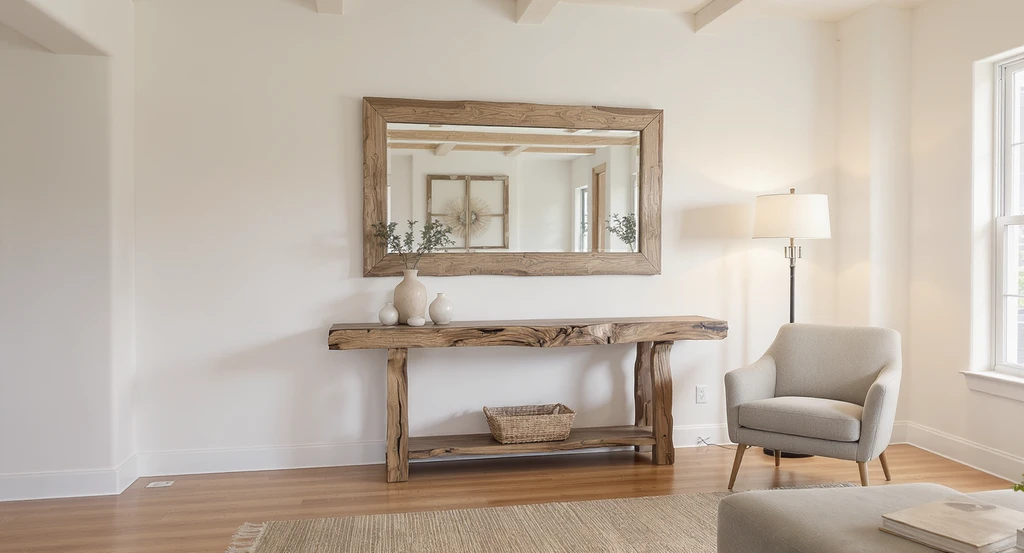
Discover how to use ai for room makeovers by visualizing a real, cohesive living room setup—showcasing ai-powered home decor shopping experience, trustworthy ai design recommendations online, and tips for ai virtual staging tools to refine architectural features with practical accessories.
The living room presented a bright, neutral canvas: medium-tone wood floors, creamy walls, and ample natural light. Key features—a substantial wall mirror over a simple console table, a stone-colored armchair, and a practical floor lamp—were left untouched for budget and layout reasons. The space was open and moderately sized, with a wide expanse of floor ready to be defined. However, earlier accessory attempts left the console overcrowded, and the lack of accent lighting on the mirror wall made the area feel unfinished at night. One especially room-specific observation: the live edge on the console and the mirror’s scale naturally supported a rustic direction, but previously gold or overly ornate accessories skewed more formal than intended. The real opportunity here was to bring warmth and intention without new furniture, relying entirely on layering practical, textural details. This approach directly responds to feedback noted in our analysis of cozy, cohesive spaces: the right area rug, simplified decor, and considered lighting are central to a pulled-together result.
-
Why Accessories and Visual Testing Drove Every Choice
Every decision sprang from visualising potential changes in the real room, leveraging the Real Shoppable Products feature for direct side-by-side comparisons. Options ranged from lush plants and varied throw blankets to more pared-back, neutral styling. Excessive tabletop accessories were carefully cut; earlier, busy arrangements had created an unintended traditional look and visual clutter. Instead, the design focused on honestly rustic materials—a distressed area rug, black metal wall sconces, and a few curated objects: a weathered clock, stacked books, and a subtle rustic accent.
Lighting was reimagined with wall sconces rather than another table lamp, since the floor lamp already provided essential task light. This edit removed redundancy and allowed accent lighting to frame the mirror, softening the whole wall as suggested in our guide to solving tricky living room areas. The design relied on iterative swaps—adding, removing, and streamlining—to dial down busyness. Notably, the process avoided introducing large plants or piles of decor and purposefully skipped trend-driven or ornate metalwork to keep to the homeowner’s rustic vision. -
Budget Allocation: Where to Anchor Spend and Where to Save
With a fixed $300 accessory budget and the aim to maximize impact, the most substantial investment was dedicated to an area rug. A vintage-inspired, textured rug underpinned the new aesthetic, grounding the arrangement and instantly conveying rustic warmth. These rugs tend to offer major transformational value per dollar, as explored in detail in our look at the 2025 living room rug trend. Sconces, meanwhile, were chosen for affordability: simple black rustic designs provided both visual interest and accent lighting without taking up table or floor space. Cost savings were gained by relying on existing lighting (the original floor lamp), shopping for only a few new decor objects, and editing down console styling with restraint. Books and a rustic clock were picked because they add character and height, but are often easy to find within budget—especially secondhand. All accessory selections were visualized with real product images for clarity before a final purchase, ensuring no budget went to an unnecessary or redundant item.
-
Furniture and Decor: The Real Products That Made the Space
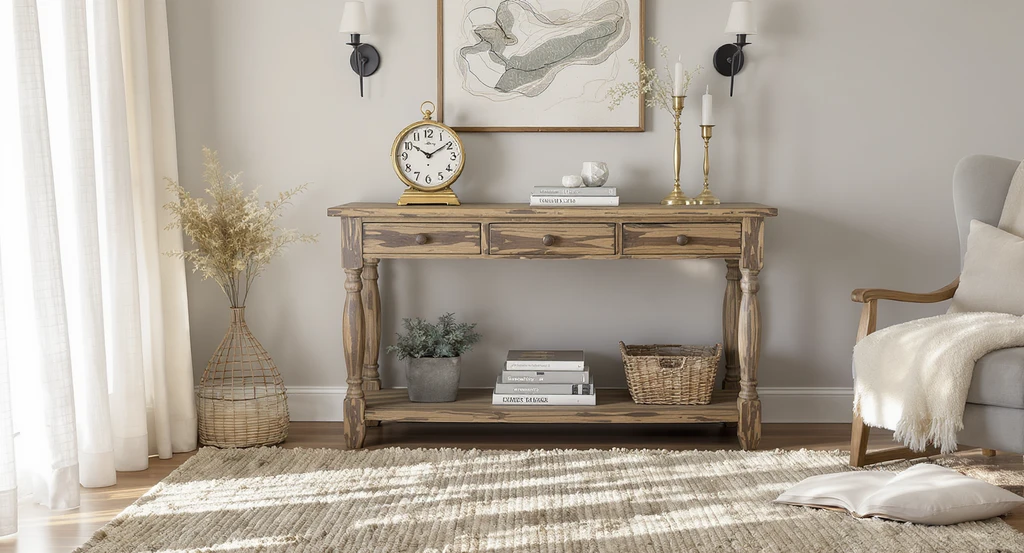
Real-time visualization using ai-powered home decor shopping tools shows how to use ai for room makeovers with purchasable rustic accessories and trustworthy design recommendations online.
To achieve the Pottery Barn-inspired, rustic feel, product selection prioritized texture, character, and authenticity. The anchor element was a Pottery Barn style, rustic-textured area rug (approximately $300), providing cozy anchoring underfoot and instantly transforming the room’s tone (shop similar here). New wall sconces (black metal, rustic, candle-style) were sourced as a budget-friendly buy (see comparable sconces). The console was lightly styled with a distressed clock, stacked neutral books, and a single brass accent—all visible and swappable in the design phase using product images. No other new furniture was purchased; original seating and major pieces were retained for both budget and sustainability reasons. This strategy is in line with ReimagineHome’s transparent approach: products were surfaced solely based on fit and user preference, with no upcharges or brand favoritism. For those wanting to test different product fits, REimagineHome AI offers fast visualization of real, purchasable product swaps. The final look proved that with careful selection and restraint, accessory updates alone can transform a living room’s style and mood.
-
Applying This Approach: Key Lessons and Pro Tips
A major takeaway is the value of restraint—editing accessories for impact, not simply volume. When using AI-powered home decor shopping, iterating visually with real product options was essential for achieving the right look before any spend. Choosing the area rug as the anchor investment made downstream decisions simpler; once its pattern, tone, and size were locked in, the rest of the accessory palette naturally fell into place. Sconces and tabletop objects worked best when scale and finish repeated the room’s existing cues (black iron, timeworn wood, or stone hues), creating cohesion without monotony. This case demonstrated that even with a limited budget, using real-time visualization and shoppable products helps sidestep accessory overload and build a layered yet ordered look. For first-time decorators or those editing a nearly-complete space, referencing visual guides such as our Add Anything feature overview can help focus on the right details. Above all, patience in the editing process—removing and rearranging instead of endlessly adding—made the difference between a room that felt busy and one that felt complete.
Frequently Asked Questions
Use AI tools that offer real shoppable product visualization—these let you preview everything from rugs to lighting using product images, then purchase directly when you’re ready.
What are the most impactful accessories to prioritize on a small budget?
Anchor the design with a high-value area rug, add warm lighting (such as sconces), and edit tabletops down to just a couple of statement objects for both style and function.
How do I keep a small living room from feeling cluttered when decorating?
Be selective: reduce tabletop items, pick one strong color or material to repeat, and ensure every accessory has a role. Visualize updates before buying and trust restrained styling.
Where should I shop for affordable, rustic-finish accessories like rugs and sconces?
Look to mainstream retailers for style inspiration, then use shoppable visualization tools to see similar, in-budget pieces in your space before searching direct links.
Can I confidently buy home decor online without seeing it in person first?
Previewing accessory options in your actual room photo via AI tools can provide reassurance that size, scale, and mood are right before you commit to online purchase.
Conclusion: Rustic Cohesion, Real Products, Real Results
This living room update illustrates that high-impact changes don’t require a full redo or a large budget. Strategic accessory swaps using real, shoppable products—especially a grounding rug, pared-back console styling, and distinctive wall sconces—bring warmth and character to a room. Testing items visually saved time and eliminated guesswork. By leveraging features like Real Shoppable Products and refining through patient editing, this project achieved a restful, rustic Pottery Barn-inspired look that feels both authentic and personal.