AI for Interior Design in 2026: The Decision-Led Guide from Prompt to Purchase
TL;DR
AI interior design in 2026 has made mood boards obsolete by linking visual inspiration to real product purchases with spatial realism. This guide breaks down each key phase-Digitize, Prompt, Visualize & Iterate, Buy while revealing the critical decision structures and hidden pitfalls that separate transformative results from expensive errors.
The End of Guesswork: How AI Changed Home Renovation Forever

Explore the ai-powered home renovation workflow guide: see how to digitize your space for ai design, use ai shopping tools for real furniture purchases, and apply prompt engineering tips to avoid common ai interior design mistakes in 2026.
In 2026, AI for interior design is no longer just about generating stylish images-it’s about delivering step-by-step confidence from your first idea to your final purchase. The guesswork and regret cycles of the past have given way to an integrated workflow where you visualize, tweak, and actually buy what you see, eliminating the disconnect between inspiration and reality.
For homeowners and renovators, this means less budget fear, far fewer surprises, and the ability to preview changes in your real space before committing. This shift from mood boards to measurable, product-linked, spatially accurate visualizations means that renovation decisions are clearer, faster, and better aligned with household needs (as covered in our workflow guide for AI-powered renovation planning).
-
The Death of the Mood Board: From Inspiration to Execution

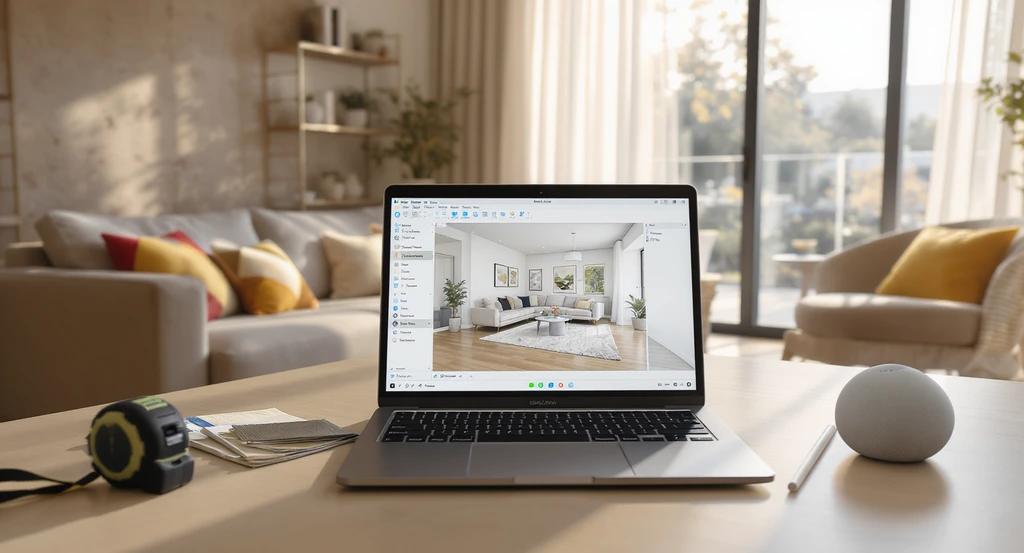
Modern living room scene comparing a classic mood board with ai-powered home renovation workflow tools, showing how to digitize your space for ai design and streamline prompt to purchase with ai shopping tools for real furniture purchases.
Mood boards traditionally helped homeowners imagine their ideal space but rarely addressed fit, availability, or cost. In practical terms, they fostered a dangerous gap between visual excitement and feasible action. Today’s commerce-driven AI closes this gap by suggesting products that exist, fit physically, and match your budget, shifting the process from mere visualization to real solution-building. This enables every finish, fixture, and furnishing to flow from prompt to purchase, not just concept to daydream (see our breakdown of new mood board alternatives).
Expert Insight
After struggling for weeks to choose a new sofa, one homeowner uploaded a photo to an AI design platform; within minutes, she previewed six options in her own living room. She realized her initial favorite was too large, while a more budget-friendly piece actually fit better—saving hundreds in potential return shipping and time lost to trial-and-error shopping.
-
Phase 1: Digitizing Your Space Grounding Decisions in Reality
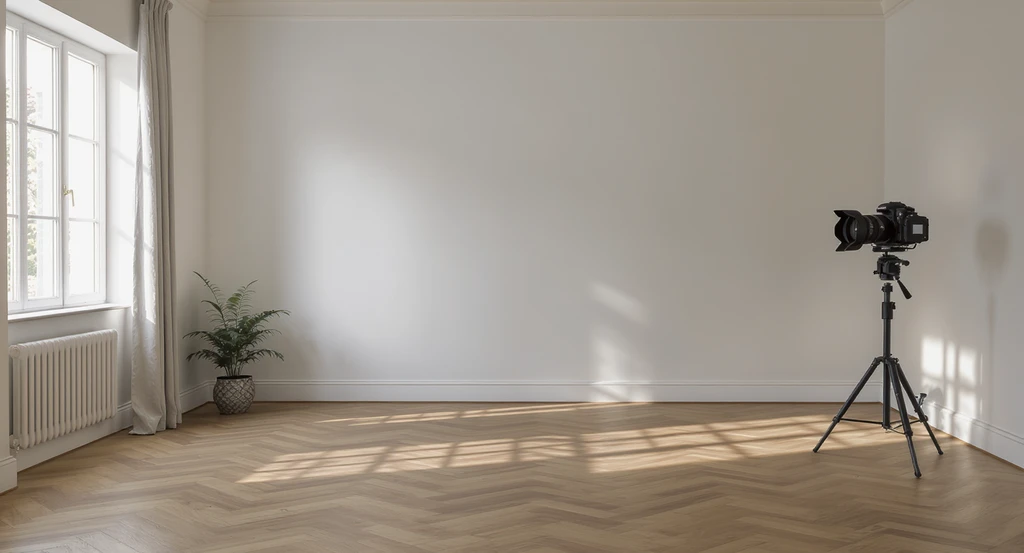
Digitizing your space through accurate, high-quality photography is essential in an ai-powered home renovation workflow guide. Learn how to digitize your space for ai design and avoid common ai interior design mistakes using prompt engineering tips and real-world visualization tools.
Every successful AI-powered renovation depends on accurate input. This starts with digitizing your room: take photos from chest level, capture corners, and audit how natural light affects surfaces. High-quality images let the AI accurately parse proportions, traffic flow, and window orientation-crucial for generating usable, actionable design overlays. Using a 'White Box' method (digitally clearing the room) resets the design canvas, preventing digital clutter from misleading spatial logic.
Most homeowners underestimate how much baseline data shapes the viability of their plans—a shortfall that visualization can now fix (learn more about reducing mistakes with AI preview tools).
-
Phase 2: Mastering the Prompt: Context, Constraint, Mood, and Function
AI design success begins with prompt specificity. Vague requests like 'modern living room' trigger safe, impersonal outputs, while prompts combining context (property type), constraints (existing layouts), mood/style, and functional needs yield tailored, livable designs. Empathy in prompts lets the AI align spatial suggestions with human needs, translating abstract feelings into concrete recommendations in layout, lighting, and surfaces.
Modern platforms, as referenced in our article about photorealistic redesigns (explore collaborative AI-driven design here), can convert these layered inputs into actionable options, further narrowing the gap between desire and outcome.
-
Phase 3: See & Tweak-Iterative Visualization and Object-Level Editing

This ai-powered home renovation workflow guide visualizes how to digitize your space for ai design with object-level in-place editing, helping avoid common ai interior design mistakes during prompt engineering and real furniture selection.
Seeing your first AI output feels transformative, but true decision confidence comes from granular iteration. In-painting and selective editing now let you replace single objects (like a rug or lamp) rather than regenerating complete rooms, so the process is object-specific, not slot-machine random. The REimagineHome AI Spatial Preview Structure formalizes this: initial global visualization, followed by targeted in-place refinements, then product-linking for procurement.
This structure accelerates decision cycles especially in multiroom or multi-user homes—by making every change visible and reversible before a cent is spent (read how visual previews prevent renovation errors).
-
Phase 4: From Pixels to Products: Seamlessly Moving to Purchase
Visualization is now commerce-connected. Today’s leading tools anchor every visual decision to real, available products so you can click, compare prices, adjust dimensions, and add to cart directly from the visual environment. This bridges the critical gap between seeing and buying, overcoming the historic problem of visualizing what cannot be sourced or afforded.
For buyers, this means drastic reduction in decision regret, shortcutting repeated store visits and returning mismatched purchases. The ability to swap a luxury item for a visual twin within budget is transformational. This commerce-first, SKU-driven approach is at the heart of the new AI home design experience (see our guide to the AI-powered purchase flow).
-
The REimagineHome AI Spatial Preview Structure
This decision structure guides users through: (1) room digitization for accuracy, (2) layered, empathy-driven prompt creation, (3) iterative object-specific edits within a unified canvas, and (4) commerce-linked final selection. Visualization works best when it’s grounded, incremental, and closely tied to real-world product options. Over time, this approach reduces revision cycles and fatigue, increases trust in selected options, and speeds up purchase decisions.
-
Trade-Offs and Common Pitfalls: What Visualization Can't Solve Alone
AI design reduces risk, but some errors are outside its scope. Structural blind spots (AI removing a load-bearing wall), over-specification (cramming too much detail into a prompt), or reliance on digital textures without real-world material checks can all sabotage results. Always verify physical feasibility and sample materials in-person before making expensive purchases.
-
Economic Impact: Does AI Interior Design Save Money?
Compared to traditional design fees-often $2000 per room, with limited revisions—AI-assisted workflows cost under $30/month and allow unlimited iterations. The major savings come from error prevention: testing layouts and finishes virtually prevents costly returns, change orders, and rework. Even a single averted mismatch recoups months of subscription fees (see more about AI’s impact on renovation budgets).
-
Definition: Visualization-Driven Renovation
Visualization-driven renovation is the process of making home improvement decisions based on high-fidelity previews of proposed changes, matched to site dimensions and product availability. It affects confidence, cost, and design satisfaction. Many assume style is the main benefit, but the true value is risk mitigation: previewing and iterating designs in context to prevent surprises once work begins.
-
How Visualization Reduces Anxiety, Regret, and Delays
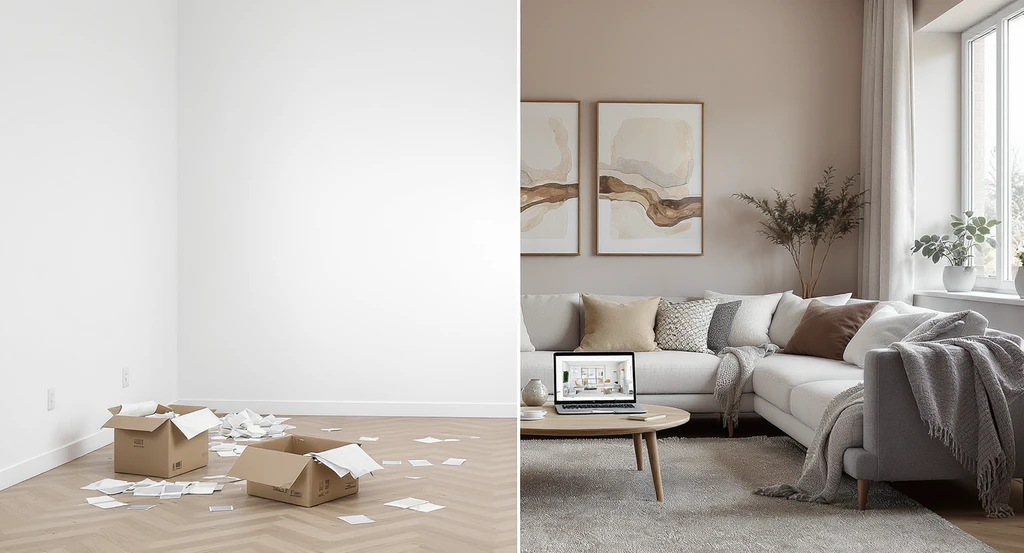
AI-powered home renovation workflow guide: A split-view of a modern living room shows how digitizing your space with AI design visualization tools reduces anxiety and purchasing regret, helping avoid common interior design mistakes.
Before visualization, homeowners face anxiety about color mismatch, scale issues, and purchase regret—factors that historically led to either overcautious choices or expensive mistakes. After seeing a realistic preview, decision cycles become faster and more collaborative, regret risk plummets, and final outcomes align consistently with the original vision (explore how realization improves confidence).
Visualization Scenario
Imagine facing a renovation decision: should you choose warm, golden oak floors or trendy matte concrete? Before you decide, you upload a photo to REimagineHome AI and preview both options side-by-side in your exact lighting and layout. This lets you instantly see how each material impacts space and mood, reducing uncertainty and increasing purchase confidence.
Frequently Asked Questions
- Is AI really accurate enough for major renovation decisions?
- AI visualization tools are now highly accurate for spatial layout, style alignment, and product sourcing. For structural changes, always confirm feasibility with a licensed professional before beginning demolition or construction.
- Can I use AI interior design tools without any design experience?
- Yes. Modern AI platforms guide users from room scanning to final selection, using natural language prompts and intuitive editing—ideal for homeowners with no formal design background.
- Will AI tools help me stay on budget during renovations?
- AI design platforms can instantly surface visually similar but more affordable alternatives, preventing overspending. They also reduce costly mistakes by letting you preview true-to-scale designs before purchase or installation.
- How do AI tools prevent regret over color and furniture choices?
- By visualizing how each element looks in your real space and lighting, AI tools reduce uncertainty and allow for changes before you buy—minimizing regret and preventing costly corrections after the fact.
Conclusion: Visual Decision-Making—Your Home, Your Rhythm
AI-powered interior design now empowers homeowners and renovators to see the precise impact of every choice, bridge the gap from idea to product, and sidestep the most common and costly pitfalls. With structured, visualization-led workflows, you can act with greater clarity, speed, and satisfaction. Access to this technology marks the true democratization of home renovation—every space can be tailored thoughtfully, affordably, and with confidence.