9 Smart Ways to Layout a Small Apartment for Dining and Work
TL;DR
Achieving a balanced layout in a compact apartment means thoughtful separation of dining, living, and WFH spaces without clutter. Use furniture placement, storage design, and clever upgrades to transform limited square footage into a flexible, inviting home. This list offers concrete strategies to maximize comfort, utility, and style in multipurpose rooms.
Efficient Apartment Layouts for Modern Life
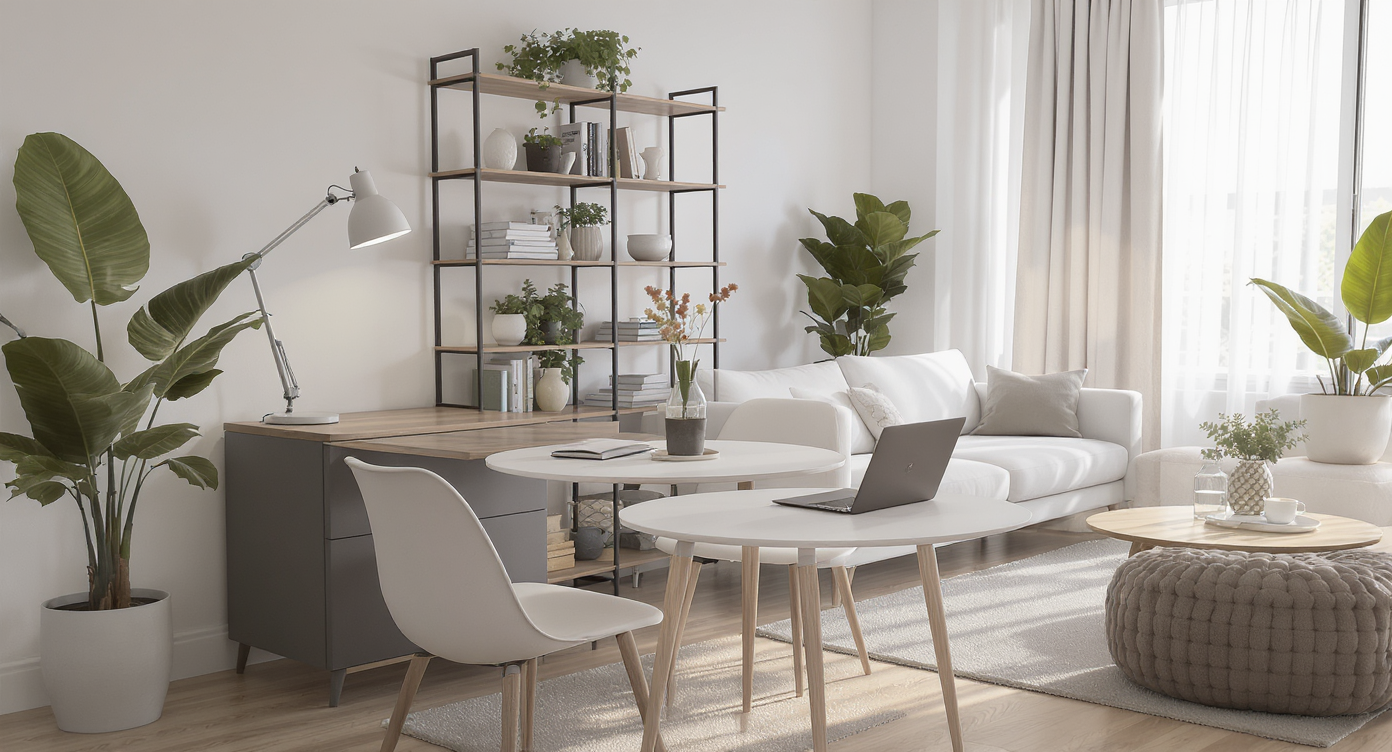
A small apartment shows a shared living space blending a cozy dining nook and a functional work-from-home area with modern, minimalist style.
Small apartments often require a single open space to handle everything from dining and working to relaxing and entertaining. The challenge lies in blending each use gracefully, avoiding clutter, and still letting your style shine. For urban dwellers, students, and young professionals, designing a layout that combines a compact dining area and a functional WFH zone within a shared living space can be the difference between daily frustration and effortless flow. Room proportions, light sources, and existing fixtures like fire safety boxes or rental flooring demands creativity, not compromise. Whether you crave a minimalistic look or want to layer in bold features, these nine strategies help maximize every inch for comfort and purpose. Each tip draws on tested design principles with examples from designers and urban renters alike.
-
1. Define Zones with Rug Placement and Lighting
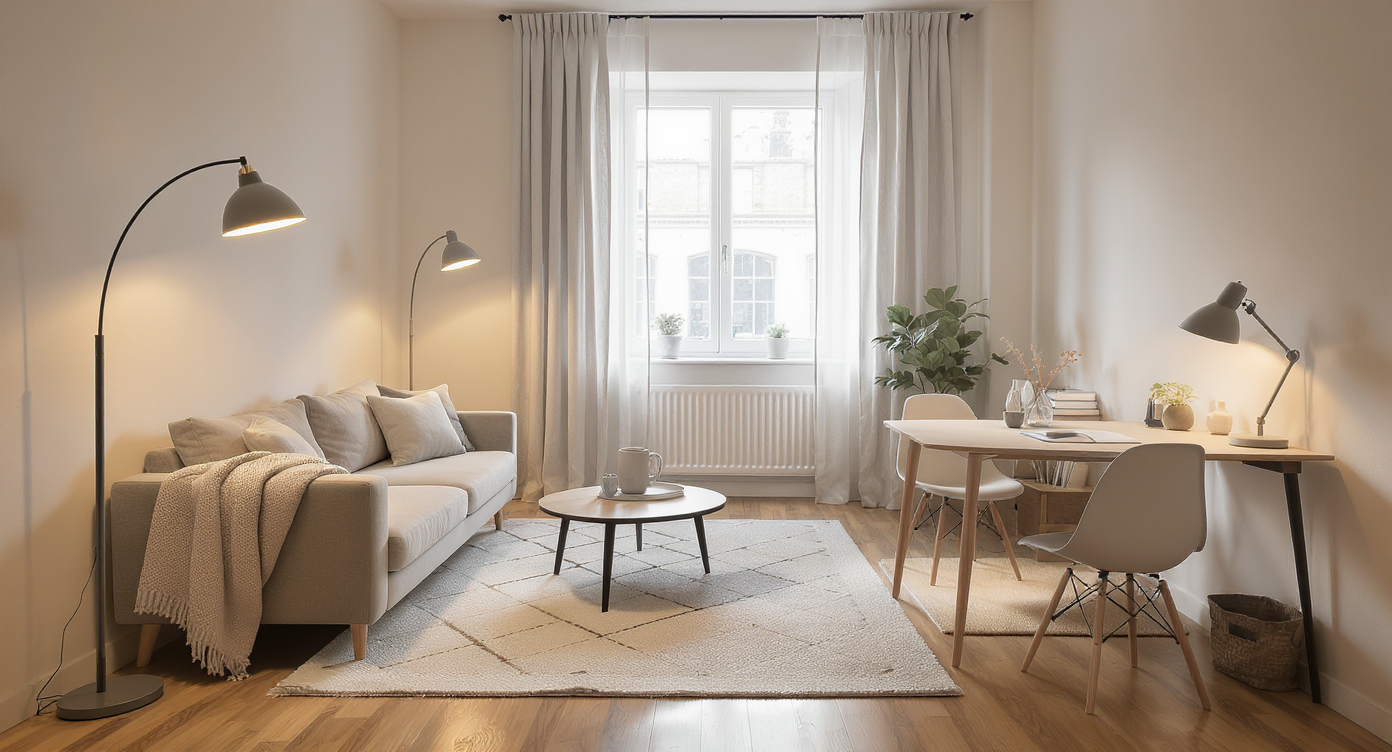
Distinct lounge, dining, and work zones in a small apartment, clearly defined by varied rug placements and targeted lighting solutions.
Organizing open-plan spaces successfully depends on clear visual cues. Interior designers often use area rugs to carve out distinct living, dining, and work zones, even in the absence of walls. For instance, a plush geometric rug beneath the sofa anchors a lounge area, while a small flatweave under a dining table marks an eating space. Adjustable lighting such as standing lamps or plug-in spotlights can further highlight these separate functions, offering a flexible, renter-friendly upgrade in rooms lacking overhead fixtures. According to our guide on creating warm minimalism, layering in varied textures through rugs and textiles helps maintain interest without crowding visual space.
-
2. Maximize Wall Space with Vertical Storage Design
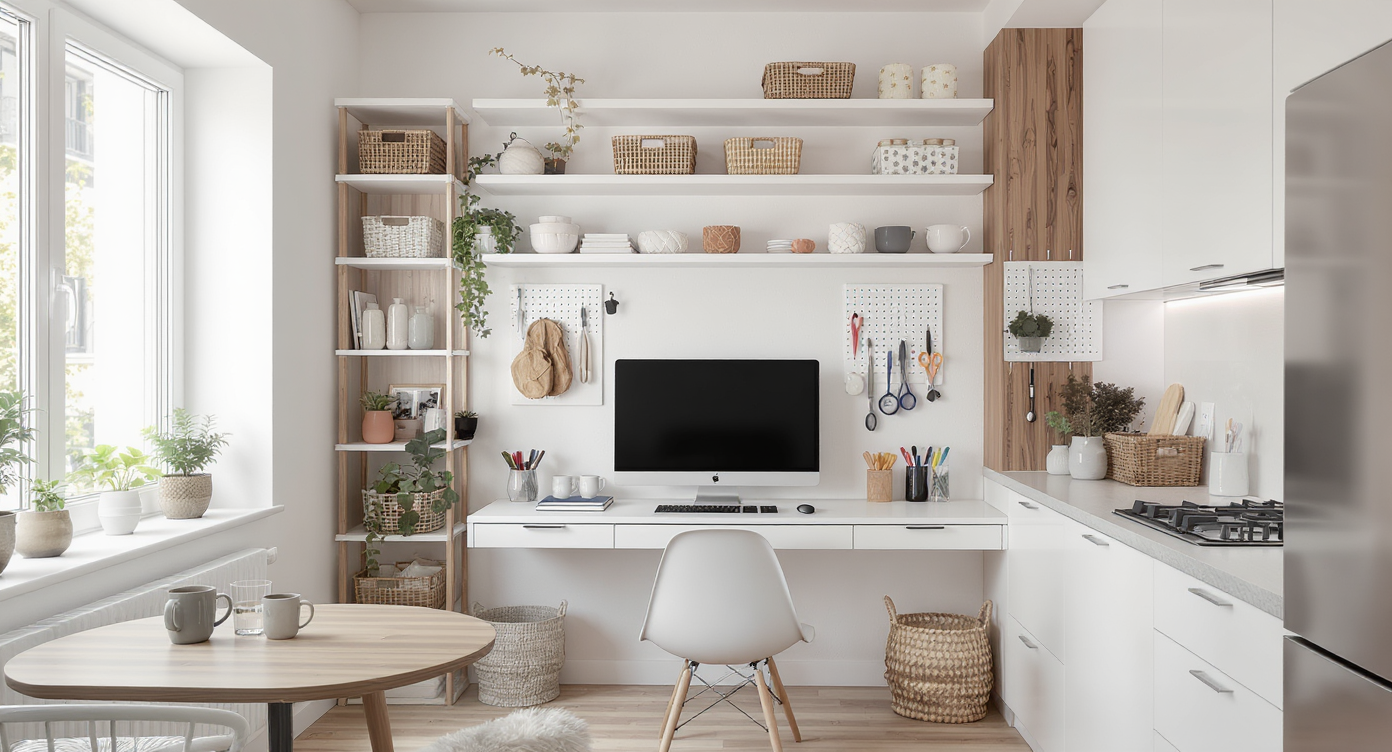
Vertical storage systems with shelves, pegboards, and baskets turn unused wall space into functional, stylish small apartment solutions.
Wall real estate is a precious commodity in small apartments. Shelving systems, wall-mounted cabinets, and peg boards turn unused heights into functional surfaces for books, dishes, or office supplies. Floating shelves above the desk or lateral bookshelves beside the dining zone keep essentials at arm’s reach while leaving floors open and airy. Vertical storage also makes it easier to integrate filing and craft supplies discreetly, vital for anyone juggling WFH spaces and hobbies. Tucking baskets or matching boxes high on kitchen cabinets is another designer-favored trick for storage that blends seamlessly with the space.
-
3. Choose the Right Furniture Proportions for Compact Layouts
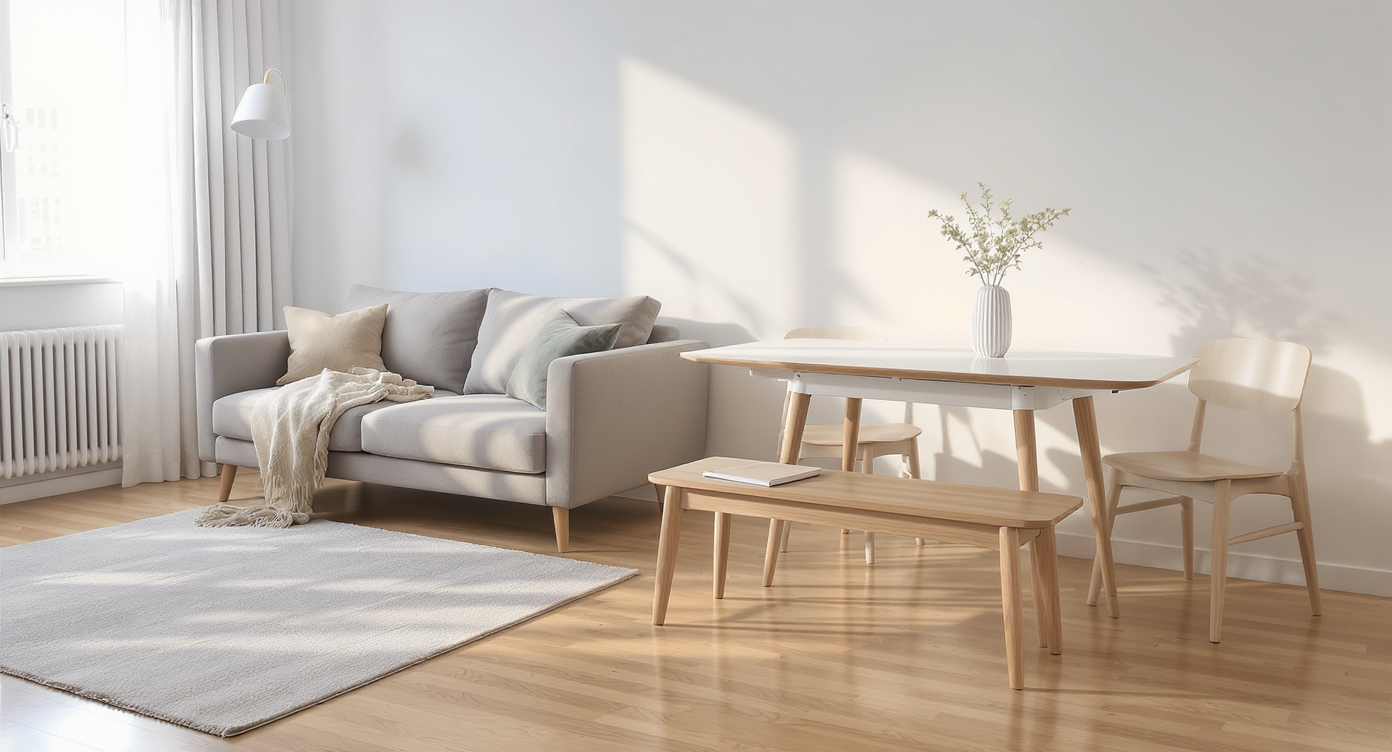
A slim sofa and extendable dining table with benches and stackable chairs stowed neatly, illustrating optimal proportions for compact layouts.
Furniture size dictates both flow and function in multipurpose spaces. Selecting a slimline sofa or apartment-friendly loveseat preserves valuable floor area. Similarly, choose a dining table with a narrow top yet extendable ends to accommodate extra guests without dominating the room. Benches or stackable chairs can be tucked beneath tables when not in use, maximizing movement for entertaining or deep-focus work. For more on furniture dimensions that improve room flow, consult our in-depth sofa and table arrangement guide.
-
4. Design a Flexible Work-From-Home Space
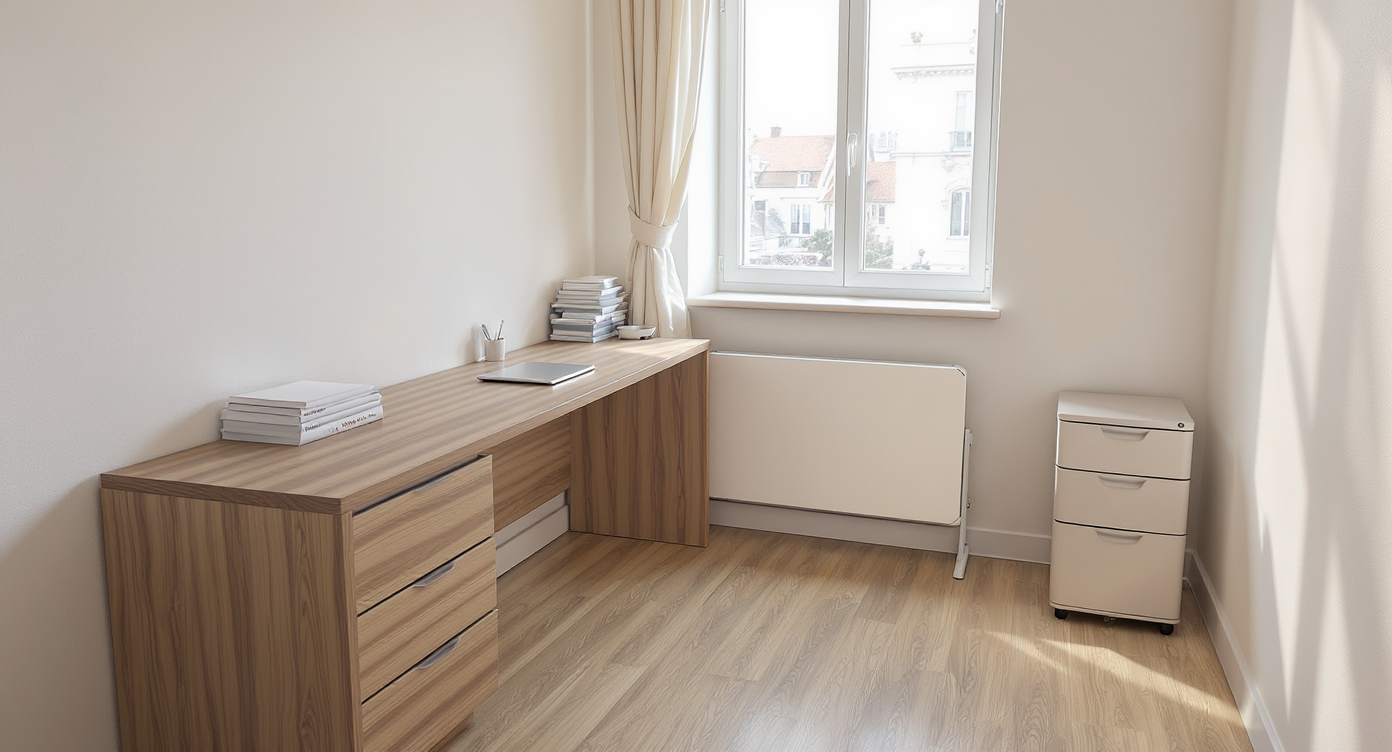
A dedicated work-from-home area with a long desk, modular elements, and mobile storage shows how small apartments can support flexible productivity.
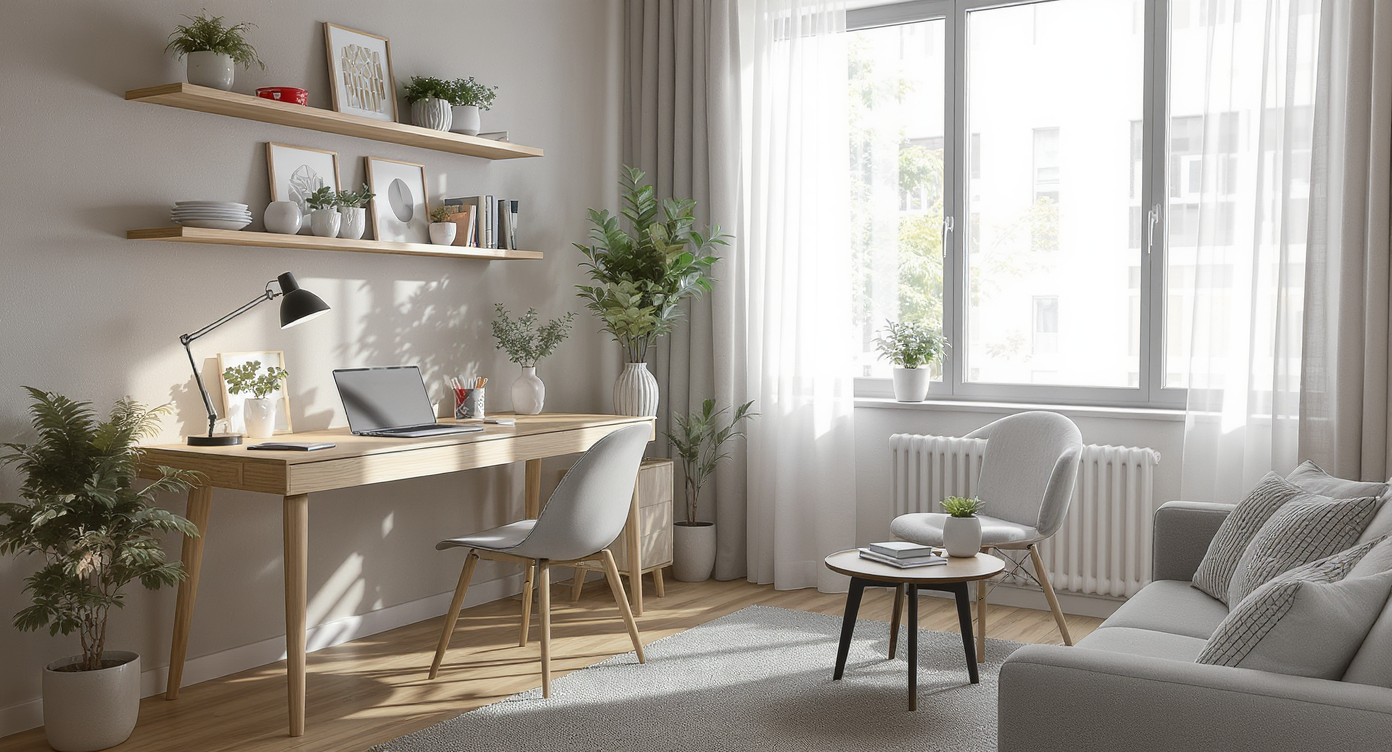
Creating a dedicated WFH space inside a shared room requires adaptability and clear boundaries. A long, narrow desk placed under a window can double as both office and project space, its drawers hiding files and electronics at day’s end. Modular desk systems or wall-mounted drop-leaf units provide workspace when you need it and vanish when you do not. Consider adding a rolling pedestal or slim mobile filing cabinet for law documents, especially for remote gig workers. For small apartment work setups that feel intentional, not improvised, see how multifunctional nooks can be assembled in our small-space home office inspiration.
-
5. Use Color and Finish to Unify Mixed Flooring
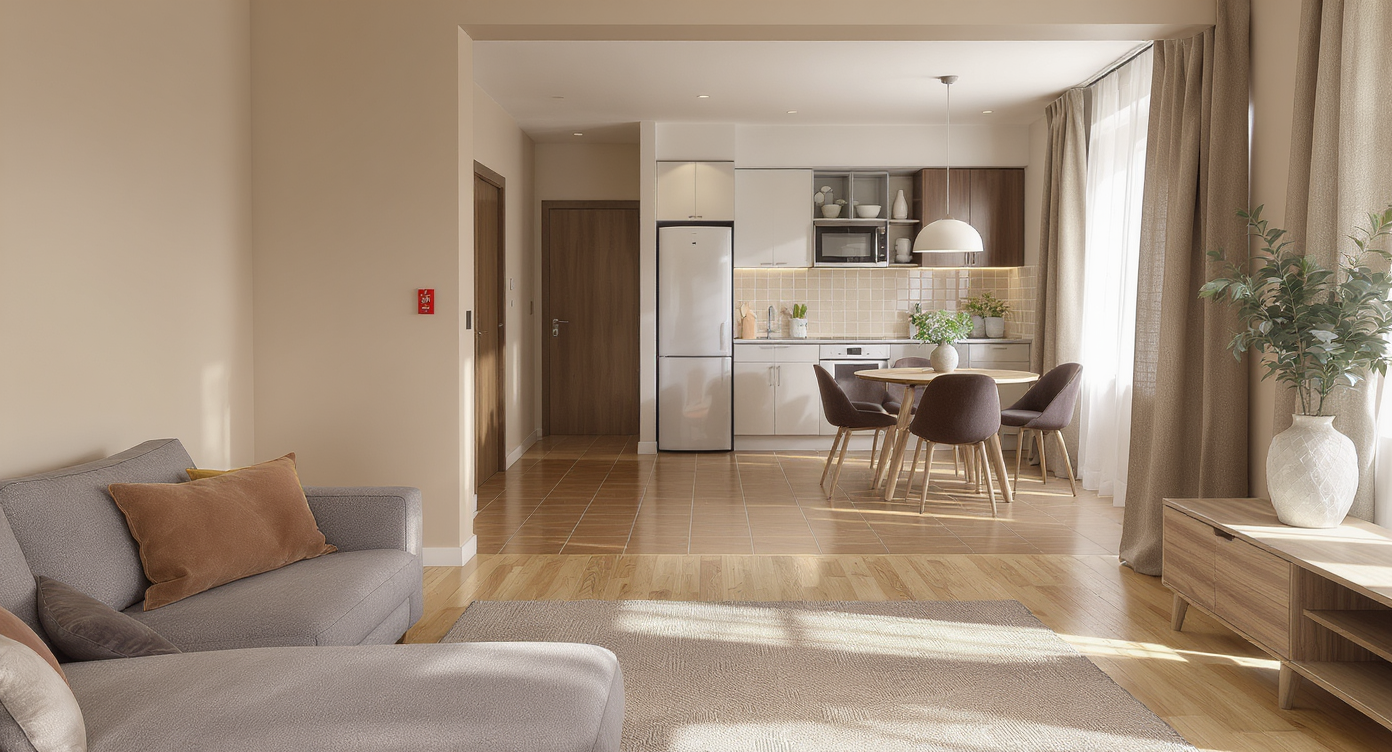
Colorful textiles, a metallic table finish, and earth-toned curtains tie together mismatched wood and tile flooring in a small apartment.
In rentals with mismatched flooring (such as wood paired with brown tile), designers recommend using paint, textiles, or area rugs to visually connect the areas. Painting furniture in tones that echo fixed features—such as a metallic table finish referencing a visible fire safety box—can make the design feel cohesive. Similarly, choosing sweeping curtain panels or hanging fabric dividers in complementary hues helps soften transitions between kitchen, living, and dining without sacrificing light. These subtle yet deliberate color connections tie together otherwise disparate materials for a seamless look.
-
6. Modular and Moveable Dining Layouts Optimize Entertaining
Not all dining layouts need to be static. In a compact apartment, try a metal dining table with stackable or folding chairs that can be rearranged for meals or pushed aside for gatherings. A bench along the wall can seat more guests with less footprint than four standalone chairs. Cushioned covers or reupholstered seats personalize the area and boost comfort, a tip echoed by many designers on a budget. Adaptable seating makes it easy to convert part of the living space into a dining zone only when needed, ensuring the room never feels overcrowded during downtime.
-
7. Ambient Lighting Upgrades for Rental Spaces
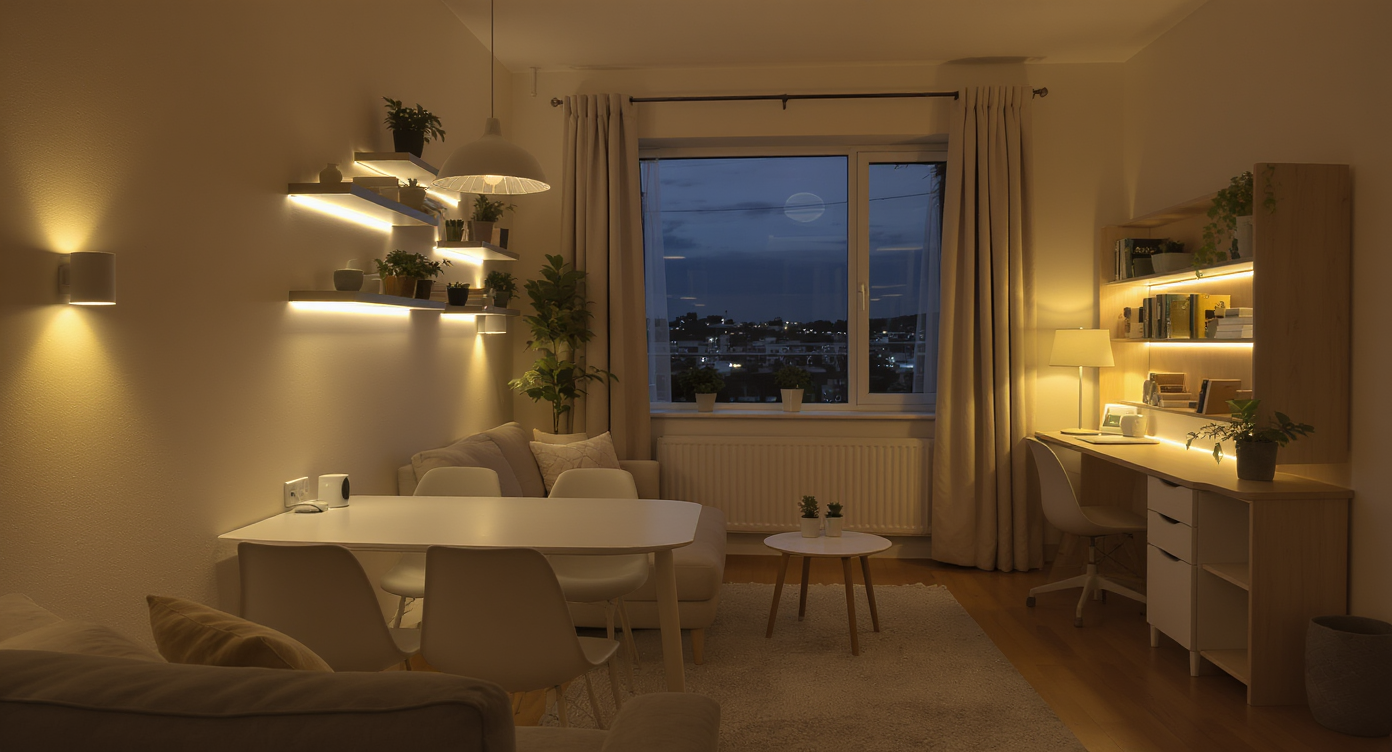
A small apartment uses plug-in sconces, LED strips, puck lights, and a tall task lamp to create flexible, ambient lighting zones.
Dim built-in fixtures are a common headache in small apartments, especially those with only one outdated ceiling light. Replace them—if your lease allows—or supplement with battery-operated puck lights, LED strips tucked behind shelves, or tall task lamps. Flexible lighting solutions like plug-in sconces or smart bulbs give zones functional glow and support mood changes from office to dinner party. These accents help accentuate your style, as we explored in warm minimalist living room updates, and keep spaces practical for daily living.
-
8. Scale-Appropriate Storage for Subtle Organization
Order is essential in a space that houses work, play, and meals. Storage design that matches the room’s proportions—think shallow credenzas, low cabinets, and under-bench drawers—prevents bulky pieces from overwhelming compact layouts. File boxes, lidded baskets, or rolling carts can be concealed under the desk or sofa, ready for quick retrieval when working from home. Using matching materials or colors ensures hidden storage does not distract from the room’s harmony. For additional tips about affordable, stylish storage solutions, check out our budget-savvy apartment guide.
-
9. Test Layouts and Color Schemes Digitally Before Deciding
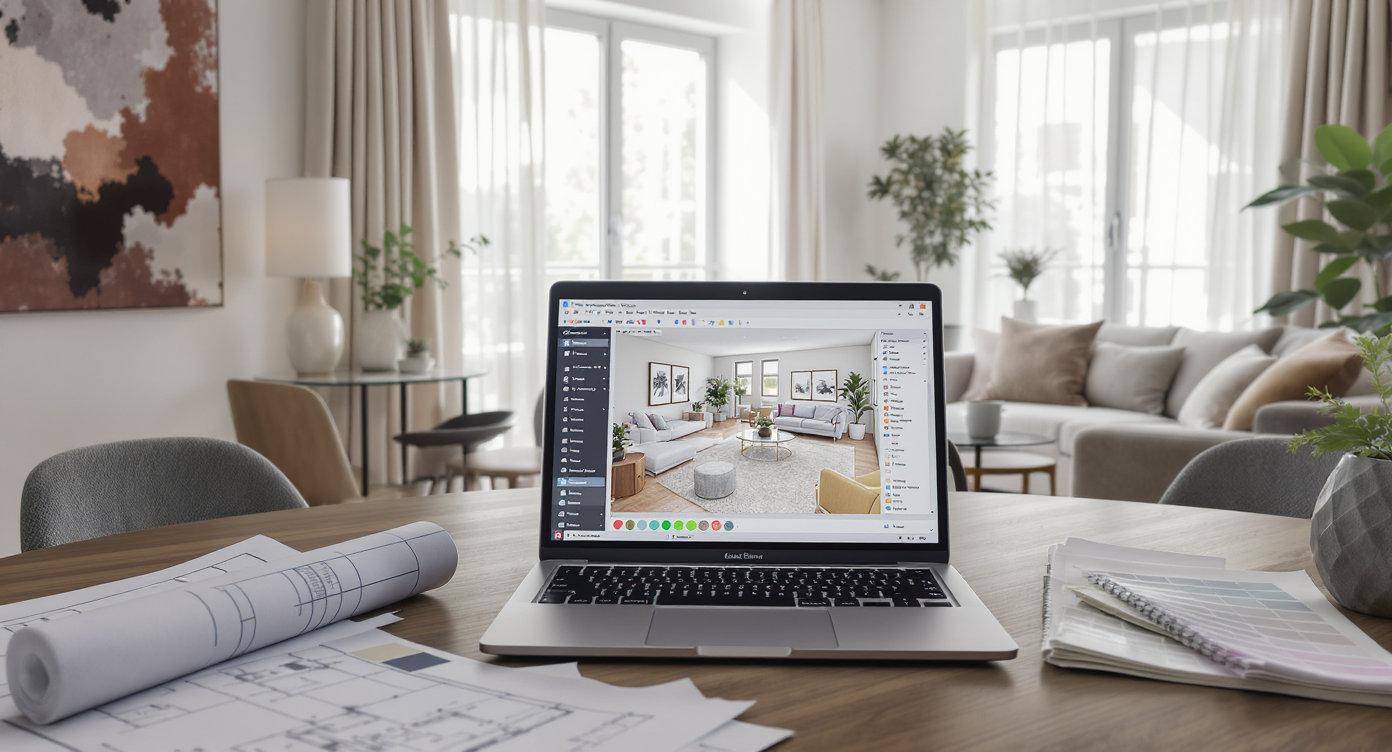
Visualize apartment layout changes with digital tools—compare furniture, colors, and finishes before making design decisions.
Planning your layout with a digital tool saves time and makes it easier to visualize how mixed needs will fit together. By uploading measurements and experimenting with virtual furniture placement, renters can troubleshoot sightlines, traffic flow, and lighting before moving day. Adjust wall paint, swap textiles, or test finishes to see how new ideas interact with light and fixed elements. Using a platform like REimagineHome.ai allows for easy planning and enables renters to mock up options and share them with others for feedback—saving money on unnecessary purchases and revealing potential before work even begins.
Frequently Asked Questions About Layout and Storage in Small Apartments
Visual boundaries are key. Position a desk near a window, add a distinct area rug, or use shelving as a subtle divider. For more specific ideas, see our WFH space tips.
What is the best way to deal with mismatched or rental flooring?
Linking separate floor finishes using colors, area rugs, or coordinated furniture helps unify the look. Painting furniture to match a fixed feature or adding textile accents works well.
Can compact layouts accommodate comfortable dining?
Yes, with careful table and seating selection. Consider slim dining tables, benches, or extendable options to suit small groups. Stackable or folding chairs add needed flexibility.
What digital tools can help me test apartment layouts?
Interior design platforms such as REimagineHome.ai let users experiment with furniture placement, color, and finish options before making major purchases.
Are there affordable office storage ideas for renters?
Absolutely. Wall-mounted shelves, rolling cabinets, and coordinating baskets offer practical WFH storage without permanent changes. Explore budget-friendly solutions in our small-apartment guide.
Pulling Together Your Small Space for Every Occasion
A well-planned compact apartment is more than a collection of furniture. Using vertical storage, carefully proportioned pieces, color cohesion, and smart zoning, you can balance dining, lounging, and WFH spaces—even in a rental with fixed floors or safety fixtures. Borrowing ideas from experienced designers and using digital mock-ups with REimagineHome.ai can help clarify your preferences and optimize the space you have for years of comfortable living.