Solid Wood vs Faux Beams: How to Choose Ceiling Beams for Your Remodel
TL;DR
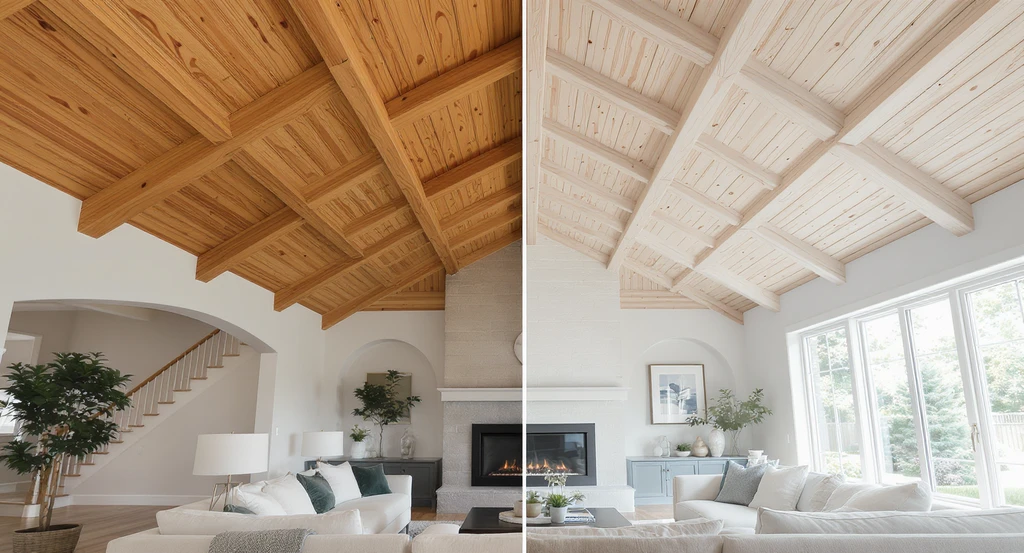
Choosing between solid wood and faux (engineered or decorative) beams is about more than looks. Solid beams offer real structure and traditional warmth but require careful scaling and installation. Faux and engineered beams are lighter, easier to install, and ideal for modern or spacious layouts where structural load isn’t needed. Both choices impact room brightness, proportion, and future maintenance, making a thoughtful, visual-first decision is key.
Understanding Your Ceiling Beam Options for Renovations
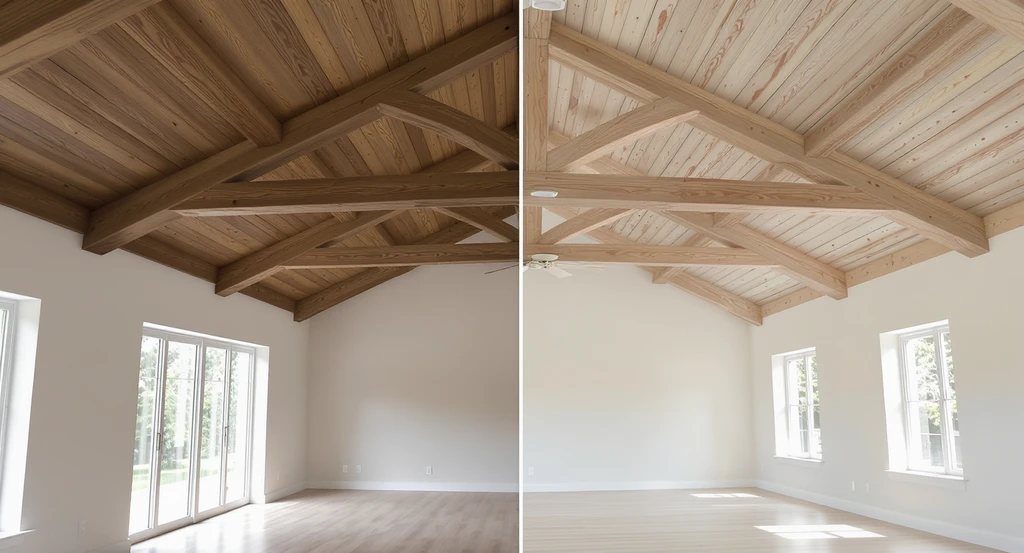
Solid wood vs faux beams for renovations: See how choosing ceiling beams impacts a remodel's light, scale, and style—with tips to avoid renovation regret.
Ceiling beams can dramatically change how a room feels, from adding cozy tradition to bold architectural interest. But the choice between solid wood and faux or engineered beams isn’t just about aesthetics, it’s about practical impact on light, scale, installation, and long-term satisfaction. Common mistakes often come from underestimating the spatial and visual role beams play. In this article, we provide a designer’s step-by-step logic for selecting the right beam style for your remodel, helping you avoid common pitfalls and costly regrets.
-
The Core Issue: What Usually Goes Wrong with Ceiling Beam Choices?
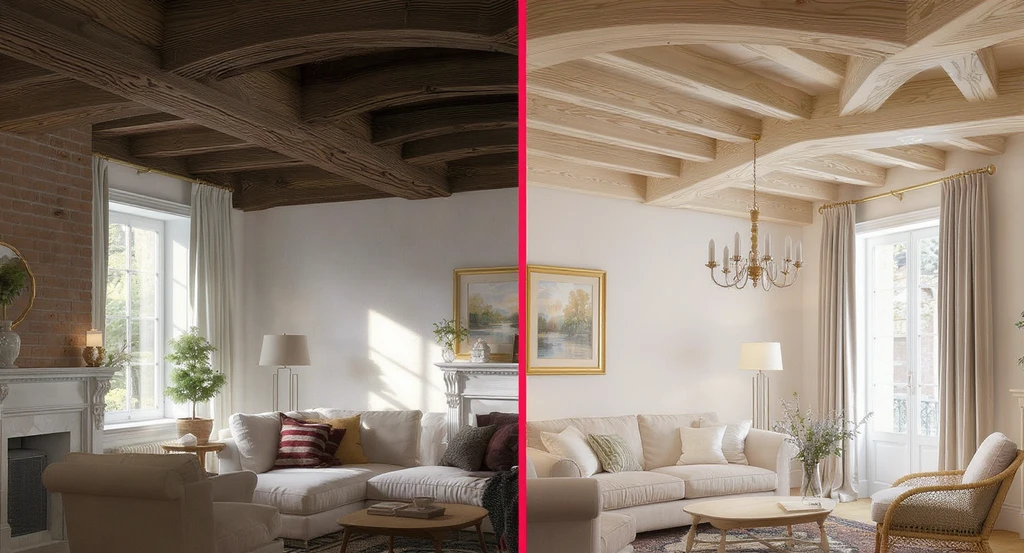
Choosing solid wood vs faux beams for renovations requires careful planning—oversized or artificial-looking ceiling beams often lead to renovation regret. See how to choose ceiling beams for remodel projects and avoid common wood beam decisions that can disrupt space and style.
Homeowners often choose beams based solely on photos or trends, leading to regret when scale, brightness, and installation complexity are overlooked. Two main mistakes occur: choosing large, heavy solid beams for purely decorative uses (making the room feel cramped or dark), or picking faux beams that look obviously unreal and disrupt the room’s authenticity. In both cases, poor planning results in layouts that feel off, too heavy visually, out of proportion, or clashing with the home's style.
Expert Insight
A client once insisted on oversized solid beams in a modest living room, inspired by magazine photos. Installation was costly, but the real regret came from how much darker and smaller the room felt, despite new lighting. Eventually, we swapped some beams for lighter, engineered versions, which visually lifted the ceiling and restored balance. The lesson: always preview before you commit.
-
Why This Happens: Spatial and Visual Factors at Play
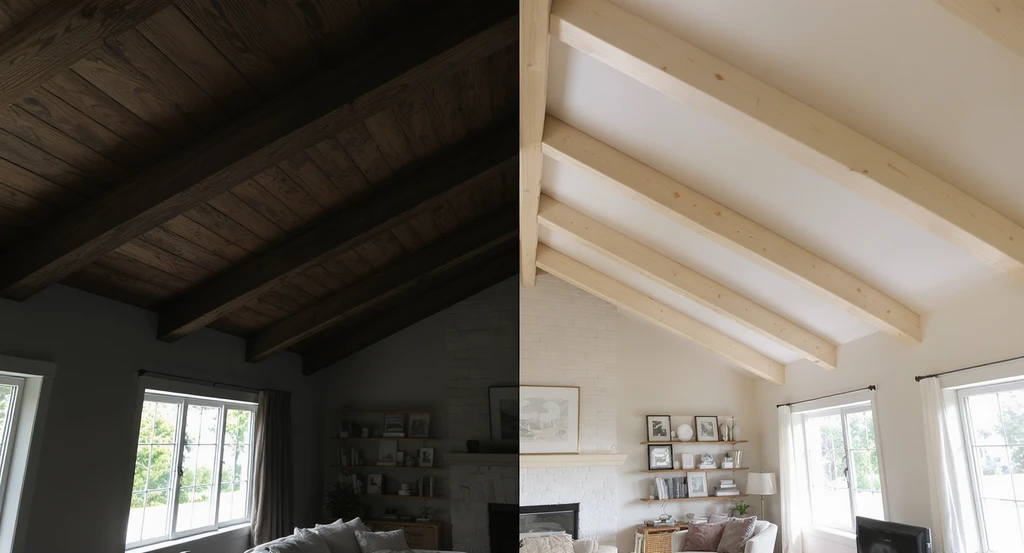
Solid wood vs faux beams for renovations: Properly choosing ceiling beams for a remodel prevents issues like reduced ceiling height or unconvincing finishes. Renovation regret wood beam decisions often arise when spatial and visual factors—like color, spacing, and light—are overlooked.
Ceilings draw the eye and shape a room’s entire perception. Oversized solid wood beams lower perceived height and reduce reflected light, making even larger rooms feel smaller and dimmer. Conversely, hollow or engineered beams, if chosen in the wrong color or with awkward spacing, can break up the ceiling’s continuity or appear unconvincingly fake. Without considering how beams interact with light, window placement, and existing architectural lines, it’s easy to create an unbalanced, dated look.
-
Design Principle: Proportion & Realism Rule
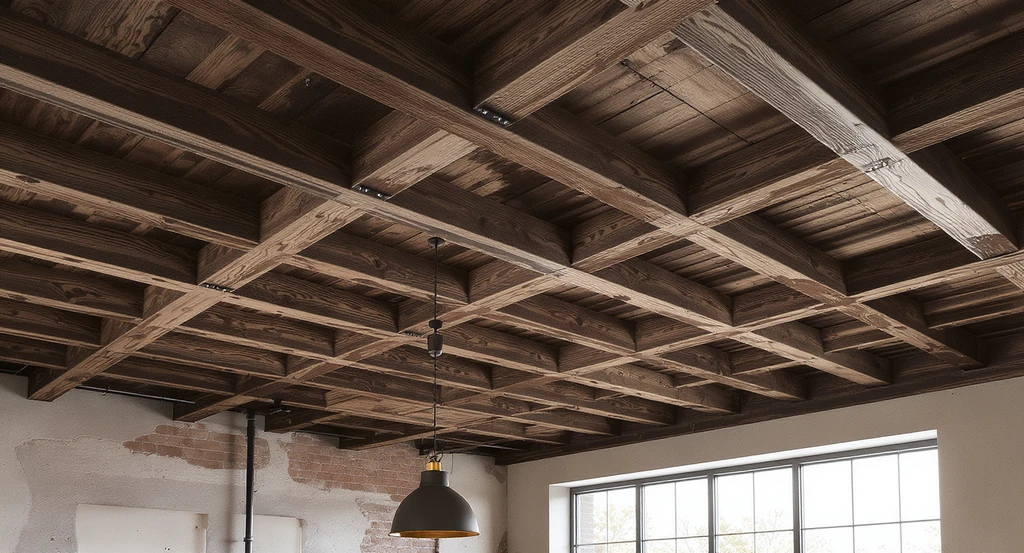
Design Principle: Proportion & Realism Rule Image
Key Principle: Always relate beam dimension to your ceiling’s height and room width. For beams (solid or faux), the rule of thumb is: the beam’s depth should be about 1/15th of the room’s width, and spacing between beams should not exceed the beam’s width by more than 1.5x. This ensures visual balance and avoids both cluttered and sparse layouts. In smaller or lower rooms, lightweight faux beams minimize bulk yet still add architectural detail.
-
Solid Wood vs Faux/Engineered Beams: Practical Corrections and When to Use Each
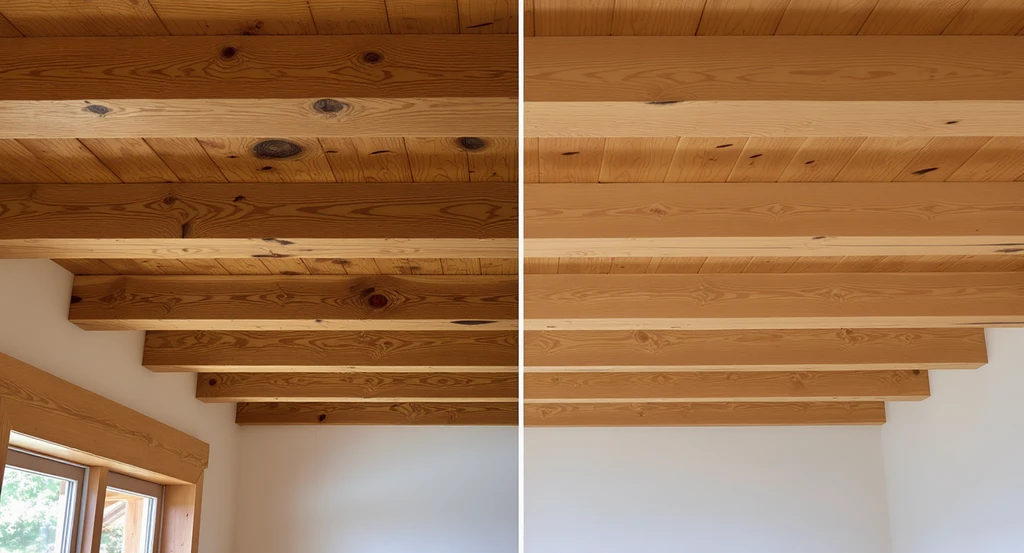
See the differences between solid wood vs faux beams for renovations. Learn how to choose ceiling beams and avoid renovation regret in your remodel.
- Solid Wood Beams: Best for structural (load-bearing) uses or authentic, rustic character. They provide classic depth, rich texture, and warmth, but their weight often demands special installation and supporting infrastructure. Real wood can also warp, crack, or develop maintenance needs over time.
- Engineered (Glulam)/Faux Beams: Ideal for modern aesthetics, long spans, or situations where weight matters (e.g., high or very wide ceilings). These beams are lighter, easier to install, and won’t warp, but are not suitable for structural loads unless engineered for such use. For decorative-only beams, choose options that convincingly mimic wood grain and finish.
-
How Beam Choices Impact Lighting, Space, and Realism
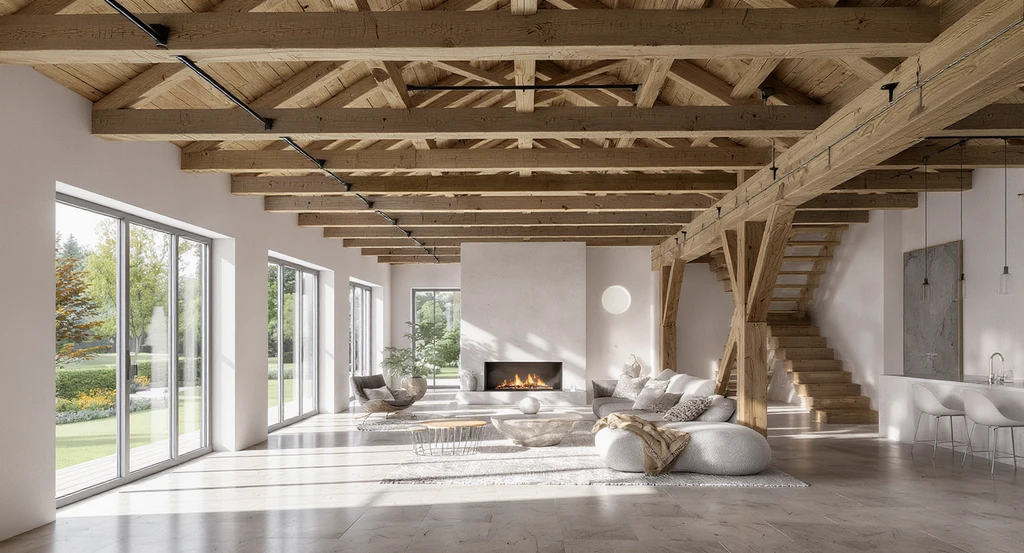
How Beam Choices Impact Lighting, Space, and Realism Image
Solid beams, especially in dark or heavy finishes, can absorb light and cast shadows, making some rooms feel smaller or dimmer, a common regret post-renovation. Faux or lightly finished engineered beams better preserve ceiling height and natural light. Whichever you choose, consider how the beam color interacts with wall tones, flooring, and window direction. This is especially important in open-concept spaces where ceiling treatments are visible across rooms. Coordination with existing architectural elements, like stair railings, window trim, or flooring, will help maintain visual logic, as suggested in our guide to 2025 interior design trends.
-
Step-by-Step: Correcting Common Ceiling Beam Mistakes
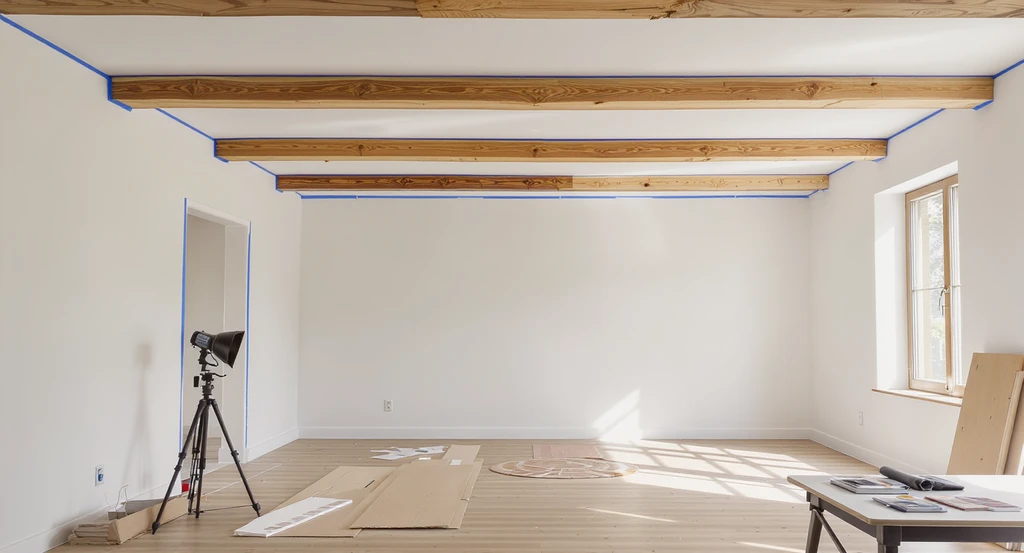
Solid wood vs faux beams for renovations: An accurate mockup with painter’s tape, lighting tests, and finish samples helps avoid renovation regret and guides how to choose ceiling beams for your remodel.
- Measure accurately. Confirm ceiling height and span before choosing beam depth and width.
- Mock up beam spacing with painter’s tape or cardboard templates on your ceiling to visualize balance before installation.
- Test lighting. Use movable lamps or spotlights to see how shadows and brightness change with your planned beam placement.
- Review material finish. Sample stains or finishes on-site to ensure cohesion with your room’s color palette.
- Coordinate with other features. Avoid visual competition between ceiling, railings, and wall treatments (see more on cohesive materials in our organic modern design guide).
-
Using Visualization to Prevent Ceiling Beam Regret

Using Visualization to Prevent Ceiling Beam Regret Image
Ceiling beams have a powerful effect on proportion, brightness, and style, but most people can’t intuitively visualize the completed result. This is why using visualization tools is essential, previewing options in your actual room will clarify which beam type, size, spacing, and finish work best. REimagineHome AI lets you test solid wood versus faux beams and different layouts, helping you avoid post-installation regrets. Test views from multiple angles, including how beams interact with nearby windows and lighting. This real-world previewing step can be the difference between a timeless update and a disappointing do-over.
-
Linking Beam Choice to Broader Trends and Long-Term Success
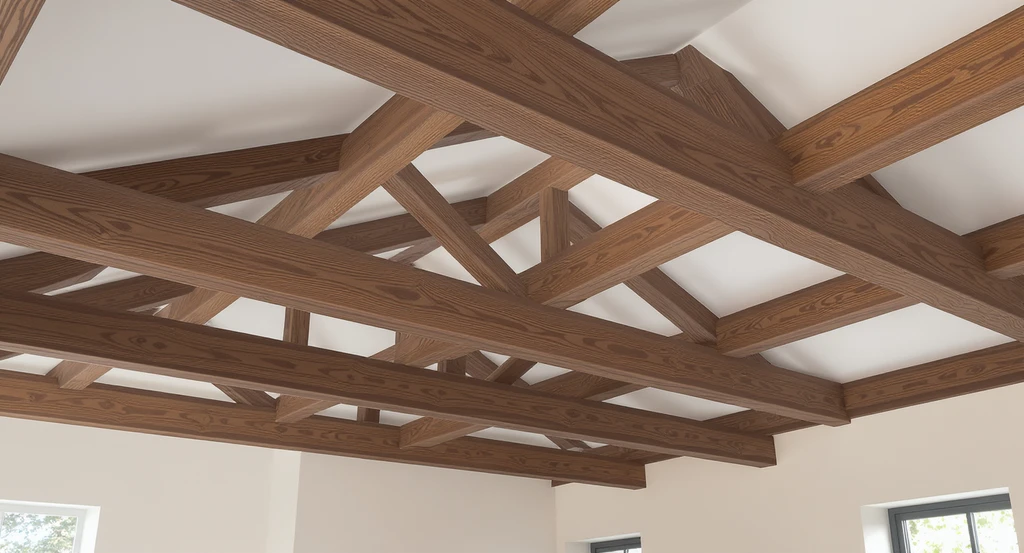
Linking Beam Choice to Broader Trends and Long-Term Success Image
Popular ceiling styles change, as seen in the 2025 interior trends guide—but regrets usually stem from ignoring scale, function, and architectural fit, not from following or resisting a trend. Both beams and full wood ceilings can work in modern or traditional settings if reasons for the choice are clear and coordinated with the rest of the design (learn more in our must-know interior ideas). Prioritize your lifestyle and the way you use the space: Is easy dusting, access for lighting, or a feeling of coziness a bigger priority for you than heavy character or structural authenticity?
Visualization Scenario
Imagine uploading a photo of your room to REimagineHome AI. You see side-by-side previews: heavy solid beams cast strong shadows and darken corners, while light-toned faux beams keep the space airy. Comparing these visuals helps you immediately spot how each option changes the feel and function, transforming a guess into a confident design decision.
FAQ: Solid Wood vs Faux Beams in Renovations
- Are faux beams worth it if I want a traditional look?
Yes, if chosen carefully. High-quality faux beams with realistic wood grain and correct sizing can mimic the look of structural beams while offering easier installation and less weight. Just avoid options that look obviously fake up close. - Will solid wood beams make my room too dark or heavy?
If your room has low ceilings or limited natural light, solid wood beams can feel heavy or make the space seem smaller. Lighter finishes and careful beam sizing can help, but always test with mockups or visualization first. - Can engineered beams support structural loads?
Some engineered beams (like Glulam) are made for structure and can span long distances, but hollow faux beams cannot be load-bearing. Always consult an architect or structural engineer before using beams for support. - Which option is easier to change later?
Faux beams are generally simpler to remove or replace, making them a good option if your needs or style may change in the future. - Is there a risk of faux beams looking dated?
Any design choice can date if it’s out of proportion or poorly matched to the home’s style. Both beams and full wood ceilings have been in and out of fashion, but focusing on visual balance and realistic finishes keeps your update feeling timeless. See our trends advice on using trends wisely.
Solid or Faux? Prioritize Function, Proportion, and Visualization
Making the right beam decision means understanding room proportions, ceiling height, and lighting, not just following what’s popular. Solid beams are best for real structure, warmth, and tradition. Faux or engineered beams deliver ease, versatility, and modern clarity. Mistakes most often come from skipping the mockup or preview stage, so leverage visualization (especially with REimagineHome AI) and methodical planning before committing. This is key for a renovation you’ll love for years.