Updating a Victorian Bathroom Without Regret: A Structured Decision Framework
Introduction: Preserving the Past, Shaping the Future
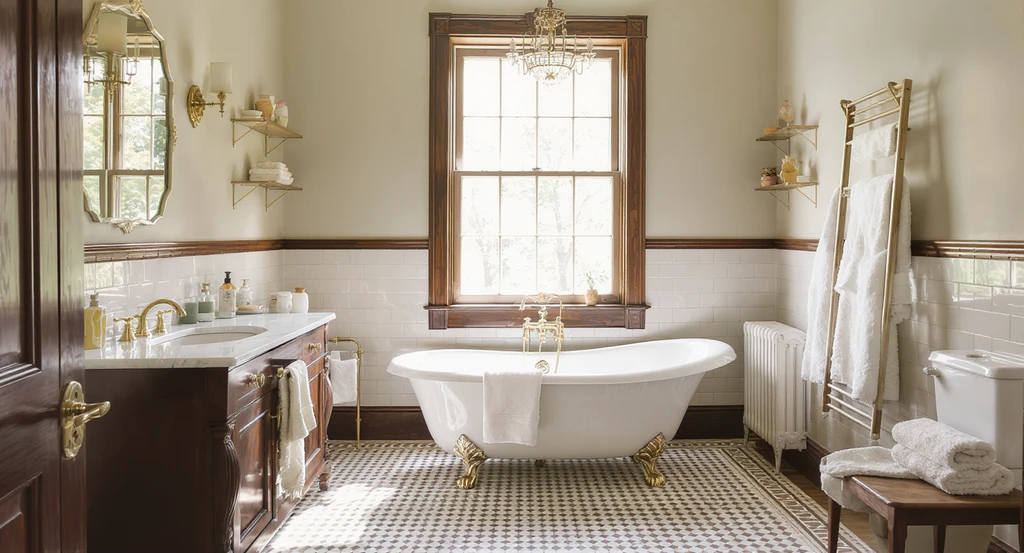
Updating a Victorian bathroom without regret means previewing every decision. See how to choose bathroom tile in a period home and avoid renovation mistakes by balancing modern and classic bathroom design.
Updating a Victorian bathroom is an exercise in deliberate contrast one that honors historical character while quietly introducing contemporary function and comfort. The risk of decision regret is substantial. Choices made in haste, or without spatial foresight, can diminish architectural integrity or saddle the homeowner with incongruous updates. This article defines a model for updating period bathrooms with confidence, leveraging visualization technology and a decision structure tuned to the unique stakes of heritage homes.
-
The Risk Layer: Why Victorian Bathrooms Provoke Decision Anxiety
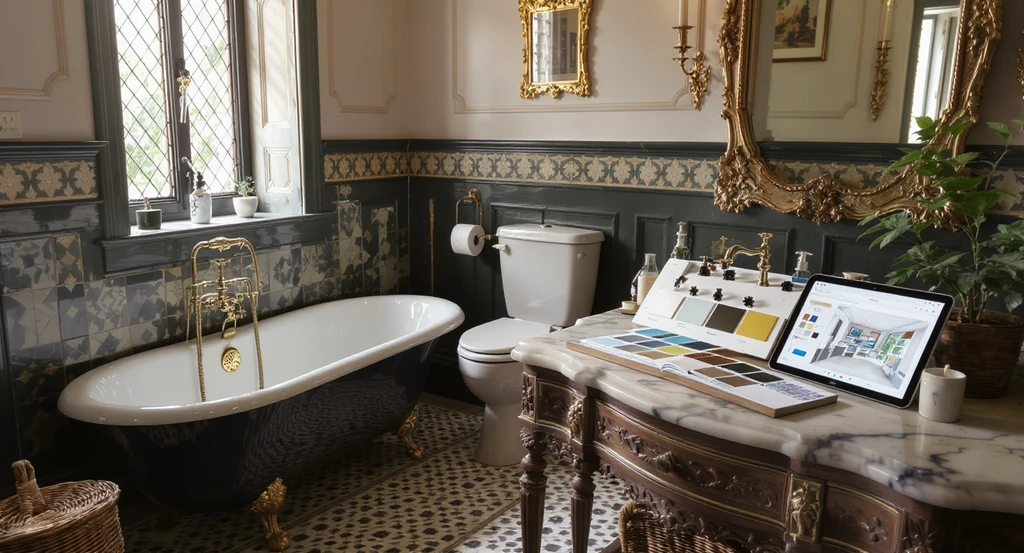
Victorian bathrooms require careful balance; mixing new fixtures and tile can disrupt the original style. Learn mistakes to avoid in vintage bathroom remodels, how to choose bathroom tile in a period home, and tips for updating a Victorian bathroom without regret.
Underlying Mechanism: Victorian bathrooms anchor a home's historic narrative through intricate architectural details, materiality, and scale. Updates that break rhythm through incompatible forms, reflective mismatches, or jarring modern insertions can permanently disrupt this balance. Unlike purely aesthetic makeovers, every decision carries high stakes. Fixtures, tiles, and materials are often costly or difficult to reverse.
Victorian bathrooms present unique spatial and perceptual challenges: small windows, tall ceilings, variable natural light, and layered color schemes. Modern interventions can easily feel out-of-place or betray the provenance of the space, leading to chronic dissatisfaction and renovation regret.
Expert Insight
During a recent Victorian bathroom update, the owners sourced a marble vanity via an online marketplace, achieving the look and tactility of a period piece at a fraction of the retail price. This strategic sourcing preserved budget for custom glass and authentic marble tile—choices that now anchor the room’s sense of history.
-
The REimagineHome AI Period Integration Heuristic
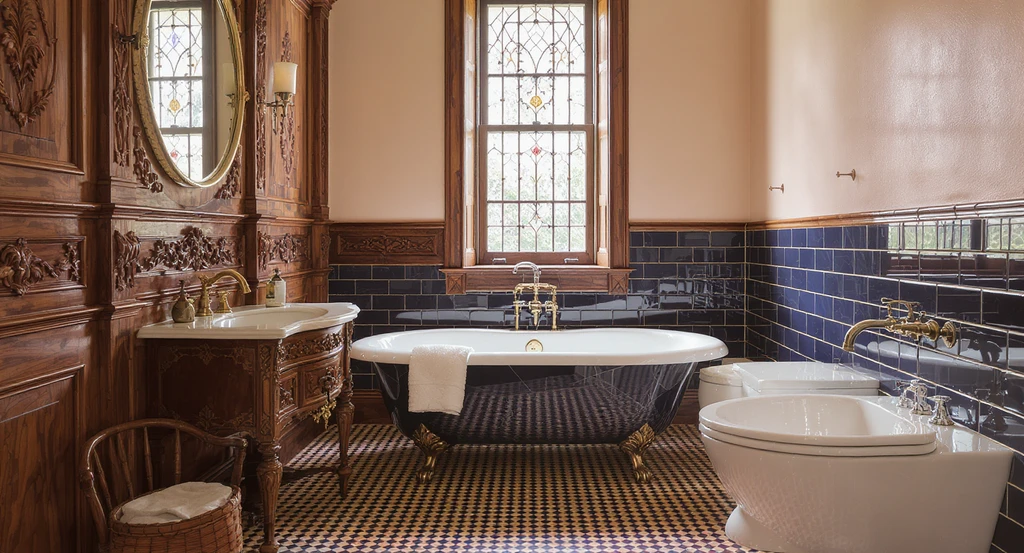
Updating a Victorian bathroom without regret starts with balancing modern upgrades and classic design. See how to choose bathroom tile in a period home while preserving signature Victorian details and avoiding renovation decision paralysis.
Framework Definition: The REimagineHome AI Period Integration Heuristic is structured as follows:
- Preserve—Retain signature Victorian architectural details (coving, cornices, windows, original floors) wherever structurally possible.
- Bridge—Select fixtures and finishes that echo Victorian proportions and profiles, even if constructed with modern materials or plumbing standards.
- Adapt—Introduce new functional elements (lighting, storage, art, built-in features) in ways that visually subordinate to preserved elements and avoid jarring material contrast.
Reference Definition: The Period Integration Heuristic is a visual and spatial logic model that prioritizes continuity of era-defining forms and finishes, enabling new interventions to harmonize with foundational Victorian features. It addresses the core psychological driver of regret by making sure updates appear 'as if always intended,' rather than visibly grafted on. -
Application Path: Structured Steps for Regret-Free Updates
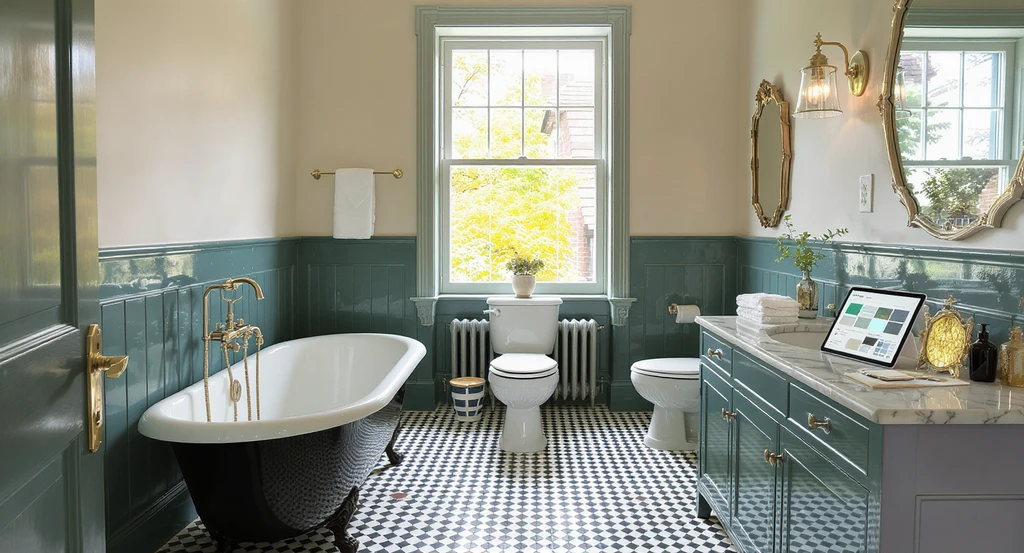
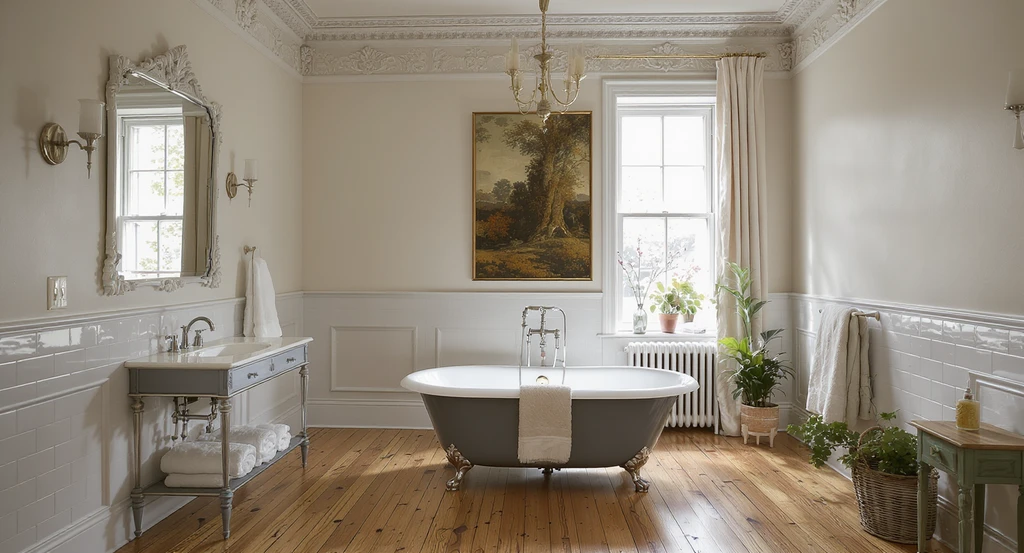
Updating a Victorian bathroom without regret requires evaluating original features, previewing bathroom tile and finishes, and balancing modern and classic bathroom design, helping avoid common mistakes and renovation decision paralysis in period home remodels.
- Evaluate Architectural Anchors: Identify original Victorian elements. Examples include cast-iron bathtubs, high-tank toilets, sash windows, encaustic or checkerboard tile flooring, ornamental moldings, and marble vanities.
- Assess Adaptable Layers: Determine what can be modernized without loss of character (lighting, hardware, storage, plumbing behind walls).
- Preview Compatibility: Use AI visualization tools to test new fixtures, paint, and tile selections directly onto photographs of your space. This minimizes perception bias, ensuring that period elements and updates blend seamlessly, rather than competing for attention. As detailed in our guide to bathroom remodel finishing touches, previewing details like metal finishes, curtain height, and hardware before committing helps avoid subtle mismatches that accumulate into visible discord.
- Balance Color and Material: Favor palettes rooted in authentic Victorian schemes—off-whites (e.g., Farrow & Ball White Tie), deep jewel tones, and subtly aged metallics. Ground modern interventions with classic materials; for example, blend contemporary marble vanities with checkerboard marble flooring, or echo natural stone hues in window treatments and cabinetry. For more on tile selection, see elegant tile trends and how to visualize them.
- Integrate Honest Vintage: Introduce select antique or vintage-look pieces via secondary markets, as recommended in our coverage of vintage revival best practices. Balance new and old using the 70/30 guideline: aim for 70% consistent period context, 30% modern intervention, ensuring the result is layered, not pastiche.
-
Visualization and Regret Minimization
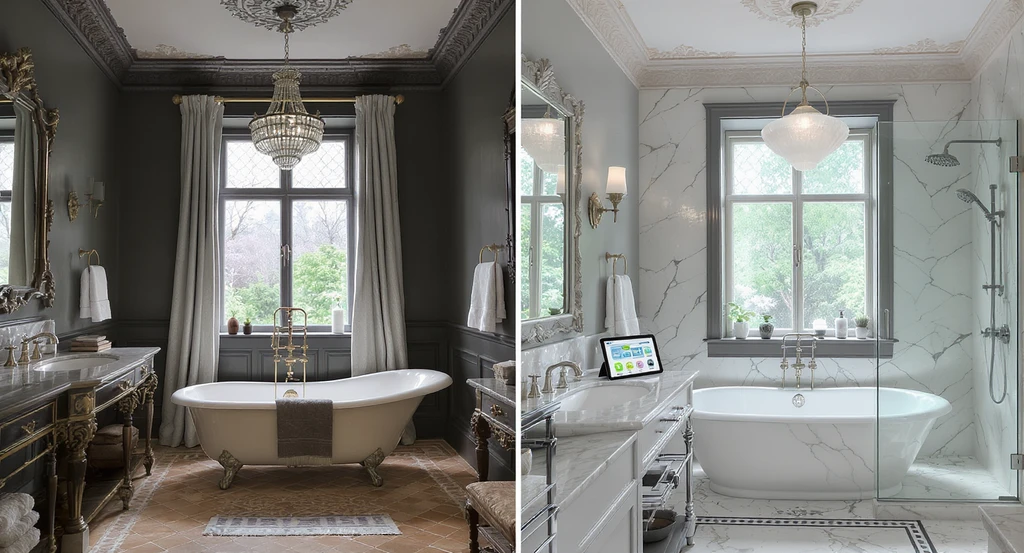
See how visualization technology helps updating a Victorian bathroom without regret, balancing modern and classic bathroom design, and avoiding renovation decision paralysis in old houses by previewing tile, fixtures, and layout choices before making permanent changes.
Traditional bathroom upgrades rely on optimism and sample boards. In Victorian spaces, where sightlines are complex and colors interact with intricate millwork, this is insufficient. The risk of unanticipated clash such as an ultra-modern light fixture overwhelming an ornate ceiling rose remains high.
Visualization technology allows you to:- Test color and material combinations before any demolition occurs
- See reflectivity, light direction, and shadow in your actual space—critical given typical Victorian daylight conditions
- Avoid regrets by previewing fixtures, hardware, curtain height, even the integration of pet-friendly features such as hidden litter boxes, before making irreversible adjustments
Using REimagineHome AI as a visual preview tool helps align architectural context and new interventions with clarity, reducing uncertainty and resulting in coherent, period-respectful renovations. -
Constraints and Trade-offs: Navigating Size, Cost, and Authenticity
Victorian bathrooms vary widely in dimension, often imposing rigid spatial trade-offs. Original clawfoot tubs may be replaced with slightly smaller baths (e.g., 1600mm), preserving function without cramping circulation. Built-in adaptations for storage, or even hidden pet accommodations, can be achieved through custom joinery in moisture-resistant MDF provided forms are sympathetic to period proportions. Authentic materials such as marble or aged brass often command higher upfront costs, but selective sourcing via marketplaces can make these feasible. Prioritize investment in high-impact areas (floors, bathing fixtures, lighting). For fixtures, careful mixing of metallic finishes may produce layered visual depth, as addressed in our guide to integrating antiques seamlessly.
Visualization Scenario
Imagine previewing a mid-century pendant against intricate Victorian cornices, seeing in real time if the lighting accentuates or disrupts the existing moldings. By visualizing this connection with REimagineHome AI, you can test options for scale, reflection, and finish, guaranteeing that modern updates serve the space rather than overwhelm it.
Frequently Asked Questions
- What is the 70/30 guideline for mixing old and new in period bathrooms?
- The 70/30 guideline prioritizes maintaining 70% of the bathroom in period-consistent features, while allowing 30% for modern updates. This balance helps preserve historical integrity while integrating contemporary function, as further explored in our guide to antiques in modern spaces.
- How can I test tile and hardware combinations before renovating a Victorian bathroom?
- Platforms like REimagineHome AI enable digital previews of tile, hardware, and paint in your actual space, reducing reliance on samples and minimizing decision regret. This is detailed in our article on visualizing tile trends.
- What authentic Victorian color palettes work for bathrooms?
- Victorian palettes include off-whites (such as White Tie), moody jewel tones, and subtle metallic accents. Strategic use of these colors grounds updates in historical context while creating depth and warmth.
- Is it possible to blend pet-friendly adaptations into a period bathroom?
- Yes. Features such as hidden litter boxes can be discreetly integrated into built-in storage, provided the design respects original proportions and finishes. Preview these elements visually before construction to ensure compatibility.
Conclusion: The Logic of Informed, Lasting Transformation
Updating a Victorian bathroom without regret is not an act of imitation nor pure invention. It requires a decision model grounded in the spatial, perceptual, and material logic of the era, layered with contemporary needs. By applying the Period Integration Heuristic and leveraging visualization, each decision can preserve the room's lineage while introducing relevant comfort and style. This approach ensures renovations feel timeless, intentional, and distinctly of their place.