Wet Room With Tub: 8 Expert Design Principles for a Seamless, Curbless Spa Bathroom
TL;DR
Designing a wet room with a bathtub demands more than just waterproofing it’s about optimizing space, access, and the spa experience. These eight principles provide concise, actionable rules for confidently integrating tubs into your wet room layout, whether for luxury or practicality.
Why Wet Rooms With Tubs Deserve a Structured Approach

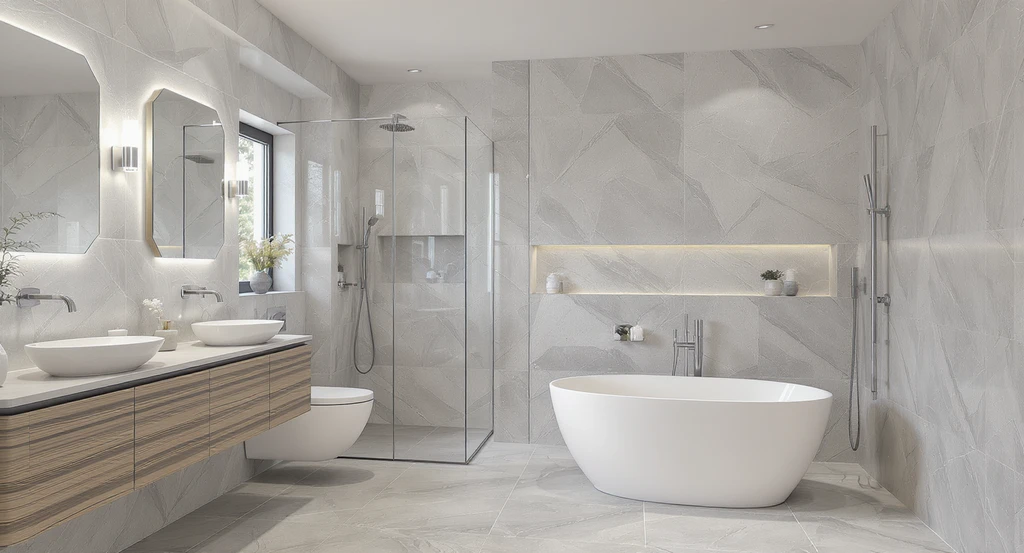
A seamless wet room with a curbless layout and soaking tub demonstrates luxury, accessibility, and modern bathroom design principles.
A wet room with a soaking tub is a fully waterproofed, curbless bathroom layout where the bathtub and shower share an open, sloped drainage system. Unlike traditional bathrooms that rely on thresholds and compartmentalized zones, wet rooms use continuous waterproofing and seamless flooring to manage water flow. Integrating a freestanding or built-in tub in this environment is not a stylistic trend it is a deliberate design strategy that improves spatial efficiency, accessibility, and long-term maintenance.This guide offers eight structured principles, incorporating the REimagineHome Zonal Integration Rule and distinct design models, to transform your decision-making and ensure your wet room is truly fit for daily life and long-term value.
-
1. Apply the Zonal Integration Rule for Optimal Layout
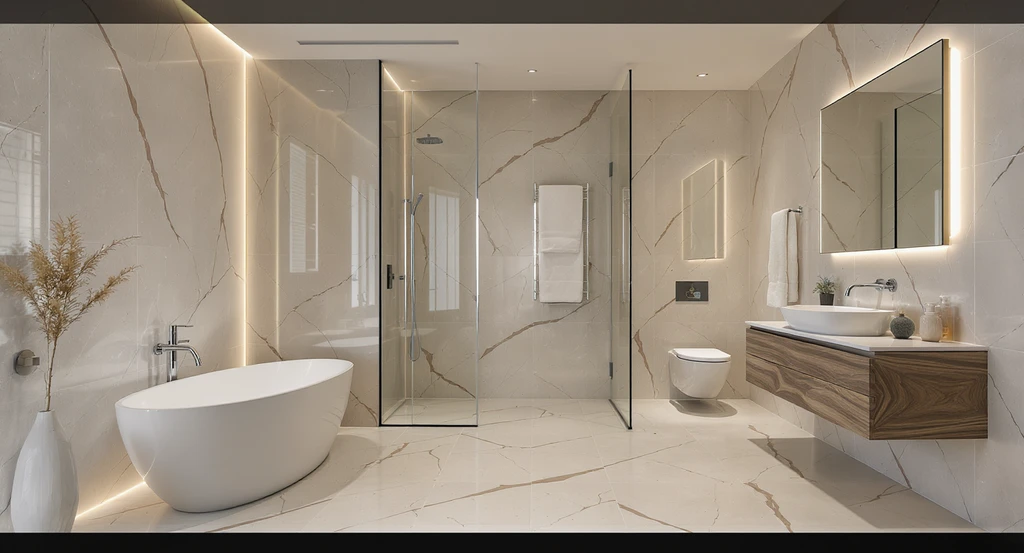
A well-zoned wet room with tub uses frameless glass panels and strategic placement to separate wet and dry areas, optimizing layout for comfort and order.
A well-designed wet room with a tub follows the Zonal Integration Rule: clearly separate wet functions (tub and shower) from dry functions (vanity and toilet) within the same open-plan layout. This spatial clarity controls splash spread, protects fixtures, and preserves safe circulation paths. Technically, zoning depends on calibrated floor slopes (typically 1:40 to 1:60 gradient), precise drain placement, and strategic use of frameless glass panels or half-height partitions. A minimum footprint of 60–80 square feet allows both tub and shower to coexist without restricting movement. Beyond performance, defined zones improve perceived order, reduce slip anxiety, and create a more relaxing bathing experience. Visualizing various layouts with REimagineHome can further reduce uncertainty before any permanence is committed.
-
2. Prioritize Drainage Geometry Over Generic Slopes
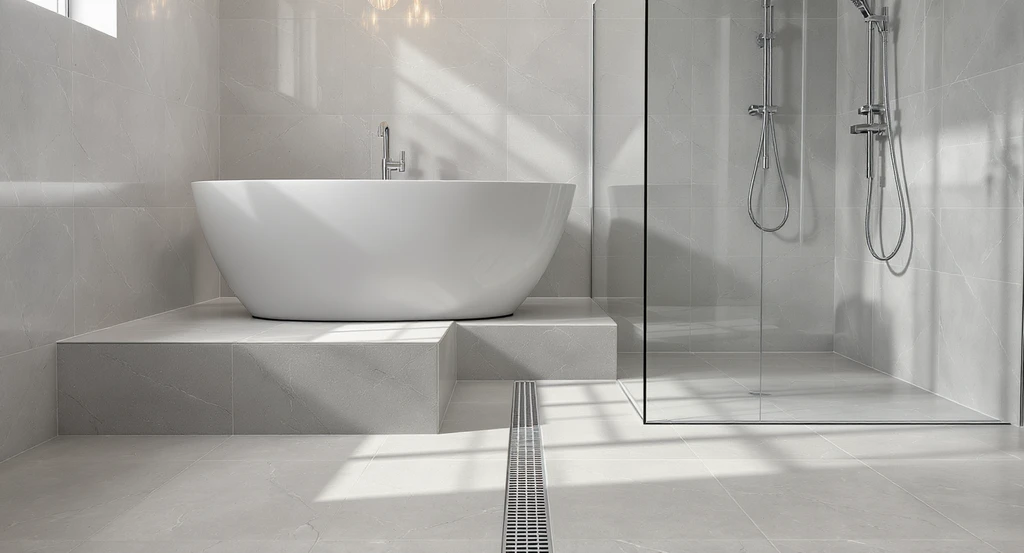
This wet room with a freestanding tub demonstrates optimal drainage geometry, with the tile floor sloped toward a linear drain to prevent standing water and ensure efficient water management.
Effective wet rooms demand more than a gently sloped floor. Use a Drainage Geometry Framework: position a linear or central drain directly under the highest water output (shower and tub), ensuring all slopes direct water efficiently. For a tub, especially freestanding, verify the surrounding floor remains sloped toward the drain, not just the shower area. Consequences of poor geometry include standing water, undermining waterproofing and safety. This approach means prioritizing drainage layout early in the planning, not as an afterthought.
-
3. Match Tub Type to Spatial Purpose for Efficiency
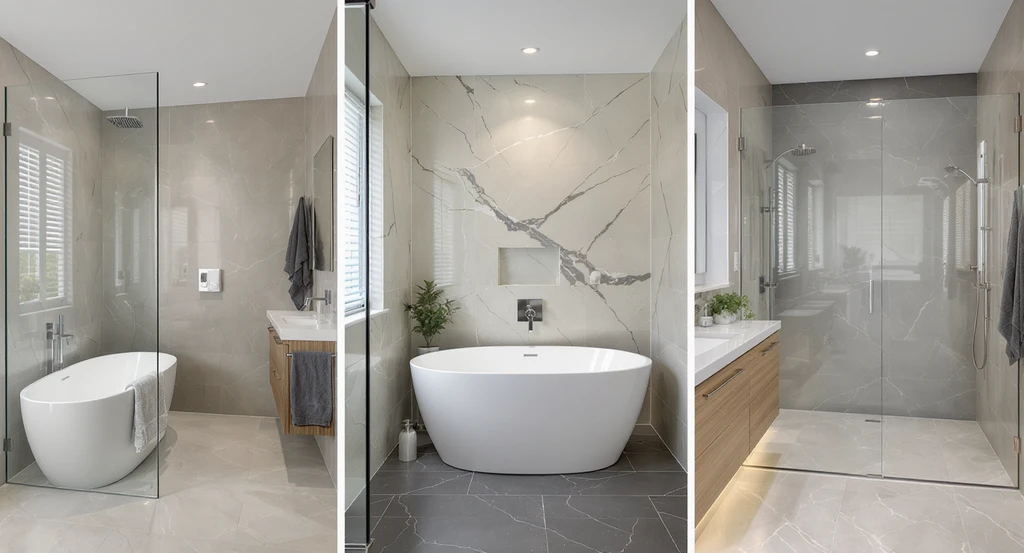
Compare freestanding, undermount, and built-in soaking tubs in real wet rooms to select the ideal tub type for your bathroom’s size and function.
Select the tub type based on the wet room’s footprint, circulation clearance, and primary use. Freestanding tubs function as architectural focal points and are best suited to wet rooms exceeding 75 square feet, where at least 4–6 inches of perimeter clearance allows proper cleaning and drainage. Undermount or built-in tubs maximize spatial efficiency in compact layouts and integrate more reliably into the continuous waterproofing system. Clawfoot models, while stylistically distinctive, require careful floor sloping and slip-resistant finishes due to exposed bases and increased splash potential. Aligning tub selection with room size, maintenance tolerance, and daily bathing habits prevents layout inefficiencies and expensive retrofits.
-
4. Use Material Continuity Principle to Elevate Cohesion
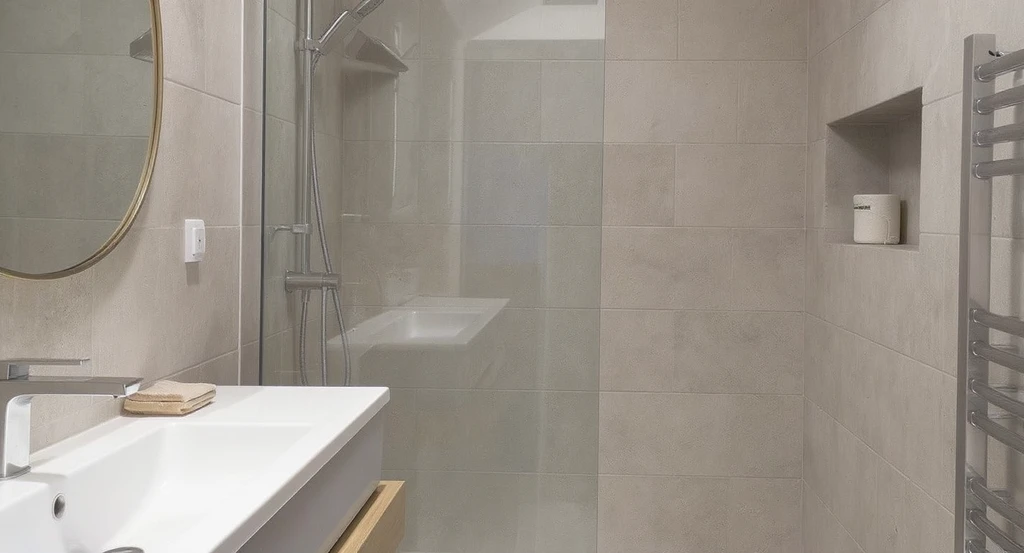
Material continuity in this wet room elevates cohesion; slip-resistant tile seamlessly connects floors and walls for a unified, spa-like bathroom design.
Apply the Material Continuity Principle: extend the same waterproof finish tile, stone, or solid surface from floors to walls to reinforce visual and functional unity. This approach not only maximizes waterproofing integrity but creates a seamless, low-maintenance backdrop that enhances perceived space. Textured materials, such as slip-resistant porcelain tile or honed stone, add safety without sacrificing style. Continuity in material selection simplifies cleaning and maintains the soothing, open feel crucial for a spa-like environment.
-
5. Distinguish Wet-Dry Separation Without Doors
Use demarcation tools such as half-wall partitions, glass panels, or subtle level changes to distinguish wet and dry areas within the same room. Rather than relying solely on doors, these elements balance openness with functional boundaries. Frameless glass or short pony walls direct splashes while keeping sightlines unobstructed. This not only preserves warmth in the bathing zone but also fosters a sense of privacy without visual clutter.
-
6. Integrate Nature and Light for Real Spa Impact
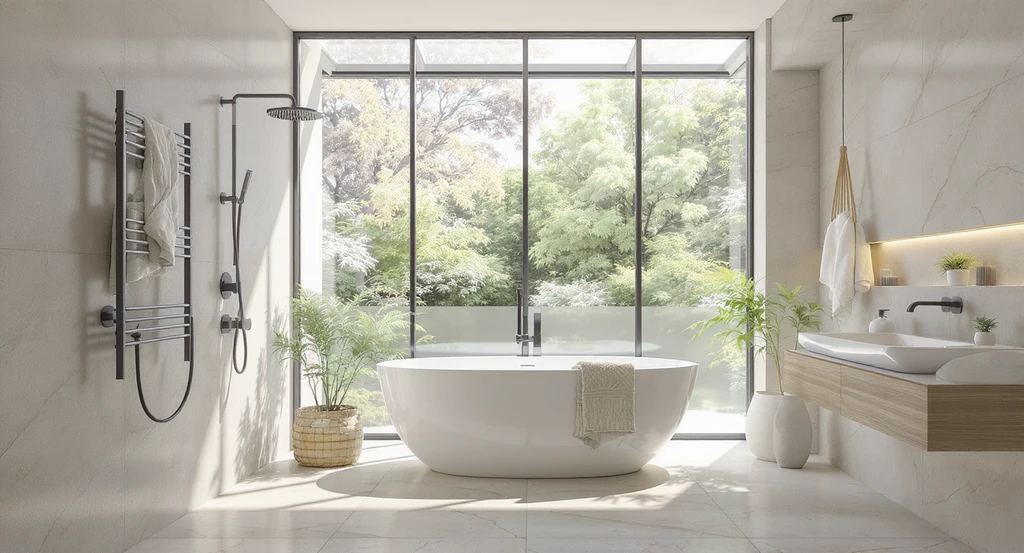
Maximize spa luxury by positioning your wet room tub beside a large window with nature views, skylight, and indoor plants for enhanced relaxation.
Position the tub to capitalize on natural light and biophilic elements such as garden-facing windows, skylights, or integrated indoor greenery under the Spa Perception Principle. Direct daylight exposure regulates circadian rhythm, improves mood, and enhances perceived spatial openness. When incorporating windows, use frosted glazing, clerestory placement, or automated shades to preserve privacy without sacrificing illumination. Thermal performance should also be considered; double-glazed or low-E glass reduces heat loss and condensation near the bathing zone. Integrating controlled daylight and nature views transforms the wet room from a purely functional space into a psychologically restorative environment.
-
7. Engineer for Accessibility and Future Proofing
Design for lifelong usability by ensuring curbless entry, slip-resistant floors, and allowance for assistive devices if needed. Accessible wet rooms require a minimum turning radius of 5 feet, lever faucets, and sturdy grab bars considered in the initial layout. Prioritizing accessibility not only broadens utility but adds to property value and peace of mind, especially in multi-generational homes.
-
8. Test Before You Build Using Visualization Tools
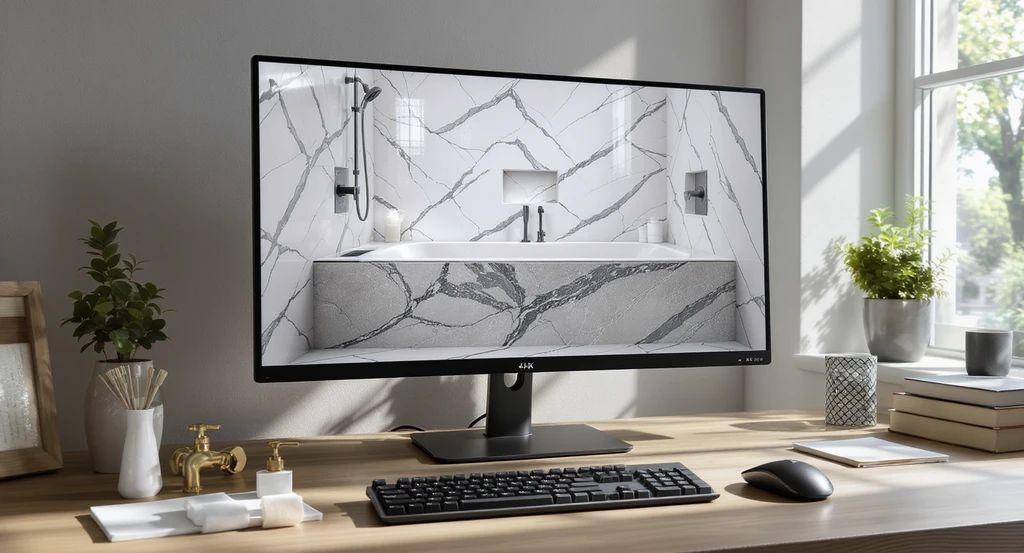
Use modern visualization tools to digitally test your wet room with tub design, adjusting drainage, material transitions, and zoning before construction begins.
Before finalizing your wet room with tub layout, employ digital visualization to model drainage, material transitions, and fixture spacing. Tools like ReimagineHome let you experiment safely, adjusting proportions, tub placement, and zoning visually before construction begins. Testing layouts virtually reduces errors, ensures code compliance, and builds lasting confidence in high-stakes design decisions.
Visualization Scenario
Imagine virtually stepping through multiple wet room plans: shifting a freestanding tub beneath a skylight, exploring half-wall partitions, and visualizing how daylight courses over continuous tile. With each adjustment, you see potential splash zones and confirm circulation comfort—giving you absolute certainty in your final layout before the first tile is set.
Wet Room With Tub FAQ
- Do I need a large bathroom to fit a wet room with a tub?
- No; a wet room with both a tub and shower can fit into 60–80 square feet, provided zones are clearly defined and drainage is well-planned.
- Are freestanding tubs safe for wet rooms?
- Freestanding tubs are suitable for wet rooms when flooring is properly sloped, slip-resistant, and waterproofed. Regular cleaning maintains safety and minimizes slip risks.
- Is a wet room easier to clean than a traditional bathroom?
- Yes, because the waterproofing and minimal barriers reduce mold-prone crevices, making surfaces easier and faster to clean compared to traditional layouts.
- What is the best material for wet room flooring?
- Textured porcelain tile or honed stone offers durability, slip resistance, and seamless integration for wet rooms with tub and shower areas.
Key Takeaways: Systematize for Confidence and Comfort
A wet room with a bathtub is not solely a luxury—it is a measured response to maximizing space, accessibility, and relaxation. By employing structured frameworks and original planning models, you create a bathroom that feels intentional, easy to maintain, and visually harmonious. Think beyond trends: anchor your choices in proven principles for an enduring, spa-like result. According to remodeling industry reports, bathroom renovations consistently rank among the top home improvements for return on investment, often recouping 60–70% of project costs at resale