What To Do With the Wall and Corner in Your Bedroom: Insightful Placement, Not Just Decoration

TL;DR
Addressing an empty wall or awkward corner in a bedroom isn’t about filling space; it’s about reading how scale, texture, and placement interact to shape a room’s mood. An oversized artwork, sculptural lamp, or one well-scaled chair in the right spot does more than decorate it completes what your eye instinctively feels is missing.
Why the Right Wall and Corner Choices Matter
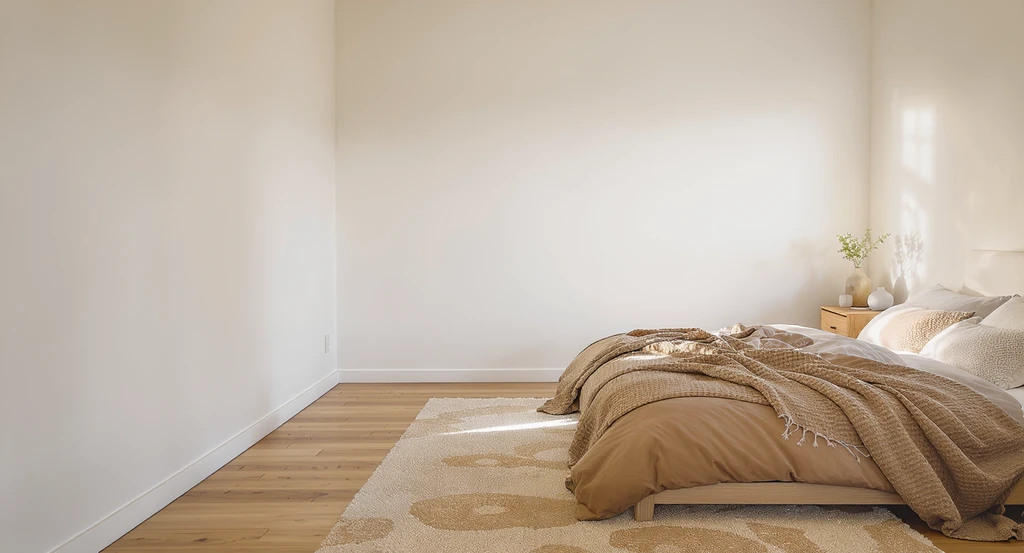
A blank bedroom wall and corner highlight how to decorate empty bedroom corners and the best furniture for awkward bedroom spaces. The image shows why intentional placement—like choosing wall art for small bedrooms or the right rug—matters for a finished, restful design.
A blank wall or neglected corner in a bedroom often triggers a subtle sense of incompleteness not because something is missing, but because spatial proportions feel interrupted. This isn’t about simply adding decor. It’s about understanding what the room is quietly asking for. Whether you’re drawn to dramatic greens, soft minimalism, or layered comfort, the wall and corner you leave unsettled can have an outsized effect on how finished, restful, or even inviting your bedroom feels. Most people approach this challenge by defaulting to small items: a cluster of frames, a petite table, or scattered plants. However, it’s usually not the quantity of decoration, but the interplay of visual weight, height, and negative space that calms or unsettles a bedroom. Good decisions in these zones create a sense of intention and help prevent that lingering “shouldn’t something go here?” feeling. This article clarifies why certain wall and corner solutions work when others don’t, how to identify what your room actually needs, and what to try before you commit.
-
What Is Actually Happening in Your Bedroom’s Wall and Corner
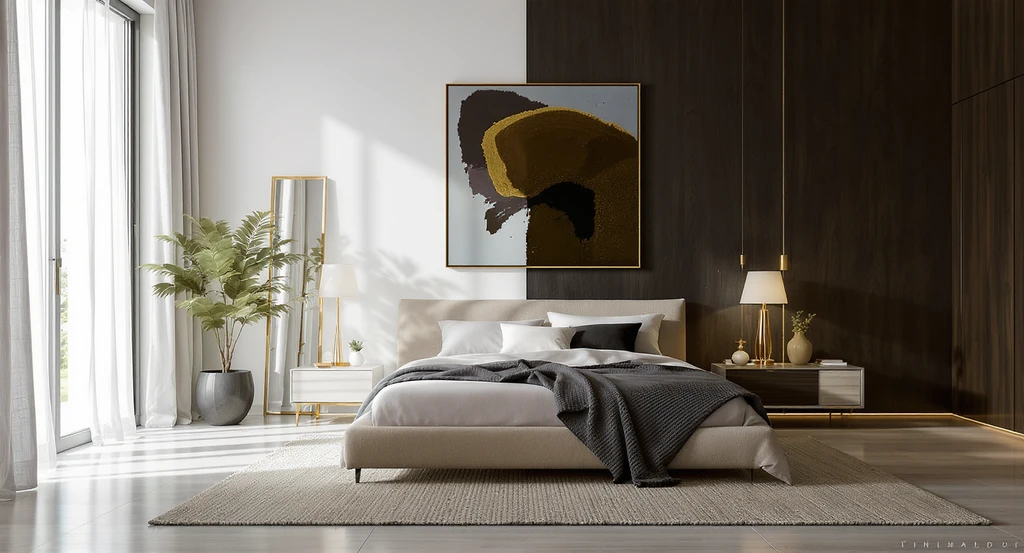
Best furniture and decor for awkward bedroom spaces: Anchoring empty corners with a tall lamp, mirror, and oversized plant, plus choosing wall art for small bedrooms to balance scale and visual weight.
When a bedroom’s main wall or corner feels unfinished, your eye is usually reacting to a break in scale or a disconnect in rhythm. A large, uninterrupted wall behind a bed or parallel to a window can exaggerate the emptiness especially when everything else sits lower in the room or hugs the floor. In corners, the tension often comes from vertical disconnect or the void that draws attention because nothing else in the space rivals that height. This is why a tall lamp, standing mirror, or even an oversized plant does more to settle the atmosphere than any collection of small, surface-level objects. Visual weight is the underlying mechanism: when wall art or furniture is too small or spread out, the void becomes more pronounced and the room can feel like it’s missing an anchor. Well-chosen larger elements don’t just fill the space, they actually rebalance how light, eye movement, and comfort interact in the whole room.
-
Why It Feels Slightly Off (and How Most People Miss the Cue)
There’s a subtle psychological reaction at play. When a bedroom’s wall or corner feels empty, it’s easy to assume something decorative will fix it. But in practice, a string of small pictures or a trio of tiny shelves usually makes the wall look more fragmented. What’s actually missing is a sense of deliberate finish. As we’ve explored in our guide to warm lighting, color, and better scale in bedrooms, scale and how accents repeat at different heights and weights plays a larger role in how peaceful and unified a room feels than any single piece of decor.
-
What Most People Assume (and Why Decorative Clutter Backfires)
A common assumption is that more decor equals more completion so adding shelves, small tables, or multiple framed prints in an empty corner or wall should make the space feel lived-in. But the opposite is often true. When you scatter several small elements, you unintentionally call attention to their individual size and increase visual busyness. This is especially pronounced in rooms with strong colors or heavy materials, like deep green walls or velvet curtains, where the eye seeks an anchor to rest upon. According to our guide on decorating awkward corners, focusing on one or two substantial pieces rather than several small ones settles the space and removes the unsettling sensation of “floating decor.”
-
How Scale, Lighting, and Surface Interaction Shift the Room
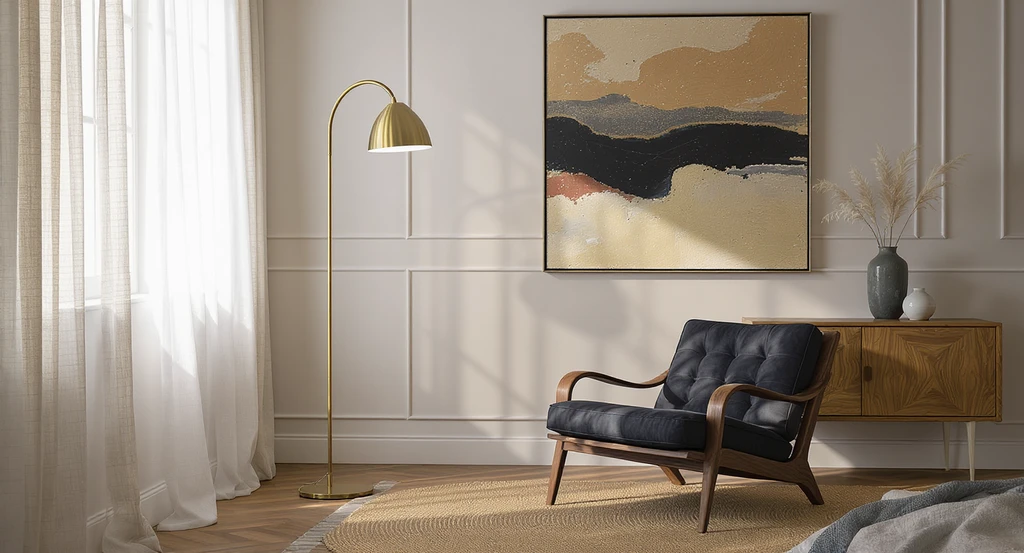
Smart bedroom design: using the best furniture for awkward bedroom spaces, large wall art, and area rugs visually expands and balances small bedrooms. Discover how to decorate empty corners and choose art that shifts the room’s light and scale.
There’s a spatial truth that many overlook: a blank wall or corner reads as empty not because it lacks objects, but because the vertical and horizontal flow is disrupted. Filling that void with a sculptural element a tall lamp, armoire, or bold canvas not only introduces height but also plays with how shadows and light move in the room. As discussed in our overview of small bedroom comfort strategies, even one large-scale item can make a compact room feel generous and cohesive. Light interacts with these substantial elements differently: a floor lamp throws vertical shadows that elongate, while a wide console or substantial chair can reflect and diffuse both daylight and lamplight, softening the room’s edges. Layering these, instead of filling space with objects, creates a more finished and calm visual field.
-
Where Trade-Offs Appear: Space, Function, and Mood
Introducing larger elements or dramatic artworks means losing certain types of flexibility. For example, a substantial armoire provides storage but reduces open floor space. An oversized artwork makes a clear statement but limits future rearrangement. In compact bedrooms, scale must be managed carefully—something we emphasized in our small bedroom solutions. The key trade-off is between a visually calm, unified mood (with a few substantial, well-placed pieces) and the ability to continually change or re-style smaller decor. Deciding what you’ll use the area for a reading nook, dressing zone, or meditative spot will clarify which trade-off is worth making for you.
-
Practical Adjustments That Create Harmony
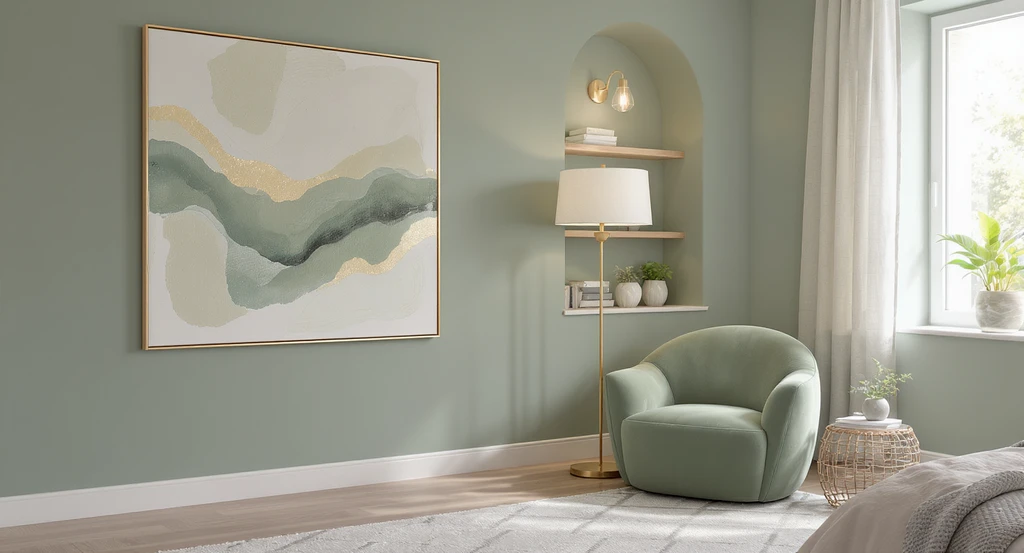
Discover how to decorate empty bedroom corners and choose the best furniture for awkward spaces: use curved wall art, layered lighting, and accent shelves to add harmony and make bedrooms look bigger.
First, decide whether the wall or corner should act as an anchor or a connector. For a wall, try one oversized artwork (at least half the width of the bed or main furniture); for a corner, opt for a tall element that meets or exceeds eye level. To soften square-heavy bedrooms, choose curved shapes a globe lamp, rounded chair, or even wall art with an irregular silhouette. If you have color on your walls, echo one of those hues in your anchor piece for cohesion. And don’t overlook lighting: as repeated in our guide on finishing a bedroom with warm lighting, layering two or three light sources at different heights will do more for the corner’s mood than any single furniture change. For alcoves or cutouts, shallow shelves or a slim bench paired with accent lighting can transform what feels odd into a purposeful feature, as outlined in our bedroom alcove strategy.
-
What Visualization Reveals: Less Regret, More Intent
Visualizing changes before buying or rearranging makes the difference between just filling space and genuinely finishing a bedroom. When you preview how an oversized mirror, a tall plant, or a singular piece of art changes the balance, hesitation drops. REimagineHome AI lets you test these adjustments virtually, showing how shadows, sight lines, and scale transform the entire room not just the empty wall or corner. It helps replace doubt with clarity and prevents the regret of pieces that seemed ‘right’ in store but feel wrong at home. Definition: In interior design, ‘visual weight’ refers to how much a feature or object draws your attention and sets the balance of a space. Achieving harmony isn’t about symmetry or filling every gap it’s about placing enough visual weight in the right places so the room feels intentional and inviting.
Visualization Scenario
Imagine uploading a photo of your bedroom wall and corner into REimagineHome AI. You test swapping in one tall, sculptural lamp for your current table, preview an oversized canvas art in moody green, and toggle the lighting direction. On screen, you see how these scale shifts make the corner feel finished, not filled and instantly know which choice suits your room.
Bedroom Wall and Corner FAQ
What’s the best furniture for a bedroom wall or corner?
The best choice is a single, substantial element that offers both scale and function: a large artwork, tall lamp, armoire, or well-proportioned chair. Select a piece that echoes room colors or textures for added cohesion.
Does a rug make a bedroom look bigger?
Yes, placing a large rug—at least two feet wider than the bed—grounds the space, anchors furniture, and reduces visual fragmentation, making the room feel larger and more finished.
How do you choose wall art for a small bedroom?
Pick one oversized piece or a vertical set that matches the bed width or fills about two-thirds of the wall length. Avoid small, widely spaced pieces that can look unintentional and cluttered.
Will a sectional or sofa fit in a bedroom corner?
In large bedrooms, a small sectional or settee can work, but measure carefully: allow at least 36 inches for walking space. In small rooms, an armchair or slim loveseat is usually a more balanced choice.
How can I visualize changes to my bedroom before committing?
Using tools like REimagineHome AI, you can preview new furniture, lighting, or art in your space virtually. This helps clarify scale and mood before any purchasing or rearranging happens.