Evaluating Bed Size for Compact Bedrooms: Comfort or Floor Space?
TL;DR
When planning a compact bedroom, choosing between a larger bed and open floor space depends on personal comfort, access needs, and the room's layout. Prioritizing a queen or full-sized bed often supports long-term comfort, but careful furniture placement, vertical storage, and versatile design strategies allow even modest rooms to work beautifully and efficiently.
Finding Harmony in Small Bedroom Choices
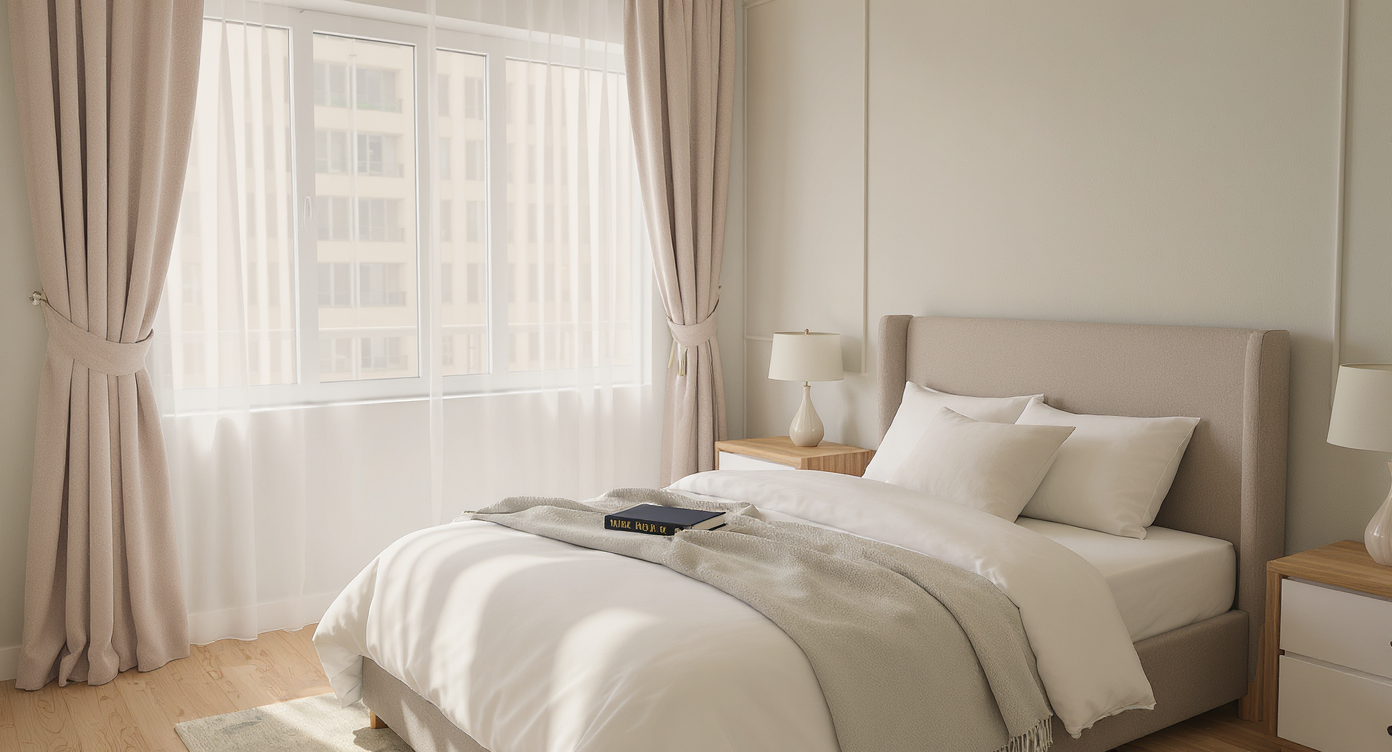
A tightly arranged small bedroom with a queen bed, minimal furniture, and built-in storage, reflecting the real-world space versus comfort dilemma.
In compact bedrooms, the question of whether to downsize your bed often emerges as a defining moment in shaping the entire space. Opting for a smaller bed may promise more floor area, side tables, or storage, but it comes at a potential cost: your nightly comfort. For city dwellers and those with unique layouts, this choice becomes more than a matter of preference—it’s about the lifestyle you want your room to support. Designers and homeowners alike grapple with the tradeoff between luxurious sleep and a streamlined, organized environment. Before deciding on a new mattress size, it helps to examine how your routines, needs, and the shape of your room interact. Recent trends in small bedroom design show that comfort and function are not mutually exclusive. With thoughtful furniture selection and layout, even a queen or full-size bed can anchor a restful sanctuary in surprisingly tight quarters.
-
Comfort Versus Functionality: What Matters Most?
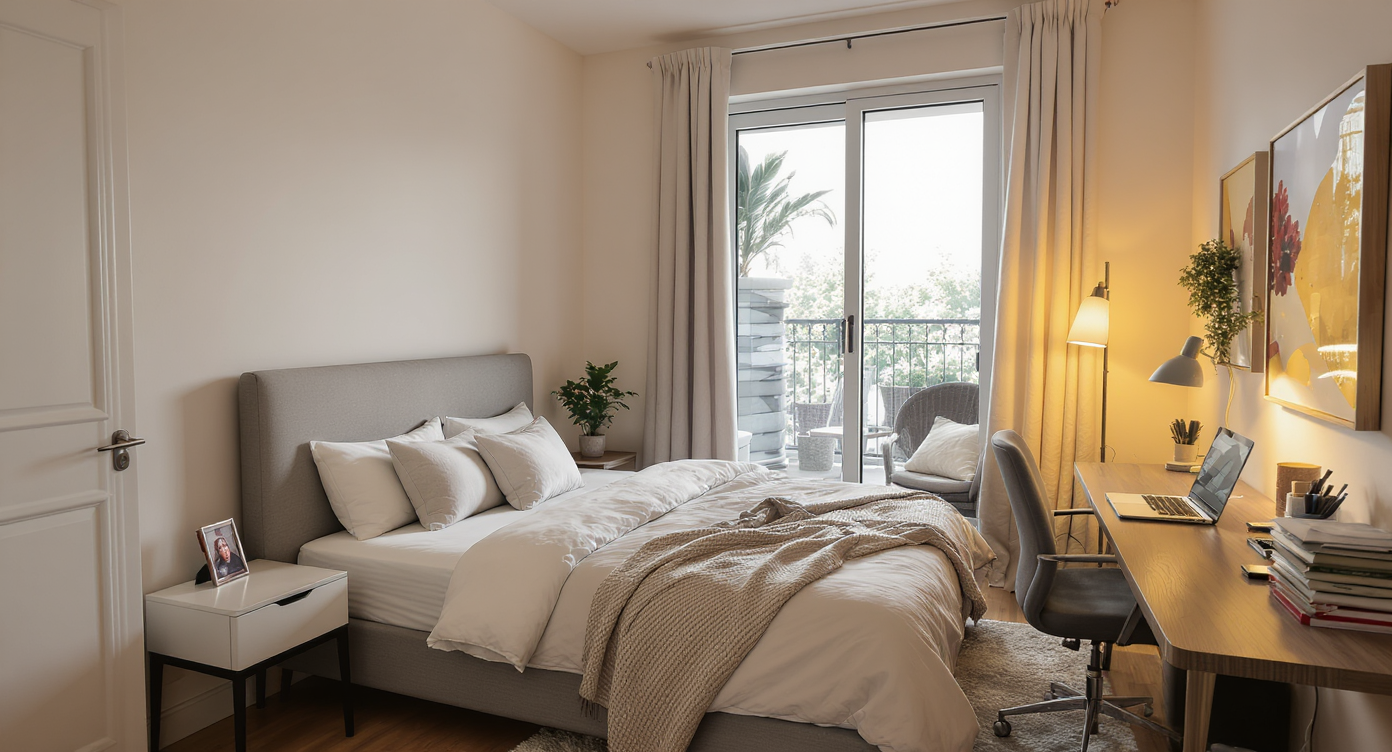
A compact bedroom showing the trade-off between a larger bed for comfort and limited space for furniture or room access.
Mattress size is a highly personal decision, but compact spaces demand practical solutions. Many adults find it difficult to sacrifice bed width for more floor room, especially if restful sleep is a top priority. However, keeping a larger bed may limit the placement of side tables, dressers, or even access to a balcony or closet. In homes where the bedroom does double duty as a workspace or retreat, consider your daily routines. If you tend to read, work, or unwind in bed, the added comfort of a queen, or even a full, can be essential. Lifestyle also plays a significant role. Do you frequently use the door near your bed to access a balcony, or is that entry rarely opened? Would moving your bed to another wall change how the room feels or functions? These questions drive both design and comfort decisions. Solutions could include keeping a queen bed and adjusting surrounding furniture, or exploring the practicality of a slightly smaller full bed to reclaim inches for critical pathways.
Expert Insight
A friend recently moved into a quirky L-shaped studio where every inch mattered. She couldn't part with her queen bed, but needed access to a small balcony for morning coffee. Rather than compromise, she slid her bed tight to the far wall, swapped out both nightstands for a single wall shelf, and tucked rolling bins below the mattress. With a soft rug and two plants, her sleeping nook became both restful and functional—all without saying goodbye to her favorite bed.
-
Smart Layouts for All Bedroom Concepts
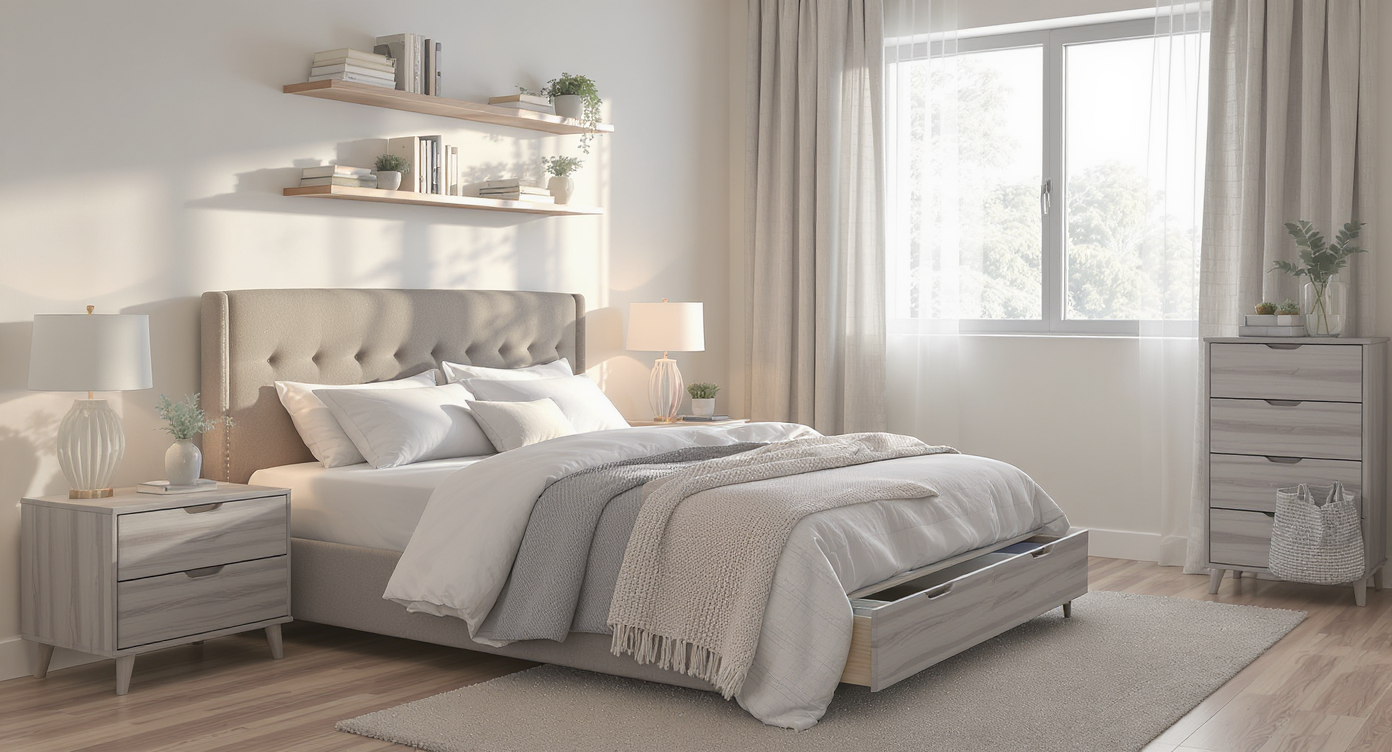
A compact 10x10 ft bedroom uses smart layout: bed against the wall, floating shelves, wall lamps, built-in storage, and a tall dresser.
The right layout balances sleep comfort with daily usability. In small square bedrooms—such as a 10x10 room—positioning the bed to allow a clear path of 24 to 30 inches is often recommended. Developers, as well as experienced residents, often suggest pushing the bed to one side of the room, making it possible to fit a nightstand on the opposite side. Floating shelves, wall-mounted lamps, and headboard storage can recreate the functionality of traditional bedside tables without crowding the floor. According to small bedroom layout: how to maximize storage in a 10x10 room, swapping nightstands for tall, narrow dressers or over-bed shelves is another space-saving technique that maximizes every inch. Even the humble under-bed drawer or unobtrusive storage basket contributes to a tidy and serene atmosphere.
-
Furniture, Flow, and Storage Design Innovations
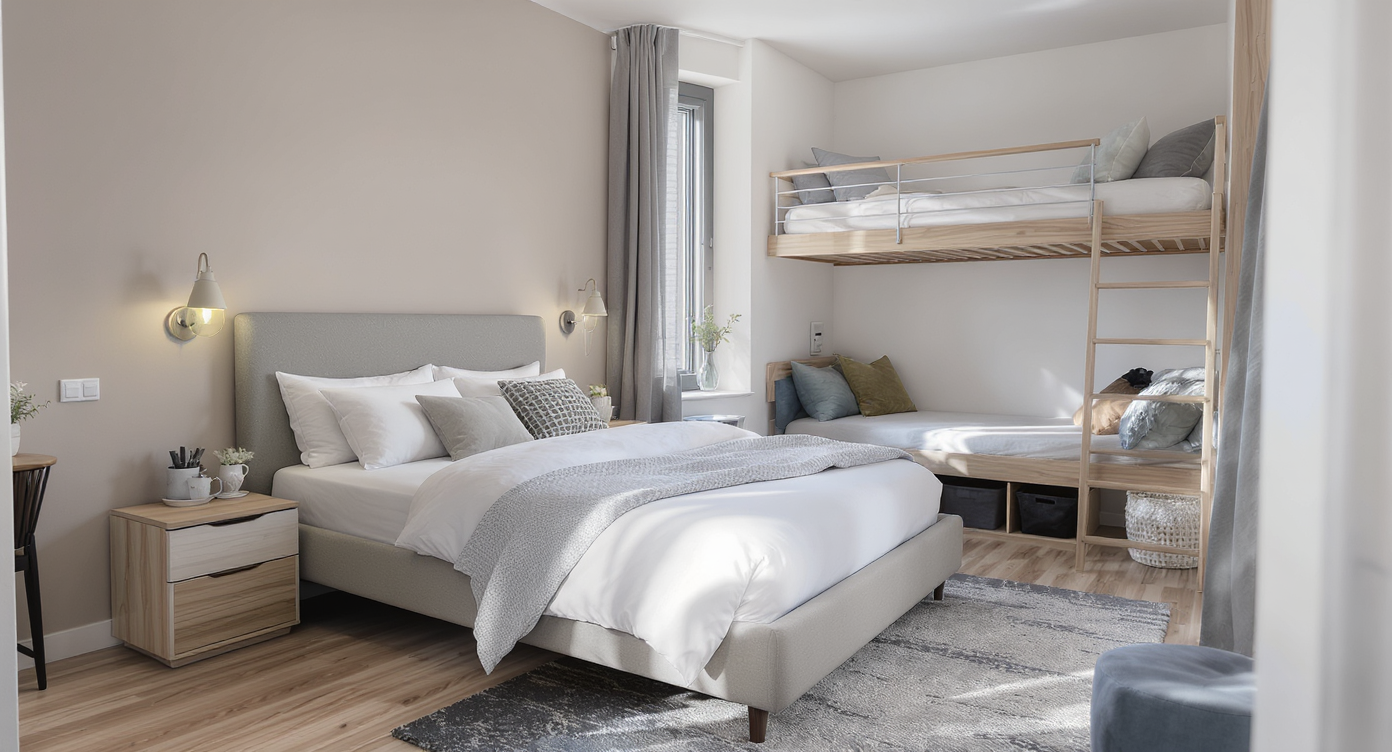
A compact bedroom maximized with low-profile, modular storage solutions and a multifunctional headboard, utilizing every inch of space efficiently.
While the footprint of your bed anchors any small room, the supporting cast—dressers, wardrobes, under-bed bins, and multiuse furniture—can reshape the space entirely. Low-profile, modular, or wall-hugging furniture frees up valuable movement zones, turns awkward alcoves into assets, and reinforces the room’s overall harmony. If your space features architectural quirks like built-in nooks or strange corners, use them to your advantage. For instance, a nook could house a compact dresser, a reading chair, or a set of floating shelves for display and storage. Smart alcove solutions suggest transforming such spaces into vanity stations, book ledges, or even extra closet storage. In especially compact settings, multi-purpose headboards with integrated chargers or shelving can take the place of standard nightstands, keeping essentials within arm’s reach yet off the floor. For unique room layouts, a Murphy bed or a lofted platform can redefine what's possible, opening up new functional zones during the day while still providing the plush rest you expect at night.
-
Practical Scenarios: Real-Life Small Bedroom Choices
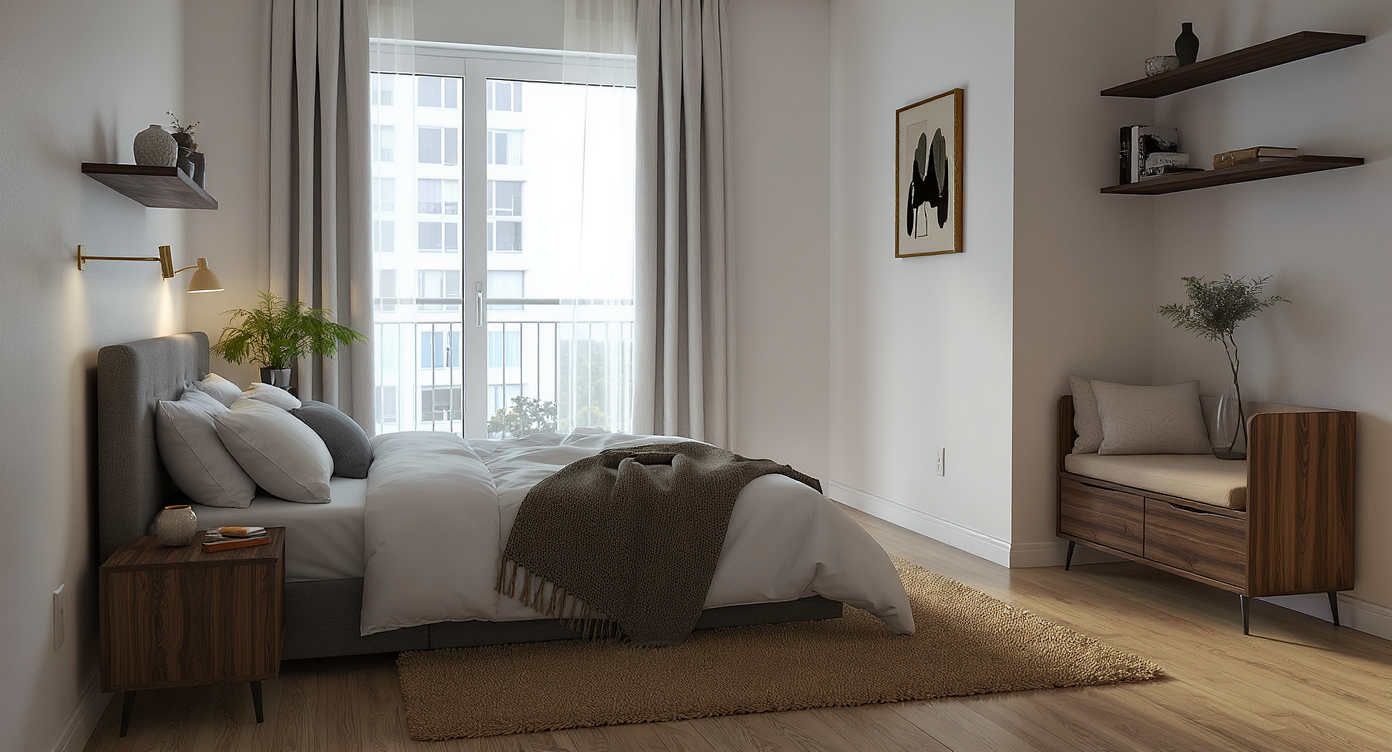
A compact bedroom prioritizes flow and storage: queen bed by balcony, wall-mounted shelf, tall dresser, and a nook daybed solution.
Consider a resident who enjoys their queen-sized bed but wants access to a shared balcony. Rather than giving up bed size, they might rotate the bed 90 degrees or slide it against a different wall to clear the path to the door. In another home, the closet is tight, and a bulky nightstand feels like too much—so a wall-mounted shelf plus a tall, lean dresser frees up the whole walking zone. Others may love the cozy feeling of a bed tucked into a wall nook, using plush pillows along the back to turn it into a lounging daybed for reading or work breaks. For solo sleepers, a full-size bed sometimes offers a middle ground: enough width for a comfortable rest and enough saved inches on either side to accommodate a lamp, floating shelf, or a bit of walking space. Shorter adults or those less tied to sleeping space may even consider a twin, especially if significant extra floor area is desired for yoga, hobbies, or working from home.
-
Anecdote: Living Large in a Small Footprint
After moving into a city apartment with a challenging 10x10 bedroom, a friend agonized over keeping her queen bed. With the balcony door nearly blocked and no room for side tables, she toyed with the idea of swapping down to a full or even a twin. Ultimately, she pushed the bed against one wall, swapped both nightstands for a single tall dresser, and installed two floating shelves at head height. The result was transformative. She kept her beloved sleeping surface but gained room to open the balcony door and stash her essentials cleverly out of the way. Over time, living in this reimagined layout became second nature, and she never missed the extra furniture.
-
Common Mistakes to Avoid
A frequent pitfall in small bedrooms is expecting every storage or furniture solution to fit the norm—pushing for two nightstands, crowding the room with dressers, or centering the bed regardless of the entry points. Another misstep is failing to adjust for movement: tight walkways, doors or drawers that cannot open fully, or a bed pressed too close to a window can breed daily annoyance. Some overlook vertical storage options or forget the power of well-placed under-bed bins, missing valuable cubic feet. Others may delay investing in blackout curtains or well-tailored blinds, sacrificing both style and sleep. And finally, not measuring every single piece of furniture before buying can easily lead to a cramped, frustrating layout. Compact spaces thrive when each addition is intentional and measured to make the most of the available footprint.
-
Tips and Insights from Designers
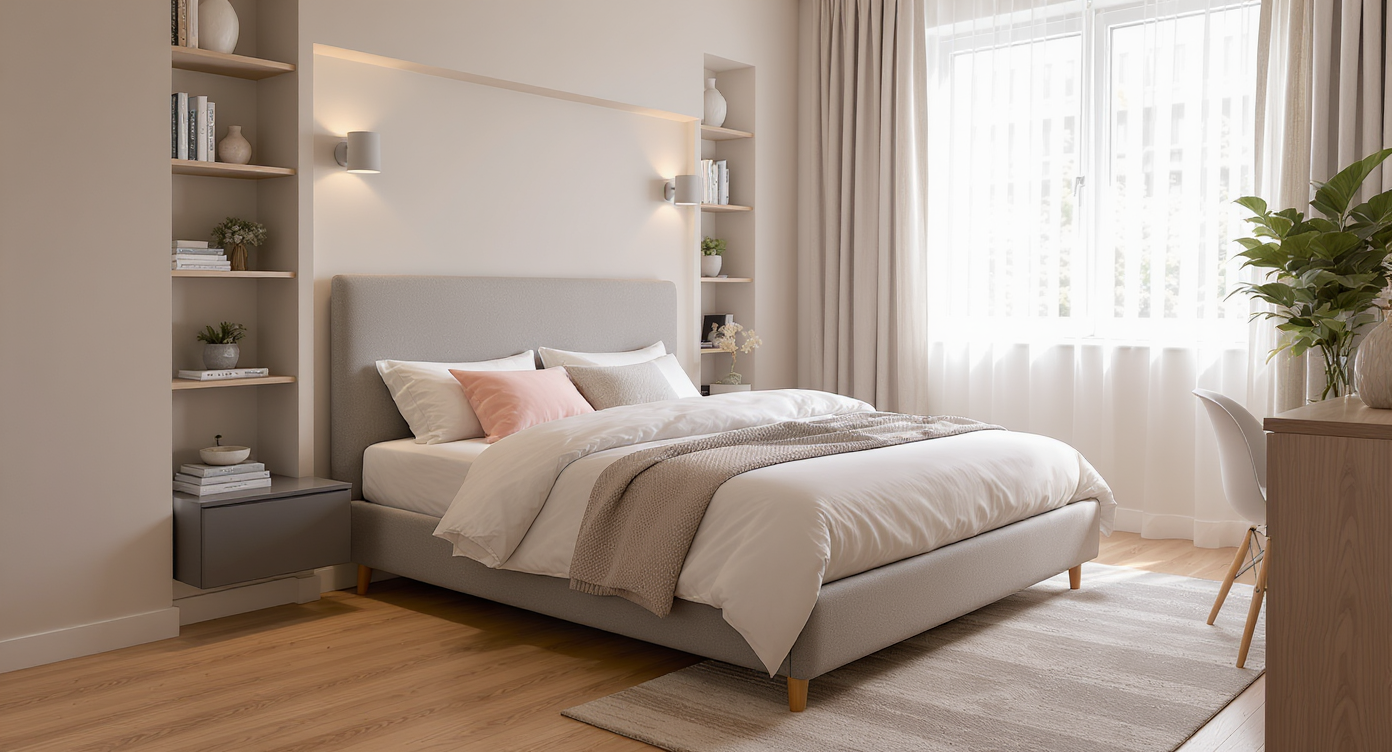
A designer-inspired small bedroom with a slim storage bed, vertical lighting, and space-maximizing alcove shelves for comfort and function.
Designers often recommend selecting a bed that aligns with your priorities—prioritizing comfort if you spend much time resting or lounging, and downsizing only when every inch makes a measurable difference. Slim profile beds and headboards with built-in storage tend to win in both function and style. Layering lighting vertically, such as wall sconces or pendant fixtures, prevents cluttered surfaces and makes a room feel taller. Looking forward, small bedroom design trends emphasize color palettes that reflect light, slim furniture silhouettes, and clever storage. Leveraging alcoves or architectural features—rather than ignoring or covering them—enables even the oddest-shaped rooms to shine. The best small bedrooms are those that bend traditional furniture norms to meet the unique needs of the user.
-
How to Use This Insight in Your Next Design
When designing or updating a compact bedroom, start by plotting out your real priorities. Identify non-negotiables—like having a queen bed for two sleepers or daily use of a balcony door. Next, review every inch of wall space for modular storage ideas, including over-bed shelving or tall, narrow dressers. The sweet spot often lies not in shrinking your sleeping space, but in maximizing storage design elsewhere and keeping traffic flow smooth. If your room features a quirky alcove or asymmetric nook, turn it into an asset—consider a daybed, shelf, or workspace rather than leaving it empty. For inspiration on integrating these elements, explore emerging layout ideas for small bedrooms that deliver style without sacrificing comfort.
-
Visualization: Picture a Better Bedroom
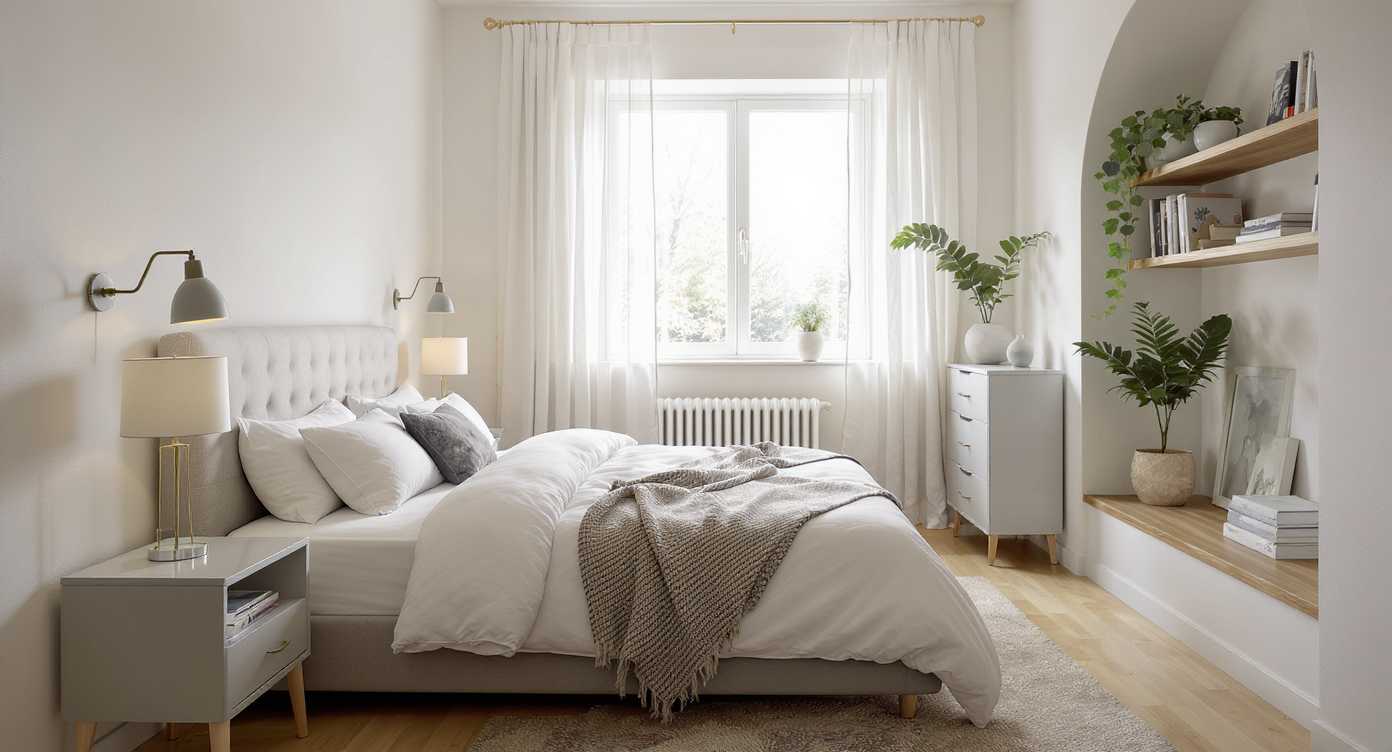
A thoughtfully arranged compact bedroom maximizes comfort and storage, balancing a plush queen bed, sleek storage, and inviting natural light.
Imagine walking into a compact, sunlit bedroom. Against one wall, a plush queen bed stretches nearly the width of the room, but a single sleek nightstand and wall-mounted reading lamp provide everything you need at arm’s reach. The opposite wall features a gently lit mirror hung above a tall, glossy dresser. Along the window, sheer curtains filter light while blackout panels stay tucked away for restful nights. An awkward alcove—once neglected—now serves as a mini-library, lined with floating shelves and leafy plants. Under the bed, smooth-glide drawers keep seasonal clothing and spare blankets out of sight. As you move through the room, nothing blocks your way, and every piece serves a genuine purpose. This space, though compact, feels open, organized, and truly tailored to your life.
Visualization Scenario
Picture a compact bedroom where sunlight streams through the windows, a plush queen bed sits snugly along one wall, and not an inch of space is wasted. A tall, slender dresser stands beside a full-length mirror, floating shelves hover above the headboard holding books and a small clock, and clever under-bed drawers organize linens. Despite the tight constraints, the room hums with warmth and personality, every element contributing to the overall sense of calm.
Frequently Asked Questions
Downsizing to a full or twin may free space, but comfort often outweighs added floor area. Evaluate how much you value sleeping space versus storage and pathways.
What’s an effective way to fit a queen bed in a small room?
Push the bed to one side, use a single slim nightstand, and opt for wall storage rather than bulky furniture. Refer to small bedroom storage strategies for inspiration.
How can I make use of awkward alcoves or nooks?
Repurpose these spaces for shelves, a cozy seating area, or extra closet storage. Explore how to optimize nooks with multipurpose furniture and clever lighting.
What new trends are emerging for small bedrooms in 2026?
Current trends include minimalist profiles, light-enhancing palettes, and maximizing vertical storage. Visualization platforms like ReimagineHome.ai can preview layouts and style updates live.
Is it possible to have both style and storage in a compact room?
Absolutely. Slim dressers, over-bed shelves, and creative use of wall space allow plenty of storage without sacrificing visual harmony.
Key Takeaways: Comfort, Space, and Creative Storage
Designing for a compact bedroom does not mean sacrificing comfort or style. By carefully considering which bed size matches your needs and leveraging smart storage, every square inch becomes purposeful. Push past cookie-cutter solutions—adapt your furniture, rethink vertical real estate, and view each nook as an opportunity. Whether you’re a queen-bed devotee or open to a full, focus on a layout and flow that genuinely supports your life. Explore visualization tools and creative solutions at ReimagineHome.ai to test how your space can evolve into its best self.