7 Real-World Steps for Transitioning into Interior Design Without Prior Experience
TL;DR
Shifting into interior design with no active portfolio or formal training can feel daunting, but a mix of education, networking, and hands-on practice offers a strong foundation. This list covers seven actionable strategies that clarify practical steps, tackle common beginner confusion, and help weigh DIY versus professional paths for career changers in the design world.
Setting Your Sights on a Design Career: Getting Started the Right Way
A beginner's workspace: design materials, samples, and a laptop on a dining table signal the first steps into learning interior design.
Starting a career in interior design without formal experience or a dedicated degree is more common than many realize. The industry combines practical skills, creativity, technical understanding, and strong networks—a mix that can be learned outside traditional full-time programs. For those feeling beginner confusion about where to start, especially adults pivoting from other fields, clarity comes from understanding the career’s pathways and requirements. Aspiring designers often wrestle with affordability, credibility, and how much to invest in certifications or education. Choosing the right course of action can both save resources and accelerate your entry into the field. In the following sections, you’ll find step-by-step planning advice, examples, and judgment from novice and seasoned professionals alike, ensuring a balanced approach for career shifters.
-
1. Understand Licensing, Accreditation, and Local Requirements

A realistic workspace showing key resources like licensing info, certificates, and local organization brochures for aspiring interior designers.
Before jumping in, get clear on what your locality requires for practicing interior design. In many regions, especially in the United States, licensure is not mandatory for most residential work but accreditation can give you a considerable edge. For example, only select states require a license while others value an accredited degree over official certification. You do not always need an interior design degree to start, but a certificate or coursework from a well-recognized institution signals credibility. Reviewing your region’s expectations prevents wasted effort and confusion, and having insight into trends—like increased online course offerings—helps you tailor your educational journey efficiently. An anchor in local design organizations or collective networks can be equally effective as formal credentials, especially when launching in mid-sized cities or creative communities.
-
2. Evaluate Certificate and Degree Options with Realistic Goals

A home workspace setup compares accredited online certificate and degree programs in interior design, featuring coursework materials and professional resources.
Many aspiring designers face a crossroads: pursue a full degree, enroll in a certificate program, or blend both. Certificate programs—particularly those accredited by industry bodies such as CIDA—offer targeted knowledge and skill development for those without the time or resources for a second bachelor’s degree. Choosing virtual certificate programs with a reputable connection to professional design organizations can make a significant impact, as highlighted by aspiring designers who balanced part-time studies with work commitments. Online offerings now commonly provide both technical and creative coursework, though in-person and hybrid formats often give richer learning, especially for material handling and collaboration. When comparing programs, always consider future progression—some certificates feed into long-term degree opportunities or even specialized graduate pathways, widening your future options.
-
3. Prioritize Hands-On and Mixed Learning Experiences

A hands-on interior design studio blends drafting tables, tactile material samples, lighting mockups, and digital tools for hybrid learning.
Interior design is both a physical and conceptual discipline. While online programs have opened new doors, there is consensus among professionals that fully virtual learning often misses the mark for tactile skills and real-world material applications. Hands-on classes, such as drafting, spatial planning, or site visits, develop intuition and confidence that purely digital coursework doesn’t always provide. Hybrid learning, which mixes online and in-person elements, makes it easier to build connections and understand textures, lighting, and materials in context. When mapping your step-by-step planning, prioritize enrolling in at least some in-person studio, workshop, or site-based instruction if available. Designers often note that interacting with real spaces and professionals contributes significantly to practical understanding and client confidence.
-
4. Gain Experience Through Entry Roles Like Staging and Styling

Editorial view of a living room setup in progress for home staging, featuring decor samples, tools, and accessories being arranged.
Moving directly into design roles can be challenging, but related jobs—such as home staging, merchandising, or assisting established designers—give early exposure to the industry’s workflows and client-facing tasks. Entry-level positions like staging stylist, showroom assistant, or even operational roles at design firms can demystify trade processes, introduce you to local suppliers, and hone your eye for spatial arrangement without requiring a full interior design degree. Many successful designers began by taking on staging or decor jobs part-time while studying or training. The blend of practical experience and formal learning offers a dual advantage, grounding abstract knowledge in everyday application and helping you build a work portfolio. For more on balancing practical DIY solutions and knowing when to call in pros, see our look at interior design on a budget for small spaces.
-
5. Network with the Local and National Design Community
A photorealistic seminar venue arranged for design networking, including sample boards, brochures, and supplier displays—no people visible.
Success in interior design depends as much on relationships as on credentials. Student memberships with professional organizations—like ASID or IIDA—can open doors to internships, events, and career mentors. Design seminars, supplier presentations, and volunteer gigs at trade shows introduce you to trends and help develop a personal network. Beginners often underestimate how fast a few solid connections accelerate job opportunities and referrals. In cities like Boulder or Denver, participating in local chapters or discussion groups often leads to leads for part-time work or shadowing. According to our exploration of industry advice for small spaces, word of mouth remains a primary way for clients to find and trust new design talent. Building your network is a core part of step-by-step planning in this field.
-
6. Build a Diverse Portfolio Using DIY and Digital Tools

A home workspace shows digital and physical portfolio elements: device-based mock-ups, before-and-after DIY photos, and design material samples.
A compelling portfolio is essential when experience is limited. Start by documenting all hands-on projects—whether staging, DIY home decor for friends, or volunteering to update a local business. Use before-and-after photos, concept boards, and sketches to show your design approach and problem-solving skills. Digital planning platforms such as REimagineHome.ai can help you create virtual mock-ups or room transformations for your growing portfolio. Not every project needs to be client-facing; even personal experiments or small-scale room updates are valuable. For inspiration on simple yet high-impact DIY projects, see our roundup of DIY home decor ideas designers recommend.
-
7. Clarify the Difference Between Decorator, Designer, and Stylist
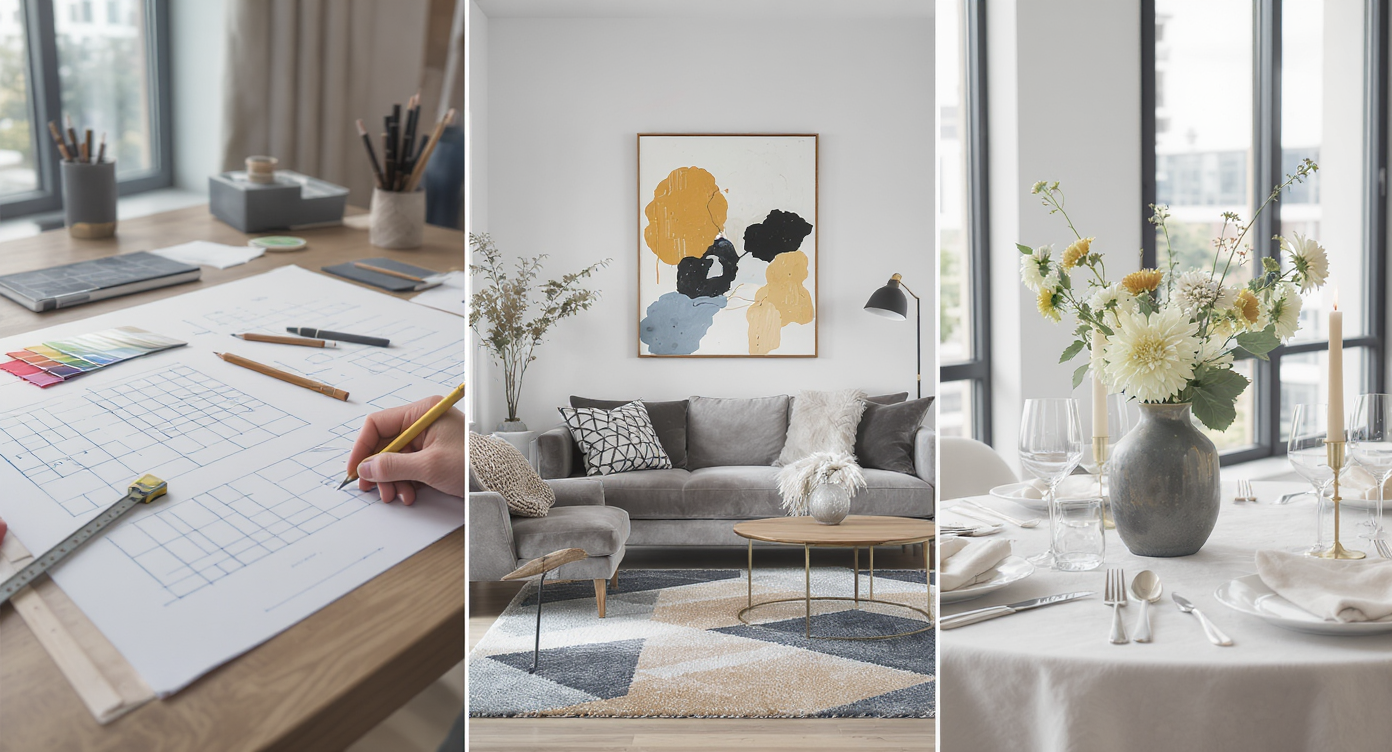
A modern apartment shows three adjacent scenes: interior designer’s drafting table, decorator’s styled living space, and stylist’s staged dining area.
Understanding titles is vital when communicating your skills and limits as you enter the profession. Interior designers—especially those with formal training—often tackle space planning, codes, and renovation. Decorators focus more on surface selections, furnishings, and color consultation, while stylists and stagers prepare spaces for specific events, photos, or real estate listings. Beginner confusion often sets in here; legal restrictions vary by location but communicating clearly about your official capacity protects your credibility and client relationships. If you prefer a path that balances DIY and advice, styling and staging roles may provide creative satisfaction while you develop design credentials. Drawing this boundary helps you honestly navigate DIY versus pro opportunities and articulate where you add value as you continue learning.
FAQs for Career Changers Entering Interior Design
While designers typically handle layout, codes, and full-scale renovations, decorators focus on finishes and furniture, and stagers prepare spaces for sale or viewing. Always clarify your official role with clients.
How important is formal certification compared to a portfolio?
Many professionals agree a balanced portfolio showing real work is just as critical as a certificate, especially when starting out. Documenting even DIY projects helps demonstrate your approach and skills.
Should I pursue DIY or professional routes for skills-building?
This depends on your learning style and goals. Many blend both, starting with hands-on DIY to understand fundamentals, then enrolling in professional coursework to deepen technical knowledge.
What digital tools are recommended for portfolio building?
Platforms like REimagineHome.ai help you visualize concepts and create mock-ups, making it easier to showcase your abilities when you lack client projects.
How can I manage costs while transitioning careers?
Explore affordable online programs, make the most of free resources, and consider part-time work in related fields to subsidize your transition, as explored in our budget-conscious guide for small-apartment design.
Designing Your Career Shift with Confidence
Transitioning into interior design without a traditional degree is possible with strategic choices in education, hands-on learning, and community involvement. Curated certificate programs, entry-level experience, and a strong portfolio—supported by digital tools like REimagineHome.ai—enable ambitious newcomers to steadily build practical know-how and a recognizable personal style. As with any creative field, persistence and adaptability go a long way.