
TL;DR
New real estate agents should prioritize mentorship, office leads, and modern marketing over minor fee differences. A brokerage with one-on-one coaching, pay-per-use marketing, and a clear tech stack often accelerates your first 6–12 months far more than a slightly better split.
The brokerage decision that makes—or breaks—year one

The right workspace supports new agents juggling mentorship, leads, and marketing efforts effectively.
SEO snippet: How to choose a real estate brokerage as a new agent—mentorship, office leads, MoxiWorks CRM, fees, and team vs. solo strategy.
Choosing a Real Estate Brokerage in 2025: Mentorship, Leads, Fees—and the First‑Year Agent Reality
When you’re new, culture and coaching can matter more than splits. Here’s how to choose a real estate brokerage—and when to join a team.
Real estate brokerage choice is a make-or-break decision for many first-year agents, and the stakes are highest when you haven’t built your sphere yet. Industry surveys put the median Realtor age near 60, which means a lot of brokerages are optimized for veterans with big SOI pipelines. That’s a tough fit for a 22–29-year-old who needs lead generation and hands-on mentorship right now. Market coaches often warn that the first 12 months are the drop-off point for many rookies, not because they can’t sell, but because they run out of runway.
Here’s the thing: the right brokerage for a new real estate agent offers more than a desk and a login. It offers office leads, one-on-one coaching, modern real estate marketing, and a tech stack you’ll actually use—from CRM to CMA and listing materials. And yes, the dollars matter, but the speed to your next closing matters more.
Anecdote 1: A 24-year-old Florida agent I met felt stranded at a large, faith-forward shop with long meetings, no mentorship, and no leads. She liked the people, but not the outcomes. After she interviewed a boutique firm with monthly one-on-one coaching, FSBO/expired funnels, and a CEO willing to co-fund Zillow while she ramped, her production—and confidence—started compounding.
National data insight: what broker models actually deliver
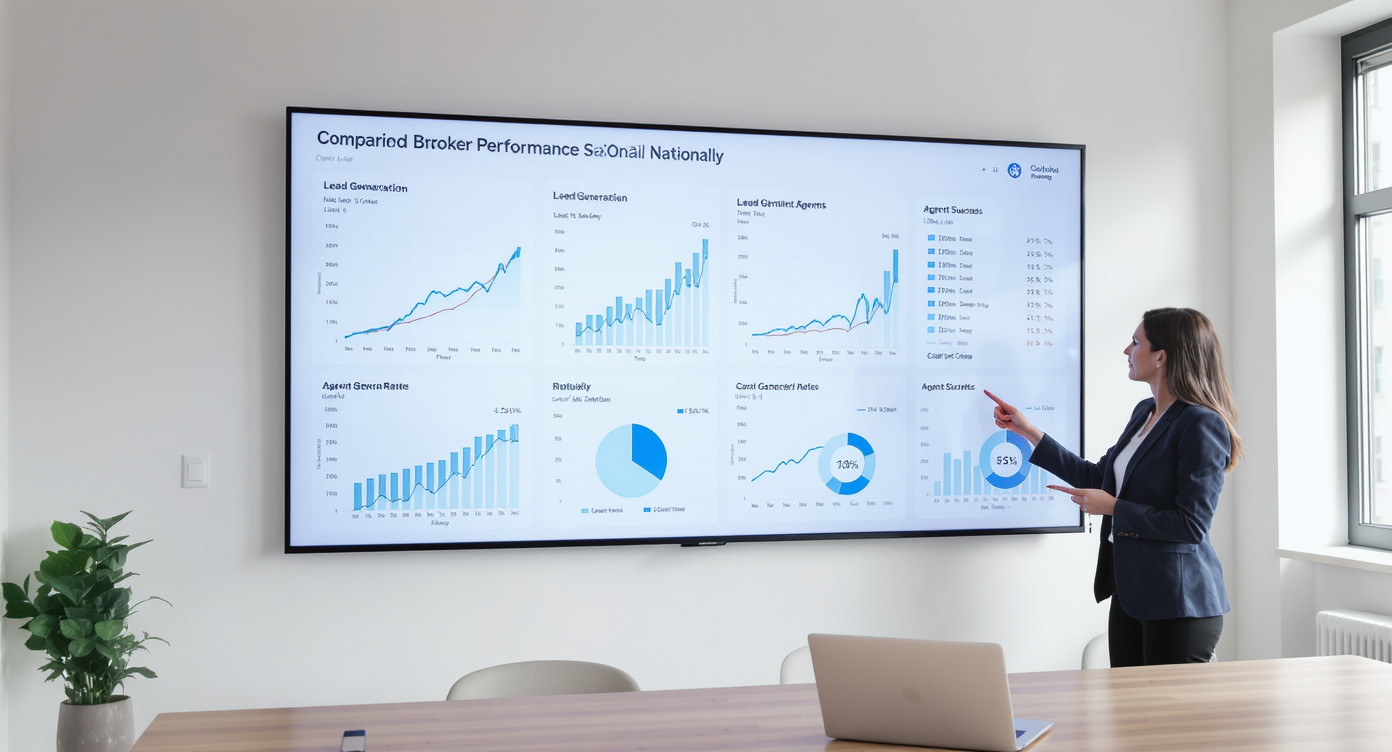
National data reveals which brokerage models deliver real results for first-year agents.
National data insight: what broker models actually deliver
Choosing a real estate brokerage is ultimately a value equation, not a fee chase. Broker managers commonly report that new agents who receive structured mentorship and office leads close their first deal 4–8 weeks faster than those left to figure it out alone. That time savings is cash flow.
Across the country, you’ll see a few recurring fee structures: franchise fees around 5–8%, per-transaction E&O charges in the $40–$80 range, and monthly office/tech fees from $0–$100. Marketing packages vary widely. Some firms hand you polished postcards, e-newsletters, and open house signs on day one; others ask you to DIY and reimburse slowly (or only after several closings). Agents often advise weighing a one-time onboarding cost of about $300 against the hundreds you’d otherwise spend piecemeal on business cards, signage, and printing within your first month.
Lead generation ROI is the other half of the math. Market analysts suggest most purchased online leads convert at roughly 1–2% with disciplined follow-up, while open houses and referrals can convert several points higher because intent is warmer. A brokerage that shares office, relocation, FSBO, or expired leads can bend this curve in your favor—especially when you don’t have a deep sphere of influence yet.
Data visualization note: Imagine a simple bar chart comparing “time to first closing” under four models—no coaching/no leads, coaching only, office leads only, coaching + leads—with the last category showing the shortest time. Alt text: bar chart showing coaching + leads producing the fastest path to a closing.
Anecdote
A 24-year-old Florida agent left a large, traditional office with no mentorship for a selective boutique firm that paired her with monthly one-on-ones, FSBO/expired funnels, and co-funded lead gen for 90 days. She booked two listings in her first quarter after the move.
Regional and segment realities: Florida, Sun Belt, and the SOI gap

Regional market nuances shape agent success across Florida and the Sun Belt’s evolving SOI landscapes.
Regional and segment realities: Florida, Sun Belt, and the SOI gap
In Florida and across the Sun Belt, broker leaders say higher insurance costs, rapid in-migration, and seasonal swings skew lead channels. That’s why relocation leads, renter-to-buyer funnels, and neighborhood farming can outperform pure SOI for new agents. Younger agents—who may not have a move-ready sphere—often do better at firms that pair them with listing opportunities (open houses, model homes) and relocation pipelines.
Demographically, many metro offices still skew older, while new agents skew younger. That mismatch isn’t about age; it’s about sales motion. If your office culture is structured around veteran repeat/referral business, you’ll hear “just call your database” more than “here’s an assigned lead, here’s the nurture plan, and here’s how we’ll coach your follow-up.” The first message works when you have a database; the second is oxygen when you don’t.
“Florida teams that combine community involvement with targeted digital farming tend to lift first-year agents fastest,” one brokerage trainer told me. “It’s not magic—just consistent reps, clear scripts, and accountability.”
Behavior and market psychology: why the right environment wins

A supportive culture and collaborative spaces encourage agent confidence and sustained growth.
Behavior and market psychology: why the right environment wins
Brokerage culture is a performance driver, not window dressing. Agents often advise that the best real estate brokerage for new agents offers real one-on-ones (not just group classes), actionable playbooks (how to run SOI, open houses, expireds), and quick broker responses when you’re in a live deal. Meetings that sprawl for hours without producing actions drain prospecting time; you should leave every meeting with a to-do list tied to revenue.
Anecdote 2: A veteran agent I know has stayed put for 18 years at one company, not because it’s the cheapest, but because it’s collaborative. Younger agents call him when a broker is tied up; he hosts their first open houses and they reciprocate with coverage. That kind of open-door mentorship turns a brokerage into a training gym—practice, reps, feedback—so new agents build muscle memory faster.
There’s also simple psychology at play. New agents who get immediate wins—hosting an open house, booking a buyer consult, landing a listing photo shoot—stick with it. Homebuyers today expect fast follow-up, clear communication, and strong listing visuals; brokerages that make it easy to execute those steps help rookies build momentum before doubt sets in.
Secondary insight: where new agents stall (and how to avoid it)

Training and focused coaching help new agents overcome early career challenges and thrive.
Secondary insight: where new agents stall (and how to avoid it)
New real estate agents most often stall when a brokerage is SOI-only, offers no office leads, and lacks one-on-one mentorship. Another stall point is outdated marketing—postcards and e-newsletters that look 1999 don’t get opened in 2025. Experts recommend keeping listing photos and branding clean and contemporary so buyers recognize and trust the property and the pro.
On technology, MoxiWorks is a common brokerage stack: the CMA tool is strong, the listing marketing center is solid, and the websites can be excellent. The CRM is serviceable for contact management and integrates with Google Workspace or Microsoft 365, though many agents augment task/flow management with additional tools. The key is adoption; a good-enough system you actually use is better than a great system you never open.
Costs matter, but sequence matters more. If a brokerage offers office leads, mentorship, pay-per-use marketing where postage is covered, and tuition reimbursement up front—those are cash-flow levers. A $40 monthly fee or a $40 E&O per transaction becomes trivial if those features help you close just one more deal each quarter. Broker coaches often note that a well-run mentee program can add 2–4 additional closings in year one, simply by replacing flailing with focused, coached activity.
Anecdote 3: I’ve watched a 21-year-old agent close eight transactions after committing to weekend open houses, daily calls to a curated lead pond, and structured script practice with a mentor. The switch wasn’t a magic brokerage—it was a brokerage that made the work painfully clear, then held her to it.
Visualization Scenario
Bar chart comparing time to first closing under four brokerage models—with coaching + office leads delivering the fastest result; caption notes that small fee differences are outweighed by lead and mentorship effects.
FAQ
FAQ
How should I choose a real estate brokerage as a new agent?
Choose a real estate brokerage that offers one-on-one mentorship, office leads, and modern real estate marketing; that combination shortens your time to first closing.
What’s the best way to compare brokerage fees and splits?
Compare brokerage fees by cost per closing, not line items; a 5% franchise fee or $40 E&O can be offset if the brokerage provides leads and coaching that add deals.
Should I join a real estate team or stay solo at a brokerage?
Join a real estate team if you lack immediate lead flow; team vs. solo is about survival runway, and teams can supply accountability and conversions while you learn.
Which real estate CRM is best for new agents using MoxiWorks?
MoxiWorks CRM works for contact syncing and basic follow-up; many agents pair it with Google/M365 tasking to manage long-term nurture more effectively.
How do I market real estate listings online without a big budget?
Use brokerage templates for newsletters and postcards, host open houses, and upgrade listing visuals with tools like ReimagineHome for affordable, compelling presentation.
Market outlook and reflection
Market outlook and reflection
Real estate marketing and brokerage models will keep evolving, but the fundamentals won’t: clarity, coaching, and consistent lead flow beat cosmetic perks. Deals don’t die from bad intent; they die from bad structure. If you’re new, pick the environment that gives you reps and relationships, not just logos and lanyards.
Service note for listings: modern visuals shorten hesitation. Tools like ReimagineHome help agents and homeowners visualize spaces, test styles, and produce on-brand listing visuals that convert—before you ever hit the MLS.
Practical takeaways
- For new agents: Prioritize mentorship, office/relocation leads, and an accountable calendar over a slightly better split. Ask for monthly one-on-ones and a 90-day ramp plan.
- For fee math: Track cost per closing. A 5% franchise fee and $40 E&O can be inconsequential if coaching + leads add even one closing per quarter.
- For tech: Adopt the brokerage CRM and CMA on day one; integrate your Google/M365 contacts, and schedule two hours weekly for pipeline hygiene.
- For team vs. solo: If you don’t have enough leads to survive 90 days, join a team now and build your brand in parallel. 40–60% of something beats 100% of nothing.
- For culture fit: Attend an office meeting before you sign. Look for collaboration signals: open-house hosting offers, live Q&A on problem files, and quick broker access.