3 Living Room Decor Mistakes AI Design Tools Can Help You Avoid
TL;DR
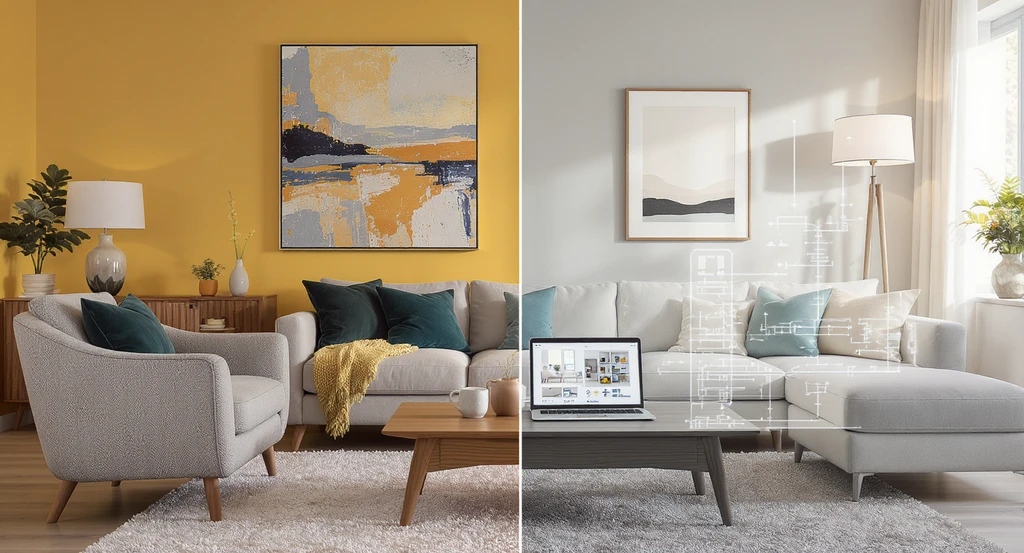
Avoiding common living room decor mistakes is easier when you use AI design tools to visualize changes before purchasing. From impulsive buys without a plan to copying Pinterest looks that don't suit your room, see precisely how your choices will fit—reducing returns, budget stress, and style mishaps. Here’s how visual validation leads to confident, cohesive results.
Why Living Room Decor Mistakes Are So Common—and So Costly
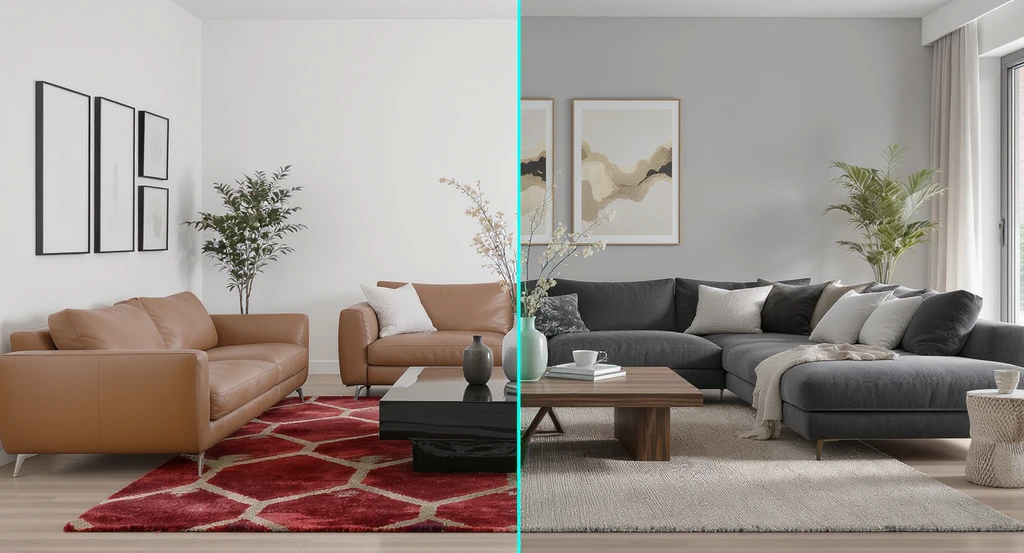
See how AI home design tools work to predict outcomes and prevent mistakes to avoid with AI room makeovers—experiment virtually before you commit.
Every homeowner or renter dreams of a put-together living room, but even well-intentioned refreshes can go sideways—leaving you with mismatched pieces, empty walls, or costly returns. What looks inviting on a screen often fails to translate into your unique space, leading to frustration and wasted money. Traditional decorating often relies on guesswork, using inspiration boards or shopping sales without knowing what actually fits your lifestyle or floor plan. Before affordable AI visualizers, there was no easy way to predict if a design would deliver on comfort, cohesion, and resale value. Today, technology bridges that gap—showing you the results before you commit. This article unpacks three common mistakes (and their simple, visual solutions).
-
What Really Happens When You Decorate Blind
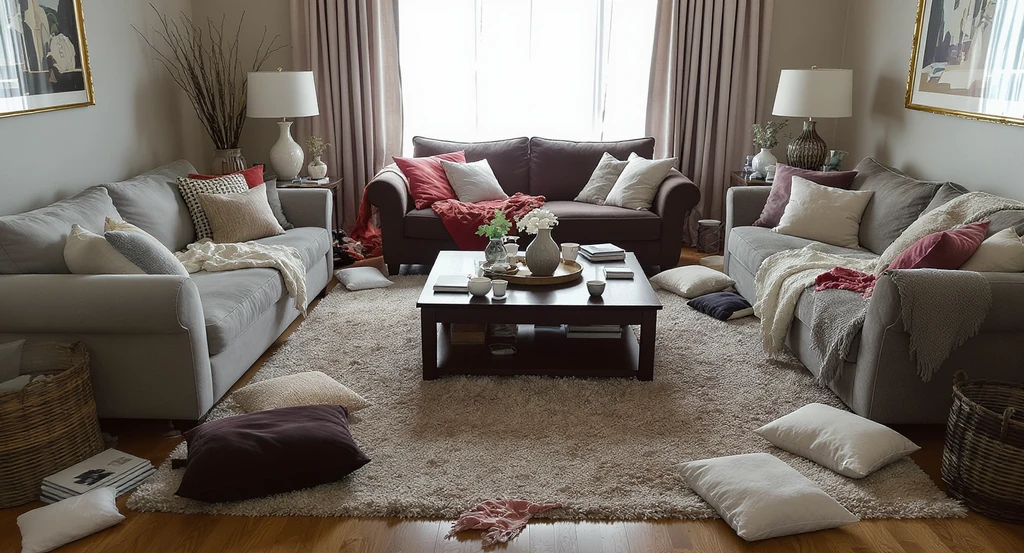
Without clear ai visualization, living room decor mistakes like odd furniture sizes and color clashes happen—see how ai room design tools work to avoid these errors.
Without a visual roadmap, most people rely on impulse buying or mimic looks that aren’t feasible for their space. This leads to clutter, clashing pieces, and a sense that something’s always missing. As described in our guide for first-time homeowners, mistakes like undersized rugs or odd-color combos are typical when you don’t pre-plan with your room’s actual proportions and natural light in mind.
-
Why Pinterest-Perfect Rooms Rarely Work in Real Life
Photos online can inspire, but not every setting is attainable. Many try to copy trendy layouts or styles, only to discover their living room’s size, ceiling height, or window placement makes certain looks unworkable. According to our breakdown of common living room decor gaps, ignoring the realities of your space is a core reason rooms feel disconnected or “off,” even after multiple redesigns.
-
The REimagineHome AI Visual Validation Model
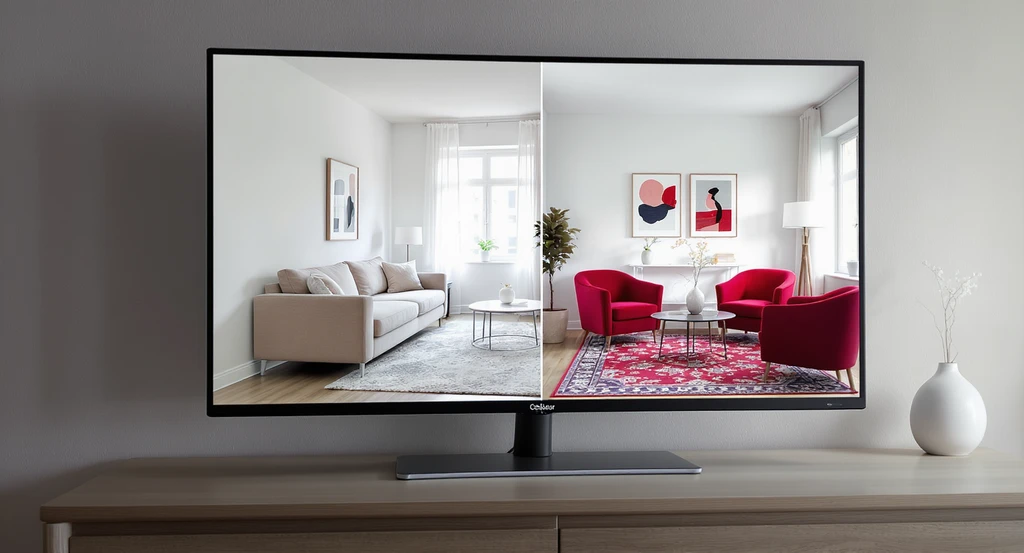
See how AI home design tools work by virtually testing new decor styles before you buy. AI visualization helps avoid mistakes in small apartment makeovers.
The Visual Validation Model from REimagineHome AI uses photo-based room analysis to let users test furniture, color, and art arrangements virtually before buying or painting. The method: 1. Upload a true-to-scale photo of your room. 2. Choose styles, colors, layout tweaks, or lighting shifts to simulate real options. 3. Preview before/after visuals with your permanent features (couch, windows, architectural quirks) unchanged. This real-world overlay approach removes uncertainty, letting you see how scale, reflectivity, and visual weight play out in your actual space.
-
Mistake 1: Shopping Without a Plan—The Costly Trap
One of the biggest decor regrets is buying attractive items on a whim—hoping they’ll make sense together. As discussed in our step-by-step plan for brown living rooms with large TVs, a cohesive vision prevents scattered purchases and returns. AI room visualizers anchor your selections, suggesting rug sizes, curtain height, and art placement for your room’s needs instead of generic templates.
-
Mistake 2: Copying Looks That Ignore Your Unique Space
Trying to recreate internet trends in a room with different scale, ceiling type, or light leads to awkward results. Instead, visualizing your own furniture and quirks—like in our article on finishing a living room with art and balanced seating—lets you adapt inspiration to genuine constraints. For example, an AI tool can show if your layout can support a gallery wall or sectional, not just copy a pin.
-
Mistake 3: Playing It Too Safe—Missing Out On Personality
After a few failed decorating attempts, it’s common to fall back on beige or safe choices, fearing mistakes. AI’s risk-free previews encourage experimentation—mixing colors, testing wall paint, or trying bold lighting—without making expensive errors. This process, as reinforced in our guide to cohesive living room fixes, leads to a more personal and satisfying result.
-
Trade-Offs: Physical Sampling vs. Visual Simulation
Swatch books and measuring tapes are useful, but can’t replicate the experience of seeing your finished space virtually. However, visualization isn’t perfect: color calibration, screen brightness, and digital models may not capture subtle fabric textures or day-to-night changes. For final verification, combine AI previews with physical check-ins—like using our AI tool best practices to calibrate scale and outlet placement in person.
-
How Visualization Reduces Decision Overwhelm

Using ai home design tools, homeowners can visualize living room decor changes—such as colors, textures, and layout—before buying, reducing mistakes to avoid with ai room makeovers and revealing how ai visualization for small apartment spaces helps clarify choices.
Uncertainty in home design usually looks like an overflowing cart, returns piling up, or endless indecision. Visualization narrows choices, clarifies scale, and reveals how light interacts with colors and textures—even before a purchase. As shown in our gallery-wall styling workflow, seeing your customized options accelerates decision making and lowers regret risk.
-
Definition: Visual Validation in Interior Design
Visual validation in interior design is the process of previewing proposed changes within a true-to-life room setting before making financial or permanent decisions. It solves for regret risk by reconciling inspiration with real constraints—lighting, dimension, layout flow, and permanent fixtures. Many assume mood boards or photos suffice, but actual visual validation requires direct overlays on your own space so you can see, not guess, the outcome.
Visualization Scenario
Imagine uploading a photo of your cluttered living room into a visualizer. In moments, you see your own sofa, rug, and windows reimagined in several color palettes and layouts. Before spending money, you eliminate mismatched purchases and confidently choose the combination that fits your light, layout, and style—cutting stress, waste, and returns by making the invisible instantly visible.
FAQs: Avoiding Living Room Decorating Mistakes With AI
AI tools preview arrangements and color schemes on your actual space, revealing issues before you buy—saving money and time, as elaborated in our guide to AI workflows.
Can I use AI design tools for small apartment living rooms?
Yes. AI solutions are especially useful for compact or single-window spaces and help you avoid overcrowding errors, as outlined in our comparison of small space workflows.
What if my living room has awkward features (alcoves, radiators, or beam ceilings)?
Photo-based AI visualizers let you keep permanent fixtures and preview how to work around these quirks, as seen in our art and seating planning guide.
Are AI room visualizers suitable for both renters and homeowners?
Absolutely. Both groups benefit from risk-free experimentation and can avoid investments in unsuitable furniture or decor—find tips for first-timers in our living room basics guide.
How can I ensure the colors and textures shown in AI visualizations are accurate?
Always cross-check with real-life samples, especially for paint and textiles. AI is a powerful preview step, but in-person validation is advised for final decisions, as discussed in our best practices article.
Key Takeaways for Smarter, Regret-Proof Living Room Decor
Most decor mistakes come from skipping the step of visualizing your choices in your real space. Using AI interior design tools provides clarity, prevents costly errors, and unlocks creativity—even for design beginners. Before your next living room refresh, use a visual validation approach for greater comfort, satisfaction, and purchase confidence. For further room-specific guidance, visit our living room design hub.