Pocket Doors vs Regular Hinged Doors: Space, Durability, and Home Value Decisions
TL;DR
Pocket doors maximize floor space and flow but have limitations in privacy, soundproofing, and maintenance. Regular hinged doors offer better privacy, durability, and easier repair but require clearances. Use a visual decision model to test each option's impact on your layout before committing, especially for high-traffic or resale-sensitive spaces.
Pocket or Hinged? Deciding on Door Styles for Your Home
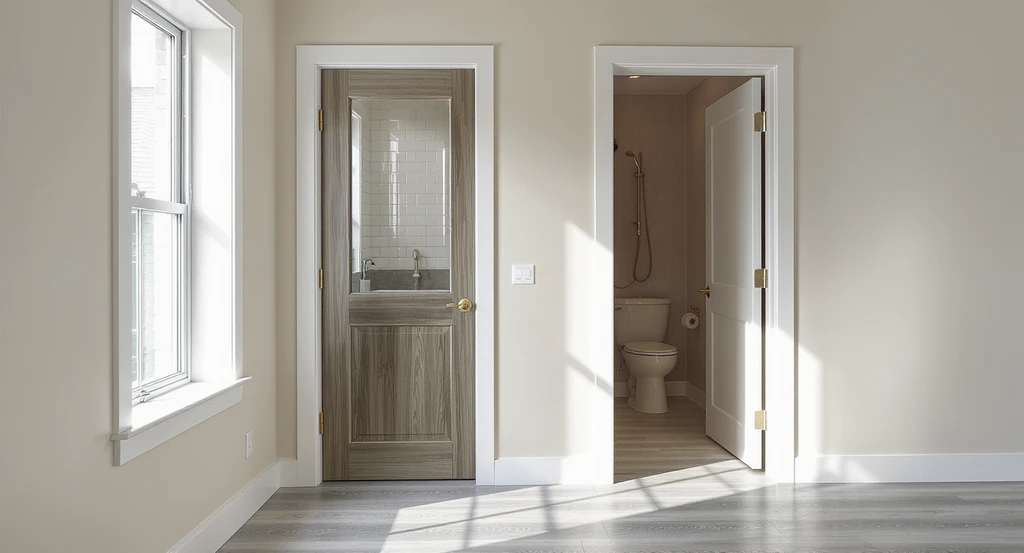
Choosing between pocket and hinged doors: This realistic side-by-side hallway scene shows the pros and cons of pocket doors in renovations and highlights common bathroom privacy concerns homeowners face.
Choosing between a pocket door and a regular hinged door isn’t purely about looks. Homeowners must weigh durability, privacy, maintenance, space efficiency, and resale value. Conflicting opinions abound: some want space-saving solutions, while others prioritize dependability and noise control. Making the right decision goes beyond style preference; it directly affects day-to-day comfort and layout performance. Whether you’re planning a new build, remodeling a tight bathroom, or considering upgrades for accessibility, door type has lasting consequences. Below, we’ll break down the spatial and functional trade-offs, using a visual evaluation system to clarify where pocket doors or regular doors make the most sense.
-
What’s Actually Going On When You Choose Door Styles?
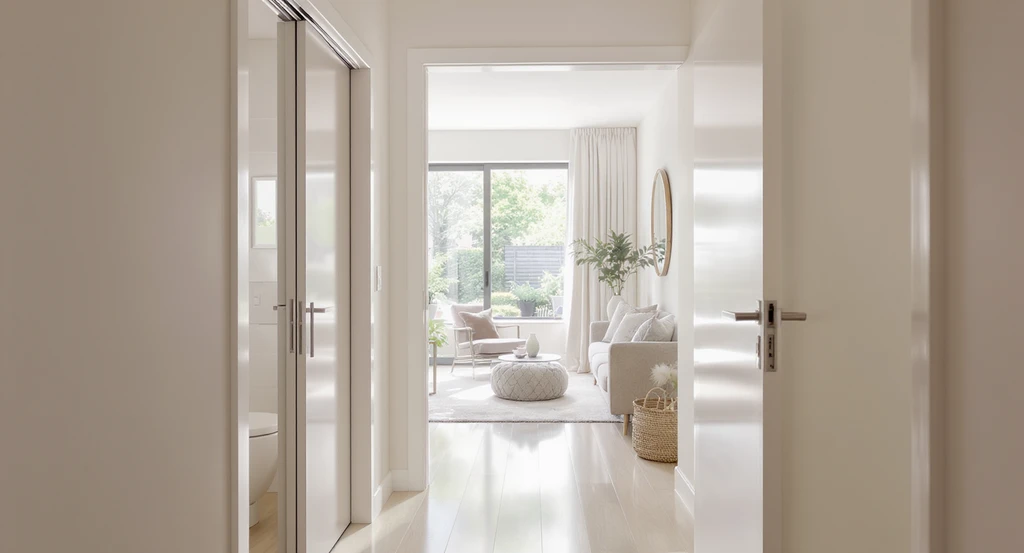
Choosing between pocket and hinged doors is key in renovations. This image highlights the pros and cons of pocket doors, ideal room placement, and privacy concerns, especially for bathrooms.
At its core, choosing between pocket and hinged doors is about reconciling available wall and floor space with daily privacy, traffic patterns, and maintenance realities. Pocket doors slide into the wall cavity, freeing up usable area, while regular doors swing open, requiring clearance but providing a traditional seal. In real-world homes, misjudging these mechanics can mean ending up with awkward layouts or future regrets—especially in compact bathrooms or hallways.
-
Why Homeowners Misjudge Door Decisions
Many homeowners focus strictly on appearances or the allure of reclaimed space, underestimating issues like sound transfer and future access for repairs. As our front door evaluation guide demonstrates, mechanical and spatial fit can outweigh aesthetics. In bathrooms, privacy or sound insulation may be compromised, and in heavy-use zones, maintenance becomes a hidden pain point.
-
The REimagineHome AI Door Placement Evaluation System
To bring clarity, apply the Door Placement Evaluation System: 1. Identify the patterns of movement through each space. 2. Assess wall space availability for pocket cavity or swing clearance. 3. Evaluate privacy and noise requirements by room function. 4. Test material choices for usage frequency (solid core for sound, durability). 5. Visualize each option using REimagineHome AI, previewing impacts on scale and flow. This structured process reveals suitability for each door type in context.
-
When Pocket Doors Work—and When They Backfire
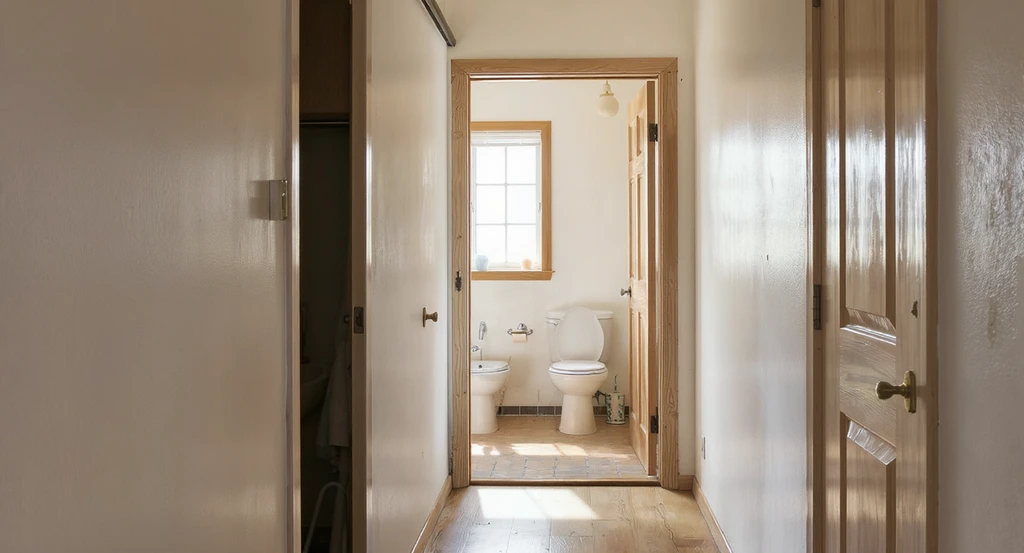
When choosing between pocket and hinged doors for renovations, pocket doors work well in small spaces like half-baths but may raise privacy concerns and long-term maintenance issues.
Pocket doors excel in tight or high-traffic areas (like small half-baths or closets) where swing clearance is a premium. However, they tend to underperform in zones where privacy, soundproofing, or water exposure matter. Over time, pocket door tracks can wear, and wall-cavity access complicates maintenance. They’re rarely optimal for main entryways or bathrooms opening to public areas, as seen in user feedback. For less-used doors or en suite baths, they offer strong value—if the wall can house the pocket mechanism.
-
The Case for Regular Hinged Doors: Durability and Flexibility
Regular hinged doors deliver superior privacy, easier installation, and straightforward repair. They readily support weatherstripping for soundproofing and upgrade with hardware or locks. Hinged doors are versatile for most spaces, including bathrooms, bedrooms, and entryways. The visual impact is substantial—they recede or stand out based on design and material, as discussed in our front door style article. Their main drawback is the required swing space, which may limit layout options in smaller rooms.
-
Trade-Offs: Space, Sound, Maintenance, and Resale Concerns
Pocket doors provide unmatched spatial efficiency but introduce risks: less sound and privacy control, trickier repair, and, sometimes, future buyer hesitation. Hinged doors may eat up precious room but are less prone to long-term issues and easier to upgrade for resale. In resale-driven markets, buyers often see traditional doors as less risky. However, for ultra-compact spaces or flexible layouts—such as closets or pantries—pocket doors can be a desirable upgrade, provided their limitations are acknowledged.
-
Hidden Insight: The Real Limitation Is Wall Structure, Not Taste
A common misconception is that any opening can become a pocket door if you desire the look or the space savings. In reality, pocket doors require a clear, unobstructed wall cavity—free of plumbing, electrical, or load-bearing studs. Attempting to retrofit a pocket door where the wall can’t support it often leads to higher costs, instability, or functional compromises. Most homeowners underestimate these construction constraints, mistaking taste for feasibility.
-
Defining the Pocket Door vs. Hinged Door Dilemma
The pocket door versus hinged door dilemma arises when homeowners seek to optimize space and flow while maintaining daily usability and privacy. Pocket doors appear to solve spatial challenges but, because they rely on concealed tracks and wall cavities, they entail reduced acoustic and visual separation as well as more intensive repairs. Hinged doors, by contrast, demand more open area but provide superior privacy and reliability. The optimal solution depends on usage context, wall construction, and long-term plans not simply preference.
-
Step-Based Door Type Decision Process
1. Map out the intended use and placement for each door. 2. Confirm wall structure (studs, pipes, wiring, load-bearing status). 3. Rate privacy, noise, usage, and space needs for each room. 4. Explore visualizations of both door types with REimagineHome AI before committing. 5. Calculate maintenance access trade-offs over the lifespan. 6. Consider resale expectations based on your market and buyer preferences, as discussed in our front door guide.
-
How Visualization Supports a Confident Door Choice
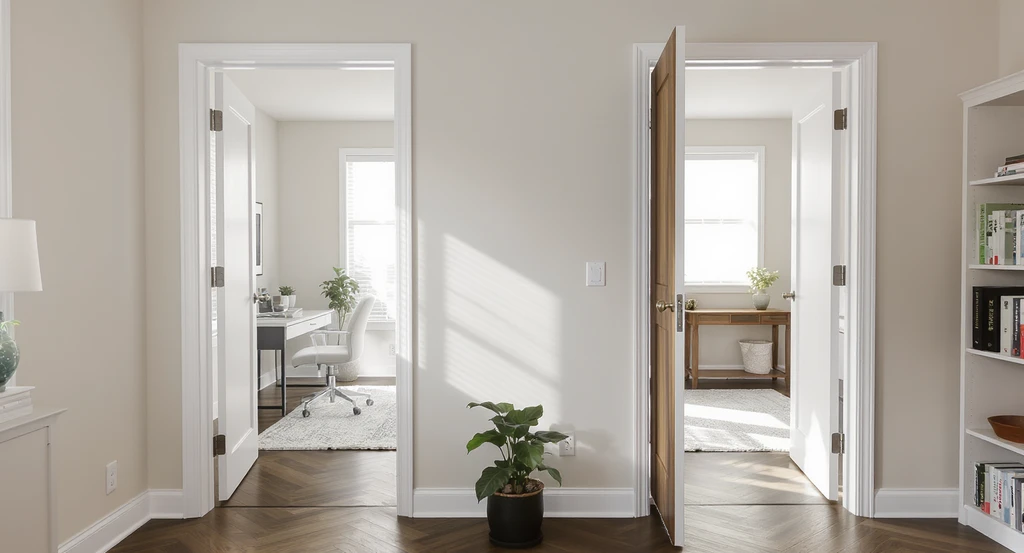
Visualizing pocket vs. hinged doors helps compare space usage, swing paths, and hardware, revealing pros and cons before replacing interior doors or renovating.
Uncertainty around door type is often a product of not being able to see scale, swing path, or wall constraints before installation. Visualization tools enable you to preview both door types from multiple angles, assess natural light flow, and check hardware or color compatibility. This upfront view—explored further in our trim and color guidance—minimizes regret, identifies opportunities for space gain, and accelerates decision timelines. The result is purchase confidence grounded in realistic expectations.
Visualization Scenario
Imagine planning a renovation for a crowded hallway bathroom: using visualization, you can experiment with both a pocket and a regular door, instantly seeing the swing clearance, privacy coverage, and how hardware style interacts with your chosen trim color—giving you clarity before committing to any construction.
FAQ: Pocket Doors vs. Regular Doors in Real Homes
- Are pocket doors more expensive to install than regular hinged doors?
- Generally, yes. Pocket doors require opening and reframing a wall, which increases labor and material costs compared to a standard hinged door installation.
- Do pocket doors work well for bathrooms?
- Pocket doors can be used in bathrooms if space is tight, but they typically offer less privacy and soundproofing than regular doors. Consider location and wall structure before deciding.
- Can I retrofit a pocket door in any wall?
- No. Pocket doors need an unobstructed wall cavity free from wiring and pipes. Load-bearing walls or narrow walls may be unsuitable without significant modifications.
- Which door type adds more value for resale?
- Hinged doors are generally favored for resale due to broad familiarity and reliability. However, pocket doors can add appeal in small or uniquely constrained spaces where they solve a problem effectively.
- How does using visualization improve door selection?
- Visualization tools allow you to preview layout and flow with different door types, reducing uncertainty, speeding up the decision, and limiting regret after installation.
Key Takeaways for Door Selection Decisions
Selecting between pocket and regular doors means balancing space constraints, privacy expectations, maintenance, and potential resale impacts. Use a step-based decision structure, supported by realistic visual previews, to clarify what will actually work in your layout—before you build or buy. Assess both current use and future needs to avoid costly mistakes or disruptions.