How to Decorate an Open Floor-Plan Kitchen and Living Room: From Overwhelm to Cohesion
TL;DR
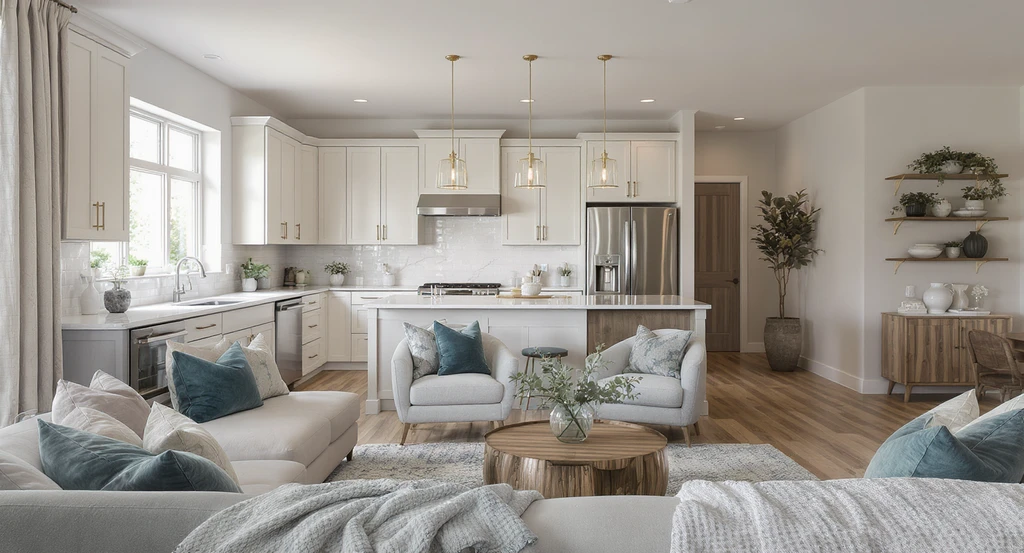
Decorating an open floor-plan kitchen/living room can easily feel disjointed and frustrating. Achieve a cohesive, welcoming look by unifying your color story, repeating materials, scaling rugs and lighting properly, and using art or shelving to subtly divide zones. Visualizing your choices before committing reduces regret and helps turn inspiration into satisfaction.
Why Decorating an Open Floor-Plan Feels So Hard (and How to Move Forward)
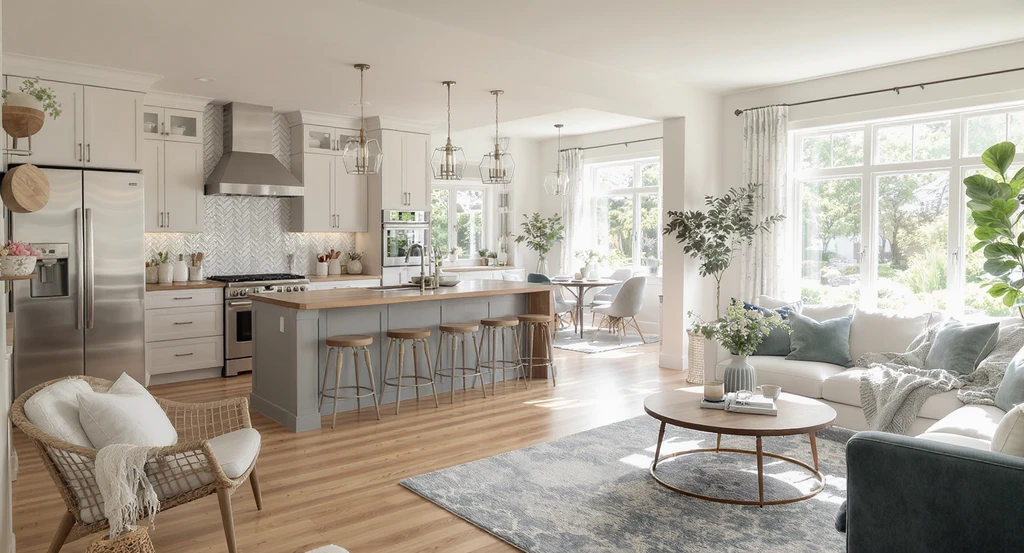
A real-world example of how to decorate an open concept kitchen living room, balancing wood tones and cozy zones without room dividers. See the best colors for open kitchen living area and layout inspiration for making combined spaces feel unified.
Open-concept living is prized for its sense of spaciousness and light, yet decorating these blended kitchen and living rooms often feels overwhelming. Many homeowners struggle to create zones that feel distinct but harmonious. Without visual boundaries, spaces may feel either bland and empty or, just as often, cluttered and chaotic. This frustration isn’t just aesthetic: choices made without a clear plan can result in wasted budget and stalled progress. That’s why the most successful open-plan rooms rely on visual repetition, thoughtful furniture placement, and a handful of high-impact, confidence-building changes. Let’s break down the decision structure that transforms the daunting into the doable.
-
What Is Actually Happening in Most Open Floor-Plans
In open floor-plan homes, the lack of walls means sightlines and traffic flow are uninterrupted but so are all the materials, colors, and furnishings. Erratic color stories, competing wood tones, and mismatched furniture easily turn the shared space into a patchwork, rather than a unified whole. Homeowners often underestimate how these sprawling rooms amplify every element, making inconsistency impossible to hide and accentuating any visual “mess.”
Expert Insight
After feeling paralyzed by design decisions, a couple tested a digital mood board with their existing hand-me-down pieces. By layering only a new rug and swapping a single light fixture, they were surprised at how cohesive and welcoming the space became without major renovations or regretful spending.
-
Why Homeowners (and Renters) Misjudge Cohesion
Many people mistakenly rely on single “hero” pieces a rug, a sofa, a curtain to spark coziness or style in an open-concept room. Without an overarching palette and layered lighting, these items can look sterile or “float” awkwardly. The temptation to paint, buy, or rearrange endlessly leads to budget fatigue and design paralysis. As explored in our guide on fixing living room cohesion, success comes from repeating colors, adjusting scale, and layering lighting not from isolated swaps.
-
The REimagineHome AI Spatial Harmony System
Use the Spatial Harmony System for reliable results in open floor-plans: 1. Identify 2–3 base colors to repeat across both kitchen and living zones (walls, large furniture, rugs). 2. Choose one consistent wood tone for large surfaces; minimize competing finishes. 3. Anchor each zone with scaled rugs, ensuring transitions aren’t abrupt. 4. Layer lighting at multiple heights in both areas to create intimacy. 5. Use art, open shelving, or tall plants as visual dividers rather than walls. This model reduces both overwhelm and budgeting errors by giving every addition a role in unifying the room.
-
When These Tactics Work And When They Backfire
These methods excel when your palette and materials are pre-selected before major purchases. In smaller open-concept spaces, overfilling with furniture backfires and makes the space feel cramped. Too many bold colors or stark contrasts can exaggerate the lack of separation, while ignoring scale (rugs, lighting, shelving) keeps things visually unanchored. Trade-offs may include prioritizing fewer, better pieces over quantity especially when managing inherited or “hand-me-down” items, as discussed in our breakdown of breaking up wood tones without paint.
-
Trade-Offs and Budget Sensitivity
Budget matters: replacing all furniture at once is rarely feasible. Evaluate which single upgrade (like a modern sofa, modular sectional, or new rug) will do the most visual work. Mixing too many finishes or styles without an anchoring plan can ultimately mean more spending to fix mistakes. Instead, as referenced in our guide to organic modern design, invest first in foundational elements such as paint, lighting, and rugs before moving to accents and art. This staged approach leads to better, more lasting results.
-
Definition: Color Story (and Why It’s Essential in Open Spaces)
A color story refers to a repeating palette of two or three dominant hues (and associated neutrals) that persist across an open floor-plan’s furnishings, rugs, walls, and accents. When executed properly, this system creates a sense of continuity and calm, visually connecting spaces while allowing each zone to express subtle personality. Many homeowners misinterpret a color story as using only one shade, but in reality, it is the strategic repetition and echoing of tones that unify a space and reduce design overwhelm.
-
Step-Based Evaluation for Real Change
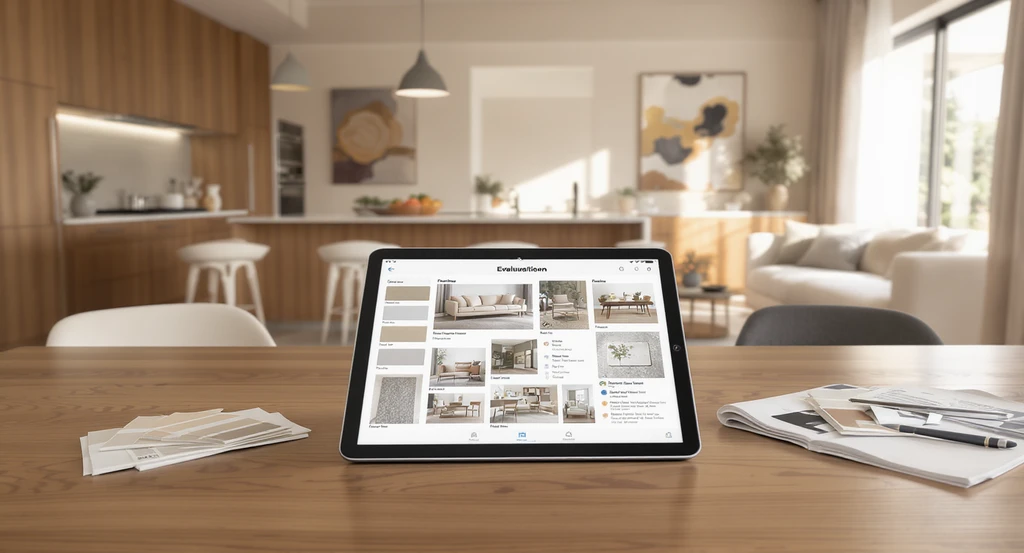
How to decorate open concept kitchen living room: Use digital mood boards, evaluate best colors for open kitchen living area, and balance wood tones to create cozy zones and unify combined spaces.
1. Photograph your current space and note where zones begin and end. 2. Make a quick digital mood board, placing potential rug, art, and furniture images side-by-side. 3. Identify clashing wood tones or colors and select one to repeat, minimizing outliers. 4. Preview paint, curtain, and lighting selections using virtual visualization tools like REimagineHome AI to see effects before committing. 5. Stage and adjust: implement one key change at a time, visually validating each adjustment using updated photos and your mood board.
-
How Visualization Transforms the Decision Process
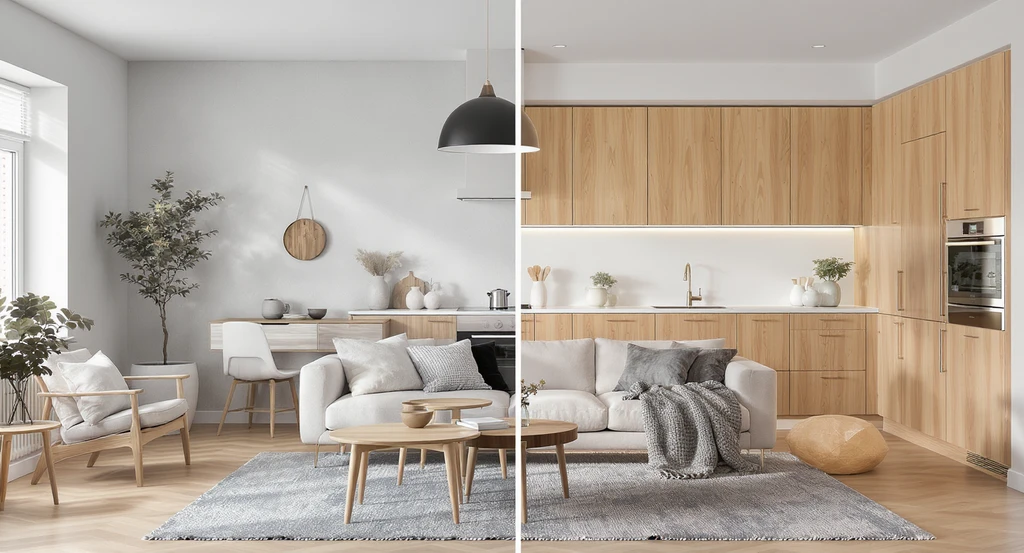
Visualization tools for how to decorate open concept kitchen living room let you test best colors, room divider ideas, and balancing different wood tones—helping create cozy, unified open layouts more confidently.
Uncertainty in open floor-plans is often rooted in the inability to “see it before you decide.” Visualizing changes whether through mood boards, virtual staging, or preview tools lets you experiment with color, layout, and finishes without risk. The ability to compare before and after images quickly narrows options, reduces regret, and shortens the decision cycle. Platforms like REimagineHome AI provide the opportunity to refine your vision, validate costly moves, and achieve new levels of confidence before investing.
-
Beyond the Obvious: The Power of Lighting and Art Placement
Layered lighting and strategic art placement do more than just decorate they visually carve “rooms” out of open space. Using a trio of lighting sources at different heights (overhead, table, and accent) for each zone creates natural boundaries and warmth. Art and tall shelving can double as subtle dividers, as explored in our dining room finishing guide. These decisions don’t just fill space; they direct the eye, improve flow, and neatly separate kitchen and lounge activity, all without walls.
Visualization Scenario
Imagine standing in your open kitchen/living room, frustrated and unsure where to start. With a quick upload of photos to a visualization tool, you preview potential rug, paint, and sofa combinations all before spending a dime. Suddenly, what felt impossible becomes a series of easy choices, backed by realistic previews. You buy only what you’ve seen work.
Open Floor-Plan Decorating FAQs
- How do I choose colors for an open floor-plan?
- Select 2–3 dominant colors (including neutrals) and repeat them across large furniture, rugs, and walls. This creates visual unity without making the space monotonous.
- What are the best ways to separate kitchen and living zones without walls?
- Use different (but related) rugs, lighting at different heights, furniture arrangements, and tall shelving or plants to signal zone boundaries while maintaining openness.
- How can I decorate with hand-me-down furniture?
- Minimize clashing finishes by repeating one main wood tone and updating accent pieces (pillows, throws, artwork) in your chosen color scheme for cohesion.
- Should I buy everything at once or stage my purchases?
- Stage purchases, starting with foundational elements like paint, lighting, or a new rug. Visualize each change to ensure it supports the overall plan and prevents regret.
- How does visualization really help?
- Visualization lets you preview colors, layouts, and finishes before committing, reducing regret and making it easier to invest confidently in big changes.
Key Takeaways for Open Floor-Plan Success
A cohesive, inviting open kitchen/living room is achieved through strategic repetition of colors, one consistent major wood tone, scaled rugs, layered lighting, and visual “dividers” like art or shelving. Visualization tools—digital mood boards or platforms like REimagineHome AI—let you preview decisions, preventing costly mistakes and helping you build comfort, unity, and long-term satisfaction.