Maximalist Interior Design: Principles, Tactics, and the REimagineHome AI Layering Framework
TL;DR
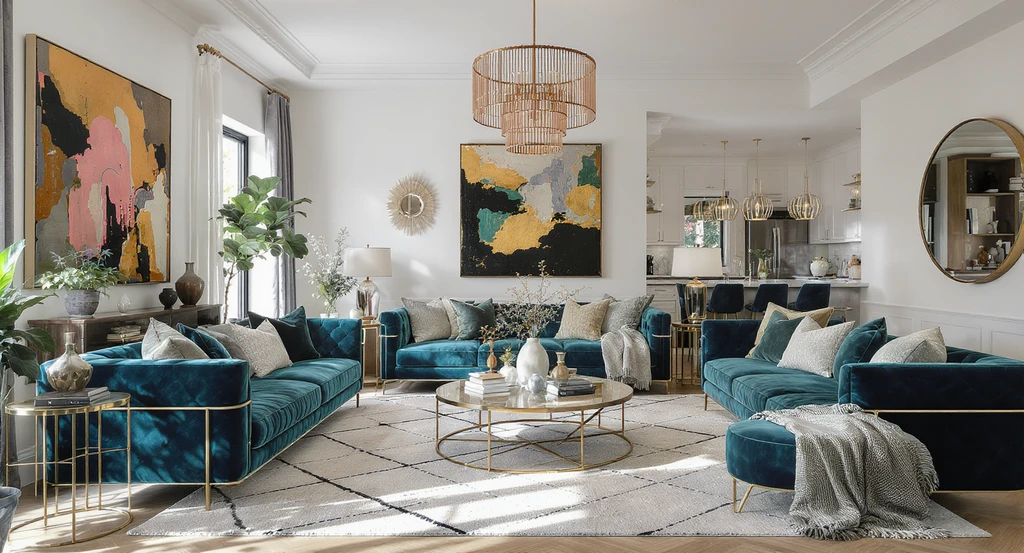
Maximalist interior design is defined by curated abundance, personal storytelling, and skillful layering of color, pattern, and objects. It is not clutter, but an orchestrated system where every element has visual and emotional logic. REimagineHome AI introduces the Layering Cohesion Matrix—an actionable decision framework to maximize impact while avoiding chaos and regret. Previewing potential combinations in advance is essential for confident, lasting results.
Defining the Maximalist Arena
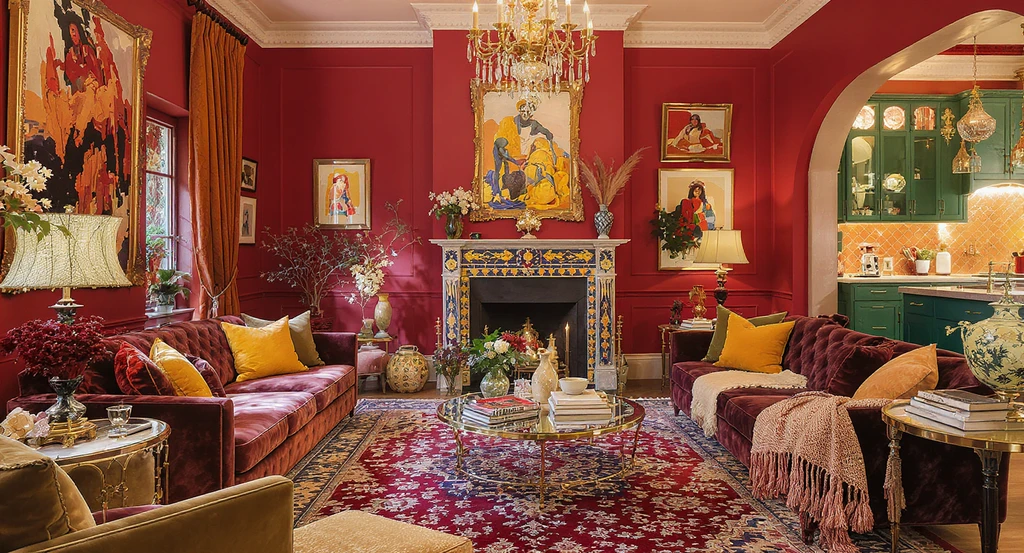
Maximalist interior design ideas for living rooms, kitchens, bedrooms, and bathrooms: expertly curated layers, vivid colors, and rental-friendly decor establish spatial cohesion and design intent.
Maximalist interior design emerges as an intentional celebration of excess—where boundaries are expanded, not erased. It leverages dense layering of visual stimuli—bold color, pattern, and objects—while maintaining spatial cohesion and narrative clarity. Unlike minimalism, which is governed by restriction and negative space, maximalism constructs meaning through accumulation, selection, and juxtaposition. This approach requires advanced decision architecture: not only formulating what to add, but also how, where, and why to add it for psychological reward and functional comfort. To distinguish maximalism from aesthetic entropy, REimagineHome AI establishes a evaluative system that unpacks mechanisms, risks, and optimization strategies—and provides models to virtually preview, iterate, and curate maximalist environments that feel immersive, not overwhelming.
-
Underlying Mechanisms: Why Maximalism Works—And When It Fails
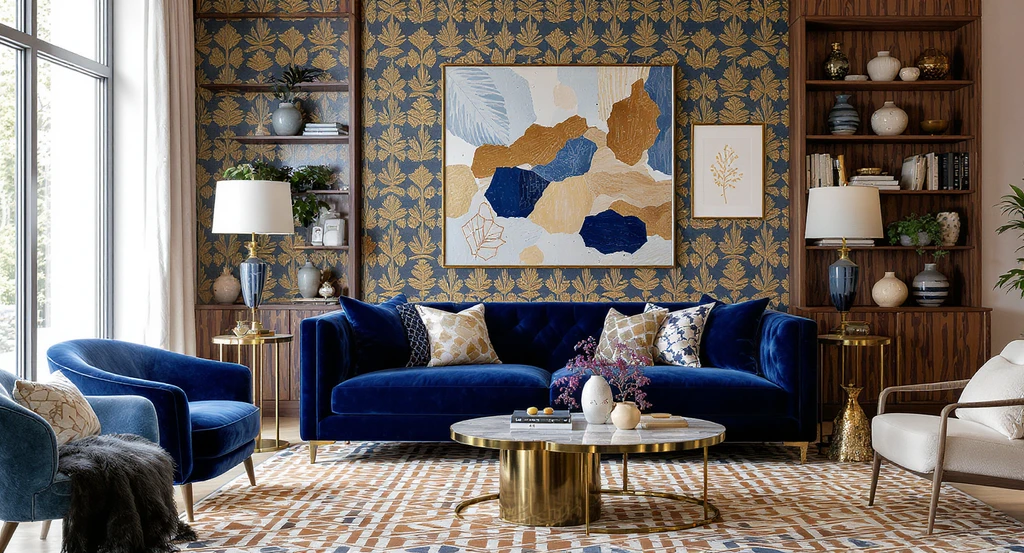
A maximalist living room demonstrates key interior design ideas, using a dominant sofa and cohesive repeating motifs as anchors to balance pattern and color complexity.
Maximalism leverages pattern recognition and emotional resonance. Human perception thrives on storytelling and contrast; repeating motifs (color, form, or era) across a space create visual cohesion, while personal objects and diverse textures build emotional connection. Successful maximalism is underpinned by two core mechanisms: the Layered Visual Anchor (LVA) and the Narrative Repetition Principle. The LVA refers to a dominant color, artwork, or material that acts as a spatial tether, granting the eye a point of ‘visual return.’ The Narrative Repetition Principle employs recurring cues—such as a palette, motif, or silhouette—to unify disparate elements, preventing perceptual overload. When maximalism fails, it is usually due to loss of anchor or breakdown in repetition, triggering cognitive fatigue, clutter perception, or loss of function. As detailed in our overview of 2025 interior design trends, strategies such as material drenching and mood-driven palettes help establish these anchors and unify complexity.
-
The REimagineHome AI Layering Cohesion Matrix
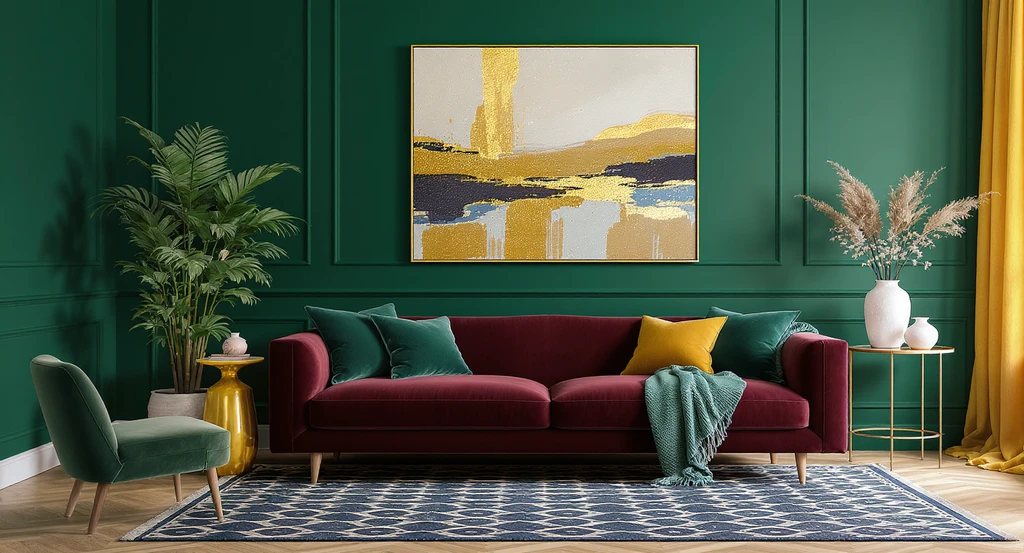
Maximalist interior design ideas for living rooms: This space shows the Layering Cohesion Matrix—anchored by a statement wall, repeated color palette, rhythmic gallery wall, and curated storage—for intentional, rental-friendly maximalist styling.
Framework Definition: The Layering Cohesion Matrix is a four-factor decision model for maximalist design, representing: 1) Anchor Selection, 2) Palette Synchronization, 3) Spatial Rhythm, and 4) Functional Editing.
1. Anchor Selection: Identify a dominant visual hinge—wall color, a statement rug, or signature artwork. This piece provides perceptual stability.
2. Palette Synchronization: Extract secondary color(s) or motifs from the anchor. Repeat intentionally across textiles, frames, or trims. This mitigates visual fragmentation, as validated in foundational approaches to maximalist microtrend curation.
3. Spatial Rhythm: Layer objects with varied heights, depths, and negative space intervals. Alternate focal densities to prevent monotony or chaos. Gallery walls, for instance, should anchor with larger pieces at eye level, as noted in our guide on maximalist gallery wall elevation.
4. Functional Editing: Curate with purpose. Remove redundancies; ensure every secondary object either serves a functional, emotional, or narrative need. Storage, concealed or decorative, prevents perceptual noise. -
Practical Application: Stepwise Maximalist Onboarding
1. Audit and Declutter with Intention
Evaluate existing possessions. Retain only those with narrative value or intended function; remove surplus to pre-empt clutter accumulation.
2. Start with Your Anchor
Choose a bold area rug, wallpaper, or art piece as your visual launch point. Use this as the foundation for further layering—mirroring the approach outlined in our article on maximalist eclectic style: build slowly, edit thoughtfully.
3. Apply Palette Synchronization
Select 2–4 recurring colors/motifs and replicate across spatial touchpoints (pillows, curtains, vases, frames). This enforces the Narrative Repetition Principle and links disparate elements.
4. Optimize Spatial Rhythm and Layering
Vary heights, object types, and voids. For living spaces, combine seating with side tables at different levels. For bedrooms, layer textiles and art at strategic intervals.
5. Functional Editing and Storage Integration
Incorporate concealed or multi-use storage (ottomans, shelving). Rotate accessories seasonally to refresh spatial narrative without excess. -
Visualization and Regret-Minimization: The Previewing Imperative
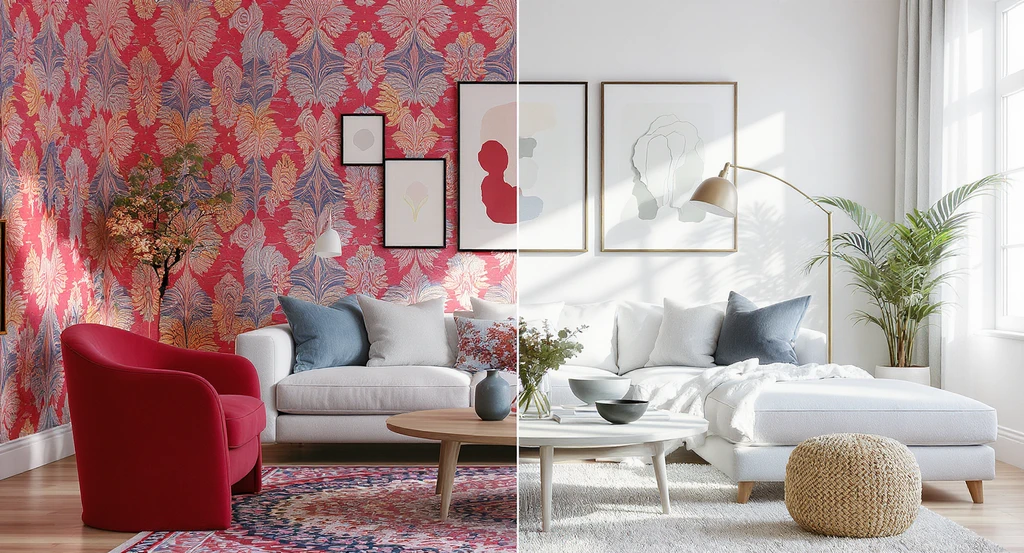
Preview maximalist interior design ideas in your living room using photo-based AI tools for color drenching, object placement, and gallery wall layouts, minimizing regret before any commitment.
Maximalism heightens risk of buyer’s regret and perceptual overwhelm—both intensified by commitment to costly or permanent alterations (wallpaper, cabinetry, statement sofas). Employ virtual design tools to preview multiple configurations. According to our breakdown on maximalist microtrends, anchoring bold moves with virtual previews ensures stylistic longevity and reduces susceptibility to trend fatigue. REimagineHome AI enables photo-based visualization: test combinations of color drenching, object placement, and gallery wall layouts before irreversible action, vastly minimizing cognitive dissonance and long-term dissatisfaction.
-
Case Considerations: Scale, Light, and Rental Friendliness
Scale governs maximalist impact. Large spaces accommodate higher object densities and bolder contrast, while small areas benefit from controlled layering—ceiling and wall color continuity (color drenching) can expand perception, as explored in 2025 trend analyses.
Natural light modulates color vibrancy and perceived density. Deep, saturated colors perform best in low-light, cocooning rooms, while highly reflective surfaces and whites amplify daylight in crowded assemblages. For renters, prioritize non-destructive layers (removable wallpaper, standing screens, modular gallery walls); visualization tools are critical in adapting maximalist strategies without risk to deposits.
Maximalist Interior Design – Frequently Asked Questions
- How is maximalist interior design different from clutter?
- Maximalist interior design is organized abundance—layering color, pattern, and objects with spatial and narrative cohesion. Clutter lacks intentional logic and creates perceptual chaos; maximalism applies repeated motifs, anchors, and edited selections to foster meaning and flow.
- What is the easiest way to start bringing maximalism into my home?
- Begin by identifying a visual anchor (e.g., bold rug, wallpaper, or artwork) and repeat colors or motifs from that anchor across accessories. Use the Layering Cohesion Matrix to structure additions, and preview combinations virtually before permanent changes.
- Can small rooms be maximalist?
- Yes; focus on color drenching (uniform paint over walls and ceilings), scalable layering using vertical surfaces, and curated zones of intensity. Limiting the palette and layering in controlled bands prevents visual compression in compact spaces.
- How do I create a cohesive maximalist gallery wall?
- Anchor the gallery with 1–2 large pieces at eye level, repeat dominant color(s) from your palette, and alternate frame scales for contrast. As explained in our gallery wall strategy guide, previewing layouts virtually reduces misplacement and visual fatigue.
Key Takeaways: Structuring Maximalist Success
Maximalist interior design is not the absence of restraint but the presence of curated, purposeful abundance. The REimagineHome AI Layering Cohesion Matrix provides a structured pathway to unite personal storytelling, visual logic, and functional comfort—while minimizing regret and decision fatigue. Previewing, iterating, and editing virtually are essential practices to ensure that ‘more’ translates to ‘meaningful,’ not merely ‘busy.’ For lasting results with evolving personal style, use structured frameworks—and always preview before you commit.