Before You Redesign: Seeing Your Toddler’s Creative Bedroom with Fresh Eyes
TL;DR
When working on a fun toddler bedroom, it's easy to second-guess bold choices. Most hesitation stems from small visual imbalances or incomplete layering, not from a faulty vision. Noticing what actually feels unfinished and previewing changes clears the way to a space both you and your child will love for years.
When Your Bold Kids’ Room Feels “Almost There” — What’s Actually Happening

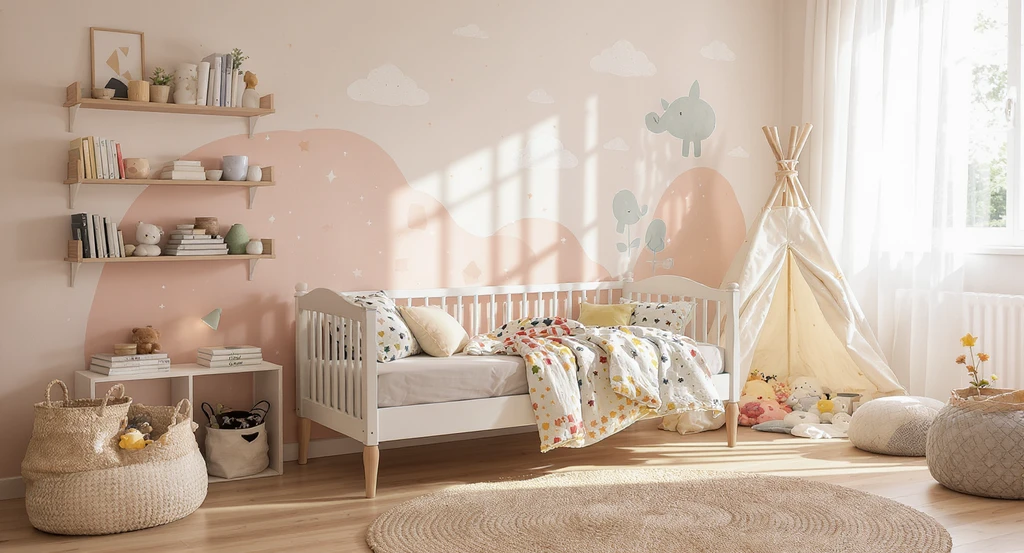
Navigating the awkward middle of decorating: This unfinished toddler bedroom showcases creative bedroom design ideas, playful mural inspiration, and challenges in balancing color and texture in kids rooms.
You set out to design a joyful, creative toddler bedroom and, halfway through, a single question keeps drifting in: Do I have design blinders on? Is my idea too much, not enough, or just strange? If you’re second-guessing yourself when a project hits its “awkward middle,” you’re not alone. What might feel unsettling isn’t taste or originality but the subtle, unfinished edge of an evolving room. Recognizing the real source of unease be it a mural that stops short, a rug that feels off-center, or a color that seems unrelated can turn hesitation into clarity and unlock the playful energy you imagined in the first place.
-
What’s Actually Unsettling: Incomplete Flow, Not Overdesign

When creative bedroom design ideas for toddlers feel unfinished, such as a mural stopping abruptly or uneven rug placement, the room’s flow is disrupted—highlighting the importance of balancing color and texture in kids rooms for a cohesive result.
When you pause a toddler room project and wonder, does anyone else see what I’m trying to do?, it’s rarely because your idea is wrong. More often, a space feels off because a few key elements are visually unresolved: —A mural starts strong but stops at a window or leaves one wall feeling empty —A vibrant rug pulls attention but sits slightly askew to main furniture —Sun rays, shapes, or accent lines don’t wrap or balance across the space The unsettled feeling is less about color choice and more about spatial flow—the eye gets “caught” where lines, color blocks, or arrangement seem unfinished. This is a spatial, not a creative, pause. Several comments in online communities echo this: the suggestion to "extend the rays past the window," "balance the sun on a bigger wall," or center furniture on the rug all point to this root cause. When the underlying shape of the design is resolved, the style feels intentional, not overpowering.
Expert Insight
When my daughter was three, I painted a sprawling jungle mural across her bedroom for her obsession with leopards—leaving a blank spot by the closet. She loved it, but something always felt off to me. Finally, I extended the vines onto the closet door and instantly, the whole room felt connected. Years later, she remembers the magical feeling, not the specifics of the paint. Small changes to flow can transform how a room is remembered.
-
The Science of Joy: Color, Memory, and Layering
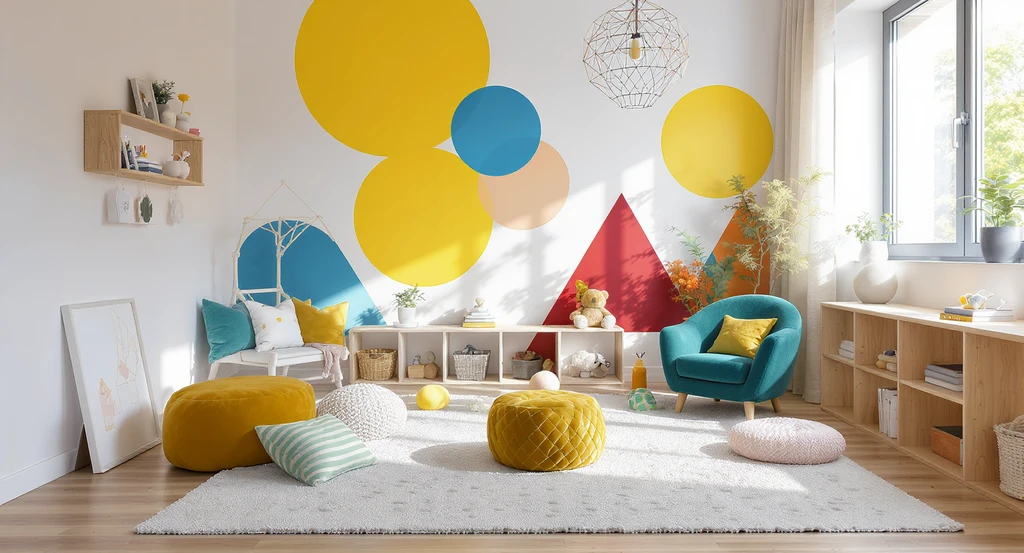
Layering bold colors, playful mural ideas, and textured details creates a joyful toddler bedroom—balancing the best colors for kids’ bedroom walls and playful textures.
Bright, playful kids' rooms aren’t just decorative they’re gateways for imagination and emotional development. Children’s brains respond directly to color, texture, and scale; personality and memory are shaped by daily cues. Intentionally choosing happy visuals can even be healing for adults, helping us reclaim a sense of wonder from childhood. Research-backed decor thinking, like the dopamine decor approach, embraces this layering of color and joy triggers over trend rules. As described in our guide to dopamine decor, the most comforting kids’ spaces carefully combine bold colors, memorable murals, and tactile details so the result isn’t overstimulating but energizing.
-
What Most People Assume Versus Subtle Spatial Logic
It’s common to assume a colorful room looks busy or chaotic. In fact, true visual chaos usually stems from interrupted lines or misaligned elements not from the amount of color. For example, an unfinished mural or a motif that doesn’t connect visually across corners is more destabilizing than a wall full of bright shapes. According to the Seuss-inspired maximalist nursery guide, the difference between overwhelming and playful comes down to how color is distributed and how shapes relate to boundaries: keeping trim, doors, or baseline colors consistent helps energetic murals "land" and gives the eye places to rest. The perception that a room is "too much" often hides the real issue: incomplete rhythm, not excess.
-
Underlying Mechanism: Why Some Corners Don’t Feel Finished
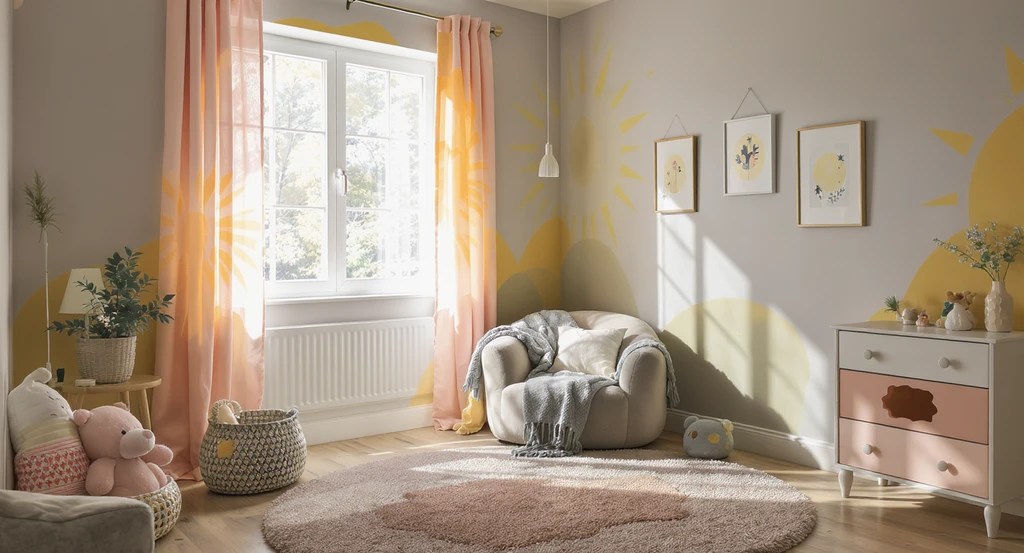
How to decorate a fun toddler room by extending playful mural ideas and balancing color and texture along corners for a visually finished kids space.
A feeling of incompleteness in kids’ rooms often relates to how eyes scan for connections. The brain wants to “narrate” a space: Where does this sun’s ray go next? What anchors that curvy rug? If a mural stops short or colors meet abruptly, it produces a tension that reads as "not done." Definition: Visual flow is the way our eyes follow lines, colors, and textures from one feature to the next, pausing at intentional boundaries (corners, windows, the edge of a rug) and judging completeness by whether those paths seem resolved. In a playful bedroom, flow can be improved by extending mural elements past interruptions (e.g., sun rays around a window), letting motifs “wrap,” and aligning large pattern elements to major pieces of furniture.
-
Trade-Offs Most Parents Don’t See: Color, Texture, and Growth
One of the most overlooked trade-offs in designing a fun toddler room is balancing immediate delight with long-term adaptability. Bold shapes and unique colors offer instant childlike joy, but their placement and rhythm affect how easily the room grows with your child. For example, a mural that can embrace new colors or has flexible shapes will age more gracefully as your child grows. As seen in our color and lighting guide for bedrooms, layering color in at least three spots and repeating key textures increases a sense of completeness without limiting future updates. Rugs, soft furnishings, and wall art that can be reconfigured or swapped as tastes change help prevent future regret or costly redesigns. The risk isn’t being "too fun," but being too rigid in layout or palette so build in room to evolve.
-
Practical Adjustments for Confident Playful Bedrooms
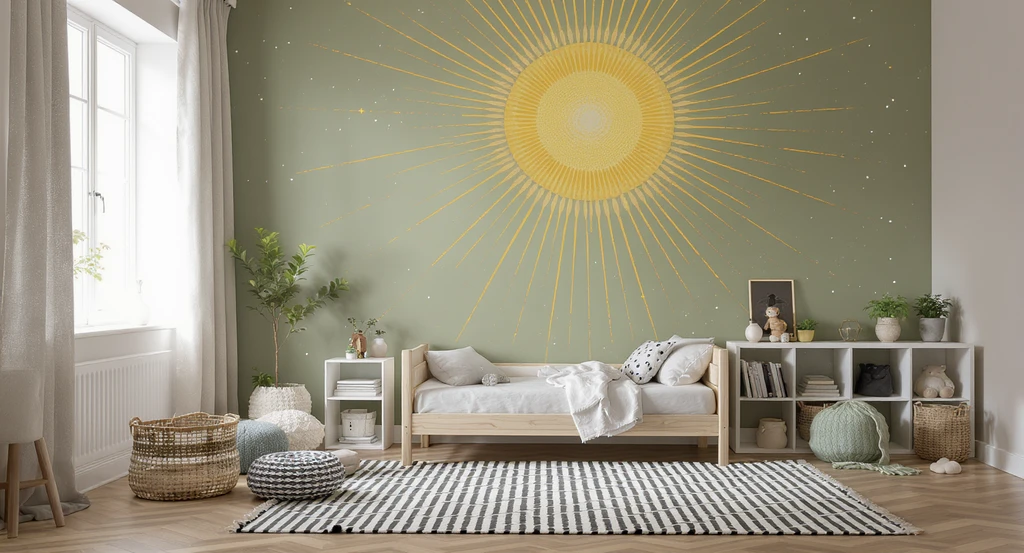
Discover creative bedroom design ideas for toddlers in this fun, playful space. Playful mural elements, balanced furniture placement, and natural textures show how to decorate a toddler room with the best wall colors and texture for a visually confident, joyful kids’ bedroom.
Several changes can immediately shift a toddler room from "almost there" to visually harmonious: – Extend painted mural elements (like sun rays or scallops) past interruptions such as windows, so lines feel unbroken – Center main furniture (bed, cubes, bookshelves) under large motifs or use symmetrical arrangements to anchor bold rugs – Add one or two natural textures (linen curtains, wood lamp base, woven basket) to soften saturated color and give the eye a place to rest – Preview new mural ideas or furniture arrangements with a visualization tool before committing to paint or hardware this lowers hesitation and clarifies what feels off visually These adjustments prioritize the underlying architecture of the room over individual details, letting joy and playfulness read as intentional, not experimental.
-
Why Visualization Matters: Ending Second Guessing Early
Seeing your room before you commit is the most powerful way to build design confidence. Visualization lets you try mural shapes, check furniture alignment, or test color blocks without the cost—or regret—of repainting or moving heavy furniture. As noted in our maximalist layouts feature, previewing wall or furniture arrangements exposes hidden imbalances that are nearly impossible to catch when standing in the middle of a project. Uploading a photo to REimagineHome AI can reveal spatial hiccups, help you see where transitions want to extend, and show exactly how color, light, and scale interact before you lift a brush. This clarity turns "Is this terrible?" into "I see what’s next."
FAQ: Common Concerns When Designing Creative Kids Rooms
- How can I stop second-guessing my colorful toddler room?
- Notice where lines or colors feel cut off or unresolved. Try extending mural elements, centering rugs and beds, and layering some connecting textures. Previewing layout and mural changes with a visualization tool often ends hesitation by revealing the missing link.
- What are the best colors for kids bedroom walls?
- Children respond positively to clear, joyful colors such as sky blue, yellow, green, pink, or even combinations. Balance bold walls with pockets of neutral or natural texture for focus and calm. Repeat major accent colors in several places to create a sense of unity.
- How do I avoid making my child’s room feel chaotic?
- Chaos often results from disconnects in flow or scale. Ensure patterns continue past interruptions and group bold elements intentionally. Consistency in trim, repetition of key accents, and gradual layering help even the most playful rooms feel harmonious.
- How can I be sure my mural or rug placement is right?
- Check visual alignment: murals work best when they carry through obstacles or end at boundaries with intention, and rugs should anchor the main activity zone or be centered under significant furniture for balance.
- Will my child outgrow a bold or playful room?
- Children’s tastes inevitably change. Build flexibility into your designs by using replaceable art, moveable rugs, wall decals, and paintable murals—making future updates easy without starting from scratch.
Trust the Vision-But Adjust the Flow
Creative toddler bedrooms rarely need a full redesign, just resolution of a few visual swings and misses. Most parents' design blinders are simply an inability to articulate what feels unsettled usually incomplete rhythm, not an excess of joy. When you notice the difference between color chaos and spatial disruption, you can confidently finish the look. Previewing your next step clears away regret and lets the vision come into focus—bright, playful, and perfectly suited for your one-of-a-kind kid.