One Year Later: Why This Reddit Living Room Transformation Feels So Complete (And What Most People Miss)
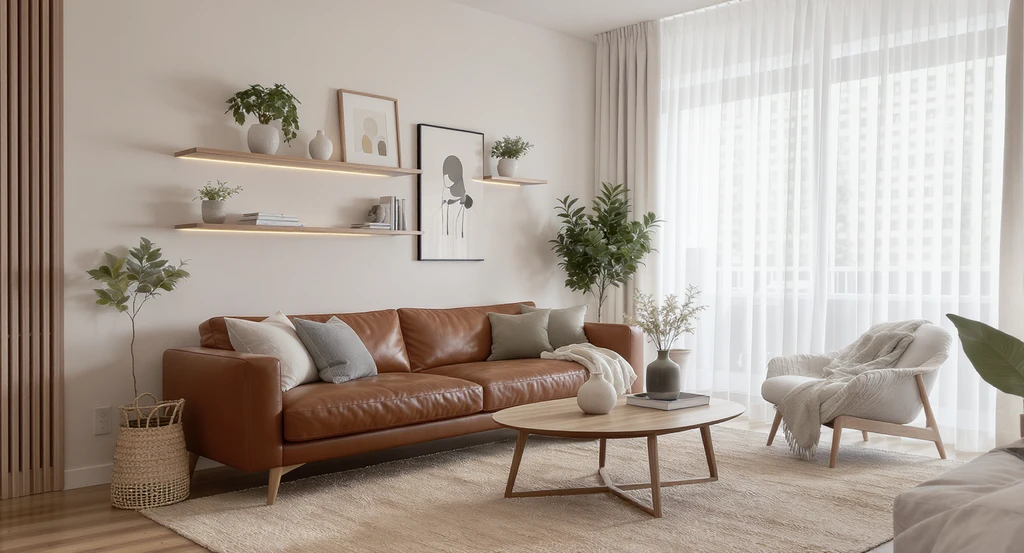
TL;DR
This living room transformation works because every finish, shape, and proportion is intentional. Tone-on-tone neutrals, well-scaled furniture, architectural trim, and the right rug size bring balance and unity. Layered texture, lighting, and subtle contrast prevent a neutral palette from feeling flat or cold. Small shifts in light and layout yield outsized impact.
What Makes a Living Room Glow Up Succeed?
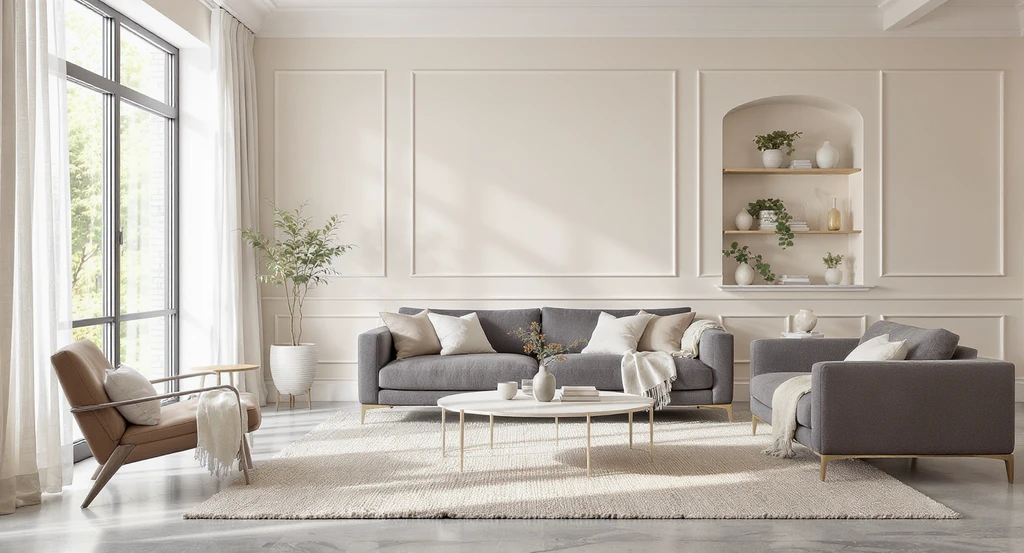
This modern living room exemplifies an ai-powered home design transformation journey by using virtual staging with ai visualization tools; subtle architectural updates and balanced decor reveal how the best ai platforms for room makeovers can enhance interior decor and create a complete, livable space.
A one-year living room transformation, widely praised on Reddit, reveals a pattern almost anyone can follow: intentional updates have more impact than total overhauls. In this space, the homeowner achieved harmony through neutral colors, architectural detail, and proportional balance. The result is not just visually attractive, but emotionally settled a room that feels finished, calm, and inherently livable. While the changes look simple, their underlying logic addresses what most people sense but can't easily explain. Understanding this mechanism can clear hesitation and guide future updates.
-
Clarity Zone: Why This Room Feels 'After'—and Not 'Almost There'
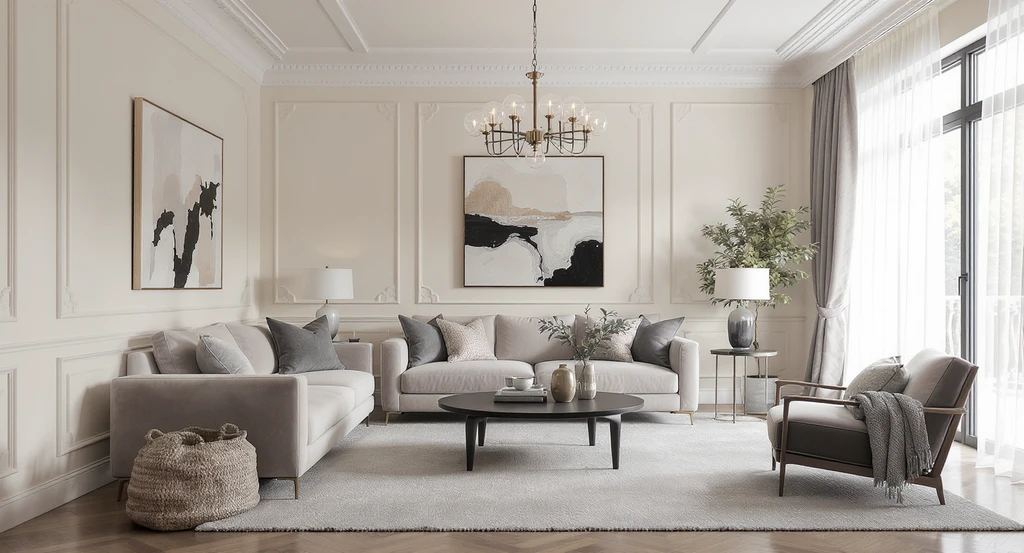
This editorial-quality living room, visually anchored by a proportional rug, panel molding, and subtle textural contrasts, demonstrates how ai-powered home design transformation and virtual staging with ai visualization tools deliver a magazine-ready look that rivals traditional interior designers.
This transformation succeeds because scale, texture, and proportion work together across every surface. The living room uses tone-on-tone creams, taupes, and greys while weaving in dark and natural accents for visual stability. Wall panel molding adds custom structure framing the space and drawing the eye upward. The substantial rug grounds the seating, echoing room width and leaving enough border to avoid a 'floating' look. A modern chandelier, correctly sized and positioned, brings vertical balance. When a room feels unfinished, it often lacks one or more of these elements: architectural detail, proportional rug, layered furnishings, or subtle textural contrast. According to our guide on the invisible finishing touches every living room needs, cohesion is rarely about new furniture, but about tying together what you already own. A living room achieves completeness when the eye can travel effortlessly from floor to ceiling, with light and dark elements leading rhythmically across the space. Strong definition: Architectural trim and a well-sized area rug prevent furniture from appearing to "float" and instead anchor a room visually and emotionally. A subtle but critical insight: Rooms that feel 'magazine-ready' are unified on three levels color palette, material texture, and shape repetition far more than by latest trends or new purchases. This is not about filling space. This is about balancing scale, linking sightlines, and applying tone."
-
What Most People Overlook: Tone and Texture, Not Just Color
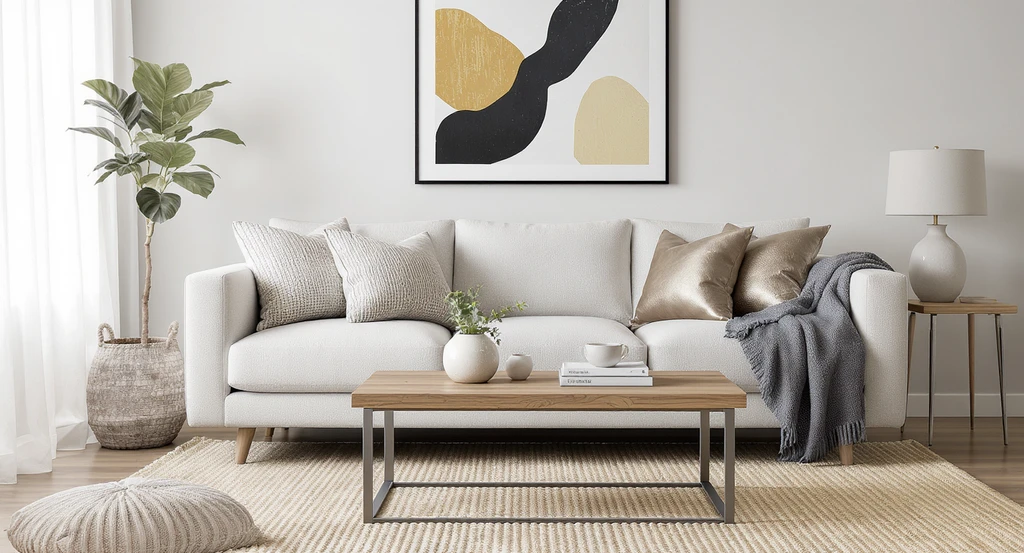
This AI-powered home design transformation journey uses virtual staging with AI visualization tools to highlight the importance of layered textures—matte, nubby, and reflective—in a neutral living room makeover, demonstrating how AI tools enhance interior decor for visual comfort and depth.
Many try to 'finish' a space with more art or brighter pillows. What this room demonstrates is a deeper layer: texture variation within a restrained palette creates the sense of life and interest. The design uses neutral upholstery, a sisal-look rug, and accent pillows in varied weaves. The addition of greenery and a single, well-chosen art piece gives focal clarity without clutter. As explored in our finishing guide for neutral spaces, what holds neutrals together is the quiet interplay of matte, nubby, and reflective surfaces never just one flat tone. Definition-grade statement: A successful neutral living room depends on at least three distinct textures across major surfaces (sofa, rug, wood or metal, plant), which creates visual comfort and prevents monotony.
-
Applied Architectural Details: The Impact of Wall Trim and Lighting
The wall paneling frames the furniture and brings an instant sense of architecture, even in builder-grade settings. Painted in a soft, warm white, the trim introduces subtle shadow and dimensionality without the need for bold color. Centering the chandelier (or at minimum, using a visually substantial fixture) corrects a common proportional error making the ceiling feel tied to the rest of the room and not like an afterthought. Ceiling lighting that is undersized or off-center can subtly undermine the whole composition, as many commenters immediately noticed in the original Reddit thread. If your room feels unsettled, check for these two conditions: blank, unadorned walls; and ceiling fixtures that are either too small or misaligned with the conversational area. As covered in how to update a dated home with intention, correcting scale and adding frame detail does more to modernize a space than new décor alone. Extractable insight: Changing overhead lights or adding architectural trim is a high-impact decision with durable effect. These interventions remain relevant as styles shift, unlike temporary accessories.
-
Where Proportion and Sightlines Quietly Build Calm
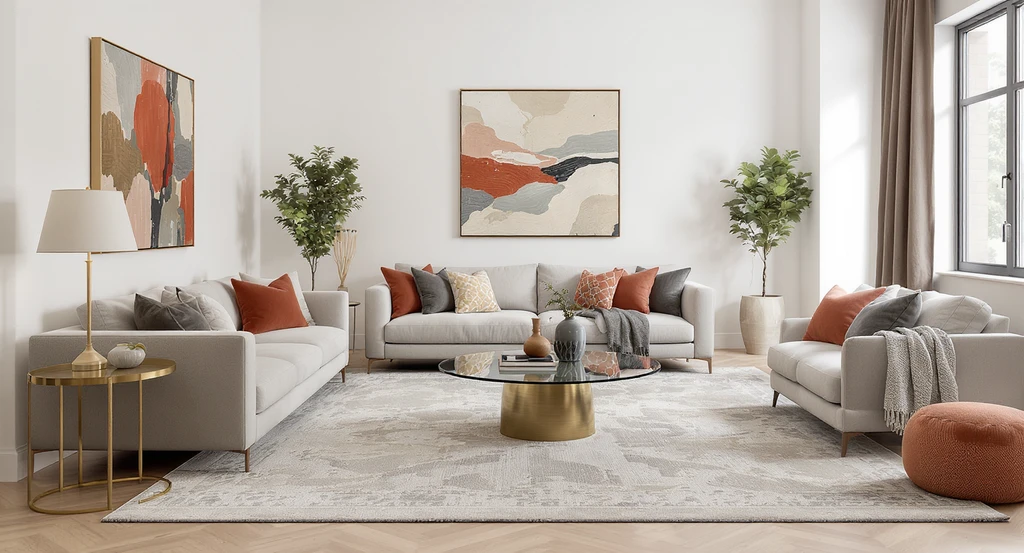
See how ai-powered home design transformation and virtual staging with ai visualization tools ensure perfect living room proportion, flow, and harmony—illustrating how ai tools enhance interior decor and prevent layout mistakes before you commit furniture or rug placement.
The eye wants to see connection between large objects. In this room, a generous coffee table and centered rug echo the seating layout, quieting the visual field. Throw pillows echo the tones of the art, lamp, and rug for seamless flow. Plants bridge the height difference between furniture and ceiling, leading the gaze upwards without abrupt stops. Measurable guideline: In rooms with high or average ceilings, select a rug that allows 18-24 inches of space from the wall, with all major seating at least half-on the rug. This proportional logic is more decisive for a sense of completion than decorative objects. Visualization tools—like those offered by REimagineHome AI—let you preview scale and layout decisions, so you can see how changes in one piece echo across a room before you commit. This reduces post-purchase regret and prevents layering new décor onto an already unbalanced base.
-
Trade-Offs and the Reason Neutrals Sometimes Fail, Even with 'Popular' Pieces
A neutral palette exposes discontinuity when tones clash or when all materials absorb light the same way. In this room, the designer avoided beige monotony by pairing creams and taupes with a touch of deep charcoal and natural greenery, as well as materials with different reflectivity. If your room feels 'almost right,' test for missing contrast a single pillow in a richer, deeper color, or a piece of wood or metal that subtly interrupts sameness. As explained by commenters and in our look at 2026’s best paint colors and combinations, the layering of warm whites, soft greys, and accent tones creates a more cohesive and calming environment than simply picking one universal white or grey. Extractable boundary: Neutrals succeed when every major element is within two shades of the next, except for one to two intentional accents that draw focus and offer relief. Too many high-contrast pieces confuse the eye. Too little contrast flattens the energy.
-
Previewing Decisions: Why Visualization Prevents Regret
Previewing a room’s transformation whether virtually or through samples lets you sense if the architecture, palette, and textures are working together before making irreversible choices. Seeing variations in rug size, wall trim placement, or chandelier scale within your own space bridges the gap between inspiration images and lived experience. Visualization with AI platforms builds confidence, not by offering more options, but by showing the direct effect of each adjustment in your setting. This process surfaces subtle problems (like off-center lights or mismatched texture) that typical inspiration images won’t reveal until after installation.
FAQ: Living Room Transformation Insights
Most rooms feel unfinished because of scale or layering, not the age of the furniture. Minor updates, like a correctly sized rug, new lighting, or added wall trim, usually have the greatest cohesive impact.
Q: What’s the fastest high-impact change for a builder-grade living room?
Adding architectural wall molding and upgrading from standard ceiling fans to substantial light fixtures delivers visible, lasting improvement.
Q: How do I know if my neutral palette is working?
If your neutrals transition smoothly from light to dark and include at least one textural and color accent, the space will feel energetic, not bland. Avoid placing all accents on one side of the room.
Q: What if I like beige, but worry it will feel too bland?
Use multiple beige tones with contrasting textures (matte, nubby, smooth) and ground with natural wood or black for depth. Even beige rooms need purposeful variation and structure.
Q: How can I avoid regret when planning changes?
Preview proportion and placement—like rug size, art height, and light fixture scale—through visualization tools or temporary repositioning before committing to purchases or installation.
What This One-Year Progress Actually Teaches
Strong living room transformations are built on architectural clarity, intentional texture, and proportional calm. The impact comes from aligning scale, layering at least three textures, and unifying neutrals with subtle contrast—not from any single piece of décor. When you preview these shifts—by physically moving things, sampling colors, or using visualization tools—you replace hesitation with clarity. You recognize which changes make the largest impact and avoid regret before you commit. The power of a "finished," inviting space is not about trends, but about quiet, clear intention.